
The Ponte delle Tette is one of those Venetian names that seem made to arouse curiosity, but behind the immediate effect there is a precise urban history. In the heart of the Carampane, near Rialto, the Serenissima concentrated and regulated prostitution for centuries, intertwining social control, everyday economy and nightlife. Understanding this small bridge means reading Venice not as an immobile backdrop, but as a concrete city: made of trade, rules, bodies, trades and assigned spaces.
Where it is located and why the name still strikes people
The Ponte delle Tette is located in the sestiere of San Polo, in the Carampane area, not far from Rialto and San Cassiano. It is a small passage, set within a network of calli and rii that once connected the market, homes, workshops and places of social control. Precisely this position, close to the commercial heart of the city, helps explain why its name is not a simple obscene curiosity.
The name refers to the regulated presence of prostitution in the Venice of the Serenissima. According to local historical tradition, prostitutes could show themselves at the windows with their breasts uncovered to attract clients: a strong image, but linked to a precise urban policy. The Venetian authorities in fact sought to concentrate and supervise the trade in specific areas, including the Carampane, instead of letting it spread without control.
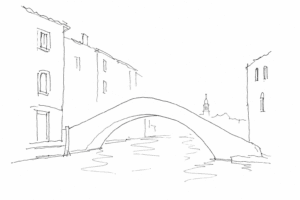
The bridge therefore preserves, in its name, the memory of a pragmatic city: mercantile, nocturnal, strict in its regulations and at the same time aware of the behaviors that ran through everyday life.
The Carampane were an urban device, not a simple picturesque backdrop. Between the late Middle Ages and the modern age, the Republic preferred to concentrate here a visible part of sex work, near Rialto but within a recognizable perimeter: narrow calli, small bridges, rental houses and views useful for control.
This choice responded to a typically Venetian logic: to tolerate what could not be eliminated, turning it into an administrative matter. The authorities could supervise entrances, movements, scandals, brawls, debts and relations with foreigners. The district thus became a safety valve for sailors, merchants, porters and men passing through, without allowing the activity to spread everywhere.
One should not imagine an area free from constraints. The poorer prostitutes, unlike the educated courtesans integrated into aristocratic networks, were subject to rules on clothing, places, hours, cohabitation and public contacts. The Ponte delle Tette must be read within this system: not as an isolated anecdote, but as a material trace of an urban policy made up of trade, morality, public order and social control.
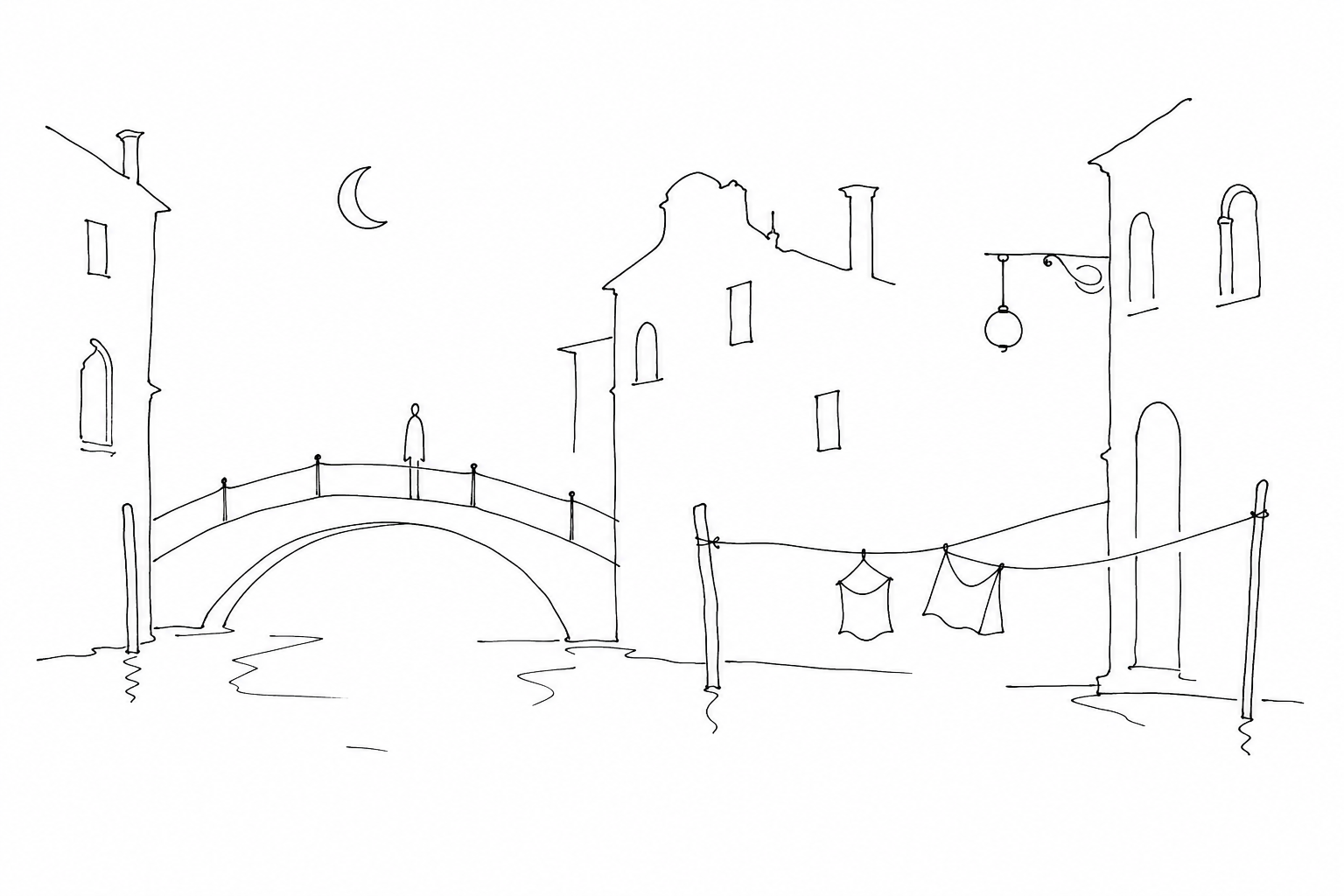
Between Rialto and the night: money, passages, clients
The proximity to Rialto was not accidental. Boats loaded with spices, cloth, wine, fish and metals arrived in the Venetian mercantile heart; by day money changers, brokers, porters, innkeepers and merchants occupied calli and banks. When the shops closed, the same network of routes continued to function: taverns, inns and rental houses intercepted men passing through, sailors, foreigners and resident workers.
The Ponte delle Tette therefore stood on an economic threshold. It was not only an access point to the regulated district, but a recognizable point within a landscape of consumption: drinking, eating, bargaining, seeking company. Clients could move from Rialto toward San Cassiano and return to the ferries or the fondamente without leaving frequented and supervisable areas.
At night, in a city with scarce lighting and mobility also entrusted to the water, concentration helped the magistracies, including the Signori di Notte, to read flows and disturbances. Economy, pleasure and urban discipline were intertwined in the same block.
How to read it today during a slow walk
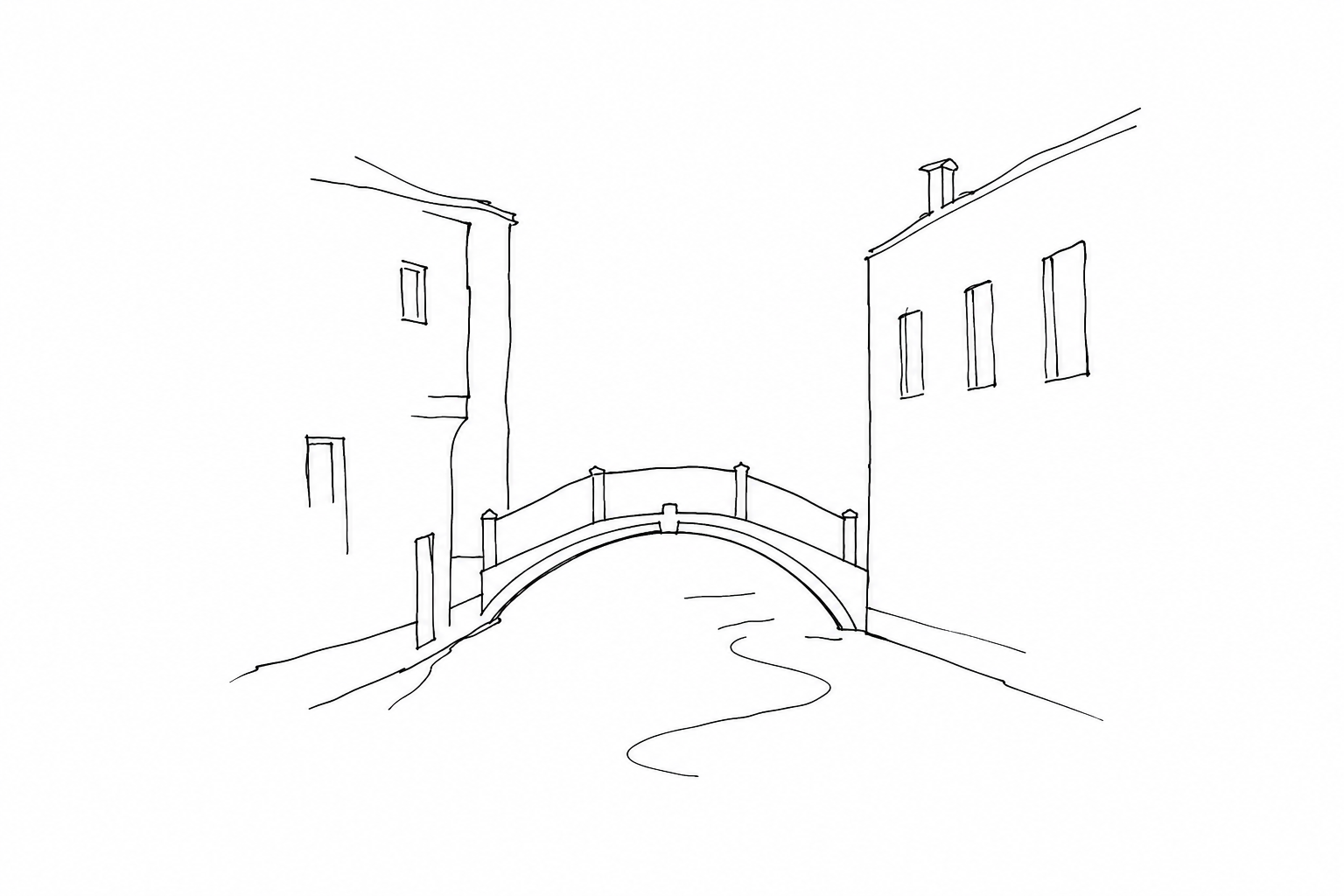
To understand the Ponte delle Tette without reducing it to a curiosity, it is worth first stopping at the edge of the rio and looking at the scale of the spaces: a short footbridge, houses pressed together, low windows, narrow calli. Precisely this small dimension explains why sexual commerce, transit and surveillance could coexist here: every arrival was visible, every stop left a trace.
Observe it as an urban document. The toponym should not be treated as a joke, but as the memory of a public policy: concentrating prostitutes in a recognizable area, close to the trade of Rialto, also meant taxing, registering, containing conflicts and directing behaviors.
- Look up: the windows recall the importance of the regulated exposure of the body.
- Look at the water: the rio was an access route, not a picturesque backdrop.
- Speak softly: it is still an inhabited place, not a set.
Today the Ponte delle Tette is crossed in just a few steps, often without noticing the density of what it tells. Stopping here, instead, helps you look at the calli around Rialto with a different attention: not only shops, markets and façades, but also rules, marginality and strategies for governing the city. On a slow walk, this corner reminds us that Venice preserves its complexity in minor details, where a popular name becomes a trace of social history.
Related Posts
Ponte della Paglia: the spot from which everyone photographs the Sighs without wondering where they are
Where Ponte della Paglia really is, why the Bridge of Sighs can be seen from there and what this crowded spot in Venice tells.Ponte Chiodo in Cannaregio: the bridge without a parapet that Venice has almost forgotten
History, form and context of Ponte Chiodo, a rare Venetian bridge without a parapet in Cannaregio.
The Ponte dei Pugni in Dorsoduro: history of the fights between the Nicolotti and Castellani
History and interpretation of the Ponte dei Pugni in Dorsoduro, from the Venetian factions to the footprints in stone.Questions Answered
Where is Ponte delle Tette located and why is the name significant?
It is in San Polo near Rialto, named for regulated prostitution practices.How did Venetian authorities manage prostitution?
By concentrating and supervising it in specific districts like the Carampane.What role did the area near Ponte delle Tette play in Venice’s economy and nightlife?
It connected mercantile activity by day and nightlife with controlled venues by night.How can we understand Ponte delle Tette today?
As an urban document reflecting social policies and city governance.
Rialto beyond the bridge
Which nearby places reveal commercial Venice once you move a few steps away from the main crossing?
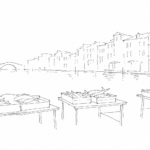 Rialto at dawn: the fish market before the photographs arriveRialto at dawn told through work: stalls, crates, voices, lagoon and respect before the tourist gaze.
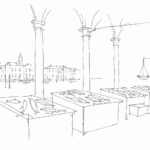 The Rialto Fish Market: how to read stalls, columns and details of a market still aliveA short guide to observing the Rialto Fish Market: stalls, architecture, marine signs and the daily rhythm of the market.
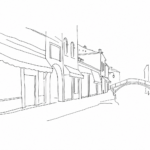 Ruga Rialto: a street of shops for understanding Venetian commerce before global storefrontsA reading of Ruga Rialto as a living trace of Venetian commerce: shops, place names, markets and urban rhythm before global chains.
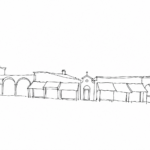 San Giovanni Elemosinario: the almost invisible church hidden among the shops of RialtoA short guide to the church of San Giovanni Elemosinario, amid the Rialto market, Renaissance history, and works by Titian and Pordenone.