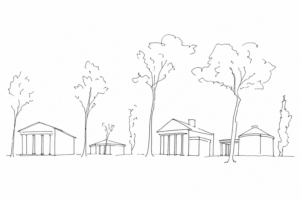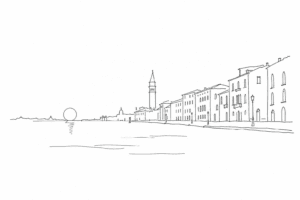
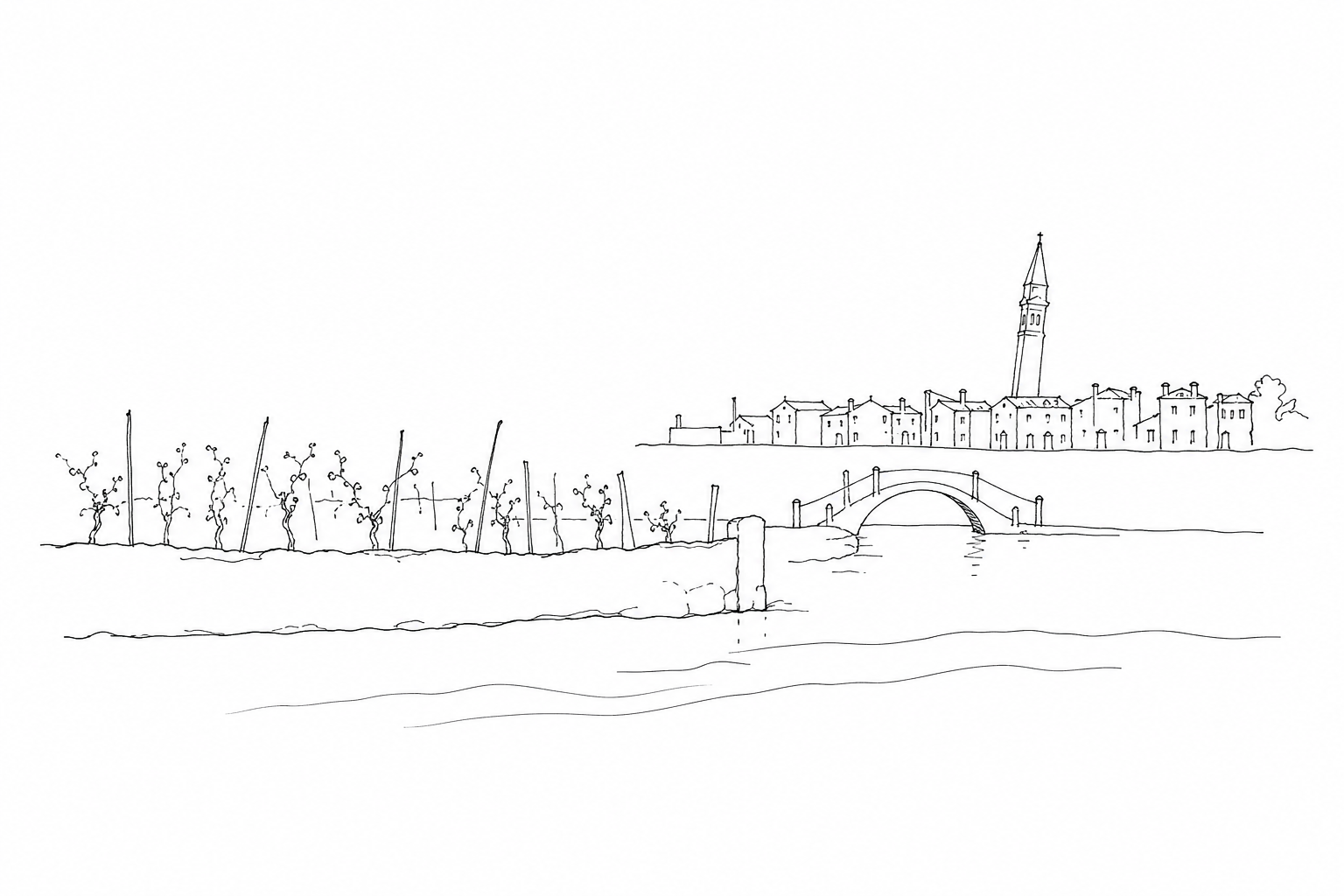
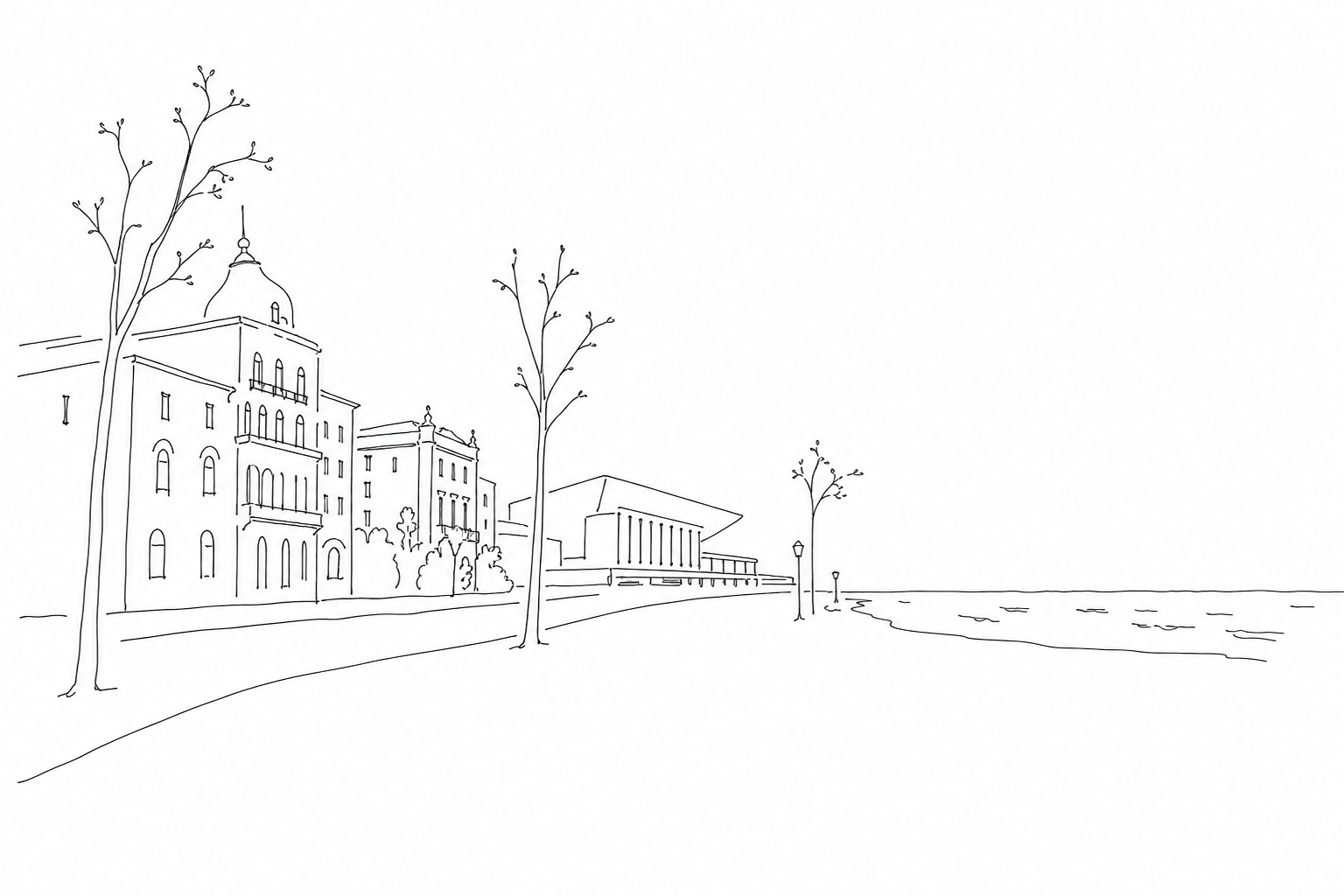

The Lido of the Film Festival exists even when the spotlights go out. Among tree-lined avenues, hotel façades, beach establishments and twentieth-century public architecture, it preserves an urban memory different from that of monumental Venice: more relaxed, more lateral, but no less eloquent. Arriving there without chasing the red carpet makes it possible to read more clearly the relationship between holidaying, society life, cinema and everyday life, observing how a long, narrow island has become, over time, both an international stage and an inhabited district.
Arriving at the Lido beyond the event
The Lido of the Film Festival is better understood when it is seen before the red carpet, as a slender linear city between the lagoon and the Adriatic. The arrival does not lead only to the Palazzo del Cinema: it crosses an inhabited island, with tree-lined avenues, hotel façades, Art Nouveau villas and stretches of twentieth-century building that tell of a precise season of Venetian modernity.
Here the memory of the Festival, born in 1932, coexists with an everyday geography: the Gran Viale Santa Maria Elisabetta as the entry axis, the quieter side streets, the front of the historic hotels facing the sea, the rationalist architecture of the festival area. The Lido is not a simple seaside appendage of Venice, but an urban laboratory in which tourism, cinema, holidaying and public representation have overlapped for more than a century.
Reading it without the urgency of the event means noticing proportions, distances and silences: the Festival remains, but as a trace within a built landscape.
The hotels: Des Bains and Excelsior
The Des Bains and the Excelsior are not simply elegant backdrops: they help to read the island’s transformation into an international seaside resort. The Grand Hotel des Bains, opened in 1900, belongs to the period in which Venice sought a modern relationship with the sea: large halls, loggias, gardens and protected paths built an idea of secluded holidaying, almost separated from the lagoon city’s urban traffic.
Its cultural memory is also linked to Thomas Mann, who stayed here and transformed this social landscape into literary material for Death in Venice; later Visconti fixed a twentieth-century image of it in the 1971 film. The hotel thus becomes an archive of gestures, social classes, expectations, declines.
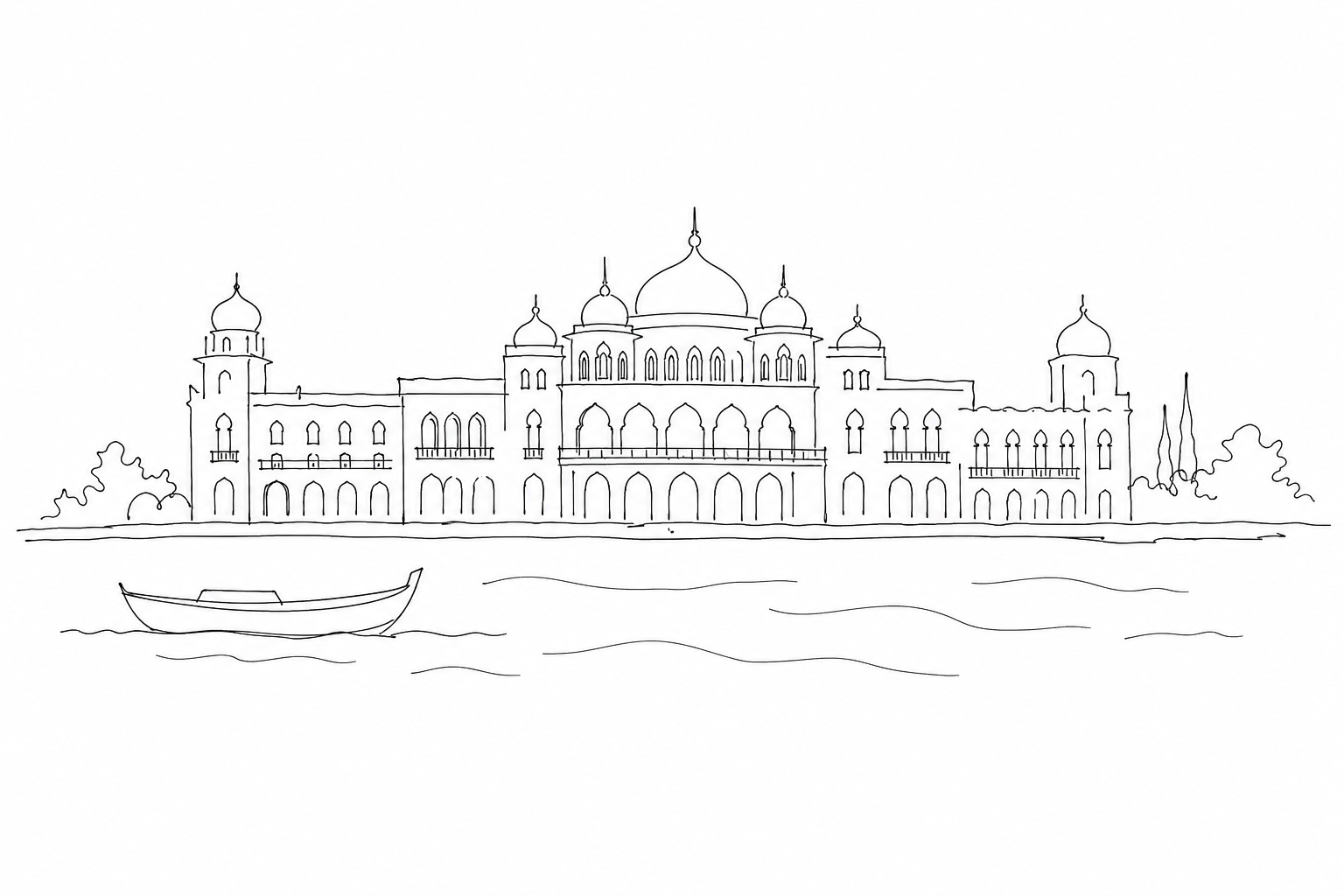
The Excelsior, inaugurated in 1908 to a design by Giovanni Sardi, instead speaks a more theatrical language: domes, Moorish arches, Byzantine and orientalizing references compose a façade designed to amaze those arriving from the sea. Observing them without the red carpet means grasping two different forms of prestige: the aristocratic seclusion of the Des Bains and the cosmopolitan spectacularity of the Excelsior.
Palazzo del Cinema, Casino and the public twentieth century
Alongside the hotel memory, the institutional core of the festival speaks another language: that of the public twentieth century, made of orderly façades, ceremonial entrances and spaces designed for crowds. The Palazzo del Cinema, inaugurated in 1937 to a design by Luigi Quagliata, was created to give a permanent home to an event that until then had had a more society-oriented and experimental character.
Not far away, the Palazzo del Casinò, opened in 1938 and linked to the name of Eugenio Miozzi, completes an urban system in which entertainment, representation and cultural policy intertwine. The architecture does not seek the Venetian picturesque: it prefers clear volumes, perspective axes, stairways and forecourts, a rationalist vocabulary softened by its seaside function.
Walking here without the red carpet allows one to see the staging of space more clearly: the avenues converge toward buildings that are not simple containers, but civic signals. They tell of the idea of an organized, official modernity, built to transform a summer shore into a permanent stage.
A walk without the red carpet
To read this stretch without the catwalk effect, one can start from the Santa Maria Elisabetta landing stage and follow the Gran Viale to the Adriatic front. The sequence is instructive: low shops, gardens, early-century small villas, then the sudden opening toward the sea. It is a small piece of urban direction, designed to accompany the visitor from Venice of the water to modern holidaying.
On Lungomare Marconi the gaze changes pace. Before the official signs, distances matter: gates, setbacks, pines, terraces, monumental entrances. Here the historic hotels should not be observed only as society backdrops, but as machines of representation created to host long seasons, sea treatments, receptions, screenings, expectations.
Arriving toward the Palazzo del Cinema and the Casino, it is worth turning around often. Twentieth-century memory is not only in the famous façades: it is in the relationship between avenues, beach, public architecture and side routes, where the international ritual lets an everyday and precise geography emerge.
Walking on the Lido outside the days of the Festival means removing the place’s loudest image and rediscovering the traces that support it: the historic hotels, the Palazzo del Cinema, the Casino, the orderly avenues, the beach just beyond the houses. It is an itinerary that asks for neither haste nor grand effects, but attention to proportions, materials, voids and memories. In this distance from the center of Venice, the twentieth century appears more legible: not as nostalgia, but as a landscape still present.