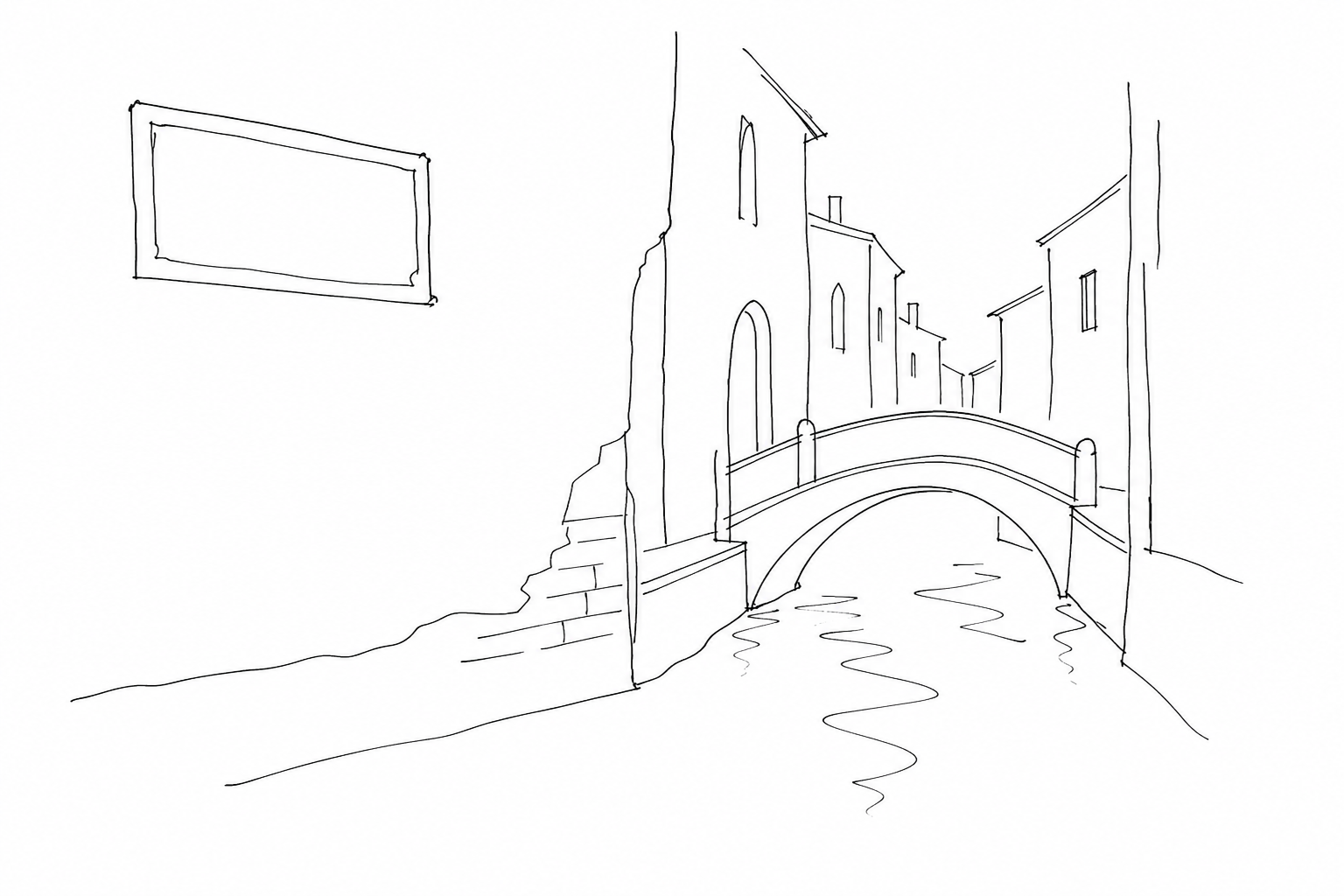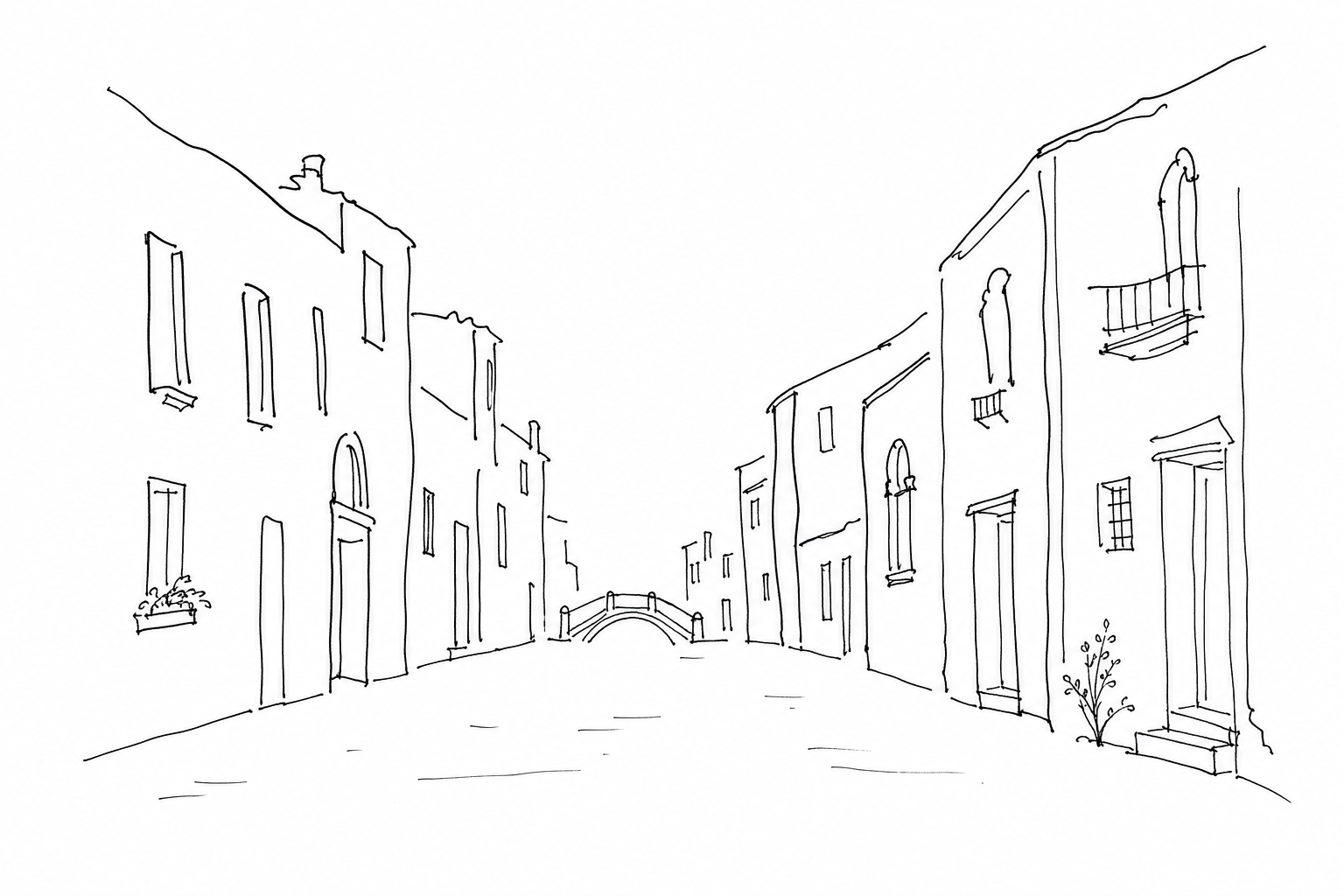
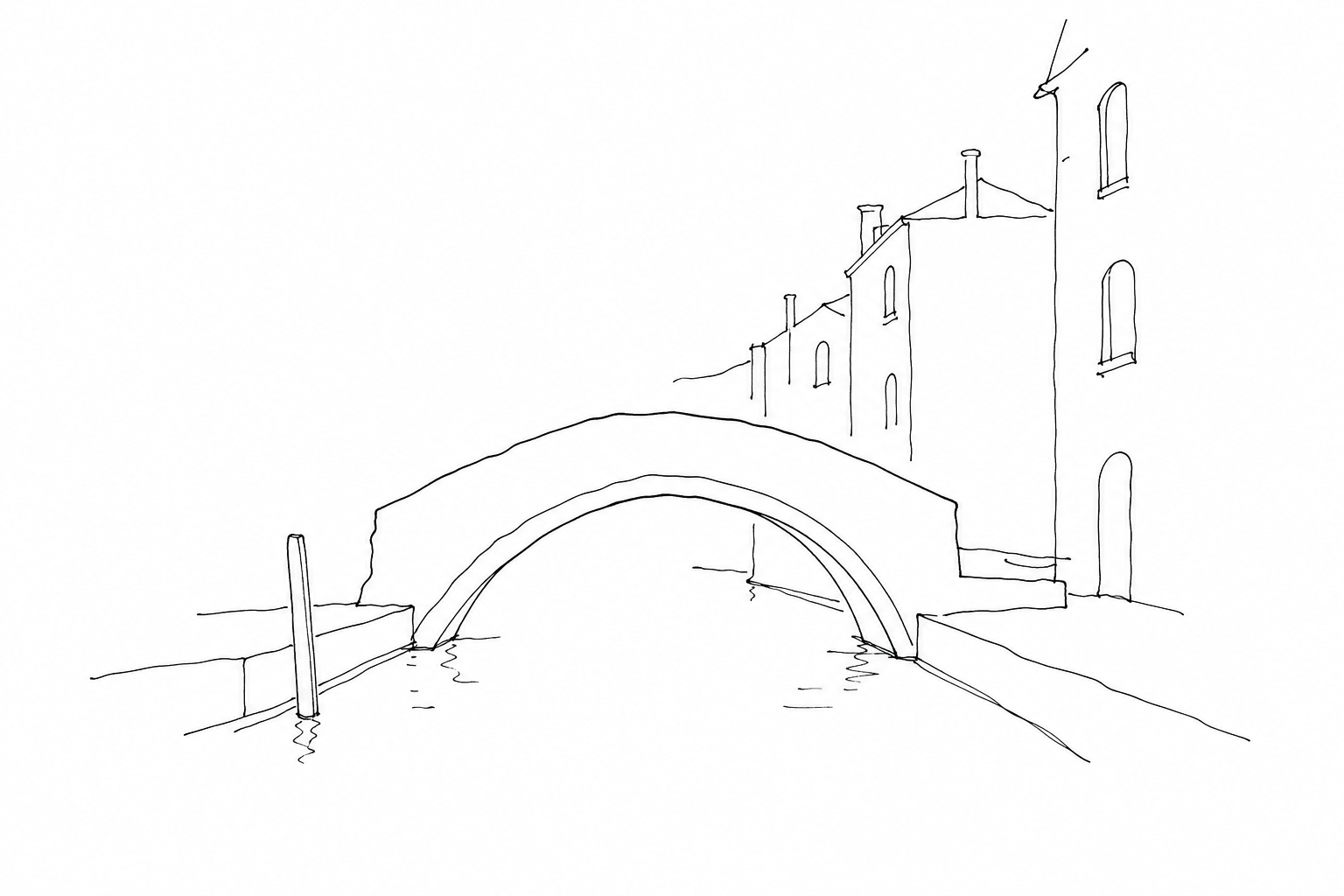

Ponte Chiodo, in the Cannaregio district, is one of those Venetian details that seem small until you really look at them. Its particularity is evident: it has no parapet. Today it appears almost an exception, but it recalls a phase of the city in which many bridges were like this, more functional than scenic, inserted into the daily relationship between houses, calli and rii. Observing it therefore means going beyond its visual oddity and reading an urban fragment that has remained close to its original form.
Where Ponte Chiodo is located and why it immediately stands out
Ponte Chiodo is located in the Cannaregio district, along the Rio di San Felice, in a residential area less theatrical than the most crowded routes but still fully Venetian: narrow fondamente, houses overlooking the water, short passages and sudden side glimpses. Its particularity is understood even before crossing it: it is a stone bridge without a parapet, with the small arch left open at the sides.
This absence stands out because today it appears almost counterintuitive. In Venice many ancient bridges were built without side protections; only later, for safety and to adapt to daily use, were they fitted with low walls or railings. Ponte Chiodo therefore preserves a rare appearance, closer to an essential historical form of the Venetian bridge.
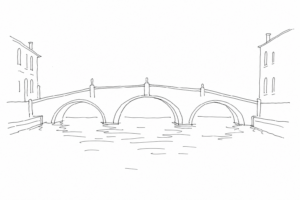
The name refers to the Chiodo family, connected to the area and to the nearby properties. Rather than monumental, the bridge is valuable precisely because of its domestic scale: it seems like a fragment that has remained intact within the inhabited city.
A crossing without a parapet: what many Venetian passages were like
The particularity of Ponte Chiodo is not a picturesque whim: it tells of an older phase of Venetian circulation. For centuries numerous minor crossings lacked side walls. The banks, the calli and the small internal connections functioned in a city accustomed to water as an everyday space, not as a simple backdrop to be observed from a distance.
Stone or metal protections spread progressively, especially when the need increased to make public routes safer and more orderly. Originally, however, the priority was often the practical continuity between a fondamenta, a house and a landing place: a few steps, an essential span, no superfluous element.
- Absence of a parapet: it shows a construction form that is rare today in the historic center.
- Domestic scale: it connects properties and neighborhood routes more than major urban axes.
- Material memory: it makes it possible to understand how Venetian architecture adapted to life on the rii.
For this reason the small structure in Cannaregio is so eloquent: it preserves not only an ancient outline, but also a different way of perceiving the edge between street and water.
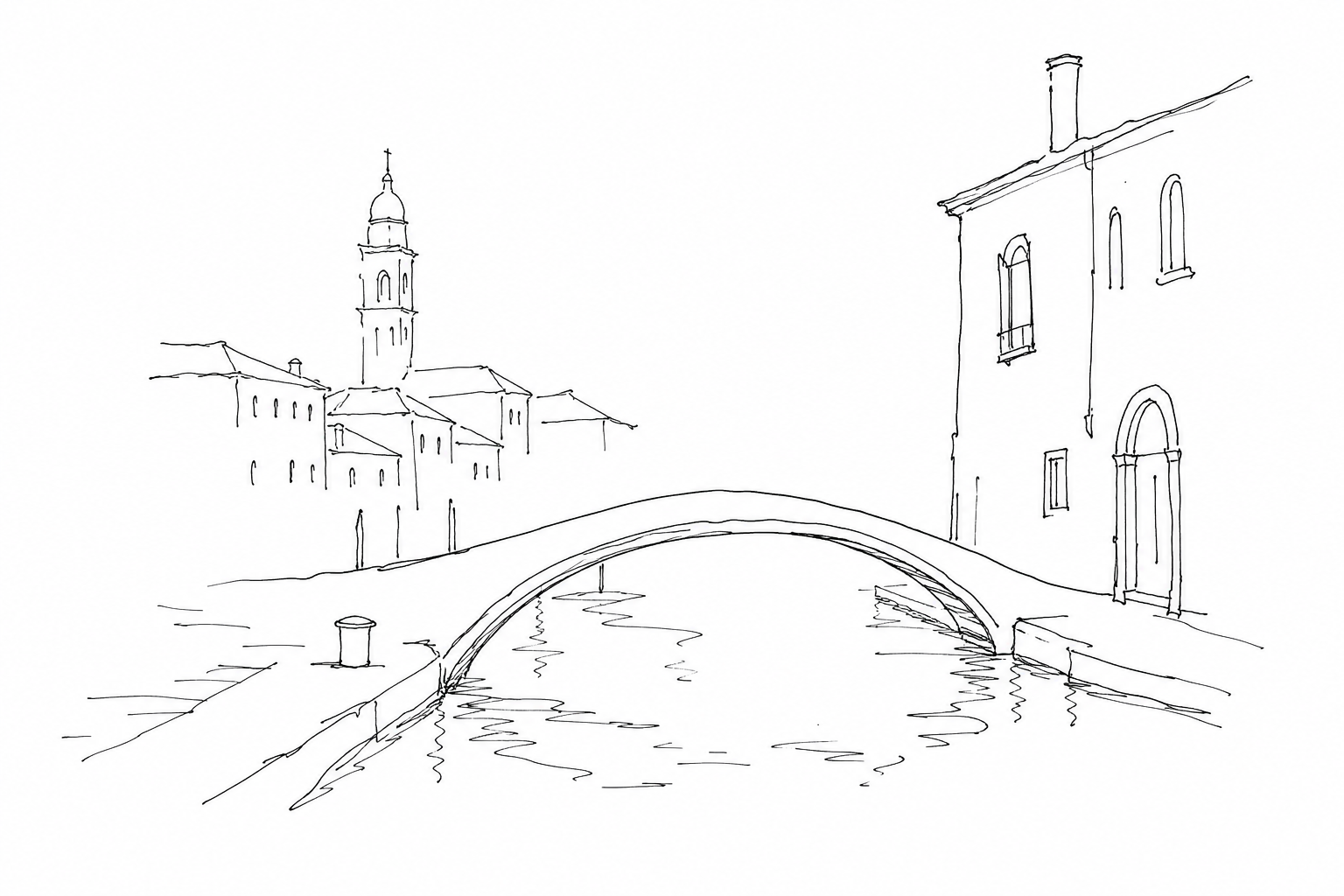
The family name and the access on the rio
The name Chiodo refers to the family that owned the building served by the crossing, rather than to a legendary episode. In this part of Cannaregio, the footbridge was not created to organize a large public flow, but to directly connect a house and its entrance to the land route overlooking the Rio di San Felice. It is an important detail: in Venice many minor openings were linked to private properties, courtyards, short fondamente and domestic landing places.
The function was therefore practical and local. Those who lived or worked there could reach the threshold, unload light goods, move between water and calle with just a few passages. The rio was not a decorative backdrop, but part of the street: boats, deliveries and people arrived there. The small Ponte Chiodo preserves this close relationship between dwelling, canal and pedestrian space, typical of an urban fabric made up of specific solutions, adapted to the individual block rather than to a monumental design.
An attentive look, not just a photograph
To read it well, it is best to stop for a few minutes on the fondamenta, avoiding occupying the passage or looking toward private entrances. The absence of the parapet should not be sought only as an oddity: it is the trace of an older Venice, in which small service crossings connected houses, banks and courtyards with minimal interventions.
First observe the stairway: the Istrian stone steps, worn in the center, tell of everyday rather than scenic use. Then look at the relationship with the rio: the short span crosses a small canal, not a major axis of representation. The reduced size also helps to understand why here the side protection was not perceived, originally, as an indispensable element.
The best photograph is the one that respects the place: including the water, the domestic masonry and the connection to the bank conveys the urban meaning of the work. Before approaching, it is always appropriate to check any local indications and not cross property limits.
Ponte Chiodo should not be sought only as a curiosity to photograph, but as a clue to a less domesticated Venice, made of private passages, water edges and practical solutions. Its absence of parapets tells of a different way of inhabiting the city, when the boundary between safety, custom and necessity was more subtle. Stopping for a few minutes, without invading the space of those who live there, makes it possible to grasp its value: not a picturesque anomaly, but a rare and still legible urban survival.
Related Posts
Ponte Chiodo in Cannaregio: the bridge without a parapet that Venice has almost forgotten
History, form and context of Ponte Chiodo, a rare Venetian bridge without a parapet in Cannaregio.Ponte dei Tre Archi: the unusual bridge in Cannaregio that breaks with the city’s usual form
The Ponte dei Tre Archi, on the Cannaregio Canal, is a rare exception in the form of Venetian bridges.
Ponte delle Guglie: obelisks, Cannaregio and the passage toward the Ghetto
History, form and urban context of the Ponte delle Guglie, a threshold between Cannaregio, the canal and the Ghetto.Questions Answered
Where is Ponte Chiodo located and what makes it stand out?
It’s in Cannaregio, notable for its stone structure without parapets.Why did many Venetian bridges originally lack parapets?
To maintain practical continuity between houses, streets, and canals.What is the origin of the name Ponte Chiodo?
It refers to the Chiodo family that owned nearby properties.How should visitors approach and appreciate Ponte Chiodo?
By observing quietly to understand its historical urban role, not just as a photo opportunity.
Keep exploring Cannaregio
Want to stay among secluded churches, unusual bridges and everyday stories of the district?
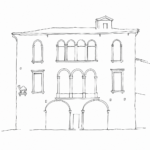 Palazzo Mastelli and the Camel: an Eastern Detail in the Heart of CannaregioHistory, interpretation and context of the camel carved on Palazzo Mastelli, among Eastern trade and the calli of Cannaregio.
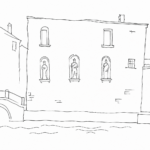 Campo dei Mori: statues, merchants and legends carved on the walls of CannaregioA brief guide to Campo dei Mori, among walled-in statues, eastern merchants and legends of Cannaregio.
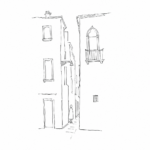 Calle Varisco: seeking one of Venice’s narrowest calli without turning it into a trophyA brief guide to Calle Varisco: where to look for it, why it matters and how to pass through it with restraint,...
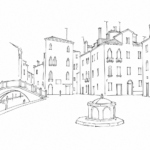 The Ghetto Nuovo of Cannaregio: why the world’s first ghetto is called “new”Origin of the name Ghetto Nuovo: from the Venetian foundry to the Jewish enclosure of 1516.