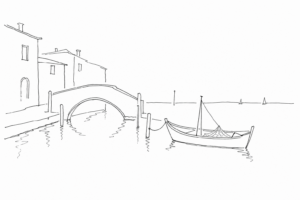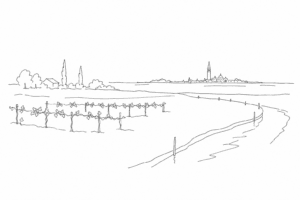

Lio Piccolo is a thin threshold between land and lagoon: a few houses, narrow roads, low embankments and water that changes color with the light. In the northern lagoon, far from the most crowded routes, the landscape is read slowly: salt marshes, fishing valleys, cultivated fields, canals and flocks of birds that redraw the horizon. The flamingos catch the eye, but they are not the only reason to come this far. Lio Piccolo tells of a side of Venice that is lateral, agricultural and amphibious, where silence is not absence, but the measure of the place.
Where Lio Piccolo is and what landscape you cross
Lio Piccolo is a small locality in the northern lagoon of Venice, in the territory of Cavallino-Treporti, secluded from the beaches of the Adriatic and overlooking a shallow-water landscape. It is reached by leaving the busiest axis of the coast and following a narrow road that enters among canals, embankments, vegetable gardens and brackish stretches of water.
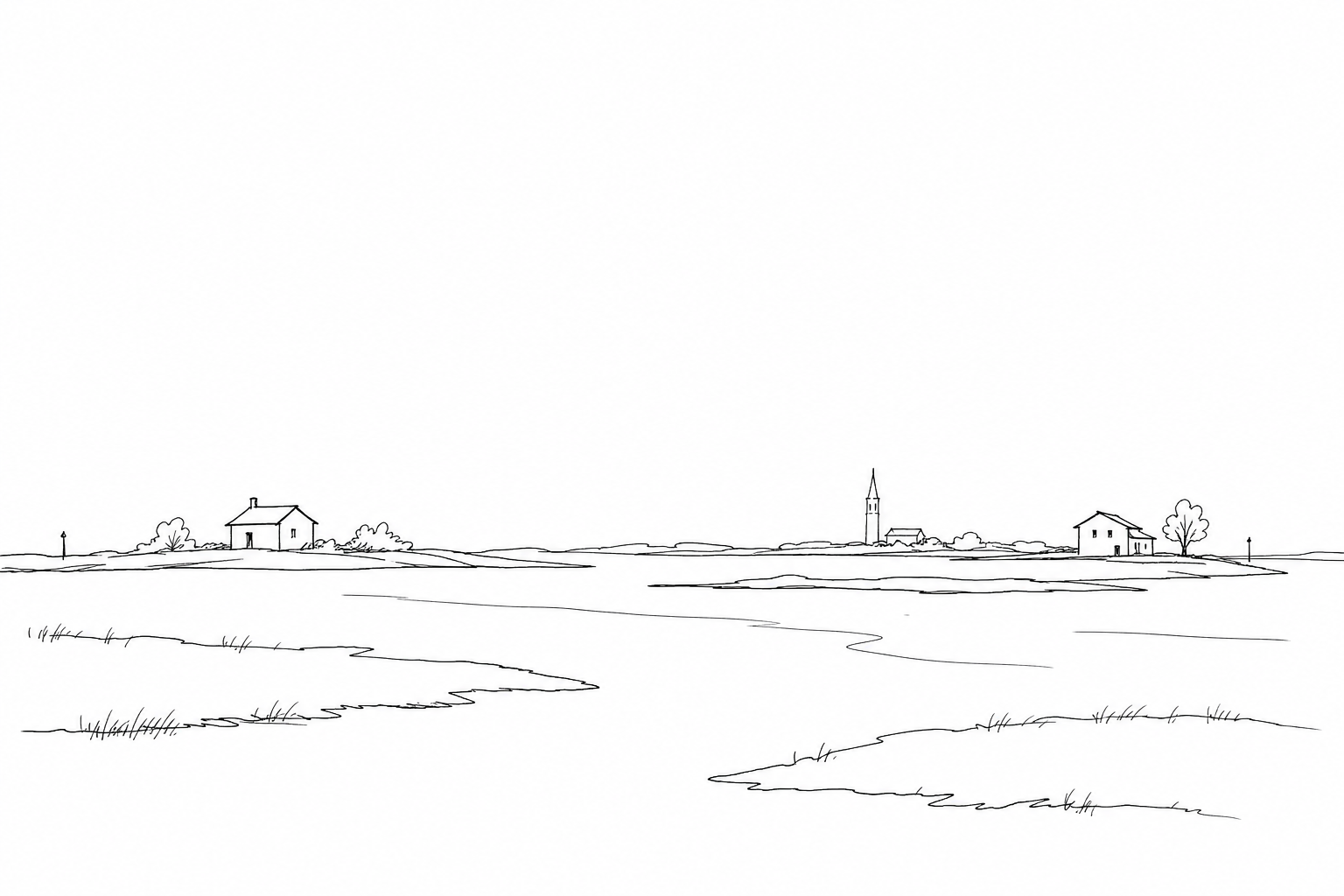
The first element to read is not a monument, but the very structure of the lagoon: salt marshes, mudflats that emerge and disappear with the tides, fishing valleys bordered by embankments, ditches and small bridges. Here the land seems provisional, designed to coexist with the water and not to dominate it.
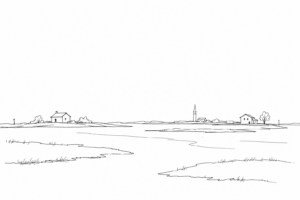
As you approach the village, silence becomes part of the place: a few houses, low bell towers, casoni huts and sudden openings toward the ponds where, in some seasons, flamingos and other lagoon birds can be observed. For access conditions and practicability, it is always prudent to check updated information locally.
Flamingos and fauna: observing without disturbing
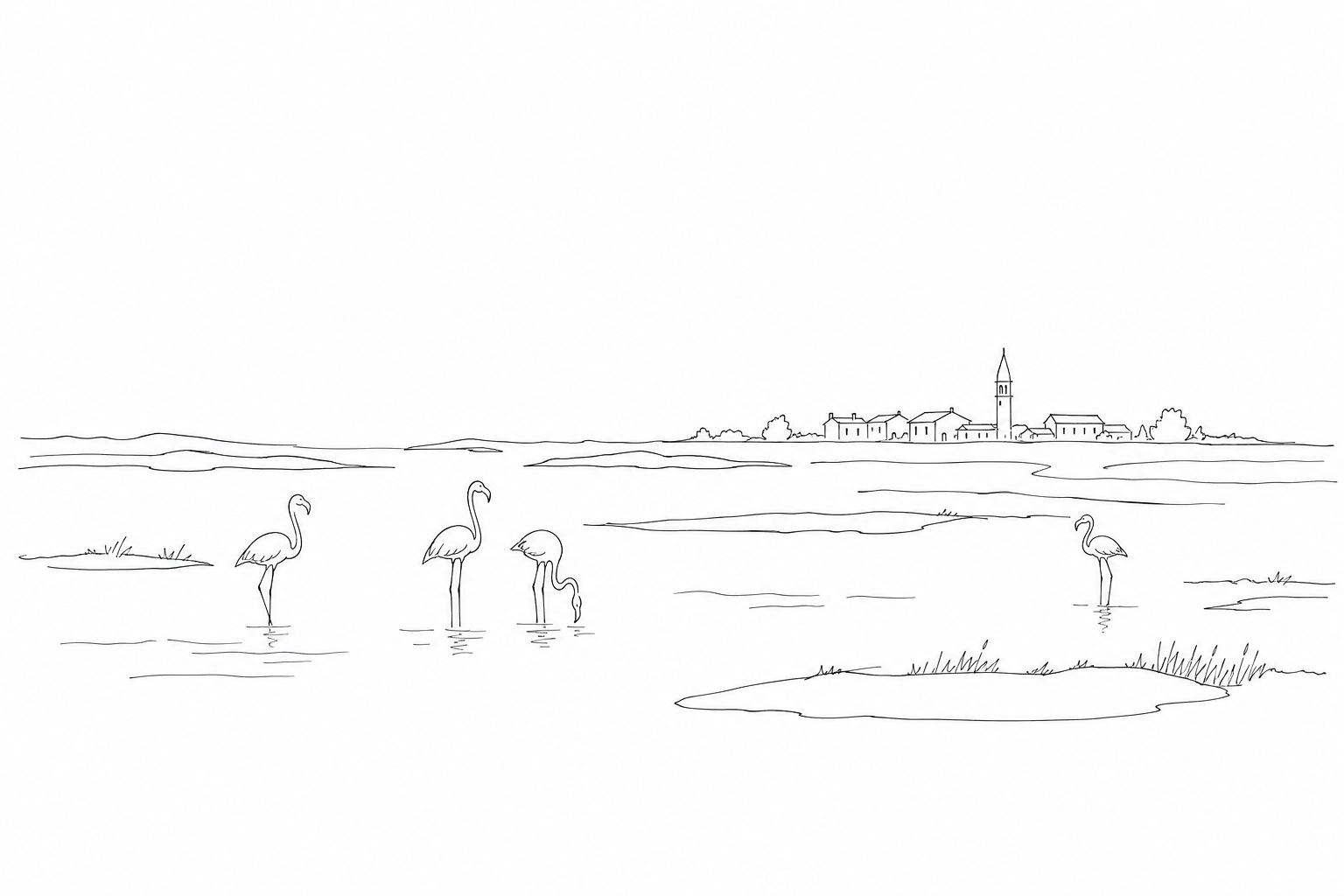
In Lio Piccolo, flamingos are read first of all in the landscape: still pink patches in the shallow waters, often far away, where the lagoon offers seabeds suitable for filtering. When they keep their neck bent and their beak immersed, they are feeding, sifting small organisms and sediments; when they remain compact and motionless, perhaps on one leg, they are resting. A sudden collective takeoff, on the other hand, can indicate a disturbance.
The same attention applies to the other presences: little egrets and herons along the edges of the canals, cormorants on the posts, waders on the mudflats uncovered by the tide. The salt marshes, with glasswort and low vegetation, are not “empty lands,” but feeding and refuge areas, delicate because they change with water, wind and seasons.
To observe well, distance is needed: binoculars, a slow pace, a low voice. Staying on the roads and embankments avoids crushing nests or pushing the birds to consume energy unnecessarily. In the northern lagoon, silence is not only atmosphere: it is part of the habitat.
Salt marshes, fishing valleys and agricultural memory
The salt marshes are the key to understanding Lio Piccolo: low, brackish lands, covered by salt-resistant plants and submerged at times by the tides. They are not “voids” between water and road, but living surfaces that slow the currents, retain sediments and offer refuge to many species. Their fragility arises precisely from this balance: it is enough to alter the water exchange, increase the erosion of the embankments or tread on the edges to impoverish a system built over centuries.
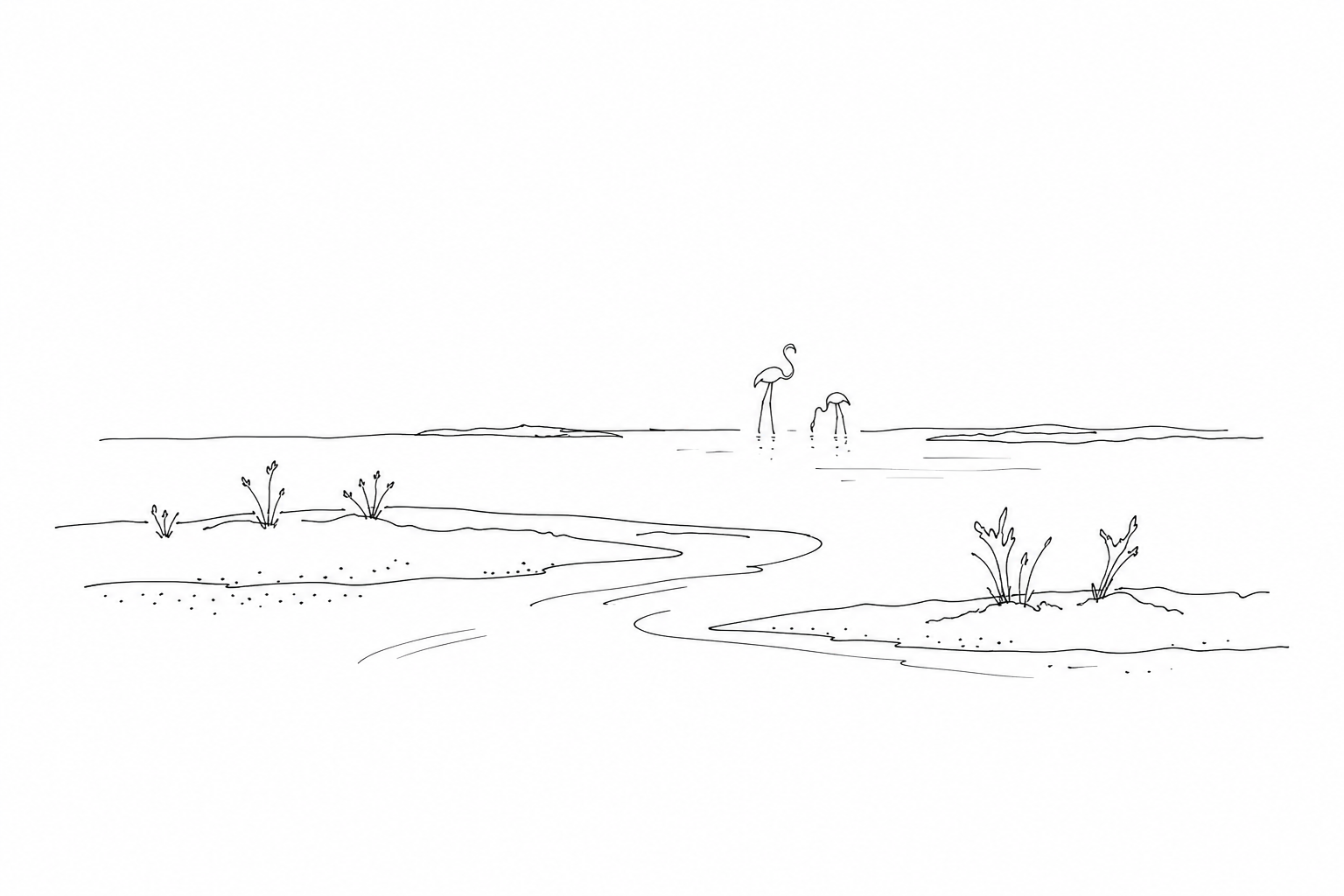
Alongside the salt marshes, the fishing valleys tell another level of history. Embankments, sluice gates and canals separate stretches of brackish water intended for extensive fish farming: an ancient knowledge, linked to seasonal rhythms and the fine management of the tides. It is not “wild” nature in an absolute sense, but an environment shaped with measure.
Agricultural memory emerges instead in the fields, in the rural houses, in the small square with the church of Santa Maria della Neve and in the seventeenth-century Palazzo Boldù: signs of a community on the edge, suspended between vegetable gardens, fishing and shallow water.
The village and a slow visit, with practical attentions
A visit to Lio Piccolo works best without haste. The arrival takes place from the mainland of Cavallino-Treporti, crossing Saccagnana and then a narrow road among canals, vegetable gardens and stretches of water: the route itself already makes it clear why this place requires a measured pace and attention.
By car, it is necessary to proceed with caution, because the roadway is narrow and shared with bicycles, residents and agricultural vehicles. Before leaving, it is advisable to check any temporary restrictions on transit or parking, without taking continuous services on site for granted.
The most suitable way to read the area is to stop briefly and often: the small square with the church of Santa Maria della Neve, the rural houses, the embankments, the sluice gates and the rows of trees tell of a settlement born to coexist with brackish water and cultivated land. Binoculars help to recognize the birds without approaching the feeding or resting sites.
Staying on public paths, speaking in a low voice and respecting private property is not only good manners: it is part of the experience of silence that makes the northern lagoon recognizable.
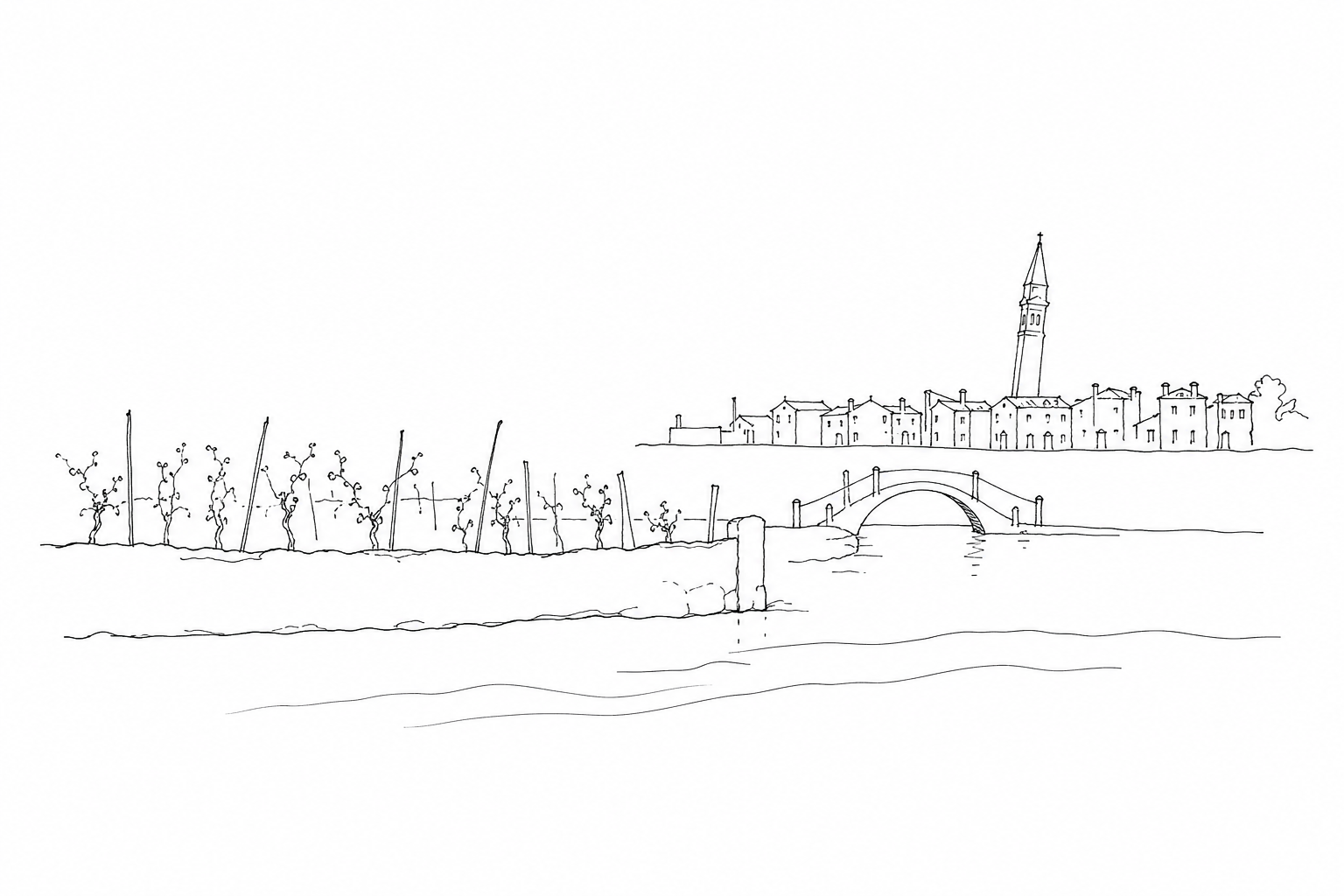
Visiting Lio Piccolo means accepting a different rhythm: observing from a distance, walking or cycling without haste, respecting inhabited spaces and fragile environments. The village, the salt marshes and the fishing valleys do not offer immediate spectacular effects, but a weave of details: an isolated bell tower, an embankment beaten by the wind, a sudden flight over the shallow water. It is a precious detour for those who want to understand the lagoon beyond Venice, in its daily balances and in its less displayed beauty.