
In Venice, the lion of St. Mark does not belong only to the flags fluttering on public buildings or to the most recognizable images of St. Mark’s Square. It is carved into stone, walled above a portal, worn by salt on a fondamenta, hidden in a wellhead or in a relief that is noticed only by changing pace. Looking for it means reading the city through its signs of power, devotion and everyday memory: tiny traces, often far from the most crowded routes, that tell how the symbol of the Serenissima inhabited Venice well beyond its official image.
Why the lion of St. Mark is not only on flags
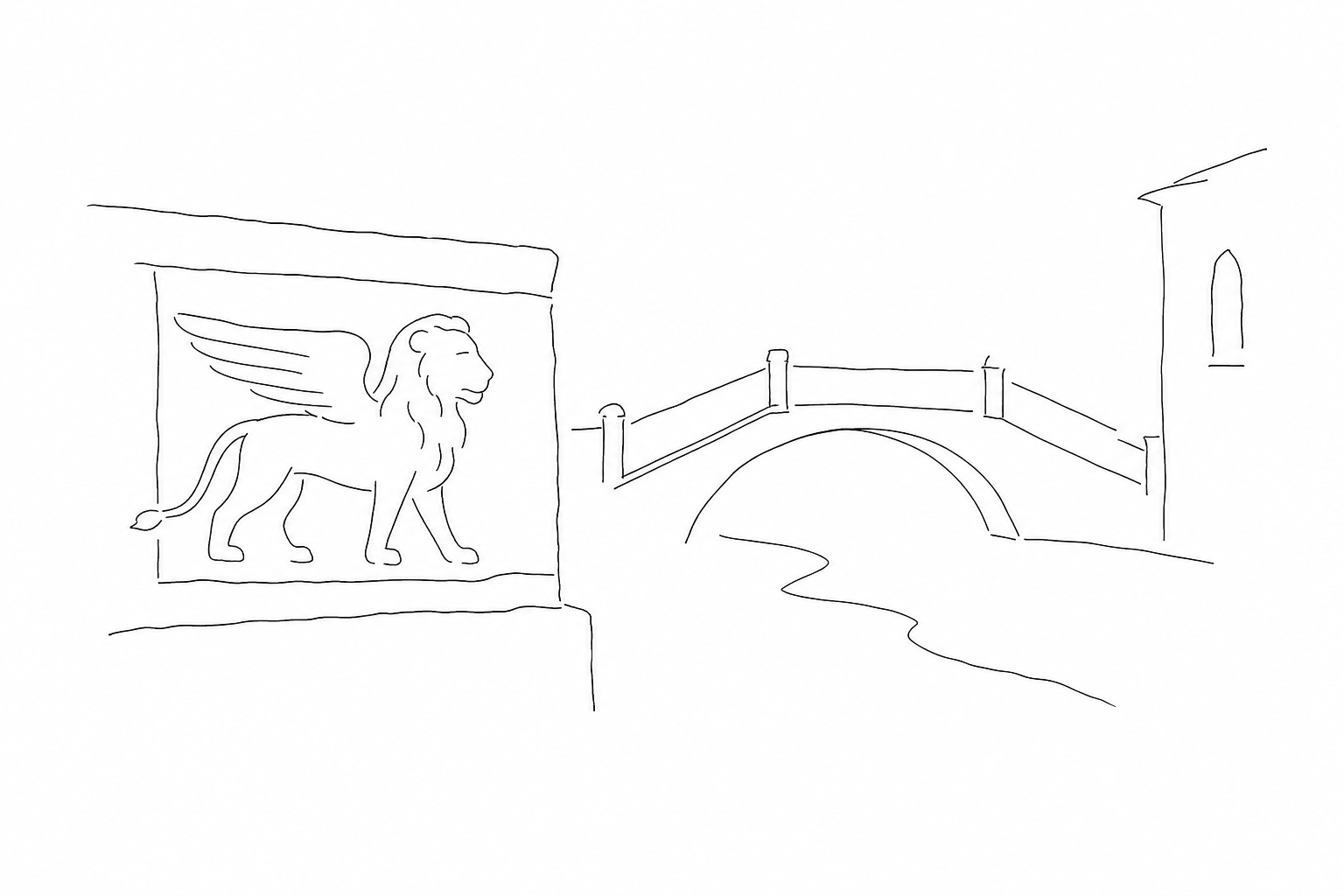
The lion of St. Mark originated as the emblem of the evangelist Mark, patron saint of Venice, but in the city and in the territories once linked to the Serenissima it also became a sign of public authority. For this reason it should not be sought only on banners: it appears sculpted on façades, wells, city gates, plaques, architraves, coats of arms of magistracies and even on small elements of urban furnishings.
Its form changes according to the message. The striding lion, with one paw on the book, is frequent in official representations; the one in moleca, frontal and compact, adapts to circular or reduced spaces, such as seals and reliefs; the lion with an open book recalls peace and law, while with a sword or closed book it can allude to defense, war or dominion.
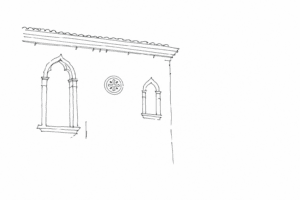
Observing it away from the flags means reading a political and religious language carved in stone: every lion marked Venetian presence, Marcian protection and the civic memory of the place.
Where to look up among calli, campi and fondamenta
To find a lion of St. Mark away from the flags, it is worth following the buildings that, in the past, spoke on behalf of the Republic: public palaces, scuole, city gates, commercial quays. Do not look for it only at the center of the scene: often it is above an architrave, in a corner of a façade, on a wellhead or among coats of arms corroded by salt air.
- San Marco area: in addition to the column of the Piazzetta, observe the Porta della Carta of the Doge’s Palace and the reliefs along the passages toward the basin. Here the symbol is linked to the magistracy and to dogal power.
- Rialto: between the market, the Mercerie and the palaces of the ancient magistracies, the winged figure appears as a mark of commercial and fiscal control. Look above portals, high windows and corner stones.
- Campo Santi Giovanni e Paolo: on the façade of the Scuola Grande di San Marco, today in the area of the Civil Hospital, the Marcian reference dialogues with polychrome marbles and Renaissance perspectives.
- Arsenale and Castello: near the monumental entrance of the Arsenale and in the nearby calli, the lion signals the military and naval dimension of the Serenissima.
- Minor fondamenta: along less crowded rii, small walled-in reliefs can indicate property, confraternities or restorations under Venetian rule.
The best method is to walk slowly and read the façades from top to bottom: wings, book, sword and halo help recognize the subject even when the stone is worn.
The lions outside San Marco: sestieri, islands and mainland
To broaden the search without losing focus, it is worth following the city’s ancient public functions. In Castello, the Arsenale area preserves signs linked to the military and productive power of the Serenissima: portals, walls, wellheads and corner stones may show the winged emblem in worn or relocated forms. In Cannaregio, instead, it is worth observing fondachi, internal courtyards and less-traveled passages, where coats of arms and plaques recall magistracies, families and institutions.
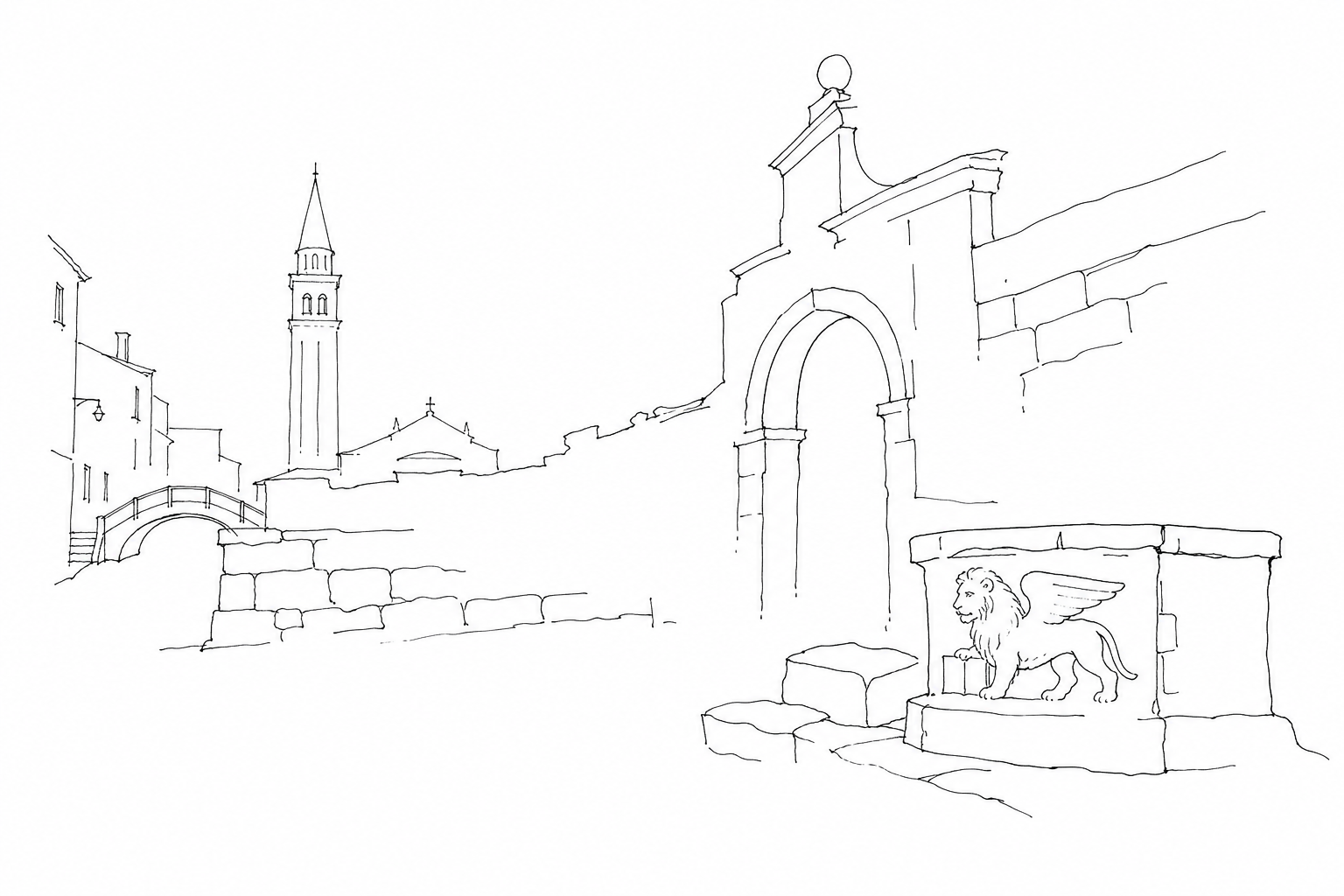
The hunt continues on the islands. In Murano, signs appear on civic buildings and podestà memories; in Burano and Torcello the sign may be more discreet, carved on reused stones or inserted into later masonry. The Lido and Pellestrina also deserve attention near churches, fortifications and town halls.
Outside the lagoon, the emblem followed Venetian expansion into the Stato da Terra: city gates, loggias, palaces of the rettori and roadside capitals in Veneto cities often preserve traces of republican domination, sometimes chiseled away after the fall of 1797.
How to recognize them without a guide in hand
A simple method is to read the position first, then the attributes. Above a public door, on a wellhead, beside a loggia or at the corner of an administrative building, the winged feline almost always indicates a Venetian authority, not a random decoration. Look for the wings close to the body, the thin halo, the paw on the book and, when the letters are preserved, the phrase Pax tibi Marce evangelista meus.
The open volume is the most immediate variant; the closed one, often accompanied by a sword, refers to a more military or garrison-like tone. Also pay attention to the form called in moleca: frontal muzzle, wings gathered like a fan, compact outline, frequent in small spaces.
If the image seems “eaten away,” observe the edges: after 1797 many symbols of the Serenissima were chiseled away. Sometimes the tail, claws, frame or an unusually smooth surface remain.
Recognizing the hidden St. Mark’s lions does not require a special map, but attention: to the corners of buildings, to the less restored façades, to reused stones, to details that survive offstage. Some are solemn, others almost erased; some show the open book, others the sword, still others bear the marks of history’s fractures. Following them among sestieri, islands and mainland allows you to cross Venice with a slower and more precise gaze, letting the city itself, in its surfaces and its silences, tell where the lion continues to appear.
Related Posts
The Piazzetta dei Leoncini: the small side space that many cross without understanding
A brief guide to the Piazzetta dei Leoncini, next to St. Mark’s Basilica: name, location, lions, details and urban meaning.Venetian patere: small Byzantine reliefs set into facades that almost no one notices
A brief guide to Venetian patere: what they are, where they come from, what figures they show and how to recognize them on the facades…
The Porta Magna of the Arsenale: lions, symbols and propaganda carved at the entrance to Venetian naval power
History and interpretation of the Porta Magna of the Arsenale, amid Renaissance architecture, marble lions and Venetian political messages.Questions Answered
What does the lion of St. Mark symbolize in Venice?
It symbolizes public authority and devotion beyond just the religious emblem.Where in Venice can hidden lions be found?
They are found on façades, wells, gates, plaques, and urban furnishings across sestieri and islands.How can you recognize the different forms of the lion?
By observing its posture, attributes like book or sword, and presence of wings and halo.Why are some lion symbols worn or damaged?
Many were chiseled away or worn by salt air, especially after the fall of the Serenissima in 1797.
Explore Venice from the mainland too
Want to add a few stops that reveal Mestre and its relationship with the lagoon?
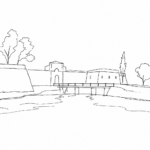 Forte Marghera: the green threshold between Mestre, the lagoon and military memoryEditorial guide to Forte Marghera: history, green spaces, water and its role between central Mestre and the lagoon.
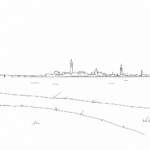 Parco San Giuliano: looking at Venice from the mainland without feeling outside historyA route through the park in Mestre overlooking the lagoon, where Venice can be read from afar but remains part of the...
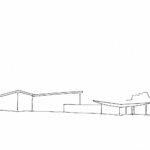 M9 in Mestre: the museum of the twentieth century for understanding the city before and after VeniceA route for reading M9, central Mestre and the relationship with Venice through history, architecture and everyday life.
 Staying in Mestre to Visit Venice: When the Mainland Makes Your Trip EasierChoosing where to stay when visiting Venice is not a secondary decision. The lagoon city has an extremely strong character: beautiful, fragile,...