
The Rialto Fish Market is not a picturesque backdrop beside the bridge, but one of the places where Venice continues to show itself as a city of exchange, work and daily habits. Reading it means observing together the fish stalls, the hands of the vendors, the ice, the names of the species, but also the columns, capitals and neo-Gothic façade overlooking the Grand Canal. In this market, every detail tells of an ancient and still concrete relationship between lagoon, cuisine, trade and urban space.
Rialto, before the bridge: the commercial heart of the city
To read the Rialto Fish Market, you need to shift your gaze from the bridge to the system of spaces that surrounds it. For centuries Rialto was Venice’s main economic hub: goods from the Adriatic and the Mediterranean arrived here, and shops, fondachi, exchange counters and magistracies responsible for controlling weights, quality and prices were concentrated here.
The Fish Market is therefore not an isolated building, but a specialized part of a broader urban organism. Its proximity to the Grand Canal facilitated the landing of the catch; its relationship with the Erberia and Naranzeria showed the logic of adjacent markets, in which fresh products and daily trade occupied recognizable areas. Even the names of the places preserve this practical function.
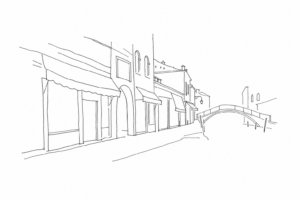
Observing columns, porticoes and stalls means understanding how Venice gave architectural form to an ordinary but essential activity: selling food, regulating exchanges, keeping the relationship between lagoon, city and market alive.
Reading the stalls: species, cuts, ice and gestures
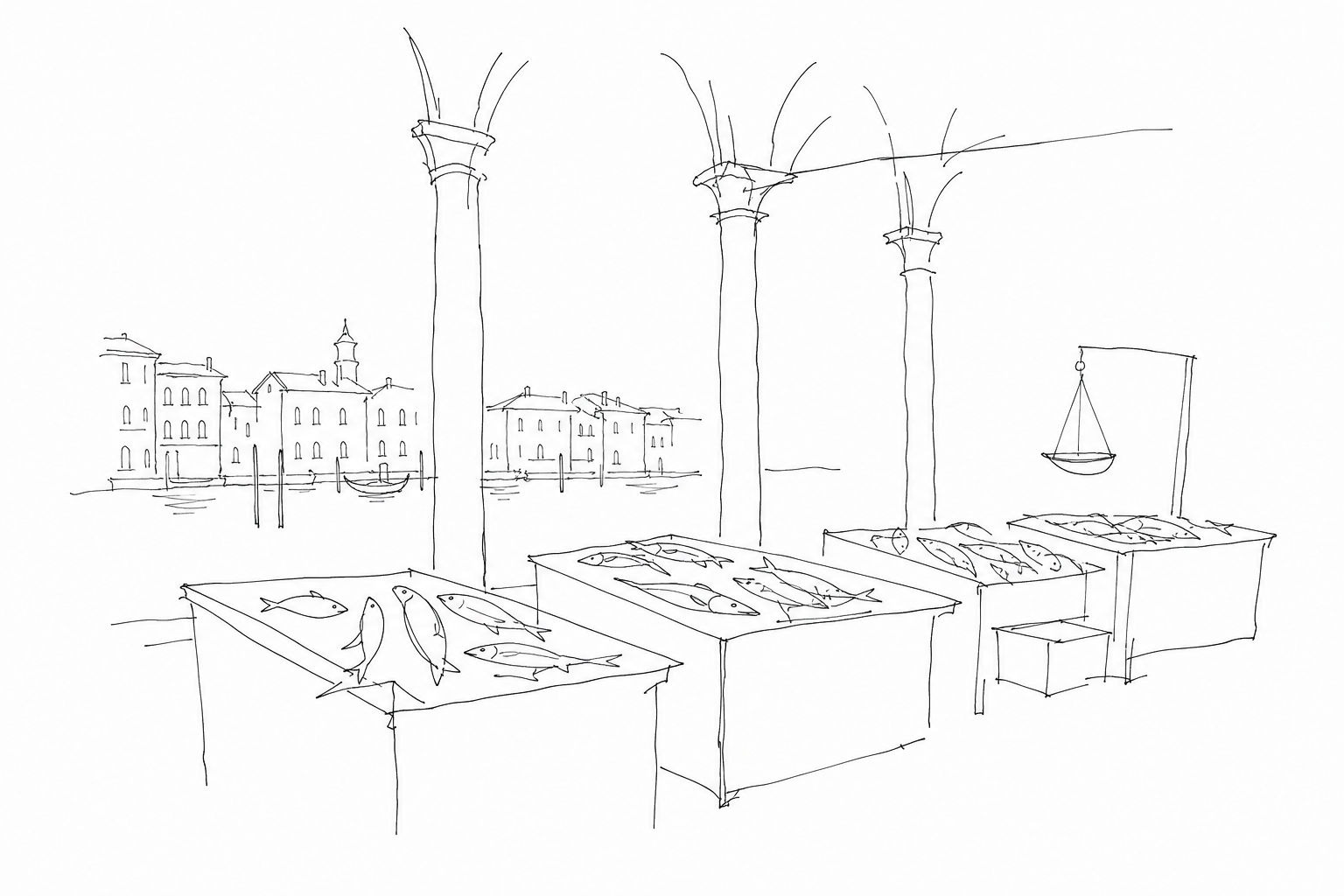
In front of the stalls of the Rialto Fish Market, it is worth observing the order first, not only the abundance. The crates distinguish whole fish, molluscs, crustaceans and already prepared cuts: this separation helps to understand provenance, use in cooking and speed of consumption. A whole sea bass or gilt-head bream shows its eyes, gills and skin; a cleaned cuttlefish, on the other hand, tells of work already begun by the vendor.
The ice is not a simple scenic backdrop. It serves to support the form, to separate the more delicate species and to make freshness visible without submerging the product. When it is arranged in gentle slopes, it also guides the eye: the larger pieces at the back, the smaller ones in front, such as schie, canoce or small fish for frying.
The gestures complete the reading. The knife that cuts, the hand that weighs, the quick rinse, the paper parcel prepared with precision indicate skills transmitted through daily work. Even the labels, when present, should not be read only as prices: local names, sizes and suggested preparations reveal the concrete relationship between lagoon, Venetian cuisine and sales stall.
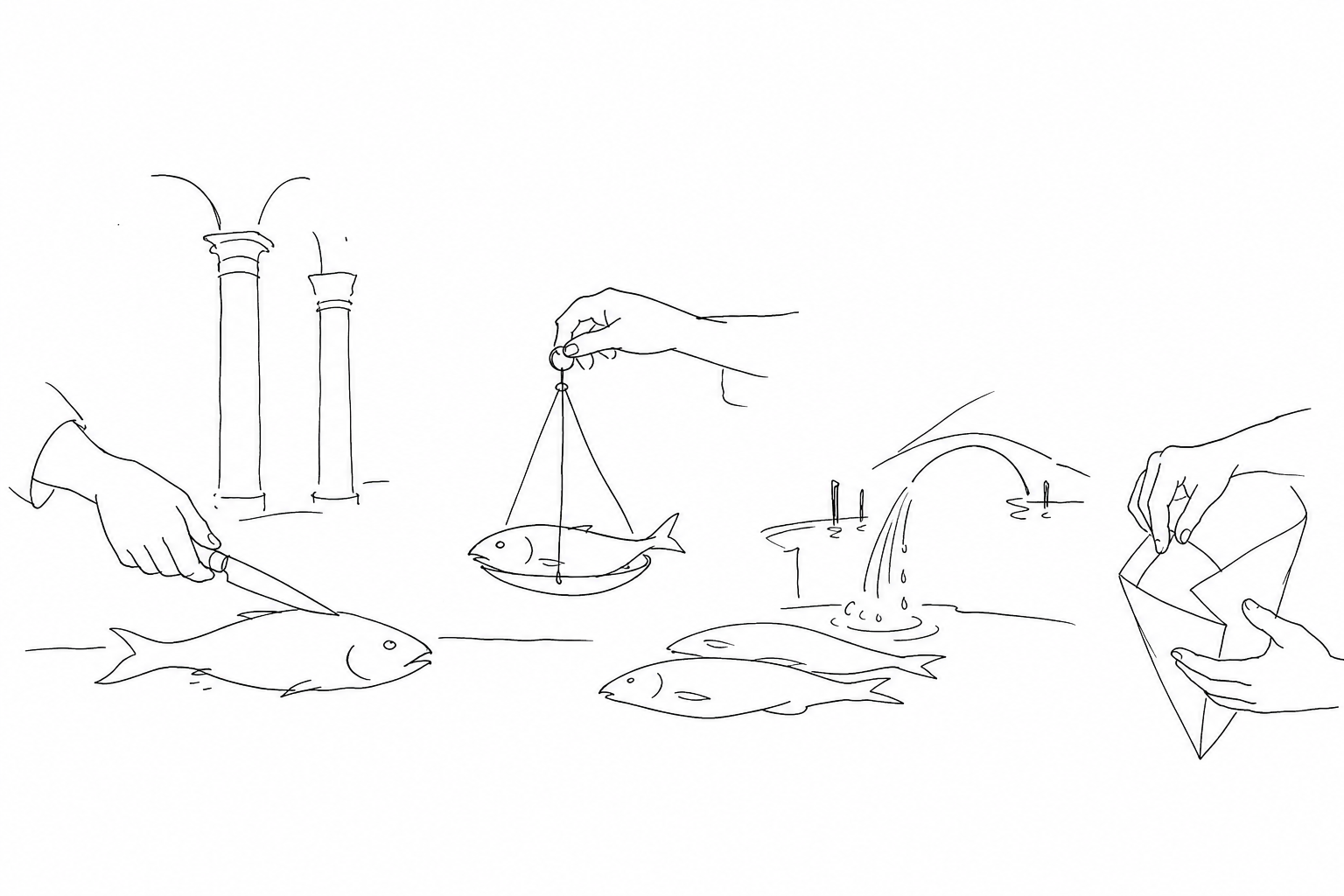
Columns, capitals and façade: the market as text
The Pescaria building should be observed before crossing through it. The current loggia, rebuilt at the beginning of the twentieth century to a design by Domenico Rupolo, recovers a Venetian Gothic vocabulary: pointed arches, exposed brick, Istrian stone and a regular arrangement of columns. It is not a picturesque backdrop, but a structure designed for a food market: open to light, ventilated, solid, easy to wash in the lower parts.
The capitals are the point where function becomes narrative. Among leaves, marine animals and fantastic motifs, the decoration recalls what was sold and is still sold in the space below: fish, crustaceans, shells, forms linked to water. It is worth looking at them from bottom to top, because they alternate naturalistic observation and medievalizing taste.
- The columns divide the space into bays and give rhythm to the passage between selling, loading and stopping.
- The façade toward the Grand Canal declares the public role of the place: not a back shop, but visible urban infrastructure.
- The materials bring together hygiene, durability and Venetian memory.
A living place: being inside it with respect
To understand this space, looking at the stone is not enough: you need to observe the work without getting in its way. The best time should not be taken for granted, because rhythms and access can vary; it is always advisable to check up-to-date information before the visit.
Once inside, staying at the edges of the passageways helps to grasp the scene: crates coming in and out, ice being distributed, knives cleaned, brief calls between vendors and regular customers. The labels are a concrete key: they may indicate commercial name, provenance and production method, distinguishing wild-caught and farmed. They are administrative details, but they also tell of the distance between lagoon, Adriatic and broader supply chains.
Respect comes through simple gestures: do not touch the fish, do not occupy the aisles to take photographs, ask before portraying people. Looking at the hands of the vendors, rather than seeking the picturesque image, restores the current meaning of the place: not a museum, but a work space still readable.
Entering the Rialto Fish Market attentively changes the way of moving through Venice: you are not just looking for a photograph, but learning to recognize a rhythm, a vocabulary, a form of coexistence. The stalls tell of the sea and the lagoon, the architecture preserves the memory of the market, the daily gestures confirm its vitality. Stopping, observing without getting in the way, buying if it makes sense and respecting those who work are simple ways to be inside this place without consuming it as a scene.
Related Posts
Rialto at dawn: the fish market before the photographs arrive
Rialto at dawn told through work: stalls, crates, voices, lagoon and respect before the tourist gaze.Ruga Rialto: a street of shops for understanding Venetian commerce before global storefronts
A reading of Ruga Rialto as a living trace of Venetian commerce: shops, place names, markets and urban rhythm before global chains.
Riva degli Schiavoni: reading the ancient port behind the most photographed promenade
An urban reading of the Riva degli Schiavoni: landings, palaces, mercantile memory and a slow gaze between San Marco and Castello.Questions Answered
What role did Rialto play in Venice’s economy?
It was the main economic hub concentrating goods and trade controls.How are the fish stalls organized at the market?
By species, cuts, and ice arrangement reflecting provenance and freshness.What is the architectural style and purpose of the market building?
A Venetian Gothic loggia designed for light, ventilation, and hygiene.How should visitors behave when inside the Rialto Fish Market?
With respect: no touching fish, avoiding aisles, and asking to take photos.
Keep reading Rialto
Want to see how the market, churches, shops and palaces tell the story of the same commercial heart?
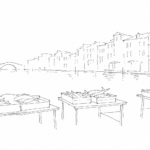 Rialto at dawn: the fish market before the photographs arriveRialto at dawn told through work: stalls, crates, voices, lagoon and respect before the tourist gaze.
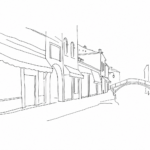 Ruga Rialto: a street of shops for understanding Venetian commerce before global storefrontsA reading of Ruga Rialto as a living trace of Venetian commerce: shops, place names, markets and urban rhythm before global chains.
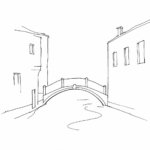 Ponte delle Tette: trade, control and nightlife in the Venice of the SerenissimaHistory and urban reading of the Ponte delle Tette, among the Carampane, regulated prostitution, trade and Venetian nightlife.
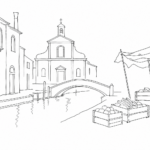 San Cassiano: Tintoretto, market and silence a few minutes from the chaos of RialtoA short route between Rialto and San Cassiano: market, quiet calli, church and canvases by Tintoretto.