
Behind the apparently natural movement of a gondola there is a little-visible and decisive trade: that of the remèr. It is he who gives shape to oars and forcole, custom-made tools capable of transforming the rower’s strength into balance, direction, silence. In a city where water is a road, this craftsmanship tells of an ancient relationship between body, wood and lagoon, far from the decorative image to which Venice is often reduced.
Who the remèr is and why the gondola depends on him
The remèr is the Venetian craftsman who builds and finishes two decisive elements of rowing: the oar and the forcola. Without him, the gondola would remain an elegant but incomplete boat, because its movement is born from the precise encounter between the wood of the oar, the carved support of the forcola and the gesture of the gondolier.
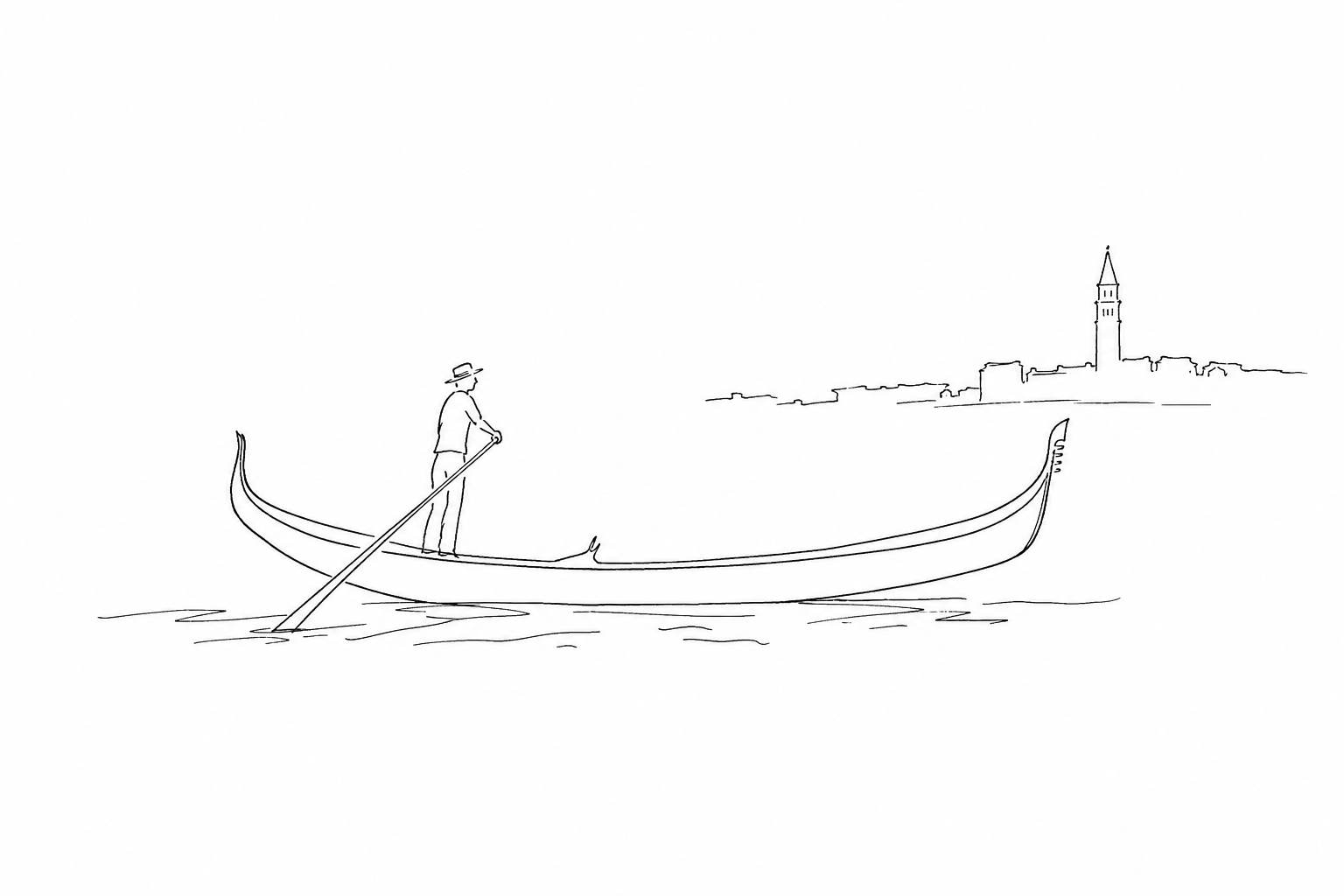
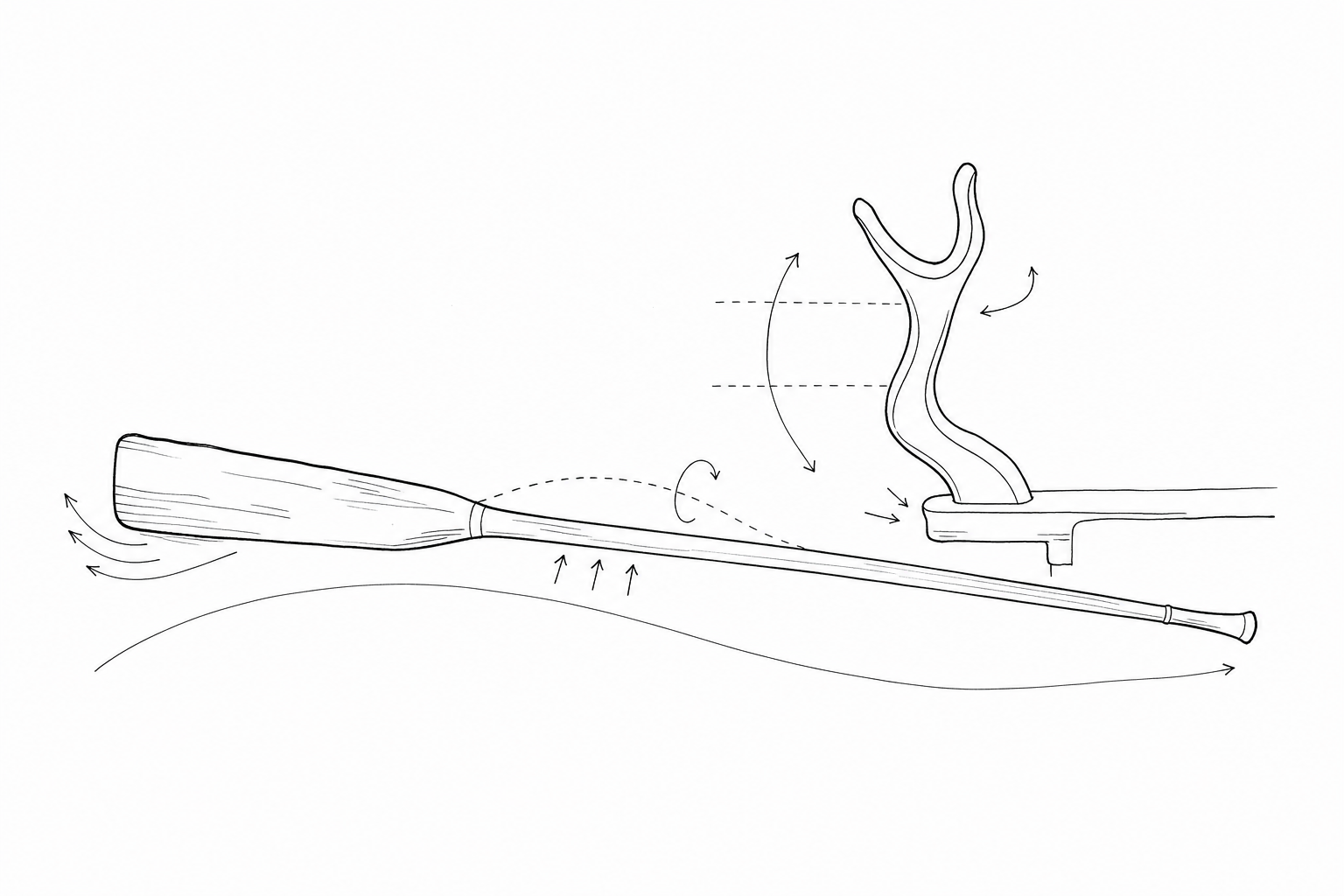
The Venetian gondola is steered standing up, with a single oar, according to a technique made possible by the asymmetrical shape of the hull and the particular architecture of the forcola. The latter is not a simple rowlock: it is a shaped piece with different support points, which allows manoeuvres, braking, forward movement and turns in narrow canals. The long, balanced oar must respond to the hand without vibrating or forcing.
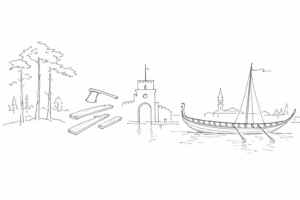
The work of the remèr is therefore technical and custom-made. It takes into account the height of the rower, the type of boat, the intended use and the sensitivity required by Venetian-style rowing. It is a trade in which functionality, experience and beauty are not separated.
The forcola: a technical object, not only a beautiful one
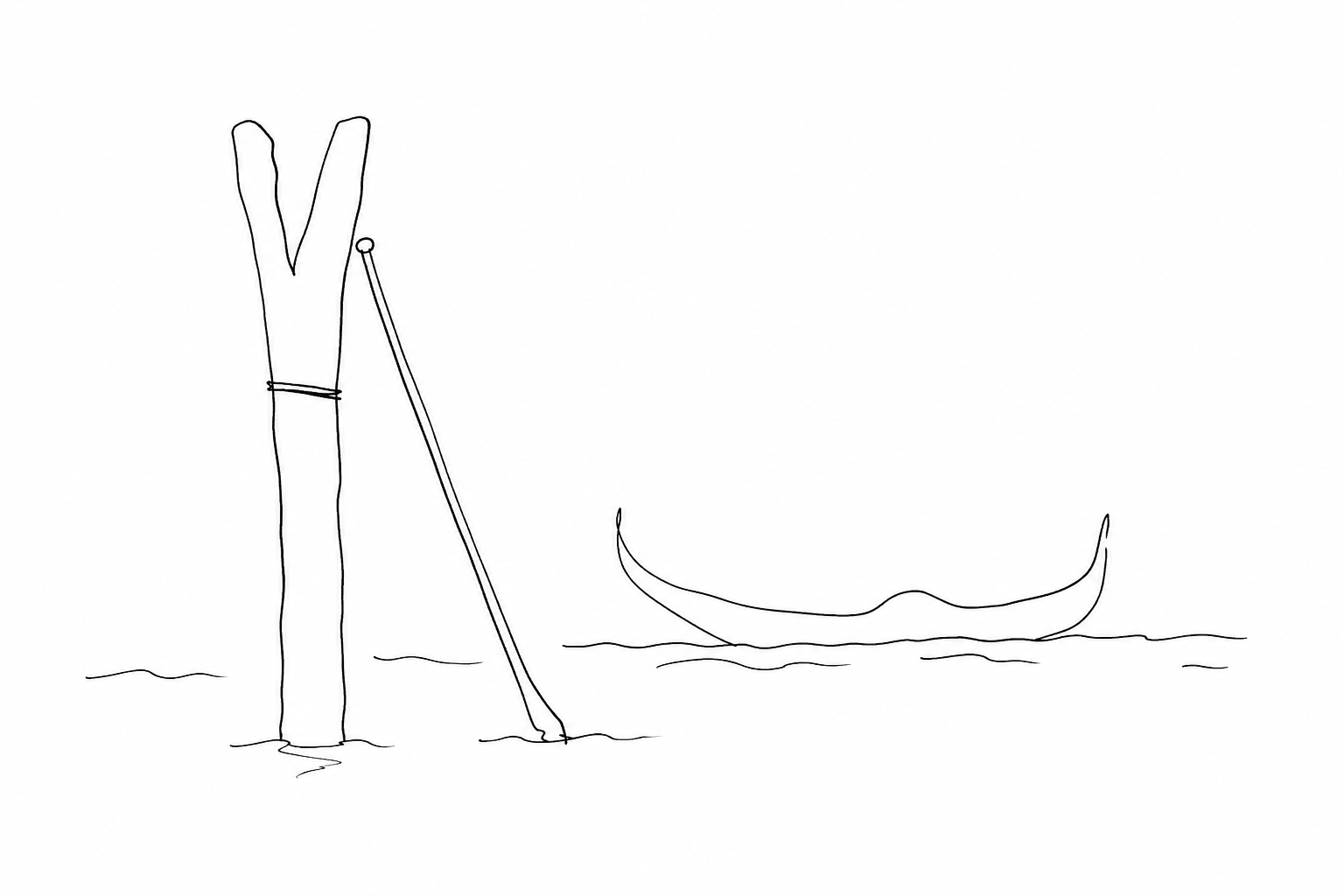
A forcola is not a shaped ornament, but a precision device. At the stern of a gondola it replaces the traditional rowlock: the oar is not locked by a pin, it rests and slides on different surfaces, each designed for a manoeuvre.
The grooves, teeth and curves allow the rower to change the leverage point without interrupting the gesture: pushing forward, braking, correcting the course, approaching a bank, moving backwards in tight spaces. The asymmetrical shape also helps compensate for the fact that one rows on only one side, transforming small movements of the wrist and hand into precise control of the vessel.
For this reason the remèr works on wood as if on a map of forces. The grain must resist twisting and impacts; the edges must be softened where the oar rubs; the heights change according to boat, build and rowing style. Beauty is born from this practical intelligence: every visible curve corresponds to a necessity, not to a decorative whim.
Woods, gestures and workshop: how a Venetian oar is born
Before it touches the water, a Venetian oar has already been “measured” several times: in the wood, in the weight and in the body of the person who will use it. In the workshop, one starts from seasoned boards, chosen for straight grain, elasticity and absence of critical knots. Beech is among the most suitable woods for the shaft, because it combines strength and relative lightness; for the forcola, more compact woods often come into play, capable of withstanding friction and twisting.
The work does not proceed by industrial moulds. Saw, plane, rasps and sandpaper are used to remove material little by little, checking balance and thickness with an expert hand. The blade must push well, but also come out of the water naturally; the shaft must be rounded so that it rotates in the palm without tiring it.
- Choice of timber: continuous grain and correct seasoning.
- Roughing out: the shape emerges by subtraction.
- Balancing: weight and length interact with boat and rower.
- Finishing: smooth, protected surfaces, never unnecessarily heavy.
Here manual knowledge lies in the millimetres: a small excess changes the gesture, rhythm and response on the water.
Where to read the craft while walking in Venice
This craftsmanship can also be understood from the bank, observing how the boats work in the canals. In Venice, Venetian-style rowing leaves visible clues: the rower stands, looks ahead, pushes with a long tool and rests it on a shaped forcola, different from a common rowlock.
- Dorsoduro and San Trovaso: between the squero, narrow canals and pedestrian passages, one notices the relationship between hull, arm and support point.
- Grand Canal: from the bridges one can clearly see the asymmetry of the gesture, with the oar correcting course and forward movement.
- Bacino Orseolo and service areas: when the boats are moored, the forcola appears as a small functional sculpture, full of recesses and inclined planes.
If you come across a workshop, it is best to look first at the details on display: grain, polishing, curves. For internal visits or demonstrations, it is prudent always to check the updated arrangements.
Observing the work of the remèr means reading Venice from a concrete point of view: not only palaces, calli and views, but objects born to function every day. The forcola and the oar preserve gestures, measurements, adaptations and knowledge handed down in the workshop. Looking for them during a walk helps to understand the city better: its water rhythm, its artisan precision, the discreet beauty of necessary things.
Related Posts
How a gondola is made: ferro, asymmetry and details that are not decoration
Bow ferro, hull asymmetry, forcola and finishes: the gondola read as a precise machine, not as Venetian ornament.The marangoni of the Arsenal: the wood artisans who built the strength of the Serenissima
History of the marangoni of the Arsenal, ship carpenters who transformed wood into galleys, hulls and Venetian maritime power.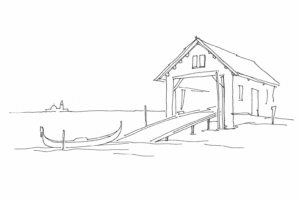
The squero of San Trovaso: the gondola boatyard that seems to come from Cadore
History, form and function of the squero of San Trovaso, the Dorsoduro boatyard with an Alpine-house façade.Questions Answered
Who is the remèr and what is his role?
He is the craftsman responsible for building the oars and forcole essential to gondola movement.What makes the forcola different from a traditional rowlock?
It is a shaped, multi-support piece enabling diverse rowing maneuvers instead of locking the oar.How are the oars and forcole crafted?
They are handmade from carefully selected woods, shaped and balanced to fit the rower and boat.Where can one observe the remèr’s craftsmanship in Venice?
By watching gondolas in action and visiting workshops in areas like Dorsoduro and San Trovaso.
Follow the craft of navigation
Want to move from the shape of boats to the hands and tools that make them possible?
 How a gondola is made: ferro, asymmetry and details that are not decorationBow ferro, hull asymmetry, forcola and finishes: the gondola read as a precise machine, not as Venetian ornament.
 The squero of San Trovaso: the gondola boatyard that seems to come from CadoreHistory, form and function of the squero of San Trovaso, the Dorsoduro boatyard with an Alpine-house façade.
 Traghetto da parada: crossing the Grand Canal like Venetians doWhat the traghetto da parada is, how to use it, and why it tells of the everyday relationship between Venice, water, and...
 The mascareta: small, agile and Venetian, long before the regatta photosHistory and use of the mascareta, a light boat created for rii, canals and the lagoon.