
Rialto at dawn is not yet an image to take away, but a place at work. Before the slow footsteps of visitors arrive and lenses are aimed at the stalls, the fish market measures time with crates, ice, low voices, deliveries. It is in these hours that the market best shows its ancient function: not a picturesque backdrop, but a commercial, urban and everyday hub, linked to the lagoon and to the history of Venice.
First light on Rialto
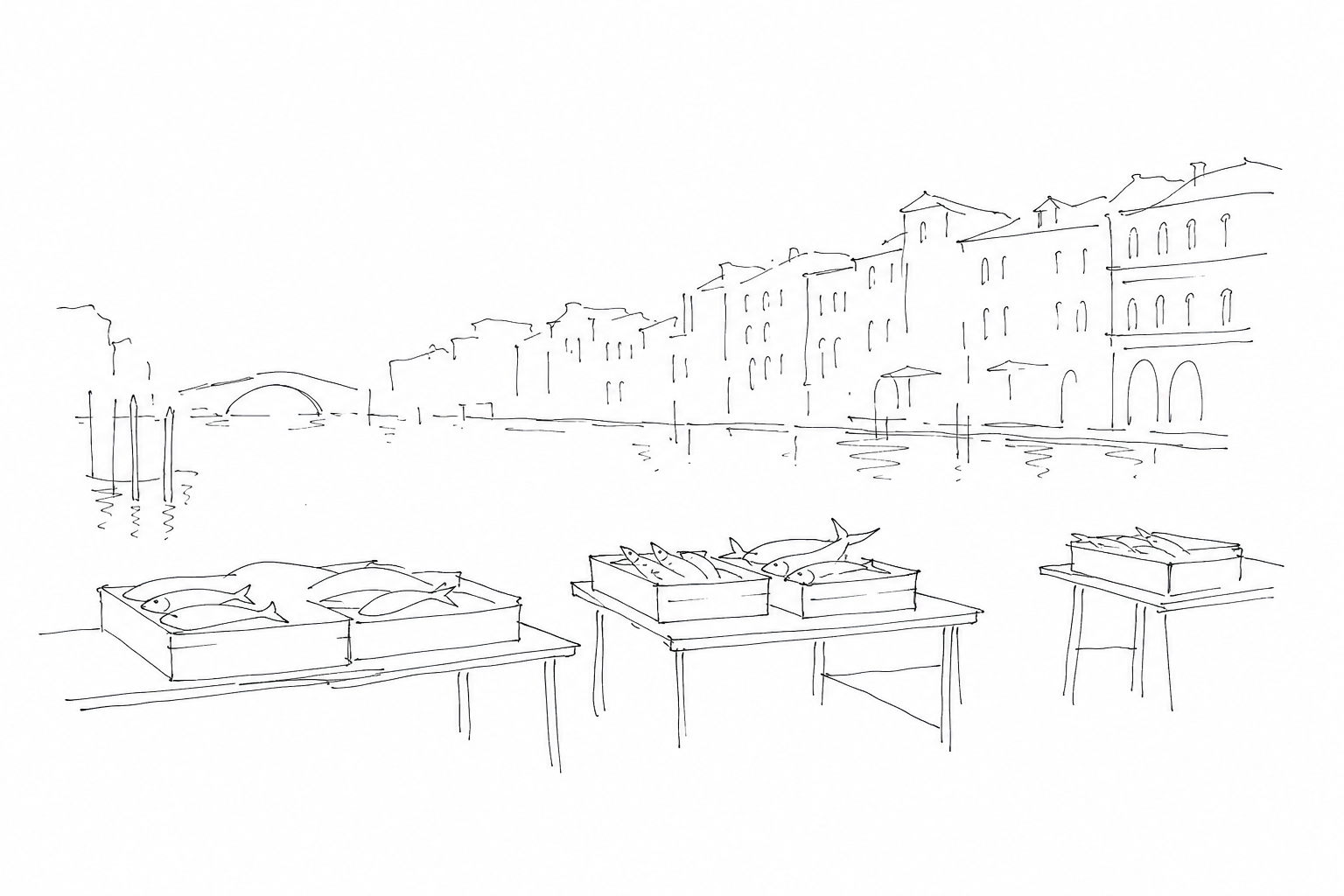
At dawn Rialto is not yet the postcard of the crowded bridge: it is a place preparing itself. Before the photographs, the quick footsteps of the vendors arrive, the noise of the crates, the briny smell rising from the shore and mixing with the damp stone of the loggias. The Pescaria, set against the Grand Canal and close to Sansovino’s Fabbriche Nuove, shows its function before its image: stalls, scales, running water, hands arranging the catch.
Here the market is not a picturesque backdrop, but an ancient urban machine. Rialto was for centuries the commercial heart of Venice, and the sale of fish remained tied to rules, measures and customs designed to protect both buyers and the lagoon. The columns and neo-Gothic arches of the twentieth-century fish market frame an everyday gesture much older than the building: recognizing a sole, assessing a cuttlefish, distinguishing what comes from the nearby Adriatic.
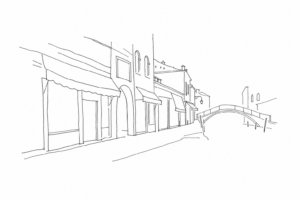
In this first light, the market speaks in a low voice: not yet spectacle, but work.
The fish market as a workplace
At the Pescaria of Rialto, dawn has a practical vocabulary: waxed aprons, wet boots, hands lifting crates, blades rinsed in haste, crushed ice sliding over the stone stalls. The Logge della Pescheria, rebuilt in neo-Gothic forms at the beginning of the twentieth century, are not simply a picturesque backdrop: they protect a trade made of weight, briny smell and constant attention.
The fish is arranged to be read, not merely looked at. The gills tell of freshness, the eye must remain alive, the skin of the cuttlefish changes tone under the light, while sole, schie, moleche when in season, sea bass and mullet occupy different spaces on the stall. Those who buy observe in silence, ask brief questions, recognize expert hands more than signs.
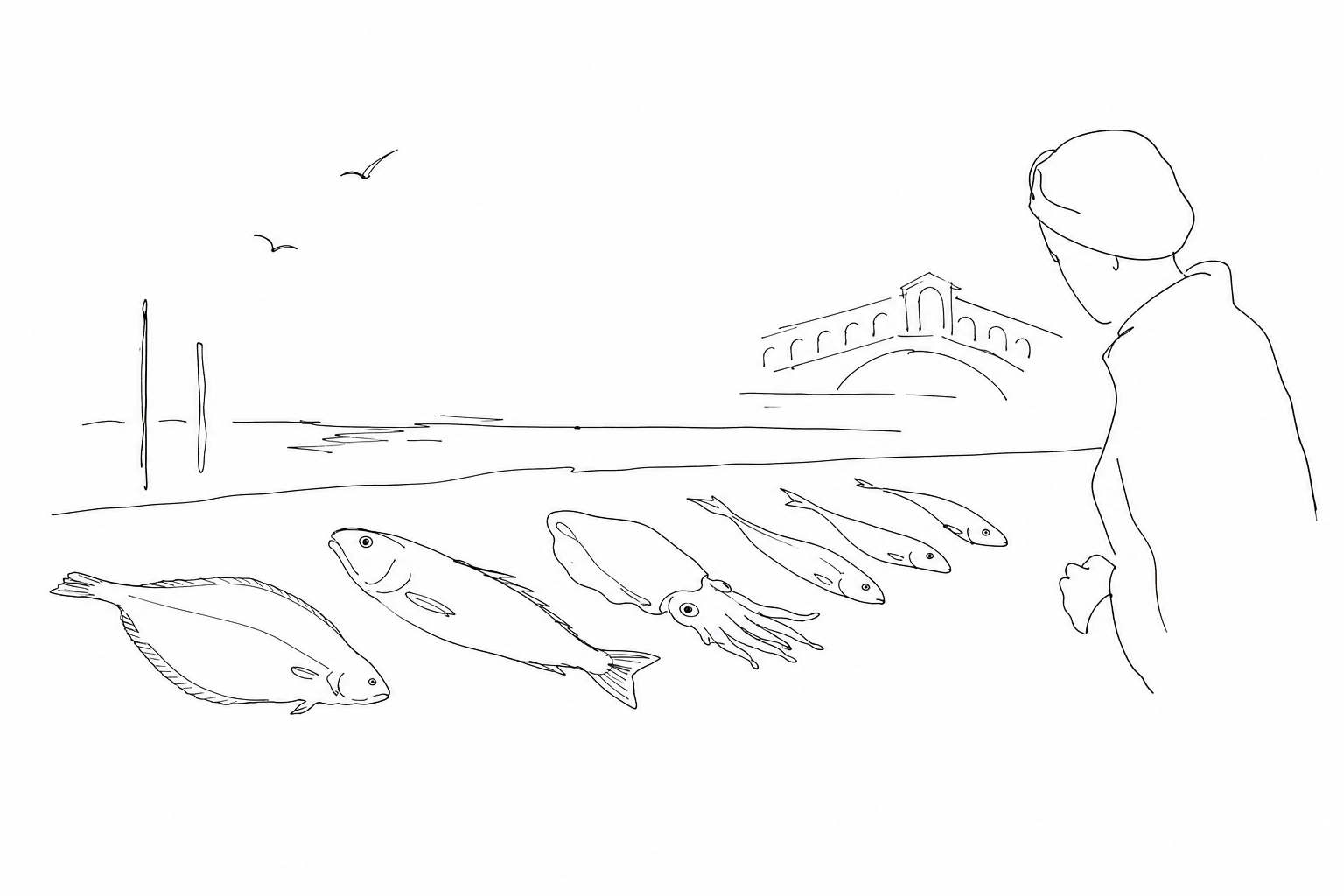
This work also has a civic memory. At Rialto a historic slab records the minimum sizes of fish, a sign of a Venice that regulated trade and the lagoon together. Looking at it after seeing the vendors at work changes the market: not a scene to photograph, but a system of rules, knowledge and everyday gestures.
Architecture and commercial memory
At dawn, in Rialto, architecture explains why this stretch of the Grand Canal is not a picturesque backdrop, but the point where Venice concentrated traffic, controls and money. The bridge connects the banks of commerce; around it, calli with precise names — Ruga degli Oresi, Erbaria, Naranzeria — preserve the map of goods: gold, vegetables, citrus fruits, spices, fish. Here the city built offices, benches, warehouses and places of negotiation so that boats could arrive directly from the water and depart again toward sestieri, islands and the mainland.
The Fabbriche Vecchie and Nuove, born after the fires and reconstructions of the sixteenth century, fix in stone an idea of order: porticoes to shelter activities, serial windows, spaces that could be monitored. The twentieth-century Pescaria, with neo-Gothic forms and capitals carved with marine creatures, added an “ancient” language to a still everyday function. When the crates are lined up, those details are not decoration: they recall a city that measured, taxed, separated, guaranteed. That is why dawn here has a commercial memory: each stall occupies a place designed to circulate goods and trust.
Watching without disturbing
To understand Rialto at dawn, one must behave like a guest in an operational place. The crates arrive, the knives work, the carts pass through the narrow spaces: the best point is not always the closest one, but the one that leaves the crossings between stalls, columns and landing places free.
- Stay at the edges: avoid stopping in front of the scales, crates or passages used by the vendors.
- Ask for portraits: a person cutting, weighing or negotiating is not an extra; a nod is enough to understand whether the photograph is welcome.
- No hands on the goods: even a curious gesture can interfere with hygiene, order and negotiation.
- Low volume: the voices, calls and noises of the loads are part of the reading of the place.
If you arrive to observe the fish before it becomes a tourist image, it is best to move slowly and always check the updated access conditions for the area.
Looking at Rialto before the photographs means accepting a different rhythm: staying at the edges, reading the gestures, recognizing the architecture as part of a use that is still alive. The fish market tells of Venice without the need for effects: in the capitals, in the names of the fish, in the hands of those who prepare the stalls, in the light that enters between the arches. Arriving there early is not only useful for avoiding the crowd, but for better understanding what remains of a market when it is still, first and foremost, a market.
Related Posts
The Rialto Fish Market: how to read stalls, columns and details of a market still alive
A short guide to observing the Rialto Fish Market: stalls, architecture, marine signs and the daily rhythm of the market.Ruga Rialto: a street of shops for understanding Venetian commerce before global storefronts
A reading of Ruga Rialto as a living trace of Venetian commerce: shops, place names, markets and urban rhythm before global chains.
Riva degli Schiavoni: reading the ancient port behind the most photographed promenade
An urban reading of the Riva degli Schiavoni: landings, palaces, mercantile memory and a slow gaze between San Marco and Castello.Questions Answered
What makes the Rialto fish market more than just a tourist backdrop?
It is an ancient commercial hub with active trade practices.How do vendors assess fish freshness at the market?
By observing gills, eyes, skin tone, and other sensory signs.What role does architecture play in the Rialto market?
It reflects the order, regulation, and history of Venetian trade.How should visitors behave when observing the market at dawn?
Stay at edges, avoid disturbing goods or vendor workflows.
Inside mercantile Venice
Would you like to connect Rialto’s details with the economic and social stories born around the market?
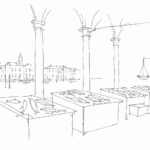 The Rialto Fish Market: how to read stalls, columns and details of a market still aliveA short guide to observing the Rialto Fish Market: stalls, architecture, marine signs and the daily rhythm of the market.
 Ruga Rialto: a street of shops for understanding Venetian commerce before global storefrontsA reading of Ruga Rialto as a living trace of Venetian commerce: shops, place names, markets and urban rhythm before global chains.
 San Cassiano: Tintoretto, market and silence a few minutes from the chaos of RialtoA short route between Rialto and San Cassiano: market, quiet calli, church and canvases by Tintoretto.
 Ponte delle Tette: trade, control and nightlife in the Venice of the SerenissimaHistory and urban reading of the Ponte delle Tette, among the Carampane, regulated prostitution, trade and Venetian nightlife.