
Mazzorbo is the island that is often crossed almost without noticing it, arriving from Burano along the wooden footbridge. Yet it is precisely this closeness that reveals its character: a few steps are enough to move from the dense colors of the Burano houses to a more open landscape, made of vegetable gardens, low banks, silences and ancient traces. Its walled vineyard, linked to the Venetian Dorona, tells of an agricultural and productive lagoon, not only a scenic one. Visiting Mazzorbo means reading a precious edge: a place close to the flow, but capable of remaining outside it.
Mazzorbo next to Burano: a change of pace
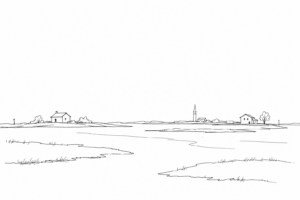
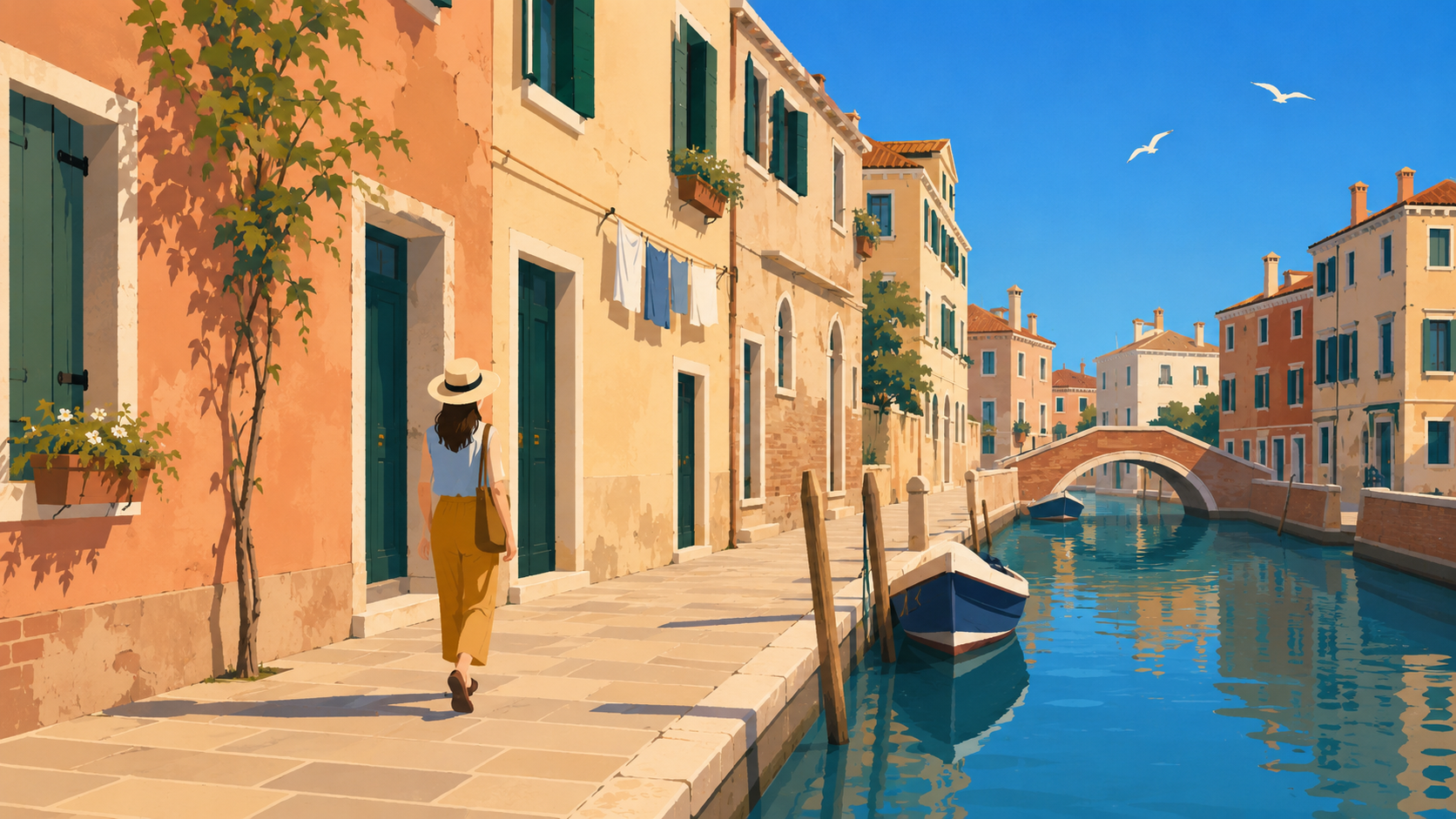
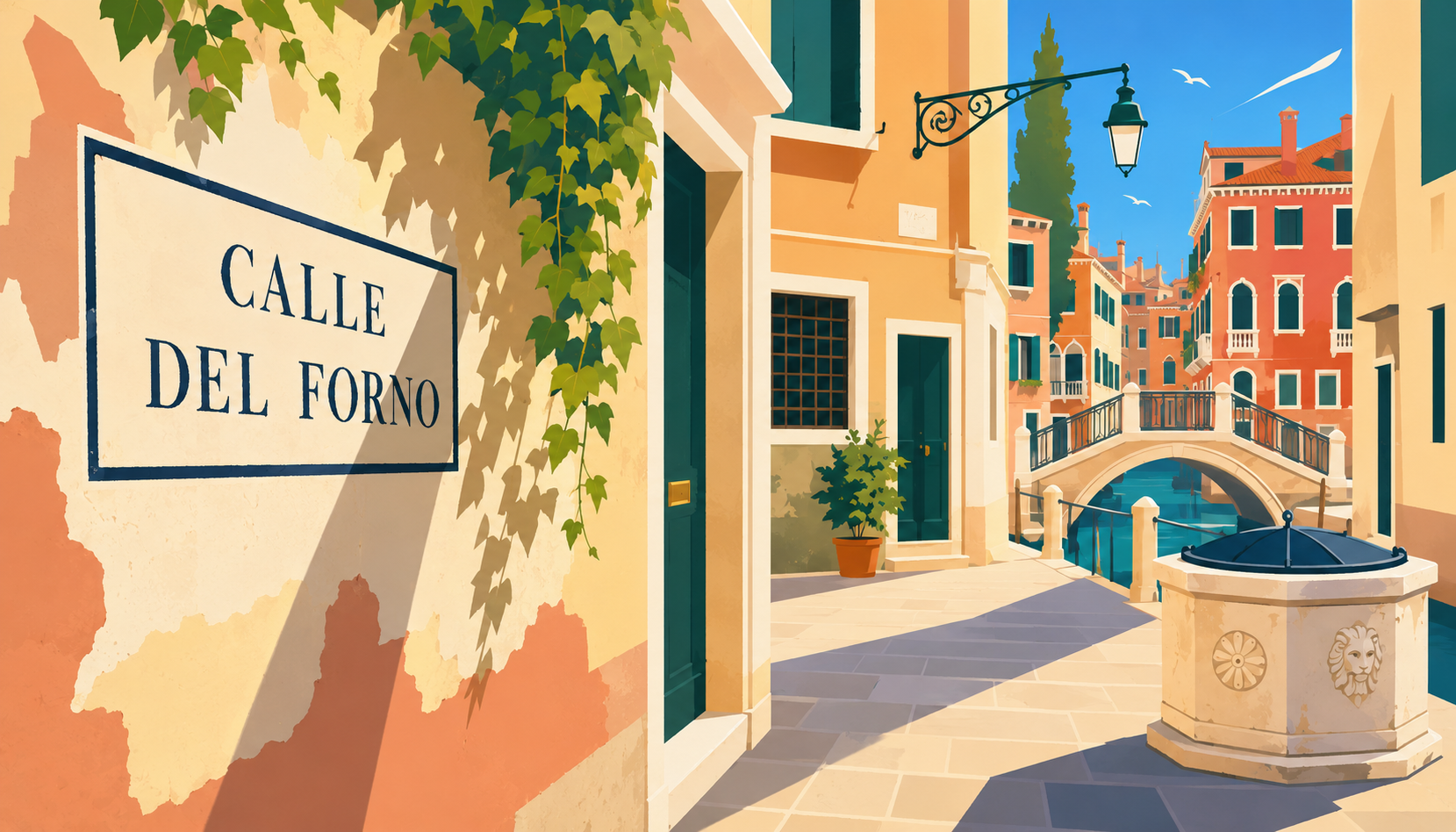
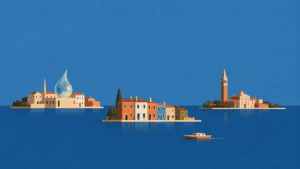
Mazzorbo is reached from Burano almost without noticing it: just cross the wooden bridge that joins the two islands and the landscape immediately changes tone. The colorful houses, dense calli and photographed liveliness of Burano give way to vegetable gardens, low banks, rows of vines and broader silences. It is a minimal distance, but the impression is that of entering a rural edge of the lagoon, where the water is not a scenic backdrop, but an everyday boundary.
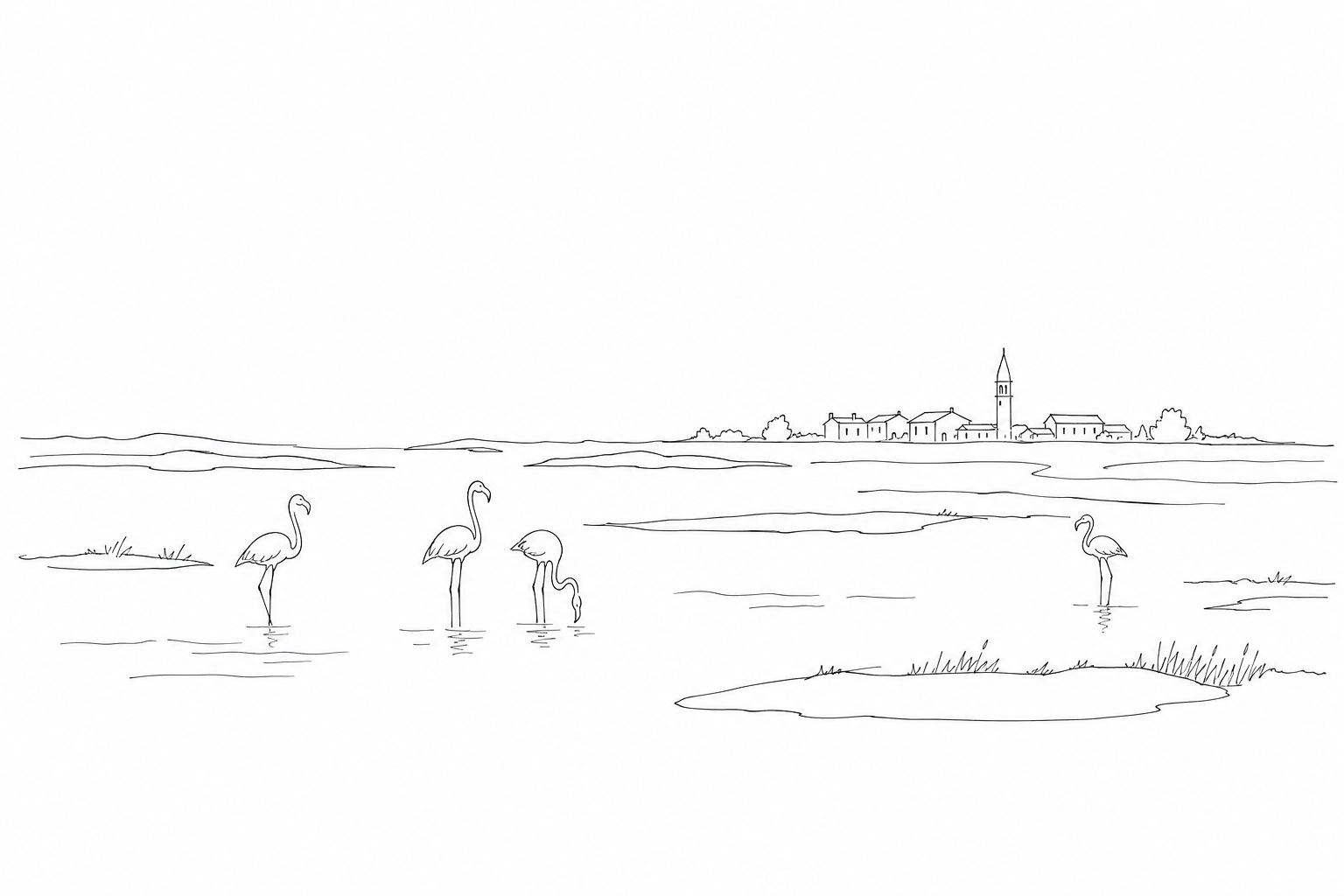
This quiet is not emptiness: it tells a different story. Mazzorbo was inhabited from the Early Middle Ages and belonged to the system of the northern lagoon islands, linked to Torcello, Ammiana and Costanziaco. Today its character can be read above all in the walled vineyard, in the green spaces and in the isolated presence of the church of Santa Caterina, a memory of a fabric that was once denser. Next to Burano, Mazzorbo does not compete: it slows down, opens perspective and gives depth back to the lagoon landscape.
The walled vineyard: Dorona and lagoon agricultural memory
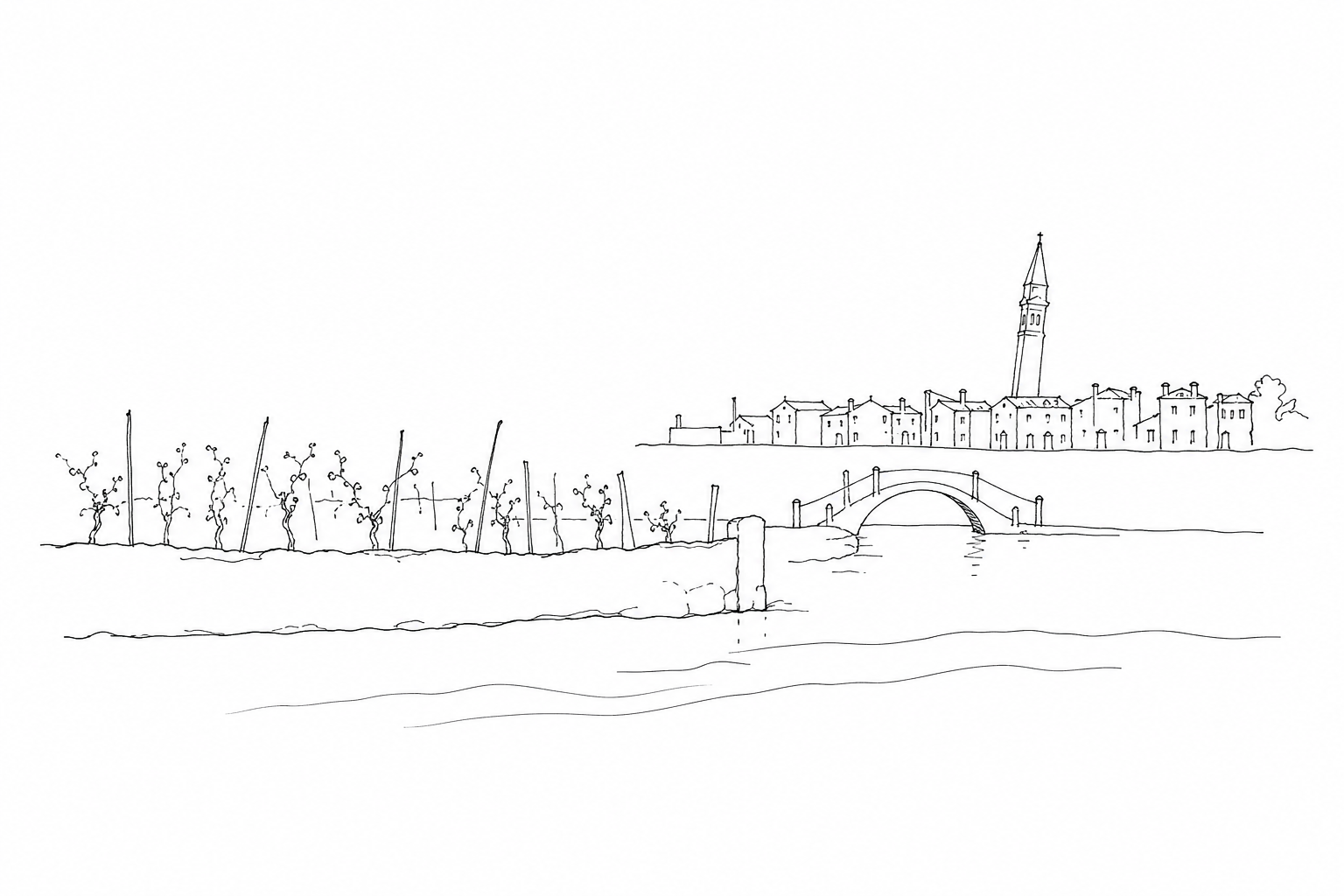
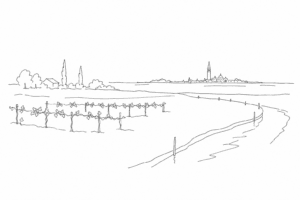
The most unexpected sign of Mazzorbo is a vineyard enclosed by ancient walls, almost a brolo suspended between brackish water and vegetable gardens. It is not only a picturesque element: it tells a concrete part of lagoon history, when many minor islands were not marginal settings, but productive places, cultivated with orchards, vineyards, cabbages, artichokes and small plots protected from the wind.
The symbolic variety is Dorona, a white grape linked to Venetian tradition and adapted to difficult conditions: soils influenced by salinity, constant humidity, slight temperature variations, the need to defend the roots from high water. The presence of the wall is therefore not only architectural. It serves to create shelter, to mark a boundary and to preserve an agricultural memory that elsewhere has been erased by abandonment or urban transformation.
Seen from the outside, the walled vineyard helps to read the island in a different way: not as a simple passage next to Burano, but as a fragment of Venetian countryside. Here the lagoon does not appear only as a waterway or panorama; it becomes worked soil, seasonal patience, an ancient relationship between community and environment. For any visits or internal access, it is always advisable to check updated information through the official channels.
Santa Caterina and the traces of ancient Mazzorbo
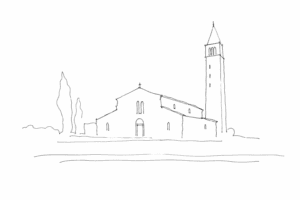
To understand the quiet side of the island, you need to reach the church of Santa Caterina, a small but decisive presence. It is what remains visible of a period when this lagoon strip was much more populated, structured into districts, vegetable gardens, religious foundations and small landing places. In the Middle Ages the area was not a simple edge of Burano: it had its own civic and devotional life, later thinned by abandonments, suppressions and transformations of the landscape.
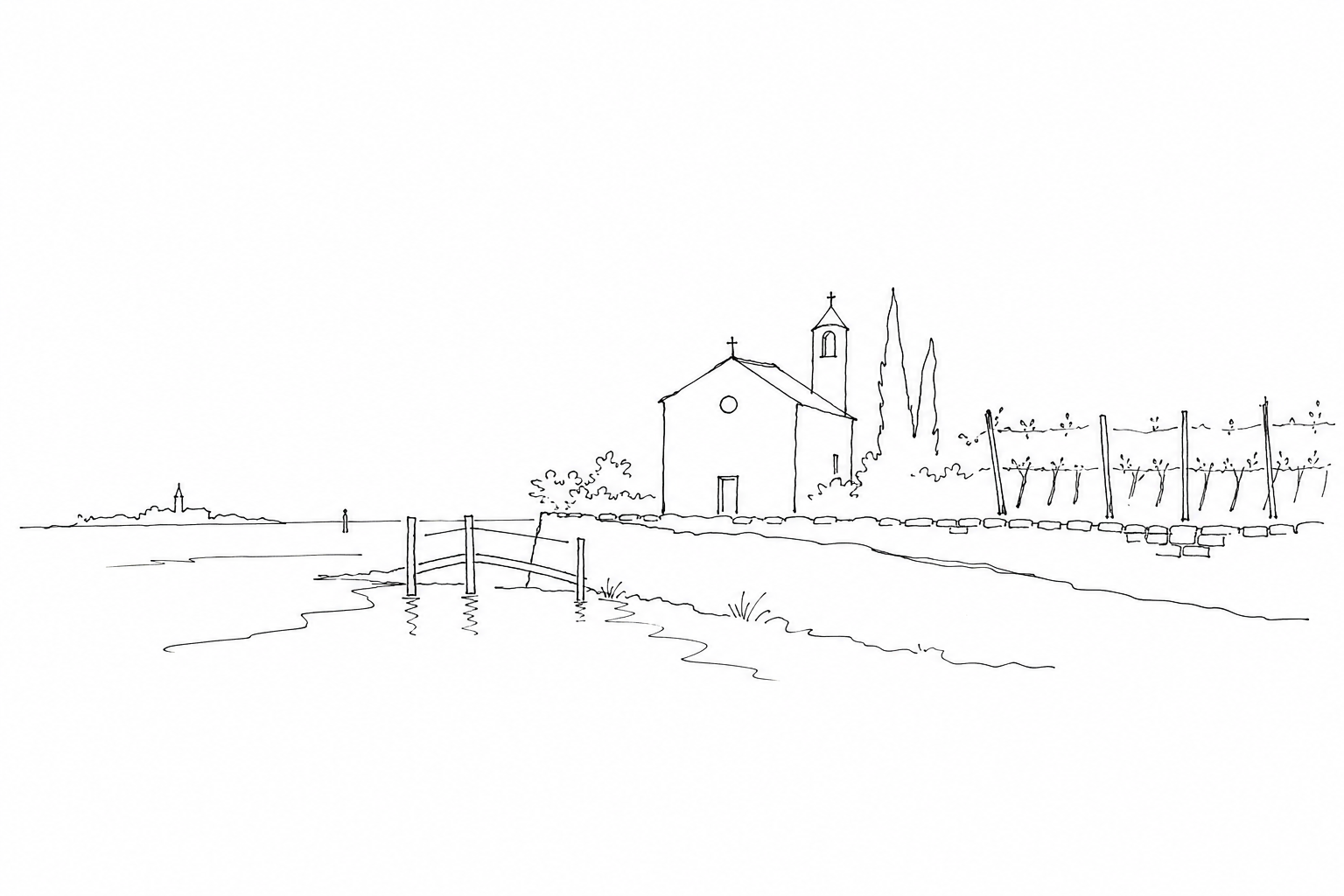
The church, linked to an ancient monastic complex, preserves a secluded character: sober masonry, essential proportions, the atmosphere of a secluded rather than monumental place. One of the best-known elements is the fourteenth-century bell, dated 1318, often remembered among the oldest in the Venetian lagoon.
Santa Caterina helps to read what is no longer there: disappeared buildings, reduced communities, changed water routes. Together with the vegetable gardens and the walled vineyard, it makes perceptible a fragile continuity between agriculture, prayer and lagoon dwelling.
How to include it in a visit to Burano
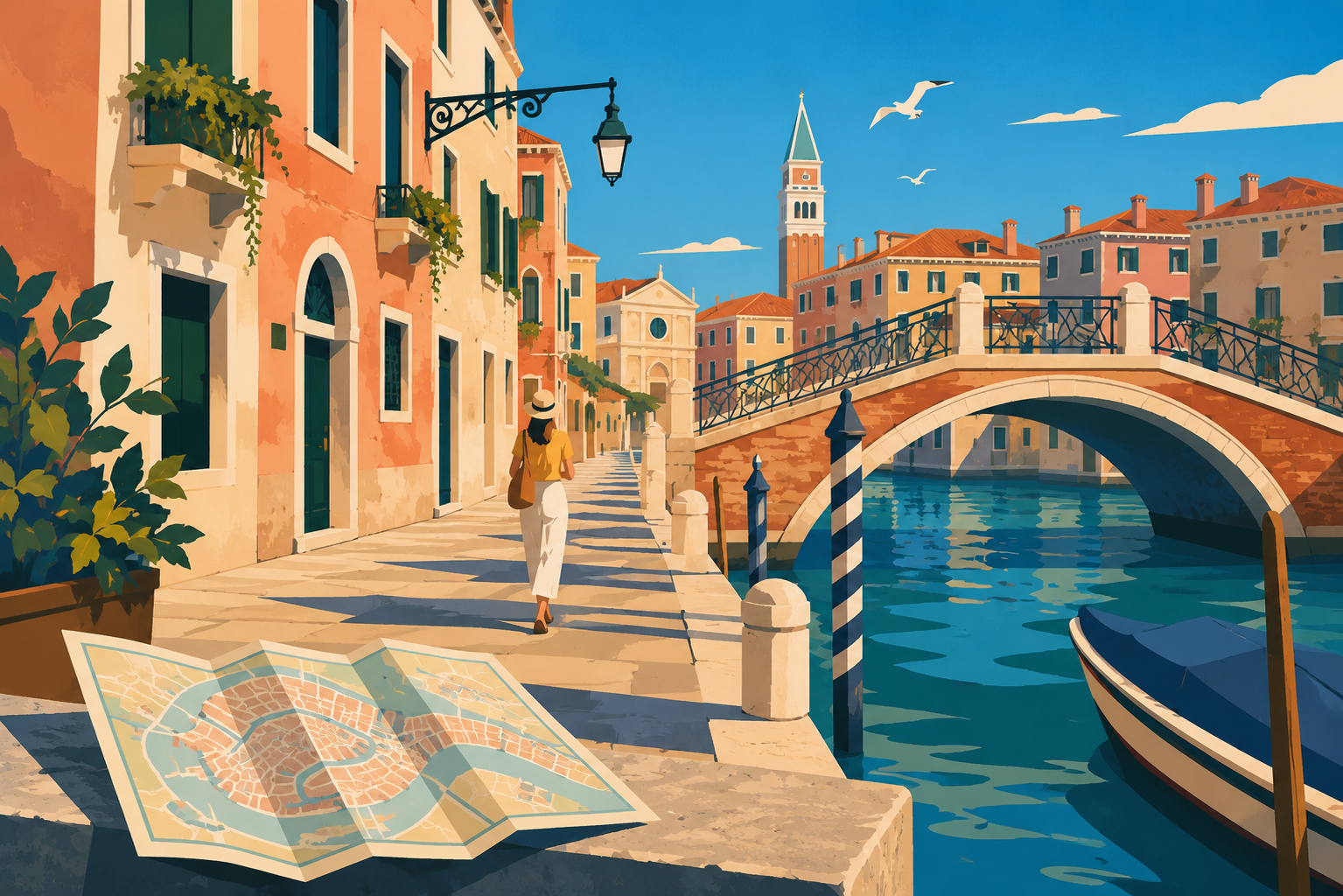
The simplest way is to treat Mazzorbo not as a detour, but as a considered pause: after the most photographed calli of Burano, cross the pedestrian bridge and let the route change pace. In a few minutes the landscape shifts from dense façades and lively canals to vegetable gardens, rows of vines, low houses and open embankments.
For a short visit, head for the vine enclosure and the Santa Caterina area, without turning it into a stop “to tick off”: here what counts are the silence, the distances, the sudden openings onto the water. If you arrive by vaporetto, you can also consider the local stop and then continue on foot toward Burano; however, always check updated lines and timetables.
It is better to avoid forcing access: the church, agricultural spaces and internal paths may have variable rules. Even seen from the outside, the walled vineyard makes clear why this bank completes the reading of the nearby village.
Including Mazzorbo in a visit to Burano does not require a complicated detour, but a different step. The walled vineyard, the church of Santa Caterina and the sparse calli restore the image of an island that preserves fragments of history without turning them into spectacle. It is only apparently a short stop: it helps to better understand the relationship between settlement, water, cultivation and memory in the northern lagoon. Before or after Burano, Mazzorbo offers a quiet and concrete counterpoint, ideal for those seeking a less automatic and more attentive itinerary.