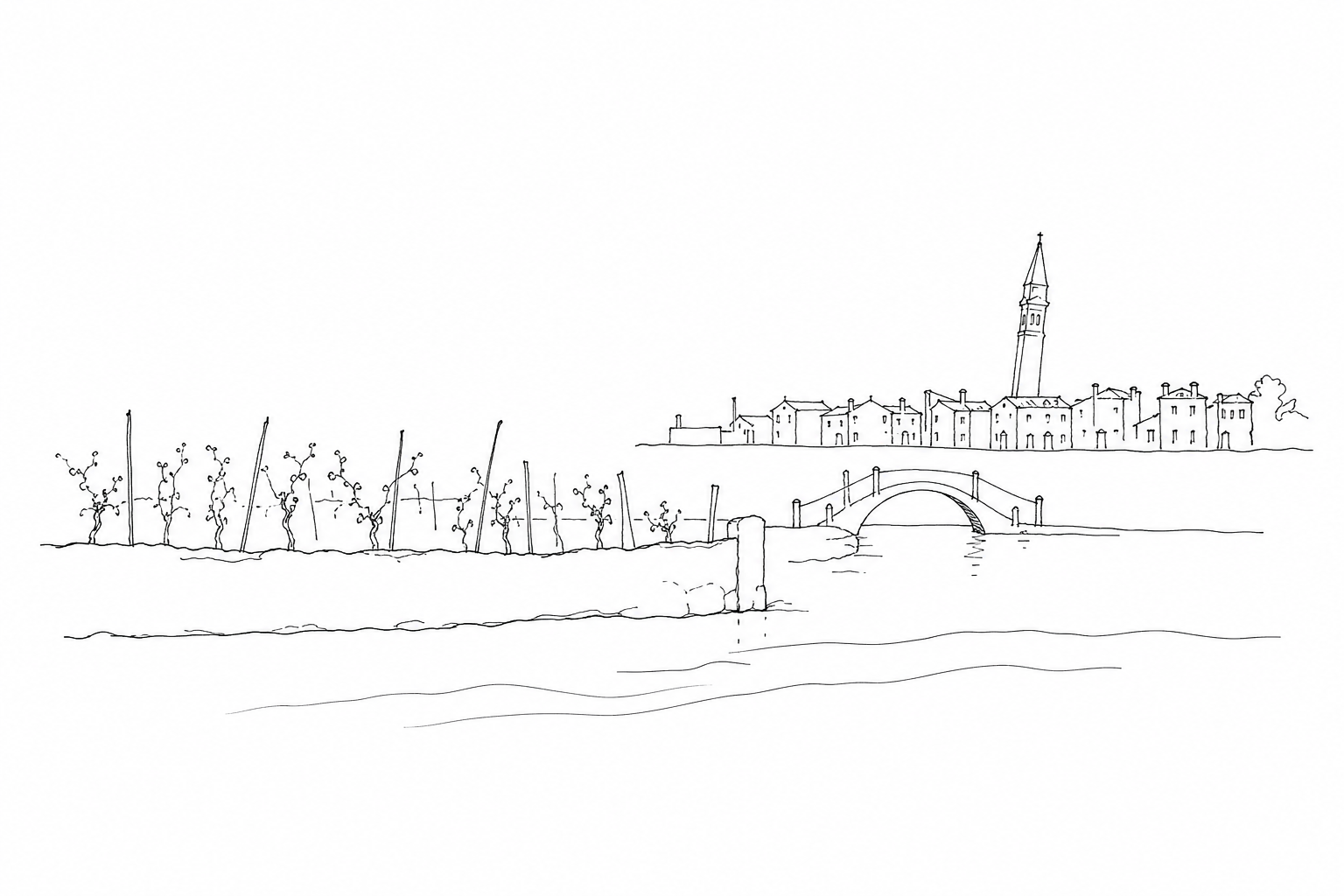
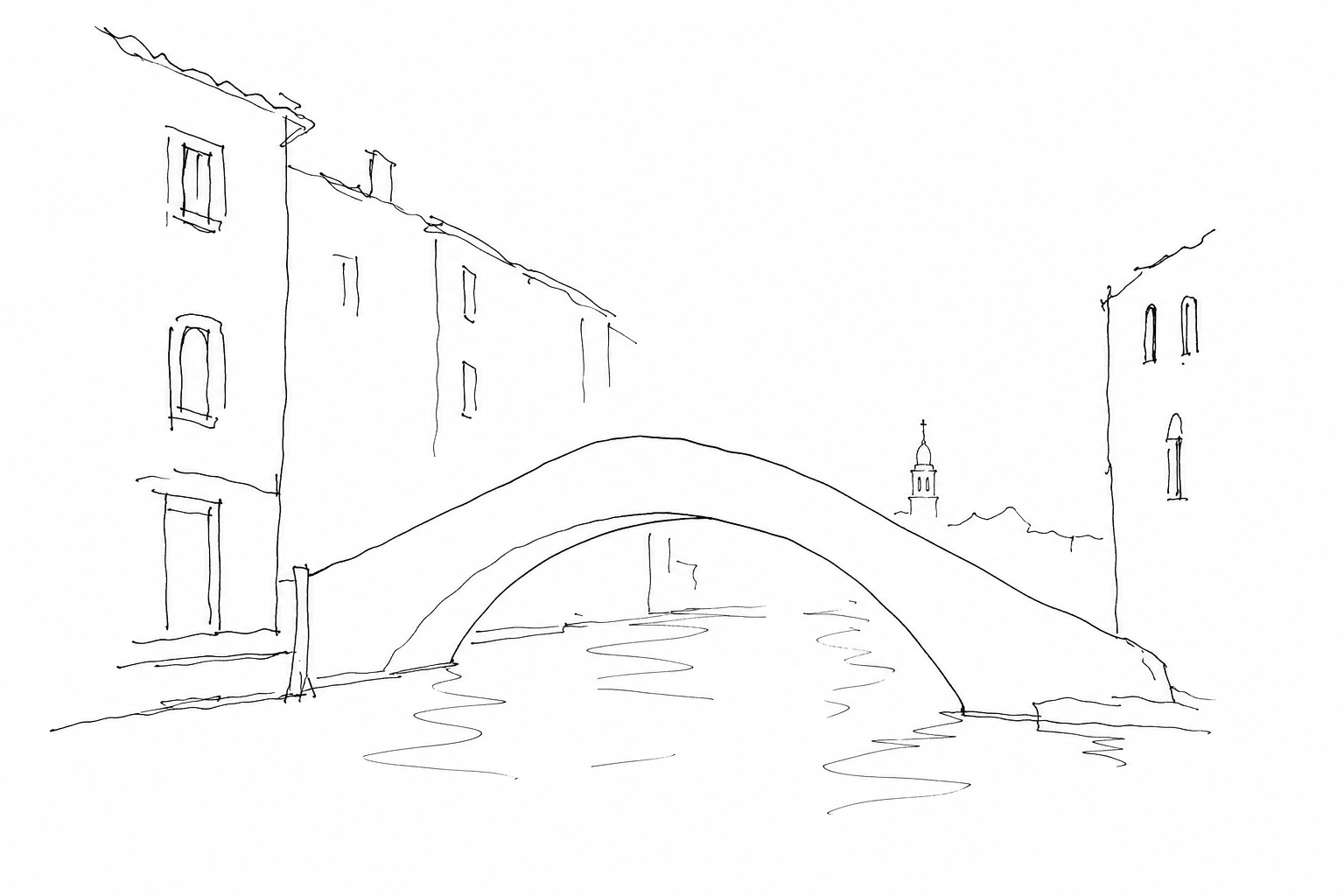

In the sestiere of Cannaregio, far enough from the most predictable flows, Ponte Chiodo preserves a peculiarity that in Venice today seems almost impossible: it has no parapet. It is a small, essential bridge, overlooking a quiet stretch of canal, but it is precisely this bareness that makes it memorable. It is not scenery built to amaze, but an urban trace left on the margins of time, connected to a private house and to an ancient way of crossing the city. Looking at it carefully means reading a fragment of everyday Venice, more discreet and less domesticated.
Where it is and why it is immediately striking
Ponte Chiodo is located in the sestiere of Cannaregio, in a secluded area compared with the most frequented flows, along the Rio di San Felice, near the fondamenta of the same name. It does not announce its presence with monumentality: it appears almost suddenly, low, essential, set among houses, water and Istrian stone like a detail left outside time.
What strikes above all is what is missing: it has no parapets. The steps go up and down without side protection, leaving the edge of the bridge directly exposed to the canal. This form, very rare today, recalls a more ancient aspect of Venice, when many bridges were built this way and urban safety followed criteria different from modern ones.
Its charm arises precisely from its small scale: it is not a scenic bridge, but a concrete fragment of the everyday city. In the silence of Cannaregio, Ponte Chiodo seems more like a survival than a monument, and for this reason it remains immediately recognizable.
A private bridge with a family name
The name Chiodo does not come from an architectural form or from a legend: it refers to a Venetian family. The crossing was in fact connected to a private property and served above all to link the public bank with the entrance of a house, according to a very practical use of the historic city. In Venice, where calli, courtyards and canals intertwine in narrow spaces, many minor passages were not conceived as large collective infrastructures, but as functional connections between homes, warehouses and landings.
This very origin explains the secluded character of Ponte Chiodo: it does not lead into an important campo, it does not organize a monumental route, it does not celebrate a family with visible coats of arms. It is a domestic threshold made visible in the urban space. The fact that it has remained without parapets accentuates the impression of antiquity, because it recalls a phase in which many Venetian crossings were more essential and less regulated by the modern idea of safety.
Its value, therefore, also lies in its reduced scale: it tells of a Venice made of properties, private accesses and solutions built to the measure of the canal.
Why it has no parapet
The absence of parapets should not be read as a scenic whim. In the case of Ponte Chiodo, the detail refers above all to an ancient typology: small masonry crossings, often created to connect a bank to a private entrance, before urban safety imposed railings and protections as a standard.
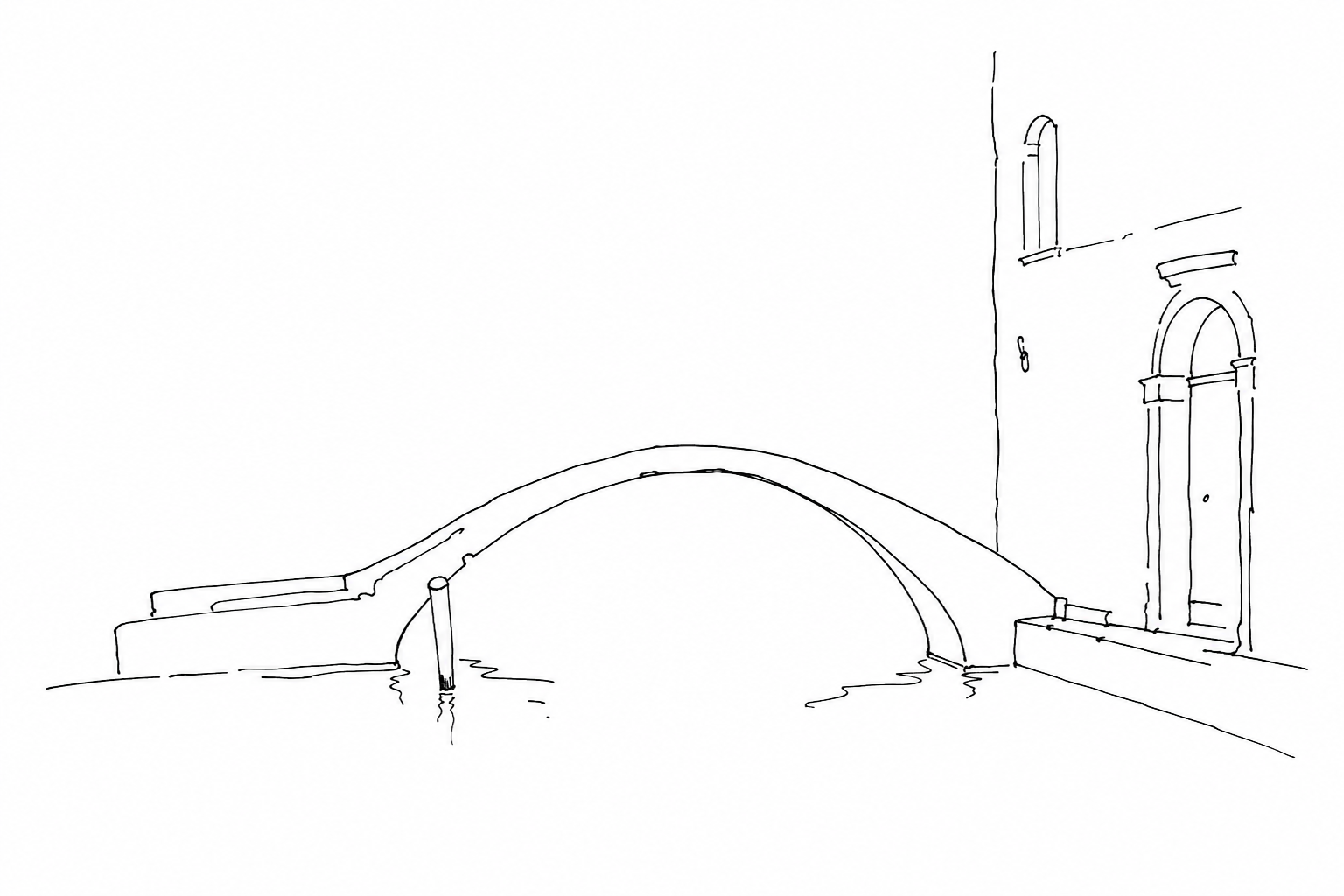
The structure thus preserves an essential form: a short arched ramp, low steps, no side balustrade. This does not mean that it remained “unfinished”; more simply, it did not undergo the update that transformed many similar structures into more protected passages suitable for continuous public transit.
Its appearance helps us understand an important difference: in the past not all connections over the water had the same function. Some served crowded calli, markets or religious routes; others were almost domestic thresholds, designed for few users and minimal distances. The case of Cannaregio falls into this category.
The lack of a parapet, therefore, is precious precisely because it is ordinary: it shows a practical solution that has survived, not an enigma. Looking at it up close means reading a small page of everyday lagoon building.
A careful stop in the sestiere
Stopping in front of Ponte Chiodo does not mean looking for a great monument, but recognizing a rare urban clue. The crossing is located in the San Felice area, within a fabric of calli and rii in which the dwellings face directly onto the water: its value lies precisely in the relationship between domestic threshold, bank and canal.
Observing it from a few metres away, it is worth noting three aspects: the reduced scale, designed for an everyday passage; the Istrian stone steps, a resistant material recurring in lagoon construction; the arrival at a private property, which recalls how many minor connections served houses, courtyards and warehouses more than public flows.
The stop is also useful for orienting the gaze: here Cannaregio appears less theatrical and more operational, made of small solutions. In this sense the structure should not be consumed as a photographic curiosity: it should be read as a trace of a lived-in city, where safety, habits and private space have changed balance over time.
Ponte Chiodo does not require a long detour, but it deserves a slow stop. Its simple form tells a great deal: the history of Venetian bridges before protections, the relationship between public space and private property, Cannaregio’s ability to preserve details that are not immediately evident. Stopping here does not mean looking for a spectacular monument, but observing a rare urban sign, surviving without clamor. In a city often consumed with a quick glance, this small bridge invites us to slow down and to recognize value even in the smallest presences.
Related Posts
Ponte Chiodo in Cannaregio: one of the last Venetian bridges without a parapet
History, form and urban context of Ponte Chiodo, a rare Venetian bridge without a parapet in the Cannaregio district.Ponte dei Tre Archi: the unusual bridge in Cannaregio that breaks with the city’s usual form
The Ponte dei Tre Archi, on the Cannaregio Canal, is a rare exception in the form of Venetian bridges.
Ponte delle Guglie: obelisks, Cannaregio and the passage toward the Ghetto
History, form and urban context of the Ponte delle Guglie, a threshold between Cannaregio, the canal and the Ghetto.Questions Answered
Where is Ponte Chiodo located and what makes it striking?
In Cannaregio along Rio di San Felice, striking for its lack of parapets.Why does Ponte Chiodo have no parapets?
It follows an ancient typology connecting private entrances before modern safety rules.What does the name Chiodo signify?
It refers to a Venetian family and the bridge's private use.Why is Ponte Chiodo important in understanding Venice’s urban history?
It shows historical relationships between public canals and private properties.
Inside the less obvious Cannaregio
Would you like to follow nearby details that give the district its distinctive character?
 Palazzo Mastelli and the Camel: an Eastern Detail in the Heart of CannaregioHistory, interpretation and context of the camel carved on Palazzo Mastelli, among Eastern trade and the calli of Cannaregio.
 Campo dei Mori: statues, merchants and legends carved on the walls of CannaregioA brief guide to Campo dei Mori, among walled-in statues, eastern merchants and legends of Cannaregio.
 Calle Varisco: seeking one of Venice’s narrowest calli without turning it into a trophyA brief guide to Calle Varisco: where to look for it, why it matters and how to pass through it with restraint,...
 The Ghetto Nuovo of Cannaregio: why the world’s first ghetto is called “new”Origin of the name Ghetto Nuovo: from the Venetian foundry to the Jewish enclosure of 1516.