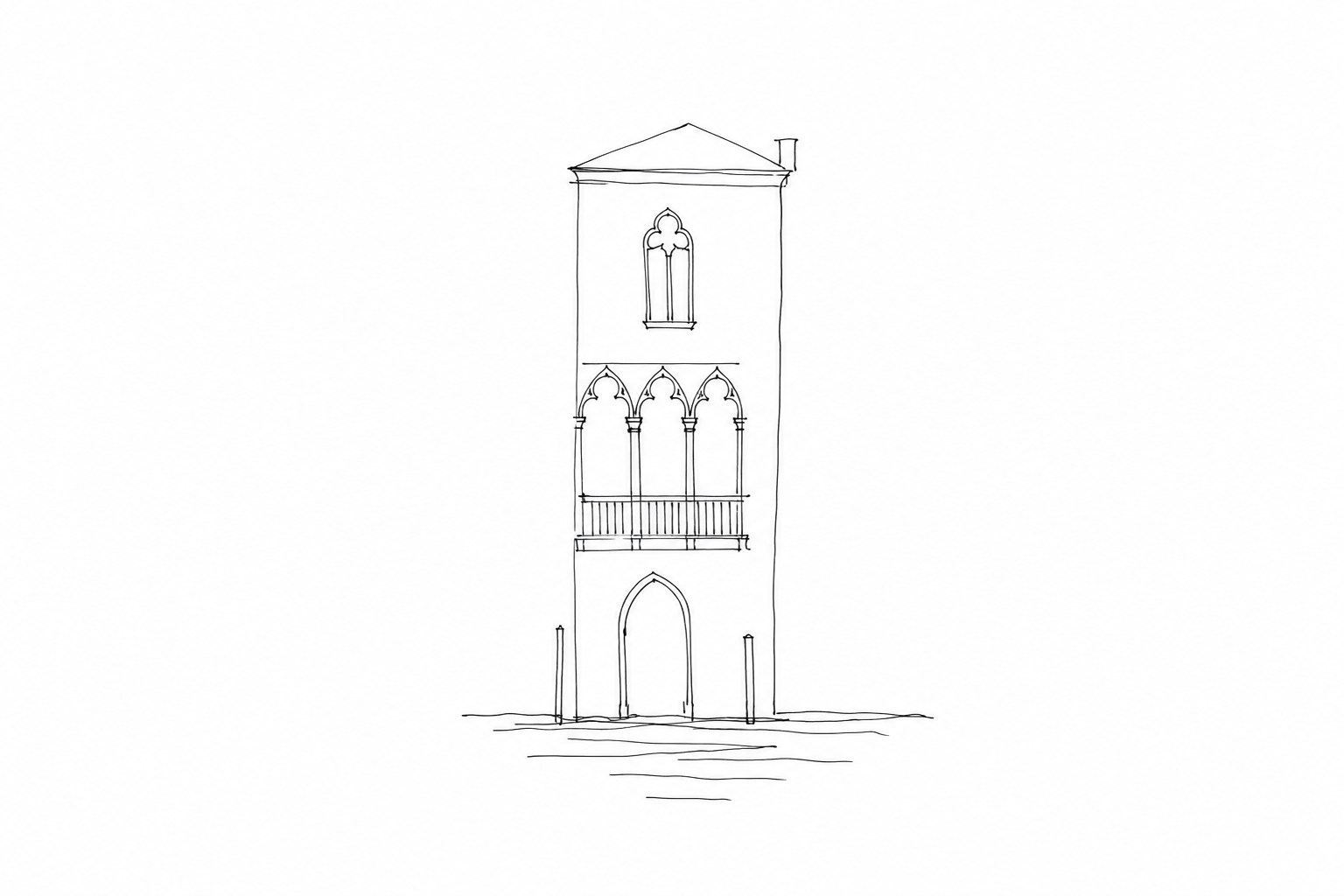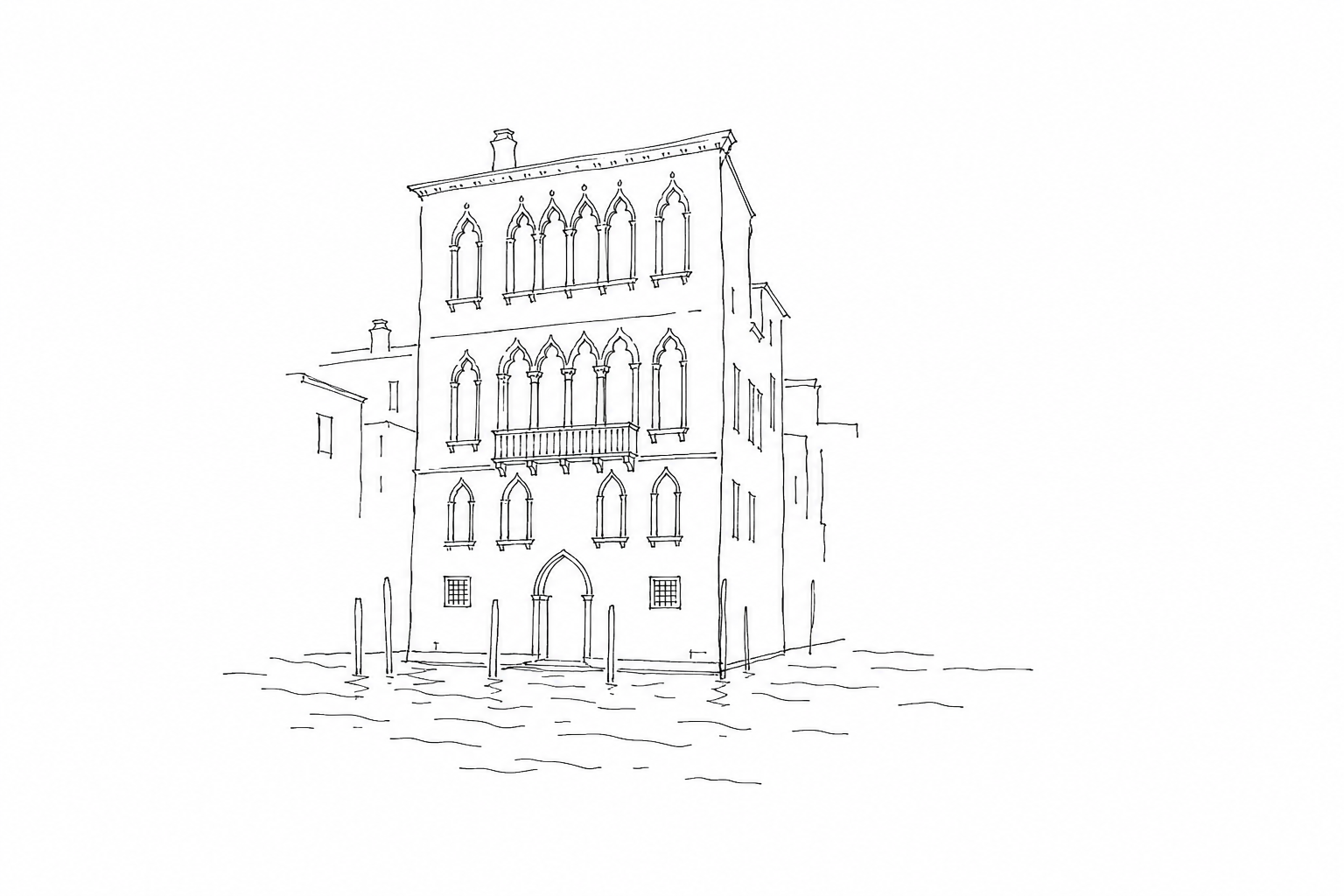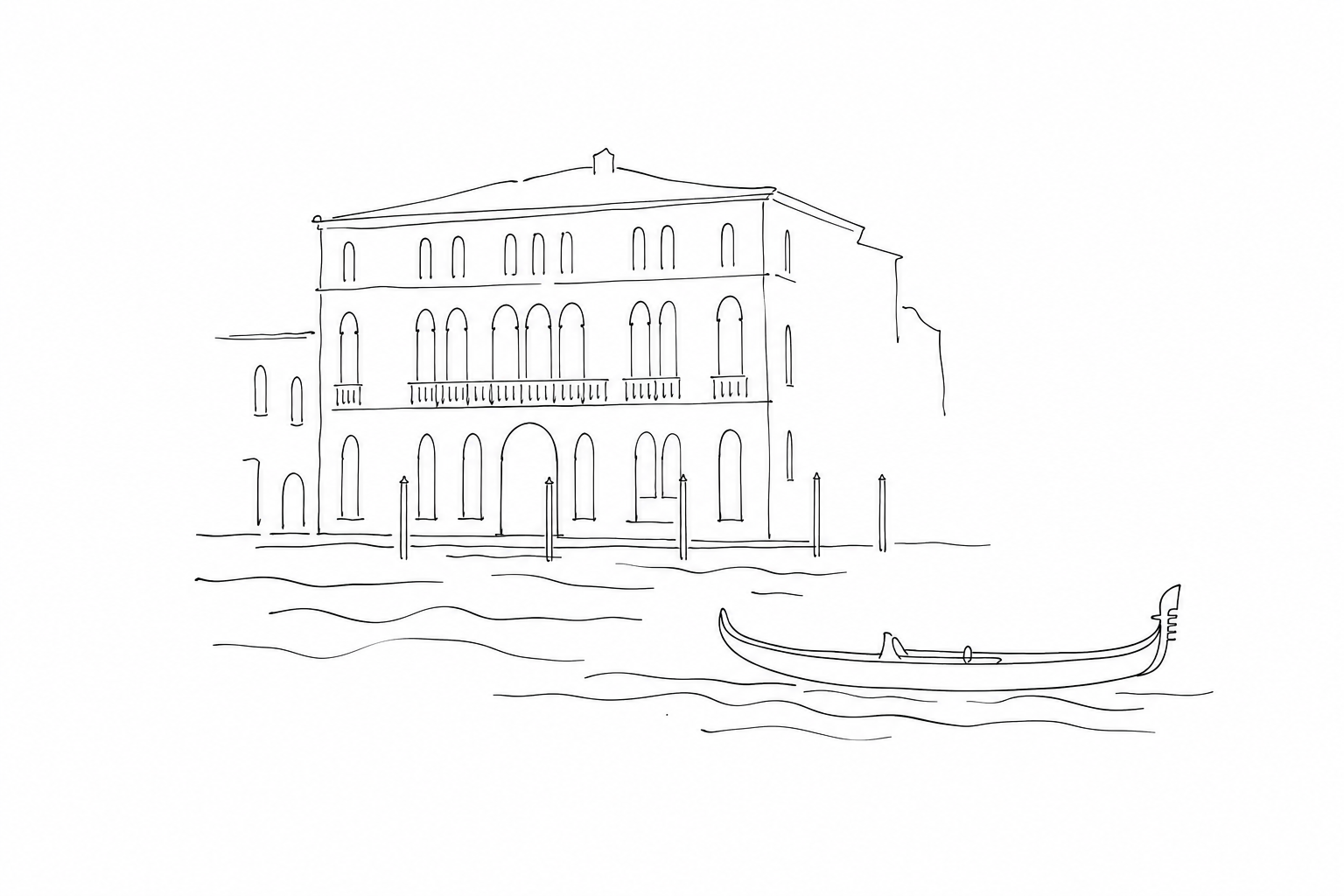

Palazzo Labia appears in Cannaregio with a presence that is discreet only in appearance: overlooking the Grand Canal and the Rio di Cannaregio, it tells of the ambition of a family that arrived late in the Venetian patriciate and was determined to leave a mark. Inside, Giambattista Tiepolo’s cycle dedicated to Antony and Cleopatra transforms ancient history into eighteenth-century theater, made of gestures, fabrics, painted architectures and glances. Reading it today means observing not only a palace, but a precise moment in Venice: elegant, competitive, still capable of inventing grandiose scenes while its political power was thinning.
Where Palazzo Labia is located and why it matters
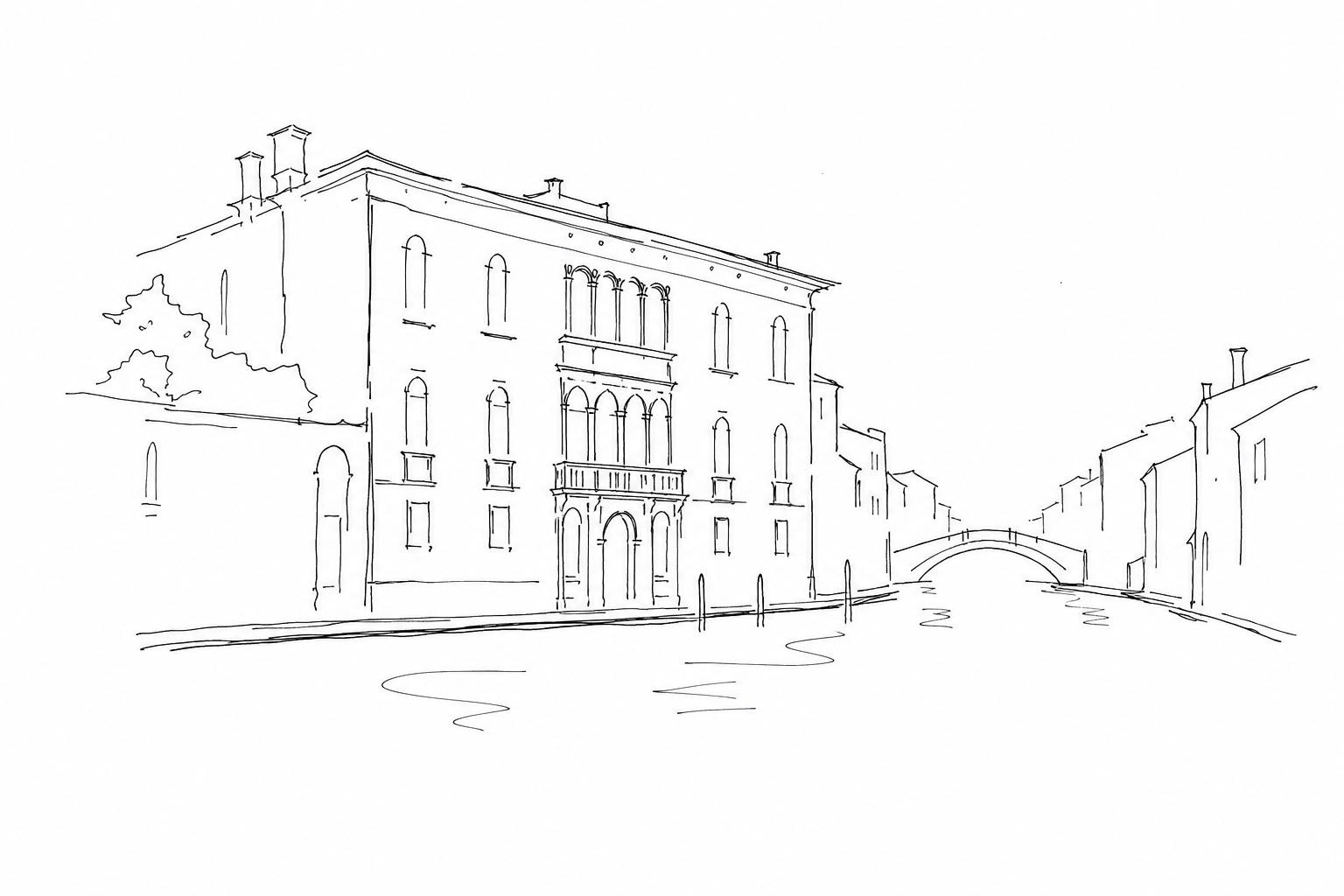
Palazzo Labia is located in the Cannaregio sestiere, in a position that explains much of its character: it overlooks the Grand Canal right where it meets the Cannaregio Canal, near the church of San Geremia and the area of the Ponte delle Guglie. It is therefore not a secluded palace, but a building placed on an urban threshold, between the ceremonial Venice of the Grand Canal and the water route that historically connected the city to the mainland.
This location helped the Labia family, very wealthy merchants of Catalan origin admitted to the Venetian patriciate in the seventeenth century, to declare visibility and ambition. The façades, one facing the Grand Canal and one facing the Cannaregio Canal, transform the building into a kind of scenic backdrop. It is the ideal context for understanding why, in the eighteenth century, the hall frescoed by Giambattista Tiepolo with the stories of Antony and Cleopatra was not just decoration: it was a manifesto of prestige, worldliness and noble self-representation.
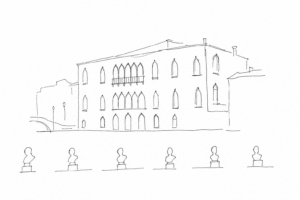
When the palace took shape, between the end of the seventeenth century and the first decades of the eighteenth century, the family that commissioned it did not belong to the ancient Venetian aristocracy. It was an extremely wealthy lineage, of mercantile origin and Iberian provenance, which entered the patriciate of the Serenissima in 1646 after a substantial financial contribution during the War of Candia.
Precisely for this reason, the residence had to speak clearly: it was not enough to live in Venice, one had to show oneself equal to the more established lineages. The choice of a monumental building, with theatrical façades and rooms suitable for parties, receptions and music, transformed the house into a public declaration of rank.
The commission focused on a sumptuous language, close to the mature Baroque taste: staircases, halls and decorations were not simple ornaments, but tools of social legitimization. In Tiepolo’s cycle, Cleopatra receiving Antony offered a model of aristocratic magnificence: classical antiquity became a mirror of the aspirations of a still young nobility, eager to appear inevitable.
Tiepolo, Cleopatra and the theater of the eighteenth century
The artistic heart of the residence is the hall frescoed by Giambattista Tiepolo in the 1740s, with the fictive architectures by Gerolamo Mengozzi Colonna. Here the story of Antony and Cleopatra is not simple learned decoration: it is a stage machine designed to amaze those who entered the festive space.
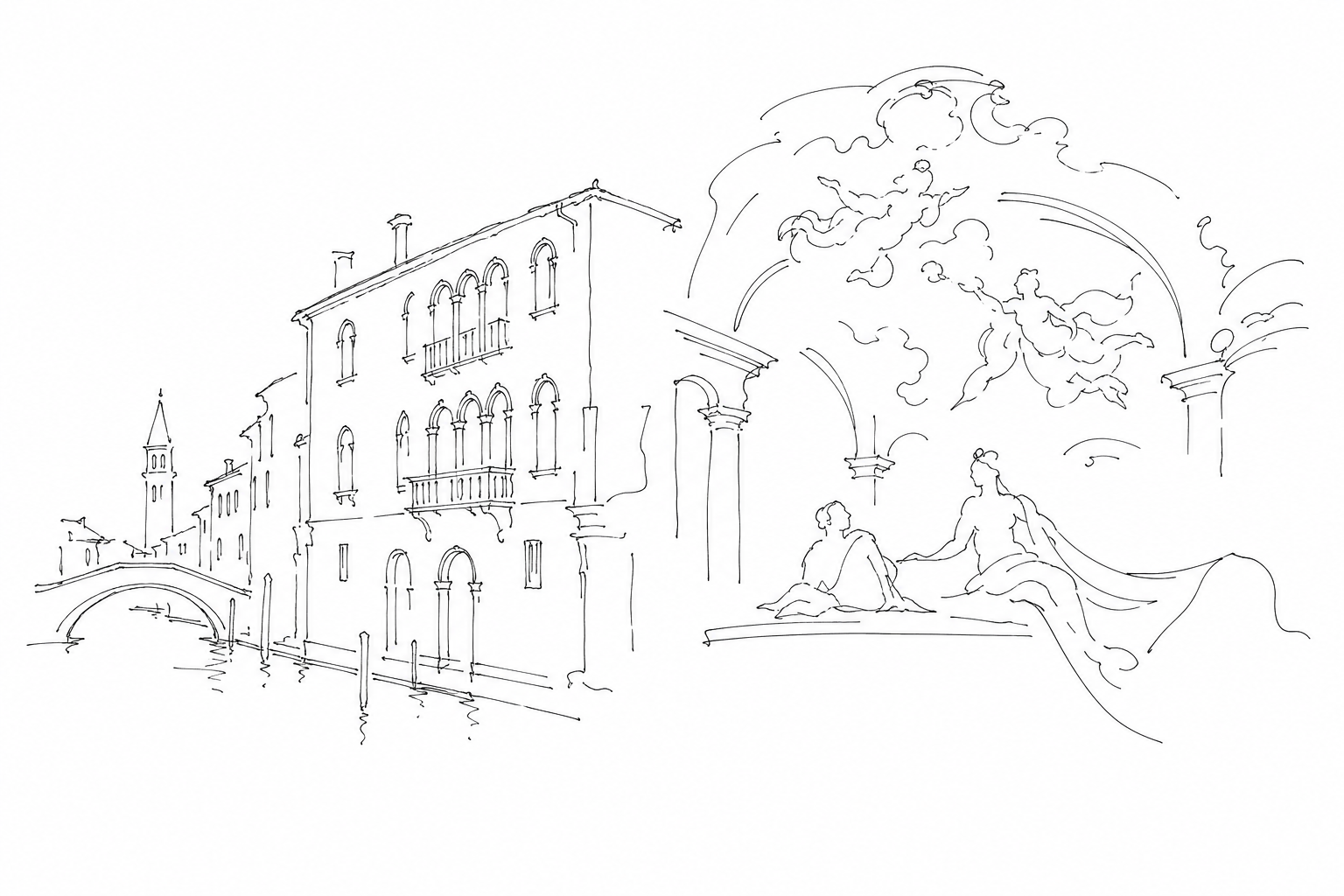
In the Meeting of Antony and Cleopatra the queen appears as sovereign, seductress and mistress of ceremony. In the Banquet of Cleopatra, instead, the narrative reaches its worldly peak: according to ancient tradition, Cleopatra dissolves a very precious pearl in vinegar to demonstrate to Antony a wealth capable of surpassing every measure. Tiepolo transforms the anecdote into Venetian theater: servants, extras, fabrics, columns and gestures construct a scene of representation more than a remote episode.
The painting works on several levels. Up close one grasps the light color, the rapidity of the touches, the elegance of the costumes; from afar, the quadratura opens the walls like stage wings, feigning loggias and non-existent depths. Ancient Egypt and Antony’s Rome thus become a language contemporary with the eighteenth century: they speak of power, luxury, alliances, reputation.
For this reason, the frescoes should also be read politically. They celebrate not only Cleopatra, but the very idea of magnificence: offering a party, governing the gaze of the guests, transforming a private hall into a social stage.
Read from the street and from the water, the building is not only the container of the frescoes: it is an urban node. The position between Campo San Geremia, the Cannaregio Canal and the entrance toward the Grand Canal explains why the Labia family wanted a visible residence, capable of speaking to passers-by and to guests arriving by boat.
- First key: observe the façades as scenic backdrops. The late-Baroque Venetian language already prepares the idea of representation that, inside, Tiepolo would bring to its maximum.
- Second key: connect Cleopatra’s hall to the social function of the house: receptions, reputation, control of the gaze.
- Third key: do not consider it an ordinary museum. Being linked to institutional uses and not always accessible as a stable route, any visits or openings should be checked on updated sources.
Thus the Venetian eighteenth century can also be read from the outside: in the threshold between everyday city, water and aristocratic spectacle.
Palazzo Labia is one of those places that help one understand Venice beyond the monumental surface. Its position in Cannaregio, the history of the Labia family and Tiepolo’s frescoes compose a narrative made of sought-after prestige, pictorial imagination and urban life. Even when it cannot be visited freely, it is worth approaching it with attention: from the bridge, from the fondamenta, from the relationship with the water and with the district. In this distance one grasps part of its charm: a palace born to amaze, but still capable of speaking to those who observe calmly.
Related Posts
Ca’ Rezzonico and Pietro Longhi: everyday Venice in the eighteenth century, between masks and salons
An itinerary at Ca’ Rezzonico to read Pietro Longhi and Venetian life in the eighteenth century through social rituals, masks, salons and everyday details.Palazzo Loredan in Santo Stefano: science, busts and Venetian culture outside the best-known museums
Editorial guide to Palazzo Loredan in Santo Stefano: cultural venue, civil architecture and the Pantheon Veneto in the heart of Venice.
Palazzo Grassi: the white face of the Grand Canal between Venetian nobility and contemporary exhibitions
History, façade and current exhibition role of Palazzo Grassi, the white palace on the Grand Canal.Questions Answered
Where is Palazzo Labia located and why is it significant?
It sits at a canal junction symbolizing visibility and ambition.Who were the Labia family and what was their social goal?
A wealthy merchant family aiming to assert nobility status.What is the artistic importance of Tiepolo’s frescoes?
They transform ancient history into a display of power and magnificence.How does the palace function in the urban context of Venice?
It acts as a social stage visible to both city and waterway visitors.
Stay a little longer in Cannaregio
Which nearby corners reveal the more lived-in and less monumental side of this part of Venice?
 Sant’Alvise in Cannaregio: the secluded church with Tiepolo and an almost domestic VeniceA brief guide to Sant’Alvise, between the northern edge of Cannaregio, Tiepolo’s canvases and daily rhythm.
 Palazzo Mastelli and the Camel: an Eastern Detail in the Heart of CannaregioHistory, interpretation and context of the camel carved on Palazzo Mastelli, among Eastern trade and the calli of Cannaregio.
 Campo dei Mori: statues, merchants and legends carved on the walls of CannaregioA brief guide to Campo dei Mori, among walled-in statues, eastern merchants and legends of Cannaregio.
 San Giobbe in Cannaregio: the hidden Venetian Renaissance near the stationGuide to San Giobbe, a Renaissance church in Cannaregio just a short walk from Santa Lucia.