
Palazzo Contarini Fasan is one of those places on the Grand Canal that you risk seeing without really looking at. Small, squeezed between more imposing architectures, it nevertheless concentrates many questions: the fragile grace of Venetian Gothic, the relationship between façade and water, and a literary legend that has made it known as the house of Desdemona. This article observes it without turning it into a mere romantic curiosity, following the visible traces of its architecture and the way in which Venice constructs memory, misunderstandings and urban charm.
A small palace on the Grand Canal
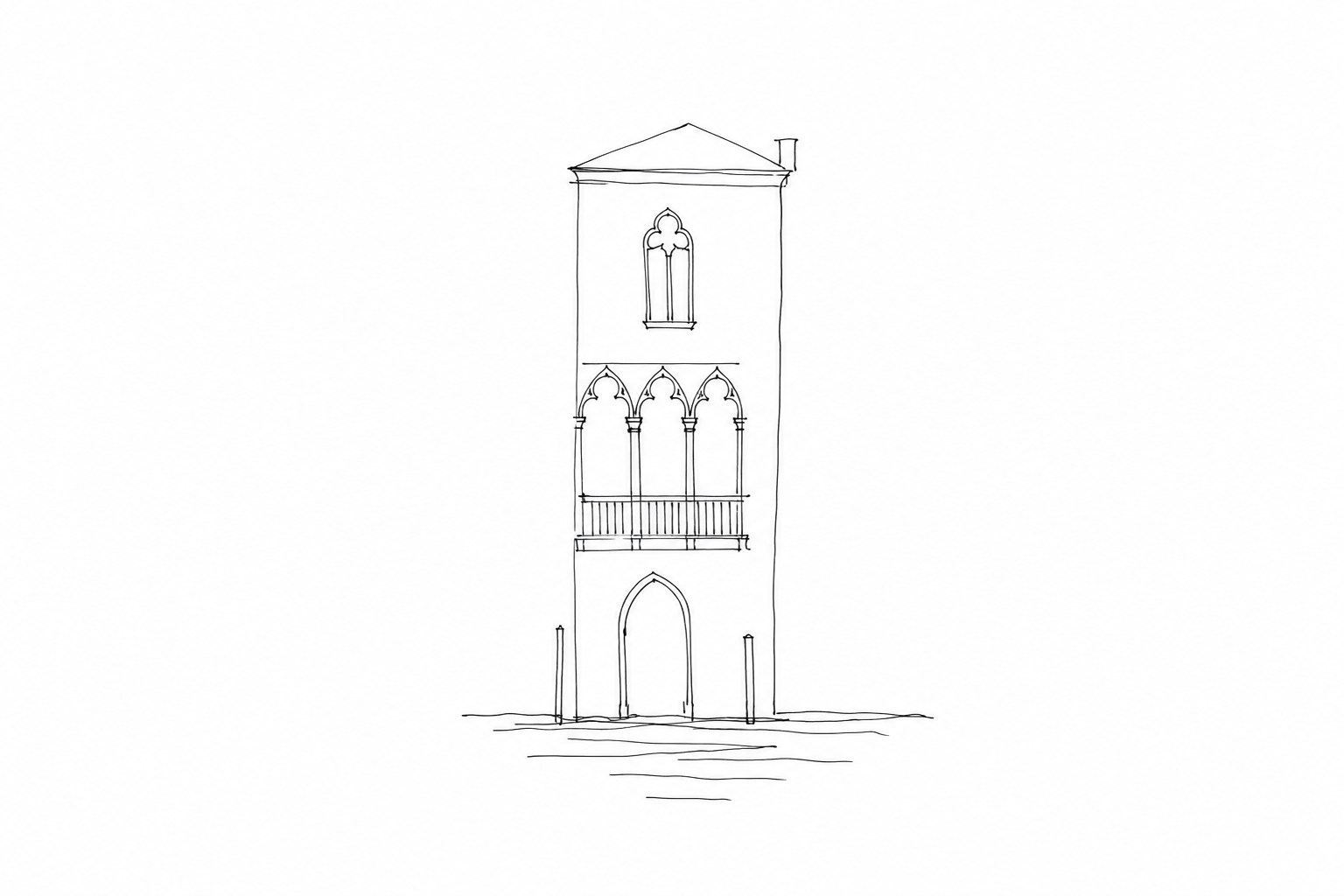
Palazzo Contarini Fasan is striking precisely because it seems almost to withdraw from the monumental scale of the Grand Canal. In the sestiere of San Marco, facing the water with a narrow, vertical front, it appears like a Gothic miniature set among larger buildings. Its fame arises from a double register: on one hand the legend that identifies it with the so-called house of Desdemona, on the other the delicate quality of its fifteenth-century architecture.
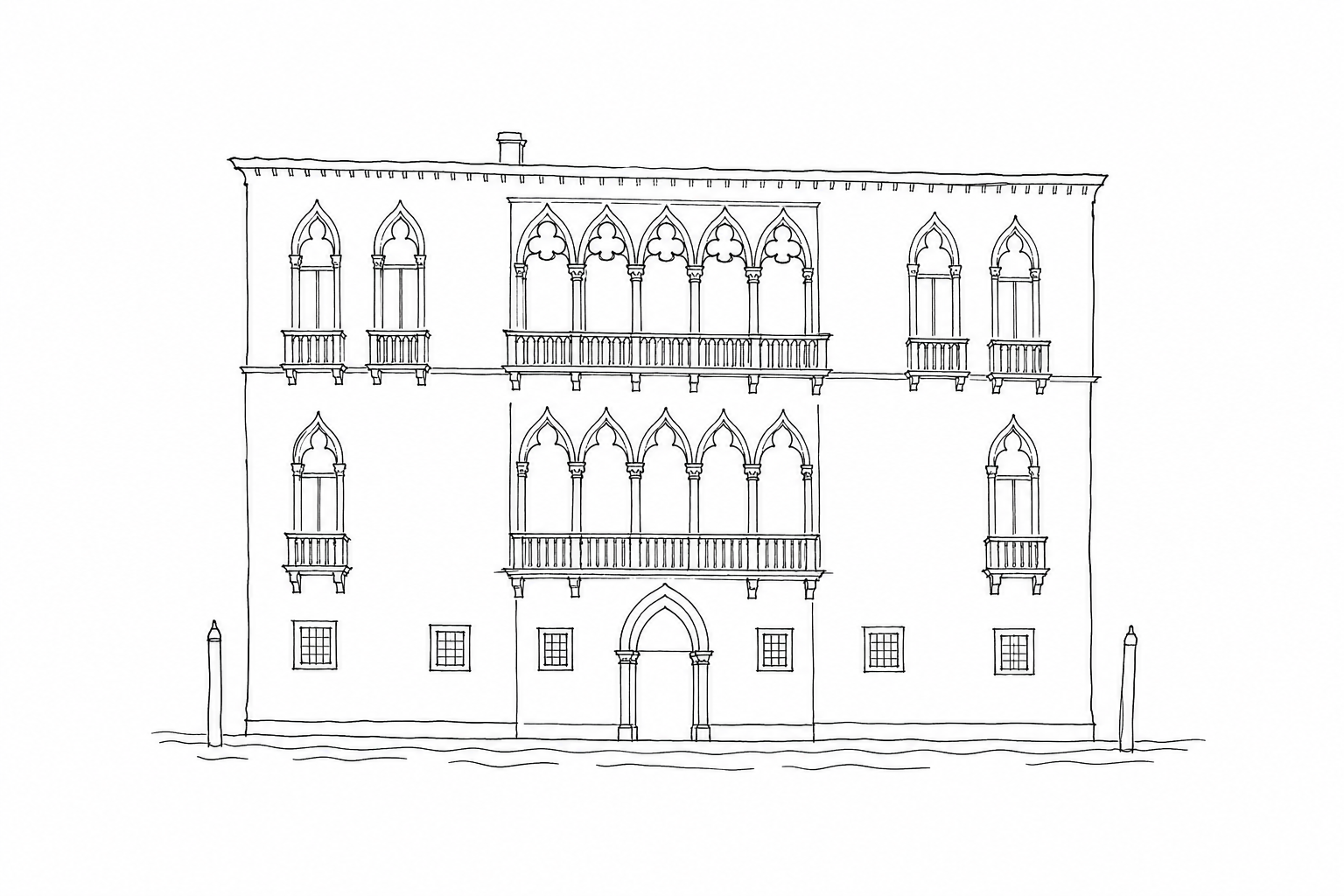
The palace belongs to the typological family of late Venetian Gothic: ogee arches, light tracery, projecting small balconies and a façade that works more through embroidery than through mass. It does not impose a severe presence; it seduces with slender proportions, pale stone and openings drawn like lace. Precisely this apparent fragility makes it memorable: on the canal of the great patrician residences, Palazzo Contarini Fasan introduces a domestic, almost theatrical note, perfect for welcoming the literary shadow of Desdemona while still remaining a concrete document of Gothic Venice.
The house of Desdemona: legend and caution
The nickname “house of Desdemona” is the most seductive, but also the most slippery, key to reading Palazzo Contarini Fasan. The figure of Desdemona belongs first and foremost to literature: she appears in the novella Un capitano moro from the Hecatommithi by Giovan Battista Giraldi Cinzio, published in 1565, and then in Shakespeare’s Othello. In both narrative traditions Venice is essential, but this residence is not indicated as the historical setting of the story.
The link with the building should therefore be understood as a cultural tradition, not as documentary proof. There is no archival evidence capable of identifying a real Desdemona who lived here, nor of directly connecting Shakespeare to this façade. It is likely that the association was strengthened thanks to the romantic gaze of travelers, attracted by the Gothic intimacy of the construction and by its scenic position on the Grand Canal.
Precisely this caution makes the myth more interesting: the legend does not replace history, but shows how Venice transforms small architectures into places of imagination, memory and theater.
Venetian Gothic in a slender façade
On the front of Palazzo Contarini Fasan, Venetian Gothic appears in concentrated form: not a monumental façade, but a vertical blade facing the water, where every opening carries weight in the composition. The narrowness of the plot forces the gaze upward, from the landing level to the piano nobile, up to the upper cornice.
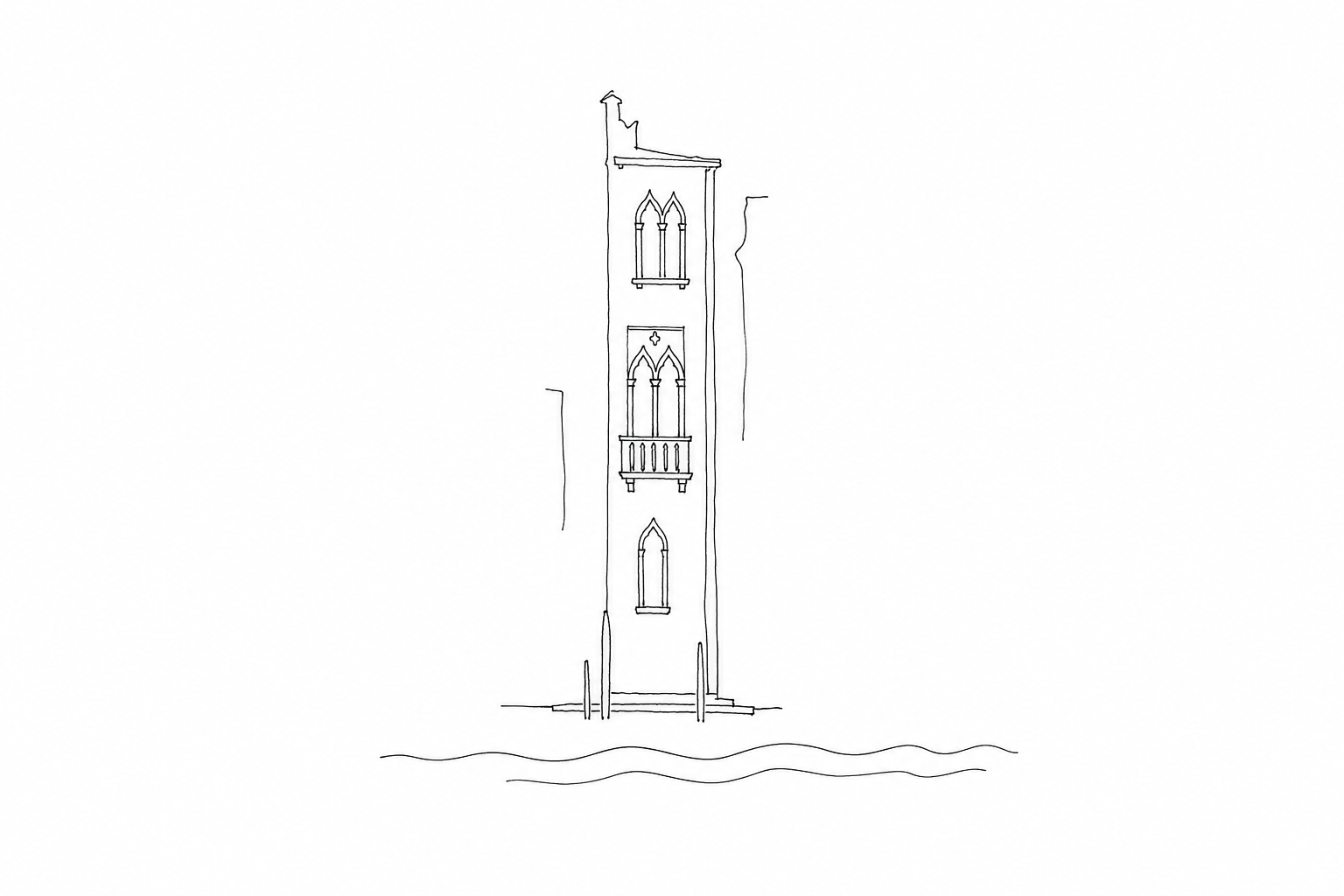
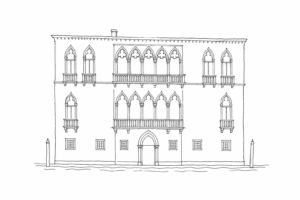
The most legible elements are the pointed-arch windows, the perforated archivolts and the small stone balconies, which lighten the wall without erasing its fragility. The rhythm is not the severe one of a symmetrical Renaissance elevation: instead, a more mobile balance prevails, typical of the lagoon Gothic period, in which solids and voids converse with the light reflected from the water.
The façade also shows the role of materials. Istrian stone defines outlines, windowsills and balustrades; the plaster, more vulnerable, makes time perceived as part of the image. Precisely this combination explains the building’s charm: elegant, small, almost suspended, but built to be seen up close and from the slow movement of boats.
How to observe it without reducing it to a curiosity
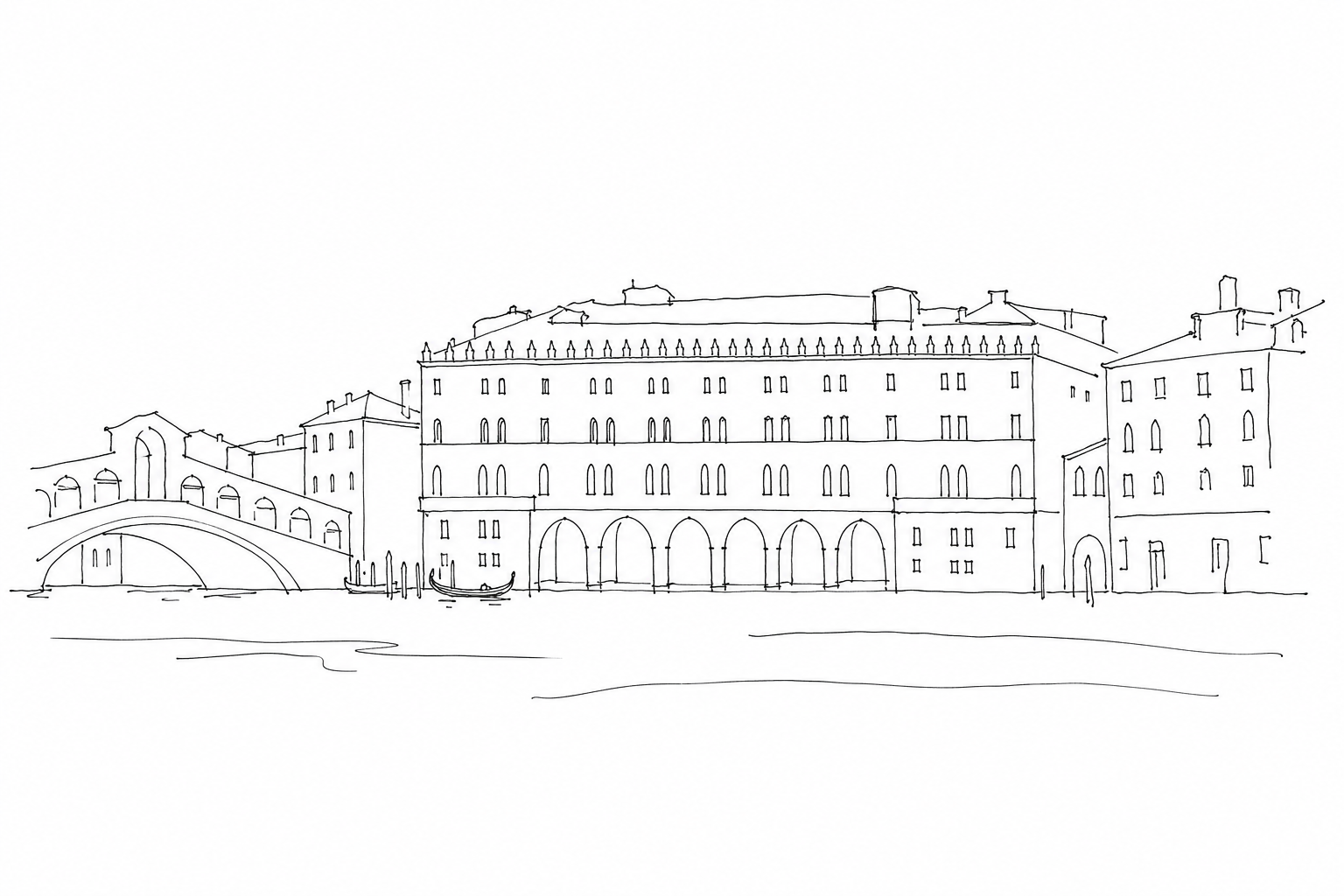
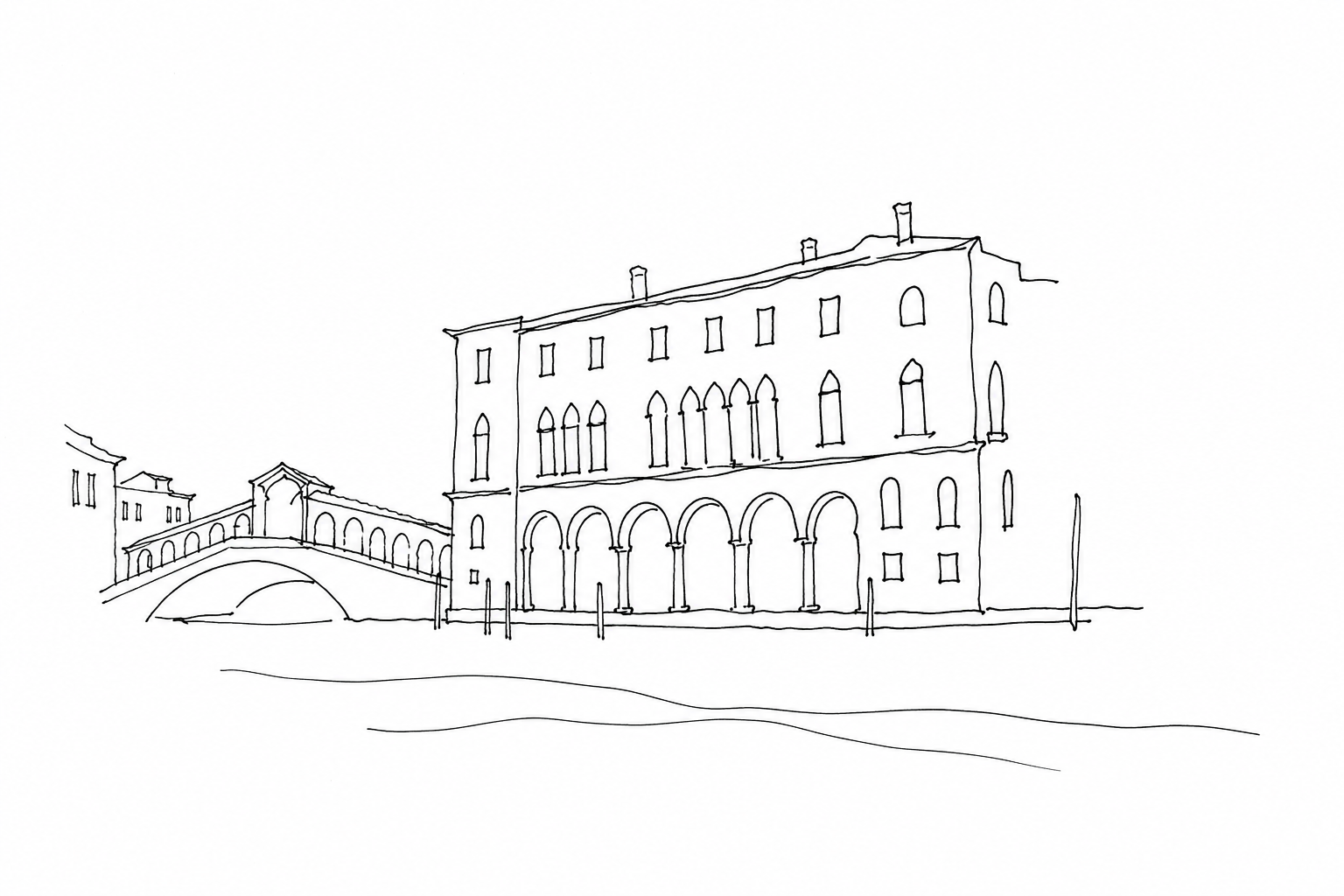
In order not to stop at the nickname linked to the Shakespearean heroine, it is worth looking at the building as an urban episode even before a literary one. Its position on the great waterway imposes an oblique reading: it cannot be understood in a single glance, but by following the rhythm of the windows, the void of the loggia, the subtlety of the tracery and the relationship with the nearby constructions.
A good method is to compare the façade with the broader fronts that surround it. Here the strength does not lie in mass, but in precision: every opening seems to measure the light, lighten the masonry and transform a narrow plot into a recognizable sign.
- Observe the overall outline first, then the Gothic details.
- Notice how much verticality matters compared with the reduced width.
- Separate the charm of the romantic tradition from the architectural reading.
In this way the myth becomes a key to access, not a shortcut.
Looking at Palazzo Contarini Fasan means accepting a different scale: not that of the monument that dominates, but of the building that asks for attention. The alleged house of Desdemona remains a suggestion to be handled with caution, while the Gothic façade offers concrete elements for understanding the finesse of lesser Venice facing the Grand Canal. Stopping to observe it, perhaps from a slow vaporetto or from the opposite bank, makes it possible to grasp a precious urban detail: the city lives not only in its great palaces, but also in its small and vulnerable presences.
Related Posts
Palazzo Pisani Moretta: why Venetian Gothic seems embroidered in stone
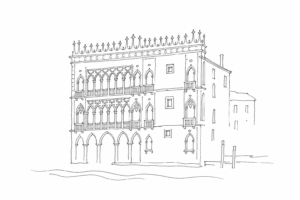
A reading of Palazzo Pisani Moretta, where Venetian Gothic becomes a subtle weave on the façade of the Grand Canal.The façade of Ca’ d’Oro: how to recognize Venetian Gothic by looking at a palace on the Grand Canal
A visual guide to the façade of Ca’ d’Oro: arches, loggias, tracery and asymmetries that reveal Venetian Gothic on the Grand Canal.
Ca’ Dario: beauty, superstition and dark legends on the Grand Canal’s most unsettling façade
History, façade and dark fame of Ca’ Dario, a Renaissance palace on the Grand Canal among art, famous names and dark tales.Questions Answered
What architectural style defines Palazzo Contarini Fasan?
It belongs to the late Venetian Gothic style with slender proportions and delicate details.Is there historical proof linking Desdemona to this palace?
No archival evidence connects the real Desdemona or Shakespeare to the building.Why is the palace called the 'house of Desdemona'?
The name arises from cultural tradition and romantic traveler associations, not history.How should one best appreciate Palazzo Contarini Fasan?
By focusing on its architectural elements and urban context beyond the romantic legend.
St Mark’s seen through its details
Want to connect architecture, ceremony and power without stopping at the postcard view?
 The Porta della Carta: entering the Doge’s Palace by reading stone, power and propagandaA close reading of the Porta della Carta: ceremonial threshold, Gothic sculpture and political manifesto between St. Mark's and the Doge's Palace.
 Palazzo Loredan in Santo Stefano: science, busts and Venetian culture outside the best-known museumsEditorial guide to Palazzo Loredan in Santo Stefano: cultural venue, civil architecture and the Pantheon Veneto in the heart of Venice.
 The Piombi and Pozzi: the prisons of the Doge’s Palace beyond the legend of CasanovaHistory, spaces and meaning of the prisons of the Doge’s Palace, from the Piombi to the Pozzi, beyond the myth of Casanova’s...
 The Bridge of Sighs from the inside: what those passing toward the New Prisons really sawA precise look at the internal passage of the Bridge of Sighs: route, light, windows and the true view of detainees toward...