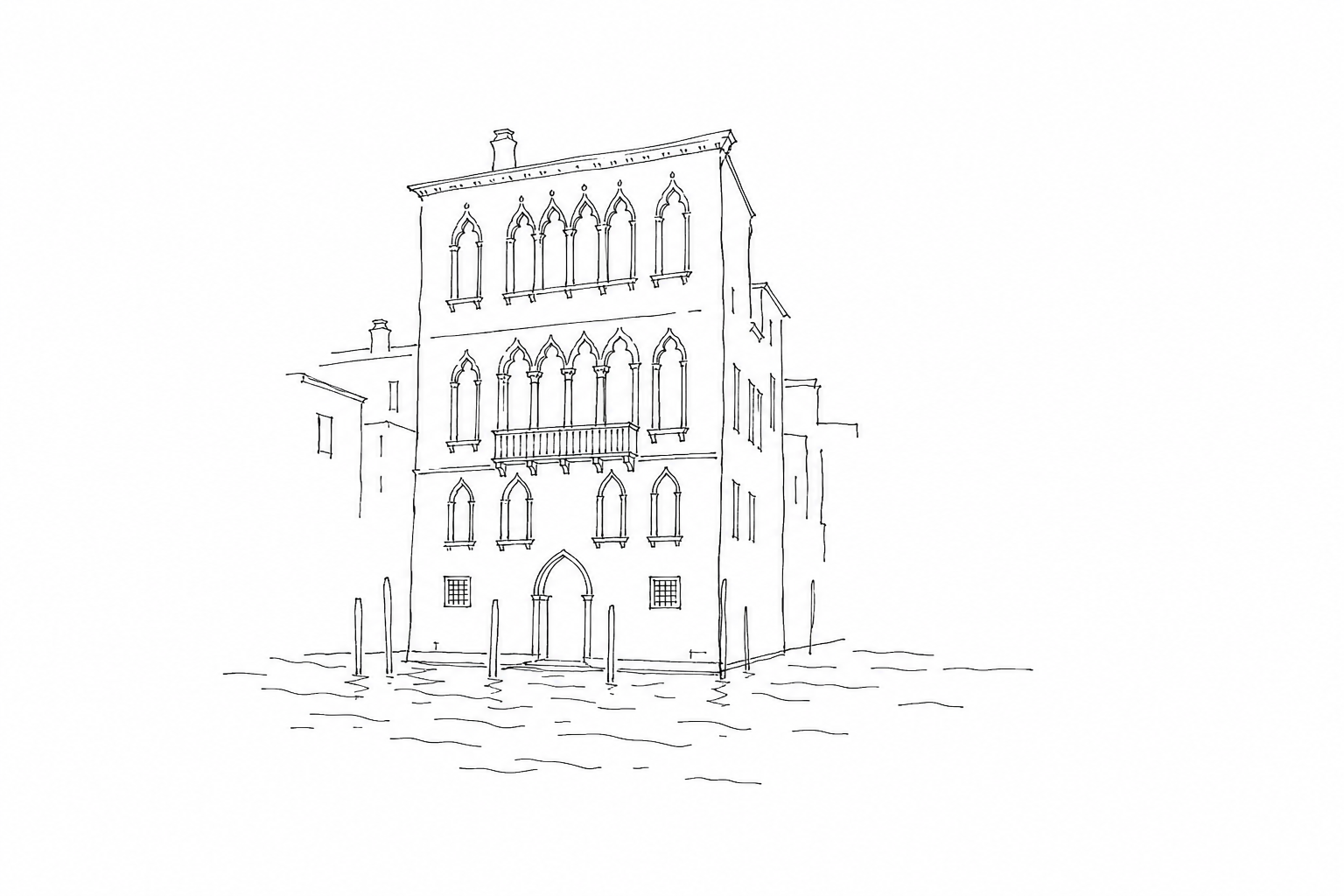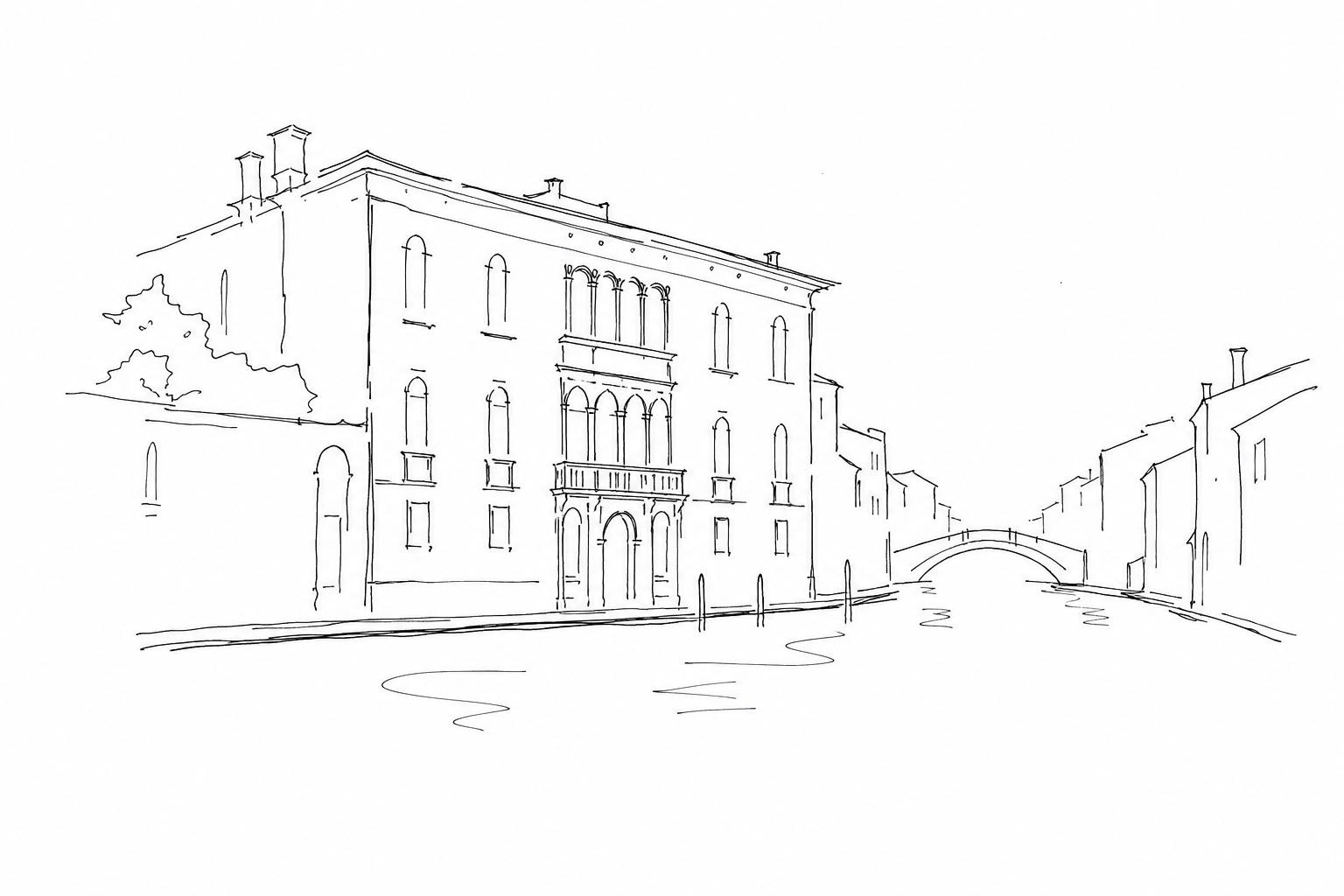
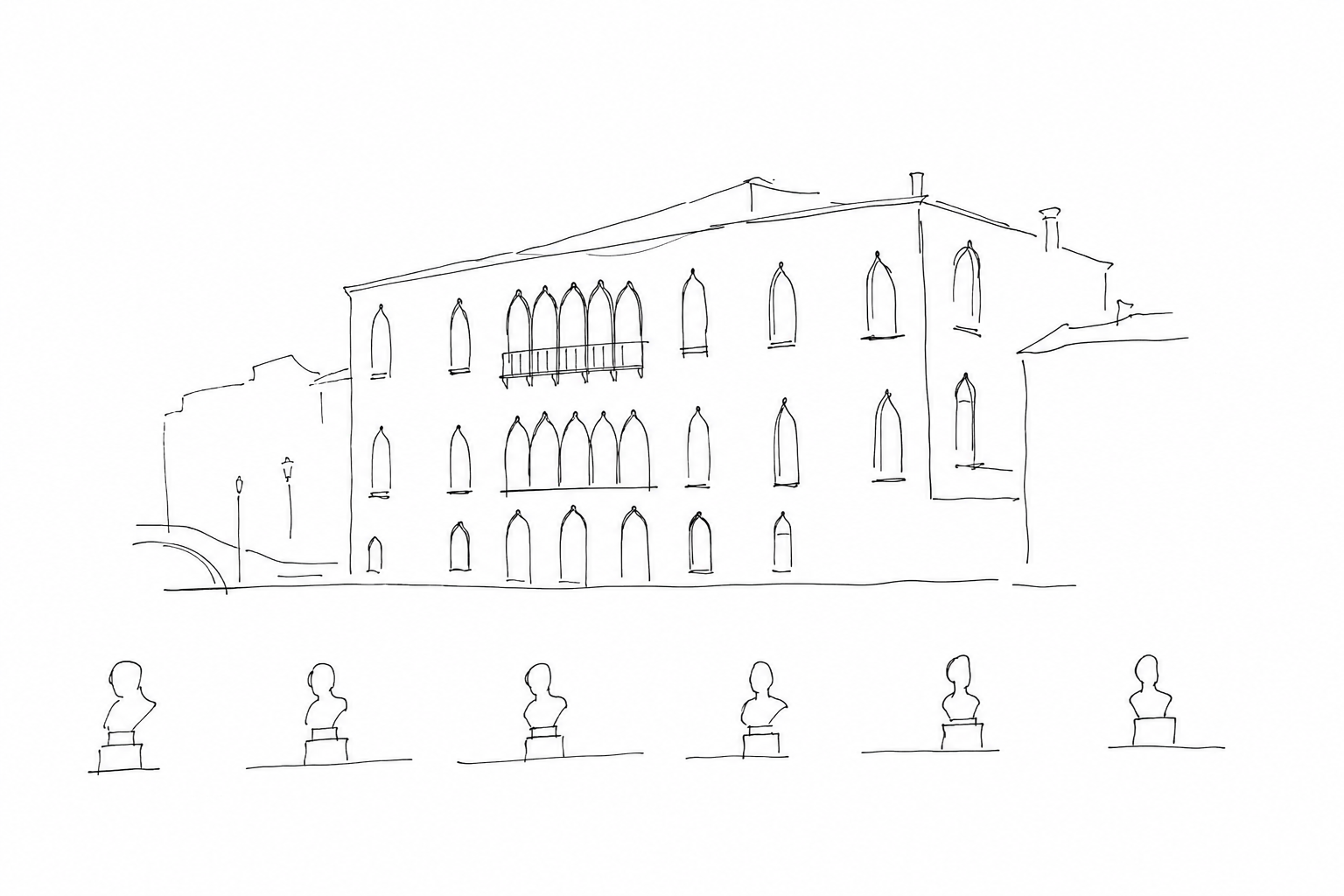

Overlooking Campo Santo Stefano, Palazzo Loredan is one of those Venetian places that are often passed through with one’s gaze turned elsewhere. Yet, behind its composed façade, it preserves a layered history: patrician residence, cultural venue, place of study and civic memory. Today it houses the Istituto Veneto di Scienze, Lettere ed Arti and preserves the Pantheon Veneto, a collection of busts that recounts figures who were decisive for the city and for its relationship with knowledge. It is not a museum in the most immediate sense of the term, but a palace where art, science and urban life continue to converse.
Where it is and why it deserves attention
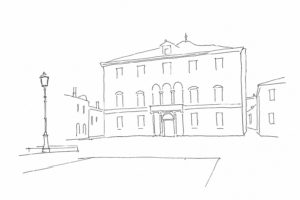
Palazzo Loredan overlooks Campo Santo Stefano, in the sestiere of San Marco, in one of the points where Venice most clearly shows its nature as a lived-in city and not only one on display. The campo is long, open, crossed by those moving between the Accademia Bridge, the San Vidal area and the route toward San Marco; for this very reason the palace risks being perceived as a simple architectural backdrop.
In reality, it is a key place for reading a Venice different from the most famous museum circuits. Its patrician history, linked to the Loredan family, is intertwined with the presence of the Istituto Veneto di Scienze, Lettere ed Arti, which has made it a cultural and scientific outpost. Attention should be placed above all on the interior: atriums, staircases and rooms preserve memories of scholars, artists and protagonists of Venetian culture, including the well-known series of busts. For any visits to the interior spaces, it is always advisable to check the updated arrangements with the institution.
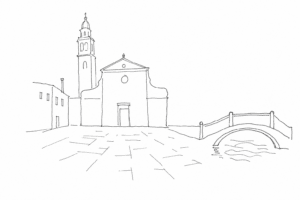
A layered Venetian palace
Palazzo Loredan should not be read as a building created at a single moment. Its current form derives from the merging and transformation of several patrician houses overlooking Campo Santo Stefano, a process typical of Venetian building practice but here particularly evident in the internal layout and the course of the façade.
The passage to the Loredan family, linked to the political history of the Serenissima, marked a phase of Renaissance reordering: the spaces were made more representative, with large halls, ceremonial routes and rooms suited to the public life of an aristocratic household. Behind the compact image of the frontage, therefore, a complex structure is preserved, made up of additions, adaptations and changes of function.
This layering helps explain why the palace became a suitable seat for the Istituto Veneto di Scienze, Lettere ed Arti: not a neutral container, but a place where domestic architecture, noble memory and scientific culture overlap. The presence of the busts converses precisely with this long history, transforming the rooms into a path of civic and intellectual recognition.
Sciences, letters and arts: the Istituto Veneto
In the Santo Stefano complex, patrician history changes register: here is the seat of the Istituto Veneto di Scienze, Lettere ed Arti, one of the cultural institutions founded in the nineteenth century to bring together scholars, technicians, historians, artists and writers. Its presence explains why Palazzo Loredan is not only an architectural stop, but also a place linked to the production and transmission of knowledge.
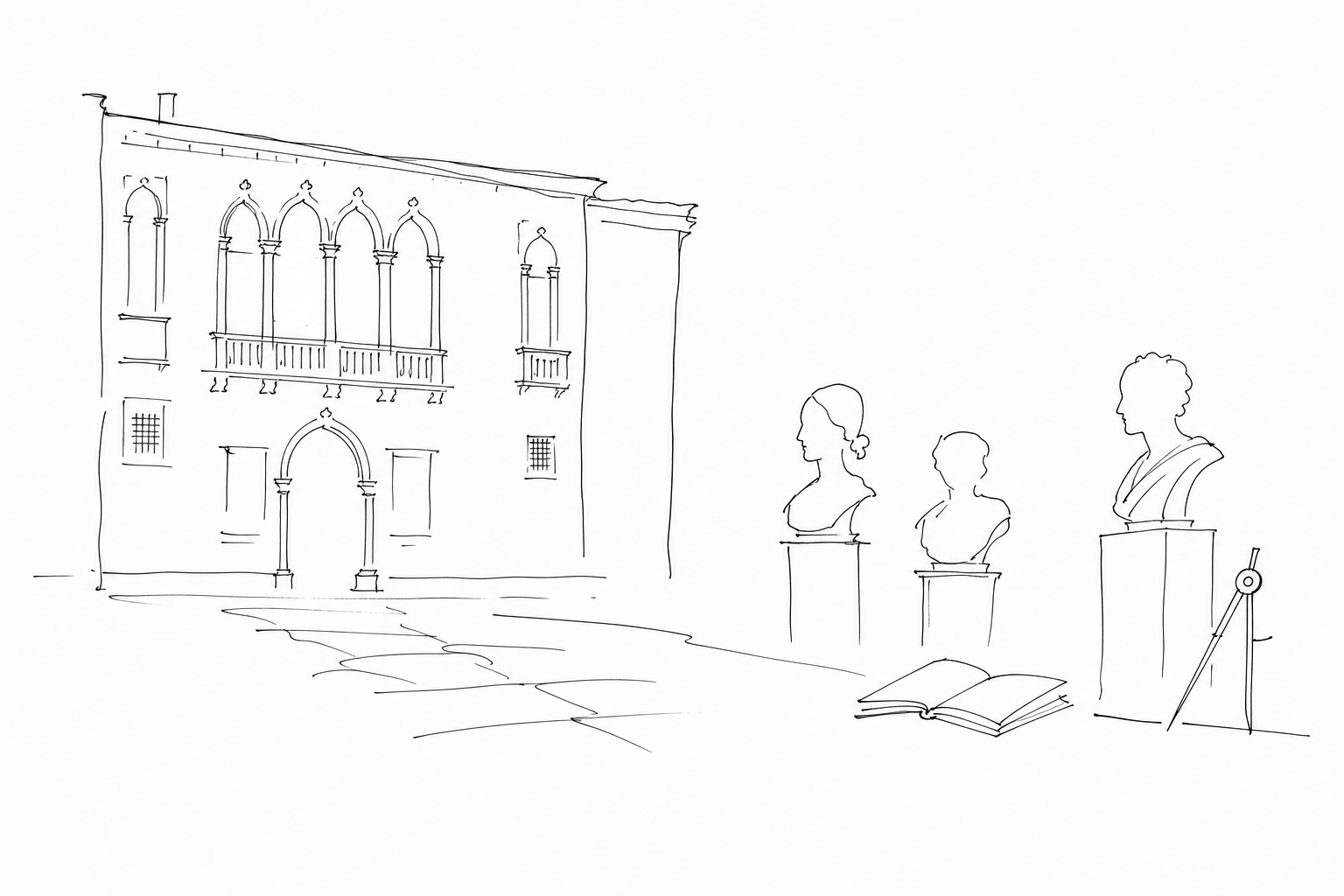
The Institute gathers the legacy of the Reale Istituto Veneto, active in the context of Lombardy-Venetia and then integrated into Italian civic life after 1866. Its disciplinary classes bring together mathematical, physical and natural sciences, moral sciences, letters and arts: a division that clearly conveys the nineteenth-century idea of culture as a public service, not as a simple ornament.
Within this framework, the value of the busts can also be understood: not isolated decorations, but faces of a shared memory. Scientists, scholars and protagonists of Venetian intellectual life become recognizable presences in the rooms, connecting research, civic education and urban identity.
The Pantheon Veneto and illustrious faces
Among the building’s less immediate collections, the Pantheon Veneto is the one that best transforms the rooms into an atlas of civic memory. These are not only sculpted portraits: each effigy selects a figure, fixes him in an authoritative posture and places him within a genealogy of public merits.
The collection was born in the nineteenth century, when academies and city institutions used celebratory portraiture to build a shared canon. Scientists, doctors, writers, jurists, artists and men of civic life are presented as examples of knowledge useful to the community. The inscription of the name, the rendering of the face, the clothing or the “all’antica” cut help us read not only who is represented, but also what idea of Venice was intended to be conveyed.
Observed in sequence, these marbles function as a narrative: they do not recount battles or ceremonies, but intellectual continuities. Visitors can interpret them as a visual archive, where personal fame becomes collective heritage and where science converses with letters and the arts without the need for a traditional museum room.
Visiting or even simply observing Palazzo Loredan carefully means reading Venice beyond its most celebrated monuments. Here the city appears as a place of research, memory and institutions, not merely as a setting. The busts of the Pantheon Veneto, the rooms of the Institute and the position in the heart of Santo Stefano restore a more concrete idea of Venetian culture: made up of families, scholars, artists, collections and transformations of use. It is a stop suited to those seeking a less obvious route, where architectural detail and everyday history help to better understand the civic depth of Venice.
Related Posts
Ateneo Veneto: the Scuola dei Picai and the harsher side of Campo San Fantin
History, architecture and memory of the Scuola dei Picai, today the Ateneo Veneto, in the campo next to La Fenice.San Vidal and Campo Santo Stefano: music, crooked bridges and an elegant piece of Venice
A short route through San Vidal, Campo Santo Stefano, music, architecture and oblique bridges.
Sansovino’s Loggetta: the small precious building at the foot of the Campanile
History, architecture and sculptures of Sansovino’s Loggetta, at the foot of St. Mark’s Campanile.Questions Answered
What is Palazzo Loredan’s historical role in Venice?
It evolved from patrician homes into a Renaissance aristocratic residence.What institution does Palazzo Loredan house?
The Istituto Veneto di Scienze, Lettere ed Arti, a major cultural and scientific body.What is the Pantheon Veneto collection?
A series of busts representing key figures in Venetian intellectual and civic history.Why is Palazzo Loredan important beyond tourism?
It embodies Venice as an active city of research, culture and memory.
St Mark’s seen through its details
Want to connect architecture, ceremony and power without stopping at the postcard view?
 Palazzo Contarini Fasan: the so-called house of Desdemona and the fragile charm of Venetian GothicHistory, legend and Gothic details of Palazzo Contarini Fasan, a small façade on the Grand Canal linked to the myth of Desdemona.
 The Giants’ Staircase: where the doge became doge before the cityHistory, ritual and details of the Giants’ Staircase in the courtyard of the Doge’s Palace.
 The Hall of the Great Council: when Venice painted itself as an immense republicHistory, political function and images of the Hall of the Great Council in the Doge’s Palace.
 The Golden Staircase of the Doge’s Palace: ascending toward power amid stucco and political controlThe Golden Staircase as a political threshold of the Doge’s Palace: architecture, stucco, access and messages of power in the Venice of...