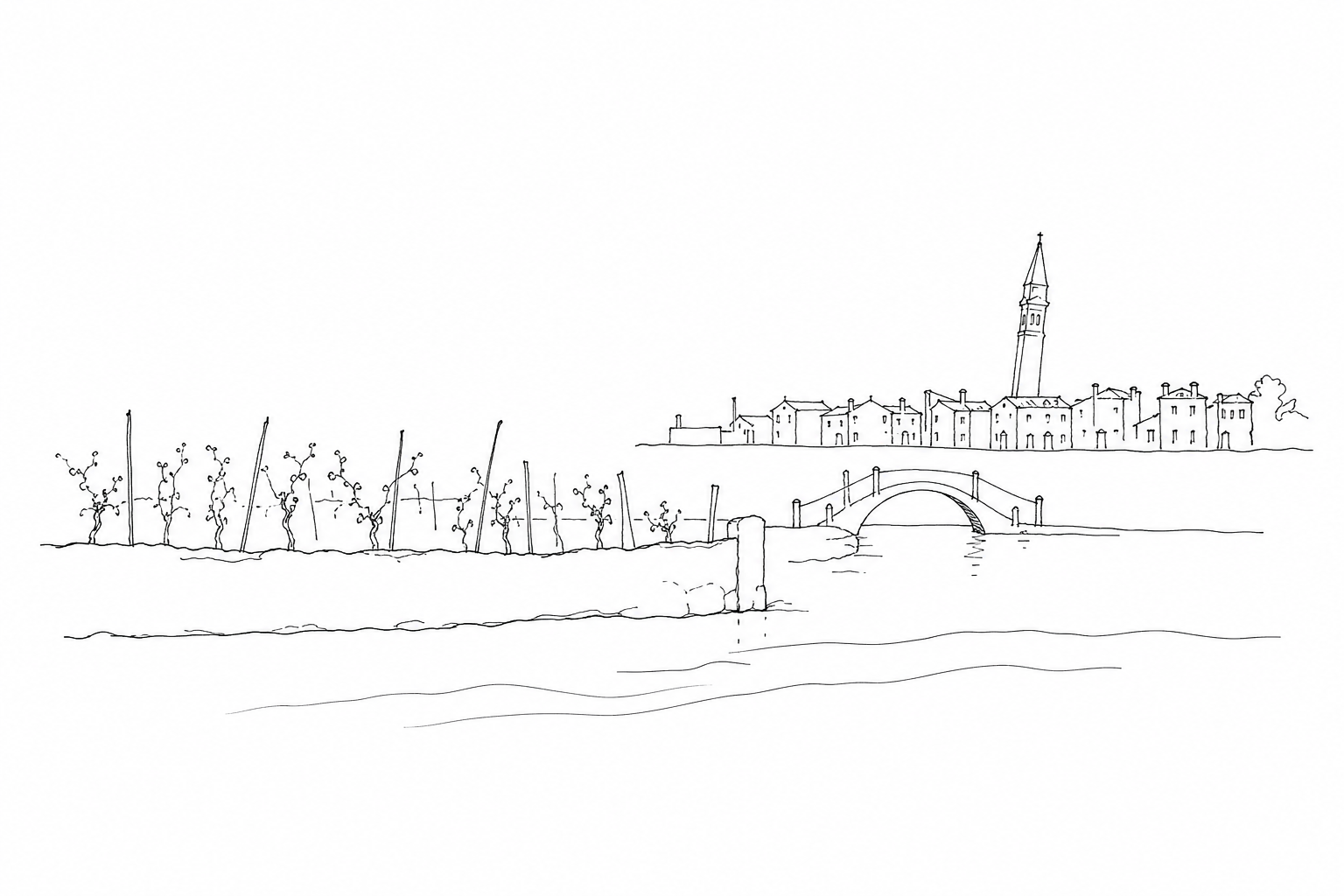

Campo dei Mori is one of those places in Cannaregio where Venice seems to speak from the walls, rather than from monumental façades. The statues set into the buildings, the nearby Palazzo del Cammello and the traces of the Mastelli merchants make up a small urban story made of stone, trade, memory and legend. It is not a spectacular campo in the most immediate sense, but it is striking precisely for its density: a few steps are enough to encounter carved faces, eastern details, popular irony and fragments of a Venice linked to the routes of the Mediterranean.
Where Campo dei Mori is and why it is striking
Campo dei Mori is located in the sestiere of Cannaregio, in a secluded area compared with the most beaten paths but close to the Madonna dell’Orto. It is one of those small Venetian open spaces where history is not announced by grand façades, but by details carved into the walls of the houses.
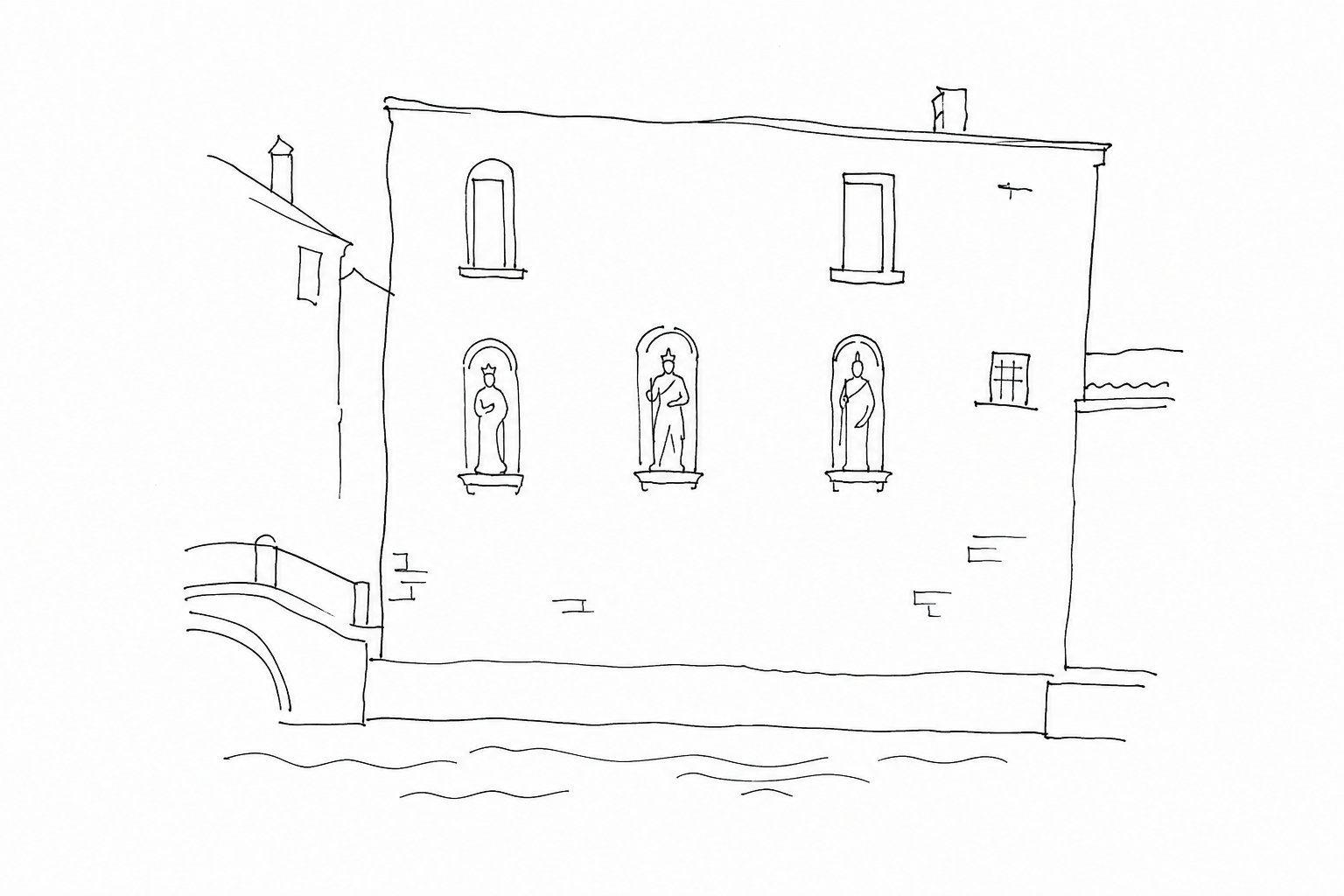
What makes it immediately recognizable are the stone statues of the so-called Moors, male figures set into the corners of the buildings. According to tradition, they represent eastern merchants, often linked to the Mastelli family, active in trade between Venice and the Levant. Their clothes, turbans and rigid poses turn the walls into a kind of urban story.

The campo is striking precisely because of this contrast: an everyday, intimate and silent space preserves enigmatic presences that seem to watch those who pass by. It is not an isolated monument, but a fragment of Cannaregio where domestic architecture, mercantile memory and popular legend remain visible in the stone.
The Mastelli merchants and the Palazzo del Cammello
The most eloquent core of the campo is linked to the Mastelli family, merchants who, according to tradition, came from the Morea, a Greek area of the eastern Mediterranean then within the Venetian routes. The stone figures set into the corners and on the façades are therefore not simple decorative curiosities: they transform the house into a declaration of origin, trade and prestige.
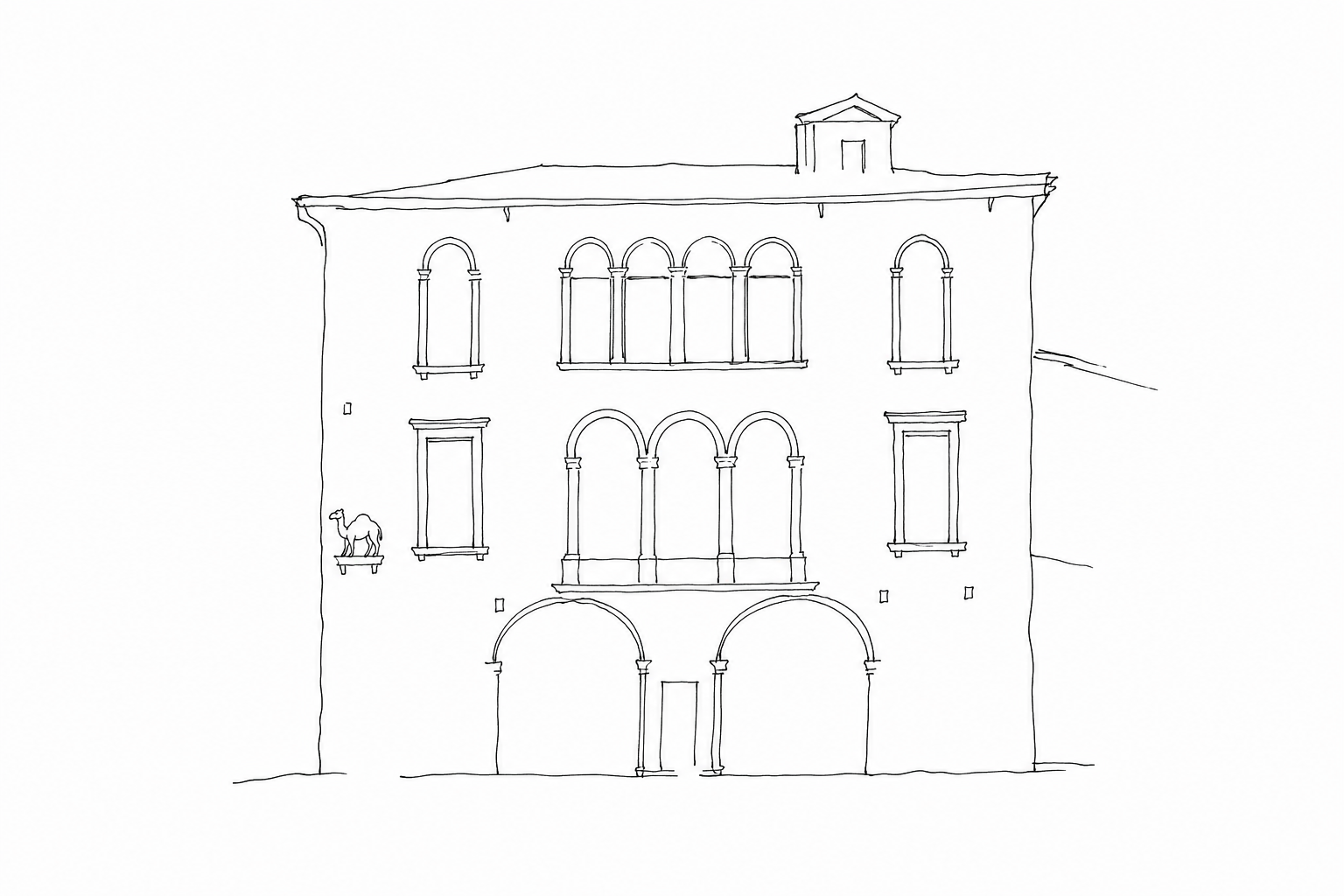
The nearby Palazzo Mastelli del Cammello, overlooking the rio, makes this connection even clearer. The bas-relief of the camel, accompanied by a figure in eastern clothing, alludes to long-distance trade: spices, fabrics, precious goods and contacts with ports of the Levant. In a Venice founded on exchanges, the exotic image was not only fantasy, but a recognizable sign of mercantile wealth.
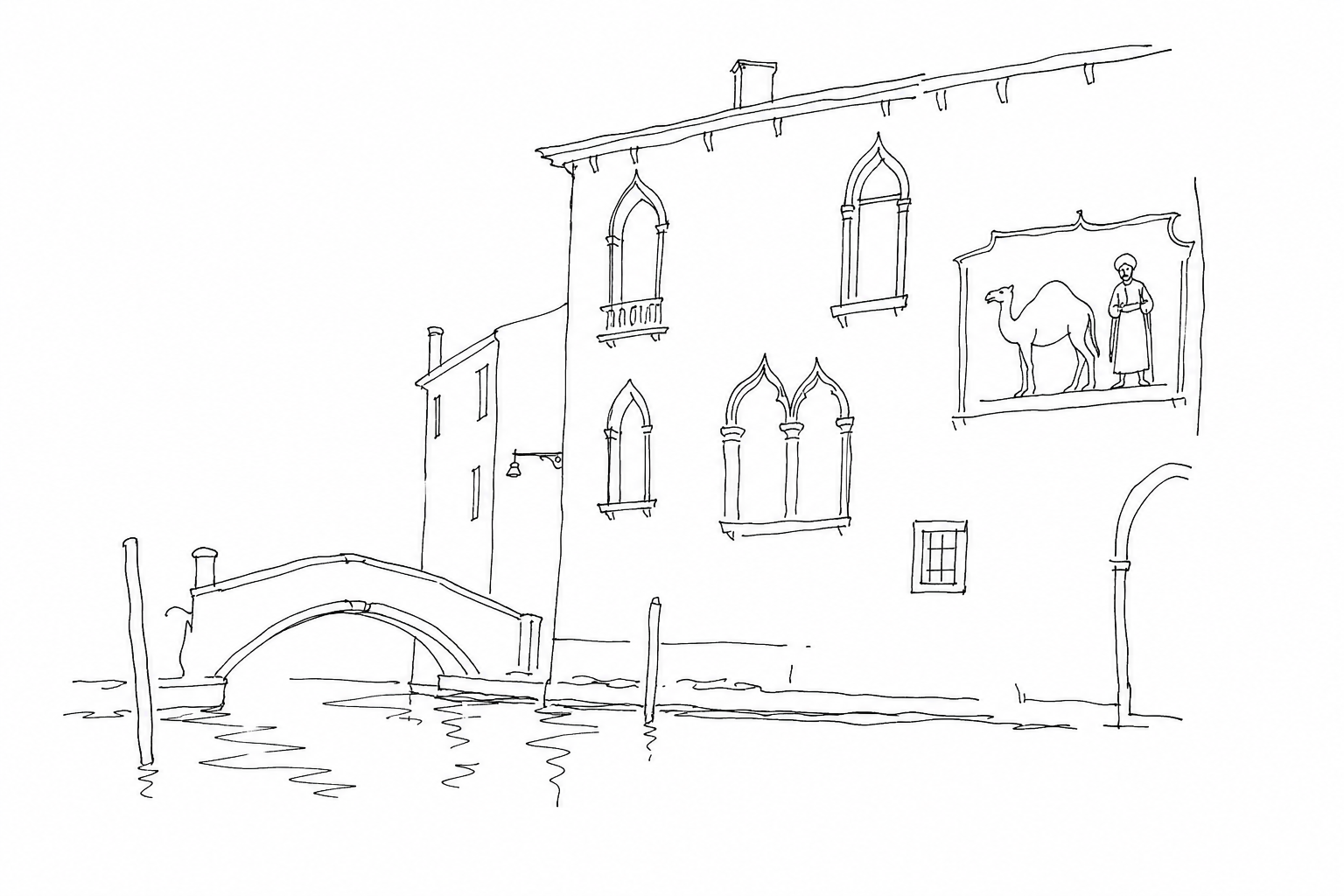
The architecture of the palace preserves medieval and Gothic elements, with arched windows and a façade designed to be seen from the water. Here the house also functioned as warehouse, office and calling card. The statues of the Mastelli, the camel and the “eastern” details thus tell of a commercial Cannaregio, where family memory was carved directly onto the walls.
The statues of the Moors: faces, names and details to read
The figures set into the corners should not be observed as simple ornaments: they function as a small gallery of legendary portraits, to be read at close range. The most famous is Sior Antonio Rioba, recognizable at the corner of the house by his severe face and by his metal nose, an evident replacement of the original stone. Precisely this addition, so visible, has transformed the character into an almost speaking presence in Venetian memory.
Other statues show heavy tunics, wrapped headgear and hands resting on sacks or bales: these are details that recall journeys, exchanges and commercial wealth, but also the medieval taste for images from distant origins. On one of the figures the name Rioba can be read, carved in such a way as to connect the sculpted body to a precise identity, even if filtered through tradition.
- The nose: an anomalous element that makes Rioba immediately recognizable.
- The drapery: long and rigid garments, more symbolic than realistic.
- The inscriptions: small clues that transform the sculpture into a family and popular story.
Legends, satire and a slow visit to the campo
Here stone does not tell only of a family: it becomes the voice of the neighborhood. Popular tradition identifies the character with the metal nose as Sior Antonio Rioba, a figure transformed over the centuries into a target of jokes and political comments, almost a Venetian “Pasquino.” Notes, biting verses and rumors were ideally entrusted to his severe face, making the corner a small scene of urban satire.
Another legend links the Mastelli brothers to the punishment of greed: foreigners enriched through trade and business, they were supposedly turned into stone for a commercial deception. It is not documentary history, but it explains why these figures continue to seem judged, motionless and admonishing.
- First observe from a distance: count the corners and understand how the sculptures “watch over” the passage.
- Then move closer to Rioba’s face: the different nose breaks the unity of the stone.
- Look down and at the walls: reliefs, inscriptions and worn surfaces complete the story.
Visiting Campo dei Mori means slowing down and reading Cannaregio at a different height: not only canals and perspectives, but corners, worn noses, inscriptions, figures that still seem to observe the life of the neighborhood. The stories of the Mastelli, the Palazzo del Cammello and the statues should not be sought as simple curiosities, but as clues to a city also built by exchanges, migrations and handed-down tales. It is a brief stop, but one capable of leaving a precise impression: Venice, in its most everyday margins, often preserves the most tenacious narratives.
Related Posts
Palazzo Mastelli and the Camel: an Eastern Detail in the Heart of Cannaregio
History, interpretation and context of the camel carved on Palazzo Mastelli, among Eastern trade and the calli of Cannaregio.Corte del Milion: Marco Polo, toponyms and hidden memory behind Rialto
A reading of the Corte del Milion among the Polo houses, nizioleti and urban traces behind Rialto.
San Vidal and Campo Santo Stefano: music, crooked bridges and an elegant piece of Venice
A short route through San Vidal, Campo Santo Stefano, music, architecture and oblique bridges.Questions Answered
Where is Campo dei Mori located and what makes it unique?
It's in Cannaregio; statues in building walls make it distinctive.Who were the Mastelli merchants and why are they important?
They were traders from the Morea linked to Venice's Levant trade.What is the significance of the statues' features?
They represent trade, identity, and include symbolic elements like inscriptions.What legends are associated with the Campo dei Mori statues?
Stories of greed punishment and satire around Sior Antonio Rioba.
Stay a little longer in Cannaregio
Which nearby corners reveal the more lived-in and less monumental side of this part of Venice?
 Palazzo Mastelli and the Camel: an Eastern Detail in the Heart of CannaregioHistory, interpretation and context of the camel carved on Palazzo Mastelli, among Eastern trade and the calli of Cannaregio.
 Palazzo Labia: Tiepolo, Cleopatra and the Eighteenth Century Overlooking CannaregioHistory, frescoes and urban context of Palazzo Labia, between Tiepolo, Cleopatra and the eighteenth-century face of Cannaregio.
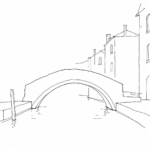 Ponte Chiodo in Cannaregio: one of the last Venetian bridges without a parapetHistory, form and urban context of Ponte Chiodo, a rare Venetian bridge without a parapet in the Cannaregio district.
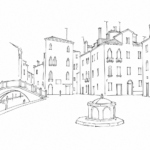 The Ghetto Nuovo of Cannaregio: why the world’s first ghetto is called “new”Origin of the name Ghetto Nuovo: from the Venetian foundry to the Jewish enclosure of 1516.