
Ca’ Dario is one of those Venetian palaces that seem to hold the gaze longer than expected. Overlooking the Grand Canal, not far from the Basilica della Salute, it combines the elegance of the Renaissance with a dark fame built over the centuries among financial setbacks, sudden deaths and stories repeated until they became legend. Its façade, refined and irregular, is not merely a photogenic backdrop: it is a complex fragment of the city, where architecture, urban memory and superstition intertwine without ever fully coinciding.
Where Ca’ Dario is located and why it immediately strikes you
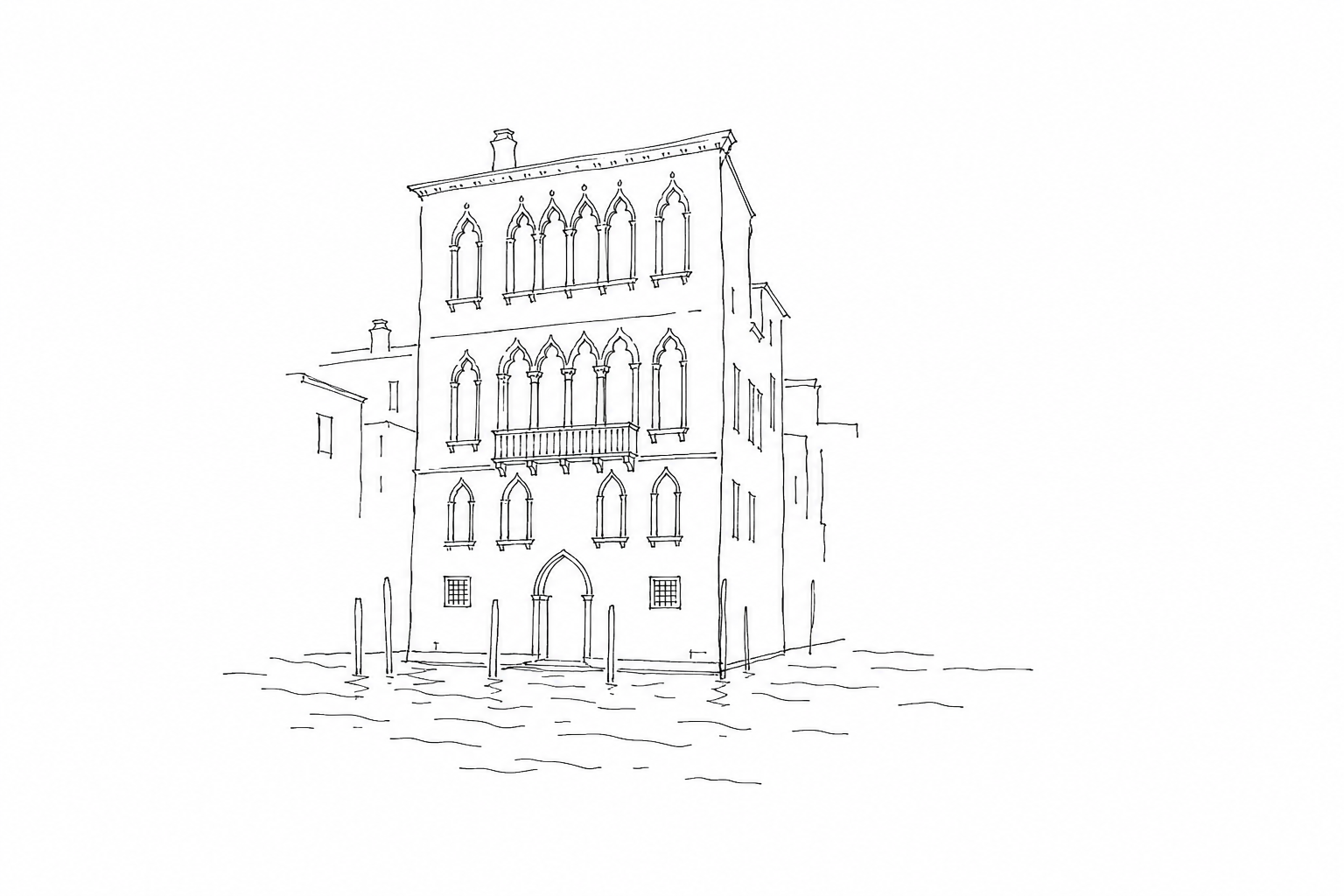
Ca’ Dario overlooks the Grand Canal in the sestiere of Dorsoduro, in a Venetian stretch of great monumental density, not far from the Salute area and Palazzo Venier dei Leoni. Seen from the water, the house appears almost like a theatrical backdrop: narrow, precious, isolated in its difference from the neighboring palaces.
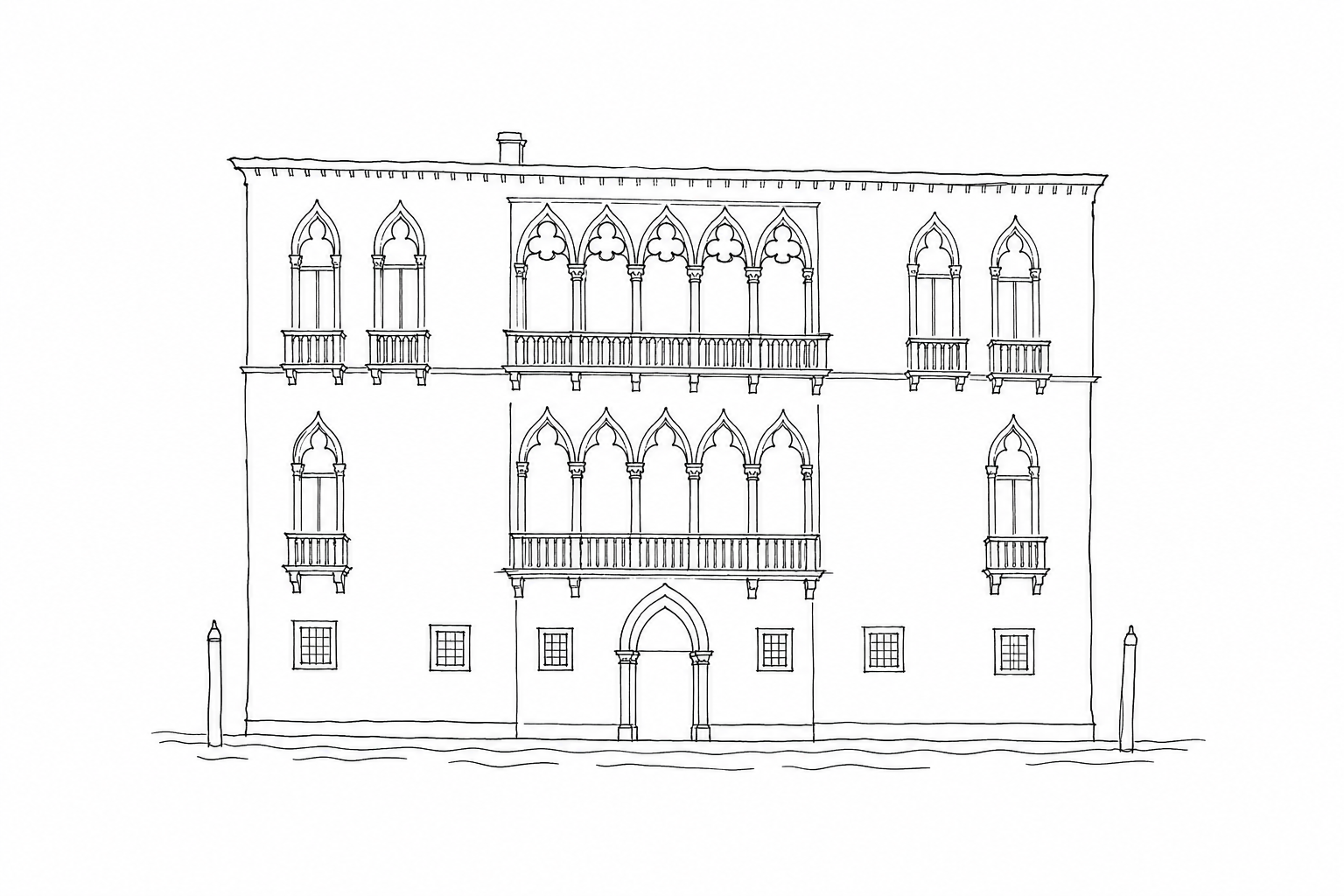
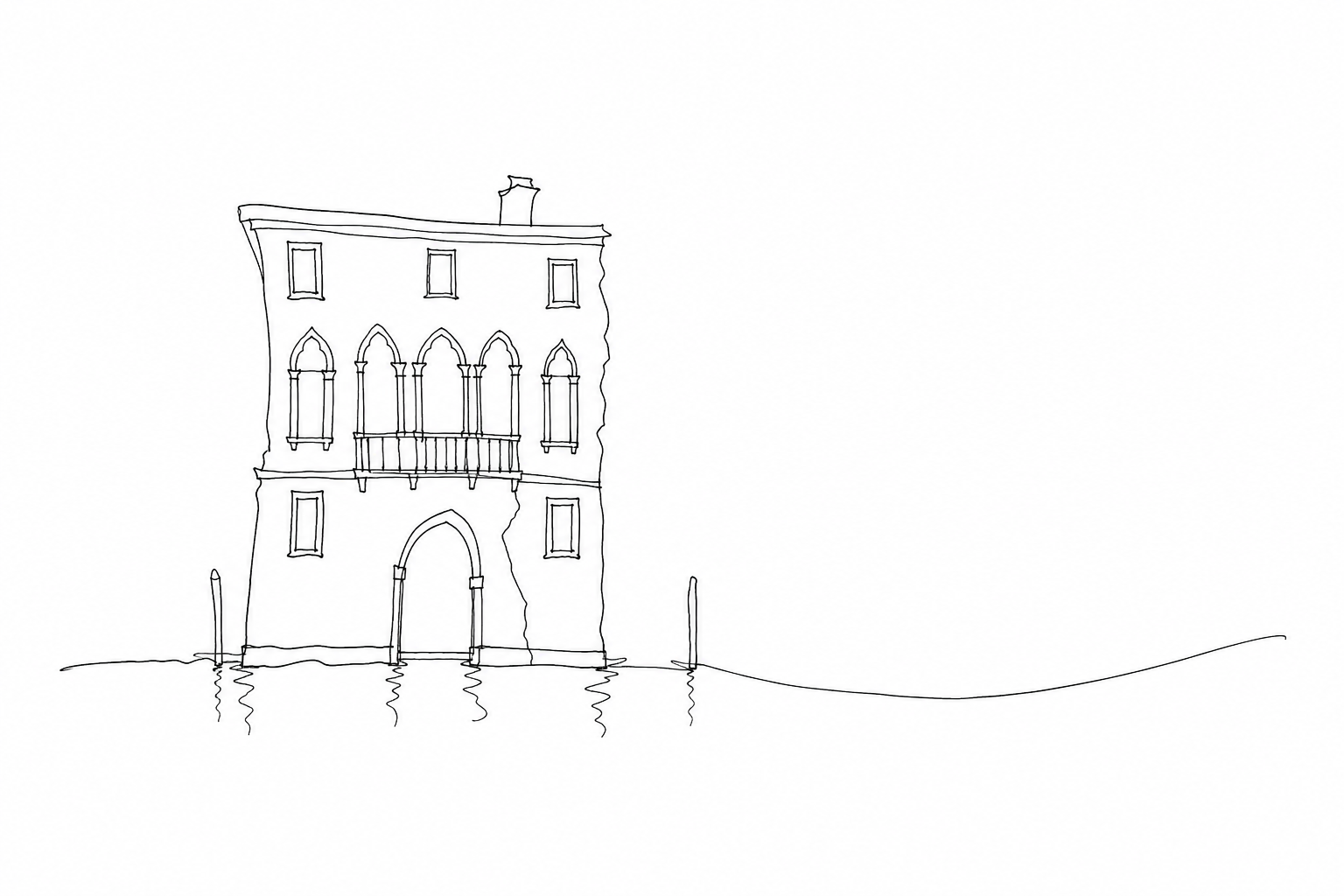
What strikes you is not only the sinister fame that has accompanied it over the centuries, but first of all its physical presence. The façade, attributed to the Lombardesque milieu and linked to the patronage of Giovanni Dario at the end of the fifteenth century, combines Istrian stone, colored marbles, decorative discs and Gothic openings. It is elegant, but not reassuring: it seems slightly off-axis, as if beauty were cracked by a hidden instability.
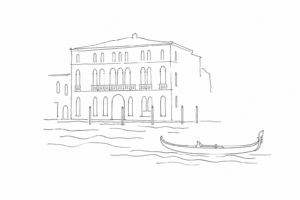
Precisely this position, exposed to the continuous gaze of the Grand Canal, has transformed Ca’ Dario into a building impossible to ignore: private palace, artistic object and, at the same time, a perfect threshold for superstitions and dark legends.
A Renaissance façade full of details
The outer skin of Ca’ Dario is a small lesson in Venetian Renaissance: it does not focus on mass, but on rhythm, color and surprise. The composition is narrow and vertical, adapted to an irregular plot; this very slight asymmetry contributes to the feeling of instability that feeds the palace’s uneasy fame.
The façade alternates Istrian stone and colored marbles, with decorative roundels that look like jewels set into the masonry. The arched windows, aligned over several floors, lighten the surface and make it almost embroidered. There is no need for a technical vocabulary: it is enough to observe how every element seeks elegance, but without erasing a certain visual tension.
- The marble roundels recall the antiquarian taste of the fifteenth century and give movement to the wall.
- The openings create a regular rhythm, but not one that is entirely pacified.
- The Latin inscription VRBIS GENIO IOANNES DARIVS links the building to its patron, Giovanni, and to the protective “genius” of the city.
It is this mixture of refinement, apparent fragility and memory carved into stone that makes the residence as magnetic as it is sinister.
The birth of its dark fame
The sinister reputation of Ca’ Dario did not arise all at once: it formed through accumulation, intertwining documents, family chronicles and stories repeated over the centuries. The certain fact is its prestigious origin: the house was commissioned at the end of the fifteenth century by Giovanni Dario, a diplomat of the Serenissima, in a noble area overlooking the water.
After the founder, tradition links the building to a sequence of reversals. His daughter Marietta is often remembered within a story of mourning and financial ruin; her husband, from the Barbaro family, appears in popular narratives amid violence, debts and premature death. Here, however, the boundary becomes shifting: some episodes belong to Venetian memory more than to a verifiable reconstruction.
In the following centuries the residence experienced changes of ownership, periods of abandonment and restorations. Its alternating conditions themselves fed the idea of a magnificent but unstable place, almost incapable of peacefully holding those who owned it. In the contemporary age the legend has been strengthened by associating other names that ended tragically with the house, in particular figures from the economic and cultural world.
The “curse,” therefore, should be read more as a narrative construction than as a historical fact: it arises from the encounter between unusual beauty, visible decay, unfortunate biographies and the Venetian taste for shadowy stories.
How to look at it today without reducing it to superstition
Observing Ca’ Dario today means holding two levels together: the fascination of the dark tale and the precision of the historical gaze. Before looking for omens, it is worth noting its nature as a Venetian Renaissance residence: polychrome marbles, decorative roundels, openings arranged with elegant irregularity and a verticality made uneasy also by its close relationship with the water.
A good key is to start from the context of Dorsoduro, near San Vio: not an isolated backdrop, but a building inserted into the visual traffic of the Grand Canal, where every noble house competed to be remembered. The legend works precisely because it rests on an unusual beauty, not because it replaces it.
- Look at the materials: the chromatic effect of the marbles produces wonder even before mystery.
- Separate periods and stories: fifteenth-century patronage, changes of ownership and modern chronicles are not the same thing.
- Always verify practical information: any openings or visits may change.
Looking at Ca’ Dario today means accepting this double reading: on one side the artistic quality of a patrician house overlooking one of the most intense stretches of the Grand Canal, on the other the narrative force of a dark legend that Venice has continued to feed. Reducing it to a “cursed palace” would be easy, but also limiting. It is better to observe its marbles, its asymmetries, its position, the events of its inhabitants and the way the city transforms buildings into stories. It is there, more than in superstition, that Ca’ Dario remains unsettling.
Related Posts
Palazzo Contarini Fasan: the so-called house of Desdemona and the fragile charm of Venetian Gothic
History, legend and Gothic details of Palazzo Contarini Fasan, a small façade on the Grand Canal linked to the myth of Desdemona.Ca’ Vendramin Calergi: Wagner’s palace and the elegant Venice of the Grand Canal
History, architecture and Wagnerian memory of Ca’ Vendramin Calergi, a Renaissance palace overlooking the Grand Canal.
The façade of Ca’ d’Oro: how to recognize Venetian Gothic by looking at a palace on the Grand Canal
A visual guide to the façade of Ca’ d’Oro: arches, loggias, tracery and asymmetries that reveal Venetian Gothic on the Grand Canal.Questions Answered
Where is Ca’ Dario located and what makes it visually striking?
It overlooks the Grand Canal with a narrow, precious façade slightly off-axis.What are the key Renaissance architectural features of Ca’ Dario?
Use of Istrian stone, colored marbles, decorative roundels, and irregular vertical rhythm.How did Ca’ Dario acquire its dark, sinister reputation?
Through centuries of tragic family events, financial losses, and legends intertwined with history.How should visitors view Ca’ Dario today in balance with superstition?
By appreciating its artistic qualities alongside the narratives of misfortune and legend.
Stay a little longer in Dorsoduro
Would you like to move from this place to nearby stories among churches, palaces and fondamenta?
 The Church of San Sebastiano: Veronese’s pictorial refuge hidden in DorsoduroGuide to the church of San Sebastiano in Dorsoduro, where Veronese worked for years and was buried.
 Marbled paper in Venice: colors on water and workshops that seem like alchemy laboratoriesA short journey through the history, technique and Venetian workshops of marbled paper, where pigments, water and slow gestures become objects of...
 Giorgione’s The Tempest: why a small painting at the Accademia continues to resist full explanationA small, famous and still elusive painting: a reasoned guide to Giorgione’s The Tempest at the Gallerie dell’Accademia.
 Ca’ Rezzonico and Pietro Longhi: everyday Venice in the eighteenth century, between masks and salonsAn itinerary at Ca’ Rezzonico to read Pietro Longhi and Venetian life in the eighteenth century through social rituals, masks, salons and...