
A few minutes from Venice’s more predictable flows, Palazzo Grimani preserves one of the most surprising spaces of the Venetian Renaissance: the Tribune. It is not a simple reception hall, but the place where a great patrician family transformed a taste for antiquity into architecture, collection and cultural vision. Here statues, niches, light and proportions build a precise dialogue with Rome and with the classical world, inside a palace overlooking the city’s daily life. Entering the Tribune means observing Venice from a less usual angle: not only water, trade and maritime power, but also study, memory and a desire for antiquity.
A Venetian palace turned toward antiquity
A few steps from Campo Santa Maria Formosa, Palazzo Grimani appears as a precious anomaly within Venice’s Gothic and mercantile fabric. The residence, linked to the Santa Maria Formosa branch of the Grimani family, was transformed in the sixteenth century into a residence capable of speaking the language of ancient Rome: courtyards, staircases, loggias and decorated rooms created a learned route, closer to the humanist palace than to the traditional lagoon house-warehouse.
The heart of this vision was the Tribune, a space conceived to house a collection of ancient sculptures and to stage it with architectural rigor. Giovanni Grimani, patriarch of Aquileia and refined collector, concentrated marbles, deities, emperors and archaeological fragments there as in a small private museum ante litteram. It was not simple ostentation: classicism became an intellectual model, a repertoire of forms and virtues through which a Venetian family asserted prestige, erudition and cultural ambition in the heart of the city.
It was Giovanni, patriarch of Aquileia and protagonist of one of the most refined Venetian collecting enterprises of the sixteenth century, who gave the Tribune its meaning. He did not think of a simple reception hall: he wanted a space capable of transforming ancient marbles, Roman copies and archaeological fragments into a visual discourse on the authority of classical culture.
The collection came partly from the family inheritance and partly from purchases made with humanist taste, in an era when Venice looked to Rome not only as a religious center, but as the material repository of antiquity. Statues, busts and reliefs were arranged according to a scenographic criterion: not piled up as curiosities, but placed in niches and architectural registers that suggested harmony, hierarchy and measure.
For Giovanni, the Tribune was also an intellectual self-portrait. His ecclesiastical dignity, erudite education and the ambition of the family converged in a room where antiquity became a living presence: a model to study, imitate and offer to the gaze of the most cultivated guests.
Inside the Tribune: light, niches and statues
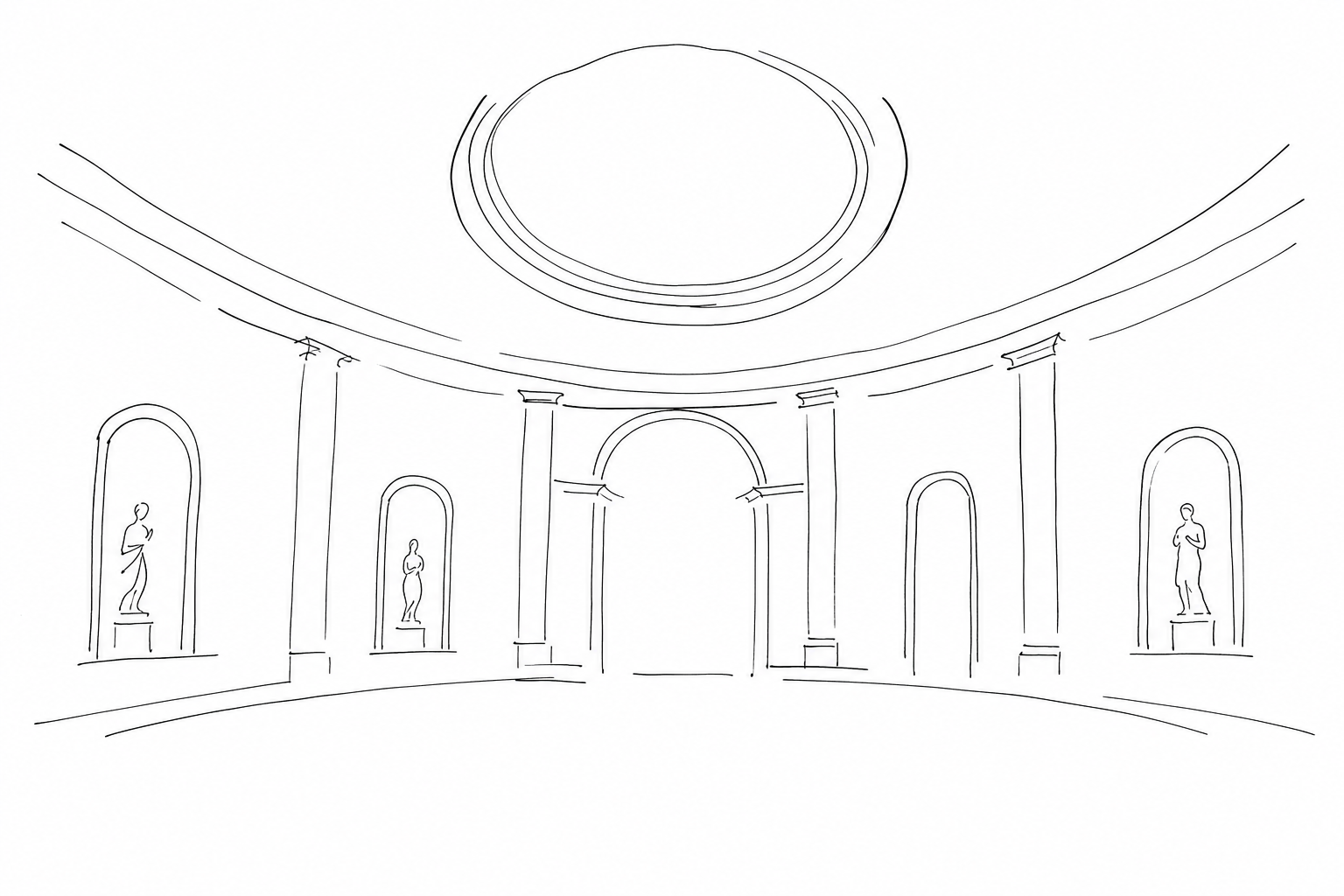
The reading of the space begins from below and rises upward. The room does not function like a linear gallery, but as a concentric space: those who enter are invited to stop at the center and turn their gaze, following a sequence of niches, shelves, busts and full figures. The walls become a kind of inhabited architecture, where each statue occupies a precise point and dialogues with those nearby.
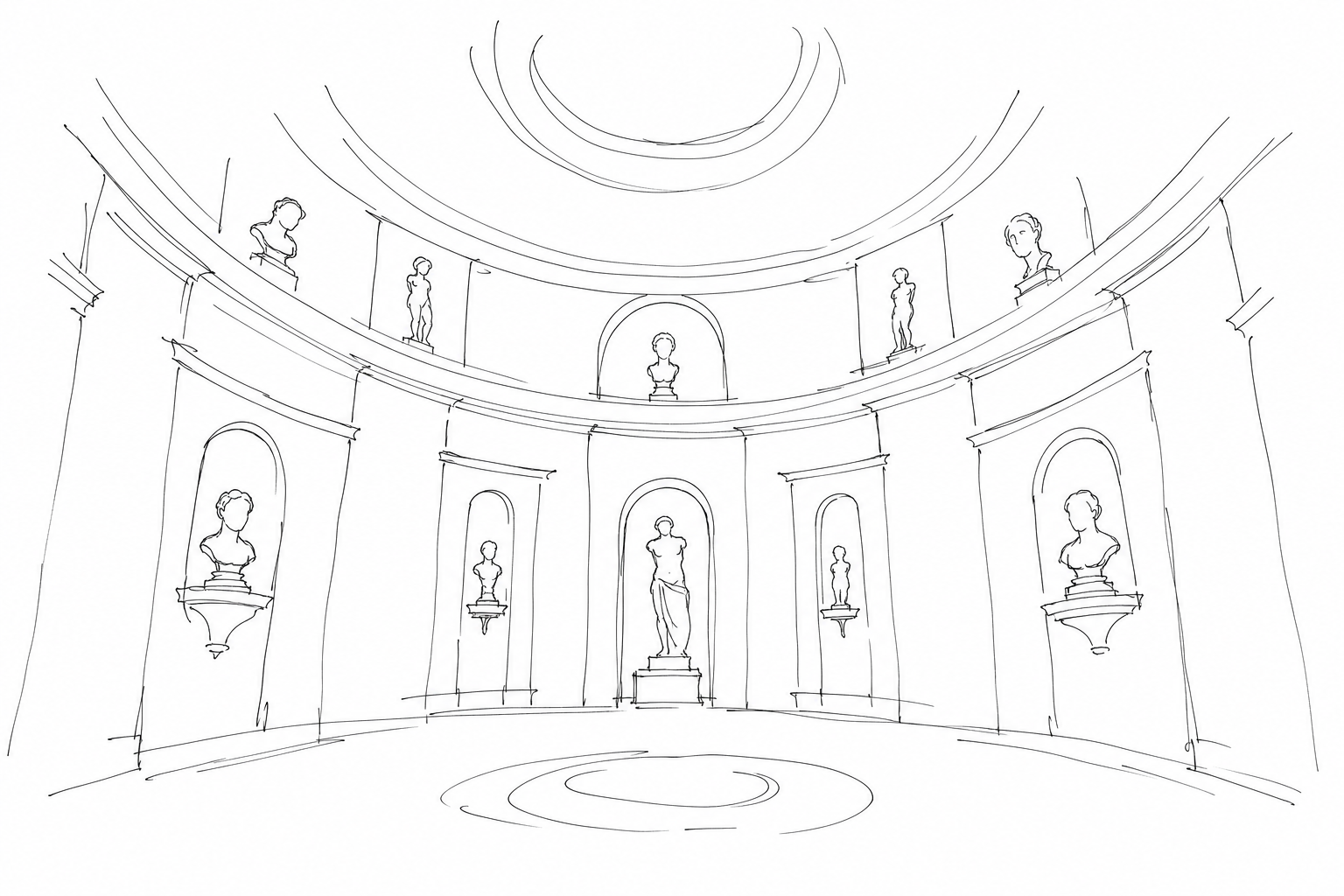
Natural light, filtered through the upper opening, does not illuminate evenly: it descends from above, grazes the volumes, accentuates profiles, draperies, torsions. This effect makes the presence of the Rape of Ganymede, placed in an aerial position, particularly theatrical, as if the myth were suspended above the visitor. Antiquity is therefore not arranged only to be catalogued, but to be perceived physically.
The niches order the variety of marbles and subjects: deities, emperors, fragments, ideal heads. The whole evokes Roman models, in particular the idea of a secluded and vertical place, where collection, architecture and light build a unique experience in the Venetian Renaissance.
Its value does not depend only on the sculptures on display, but on the fact that a Renaissance idea of a museum before modern museums survives here. Giovanni Grimani did not collect ancient marbles as simple trophies: he inserted them into a visual machine designed to show erudition, family rank and dialogue with Rome.
For Venice, a city built on water and on the East, evoking classical antiquity in such a carefully calibrated room meant claiming a different cultural genealogy: not only mercantile and lagoon-based, but also humanist. The collection, later linked to the public history of the Serenissima through the bequest of statues to the Republic, helps us understand how private taste could become shared heritage.
During the visit it is worth slowing down: observing the whole before the individual pieces, then comparing bodies, postures and gazes. For updated practical details on access and routes, it is always best to check the official information before leaving.
The Tribune of Palazzo Grimani still matters today because it makes visible an idea of Venice that is often less recounted: a city capable of collecting, interpreting and reinventing the classical heritage without losing its own urban identity. The statues are not only works on display, and the niches are not simple decorative frames: together they tell of an intellectual, family and political project. Visiting this space attentively allows one to read the palace as a complex organism, where architecture and collecting support each other. It is a precious stop for those seeking a slower, less obvious Venice, made of rooms, details and stratifications.
Related Posts
Palazzo Loredan in Santo Stefano: science, busts and Venetian culture outside the best-known museums
Editorial guide to Palazzo Loredan in Santo Stefano: cultural venue, civil architecture and the Pantheon Veneto in the heart of Venice.Palazzo Grassi: the white face of the Grand Canal between Venetian nobility and contemporary exhibitions
History, façade and current exhibition role of Palazzo Grassi, the white palace on the Grand Canal.
Palazzo Labia: Tiepolo, Cleopatra and the Eighteenth Century Overlooking Cannaregio
History, frescoes and urban context of Palazzo Labia, between Tiepolo, Cleopatra and the eighteenth-century face of Cannaregio.Questions Answered
What is the Tribune in Palazzo Grimani?
A Renaissance space housing a classical sculpture collection and cultural statement.Who was Giovanni Grimani and his role?
A refined collector who designed the Tribune to showcase classical heritage intellectually.How does the Tribune reflect Venice’s identity?
It shows Venice not just as mercantile but humanist and culturally ambitious.What architectural elements define the Tribune?
Niches, light from above, and strategic statue placement create a unique visual experience.
Keep walking through Castello
Want to stay among churches, waterfronts and places where Venice opens out and feels more everyday?
 Querini Stampalia: Carlo Scarpa, acqua alta and modern architecture inside a Venetian palazzoEditorial guide to the Querini Stampalia: the palazzo, Carlo Scarpa’s intervention, acqua alta and the dialogue between historic Venice and modern architecture.
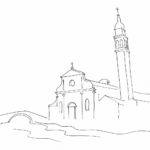 San Giorgio dei Greci: the leaning bell tower that tells the story of Venice’s foreign communitiesHistory, architecture and an urban reading of San Giorgio dei Greci, between the Greek community, Castello and a leaning bell tower.
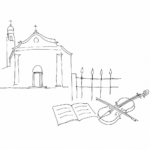 La Pietà and the Musician Girls: Vivaldi Seen from the Hospital Girls’ SideThe Venetian Pietà reinterpreted through the musician girls who played for the hospital and for Vivaldi.
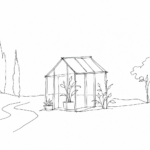 The Serra dei Giardini: glass, plants and the Biennale even before the national pavilionsHistory and interpretation of the Serra dei Giardini, among glass architecture, plants and the birth of the Biennale.