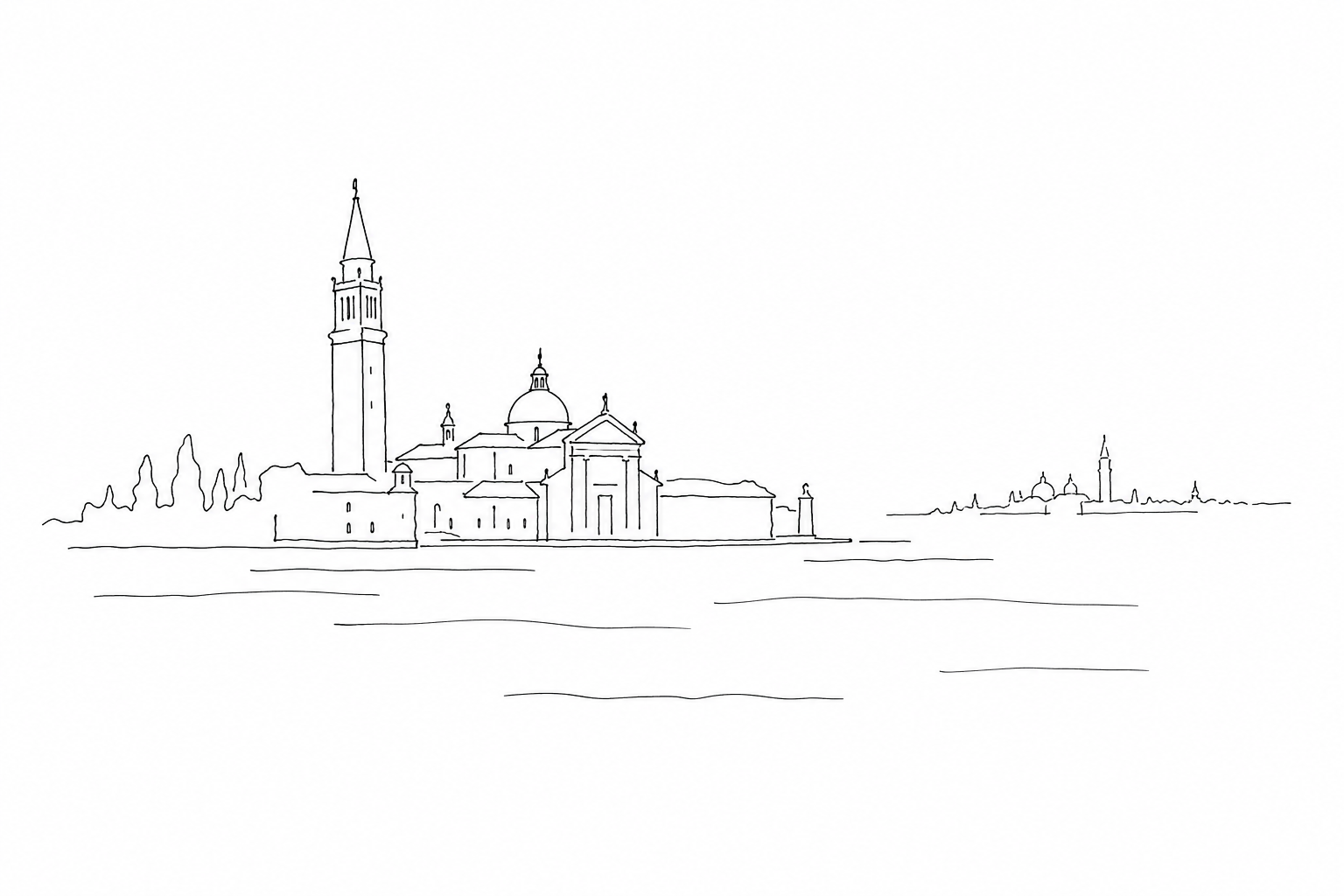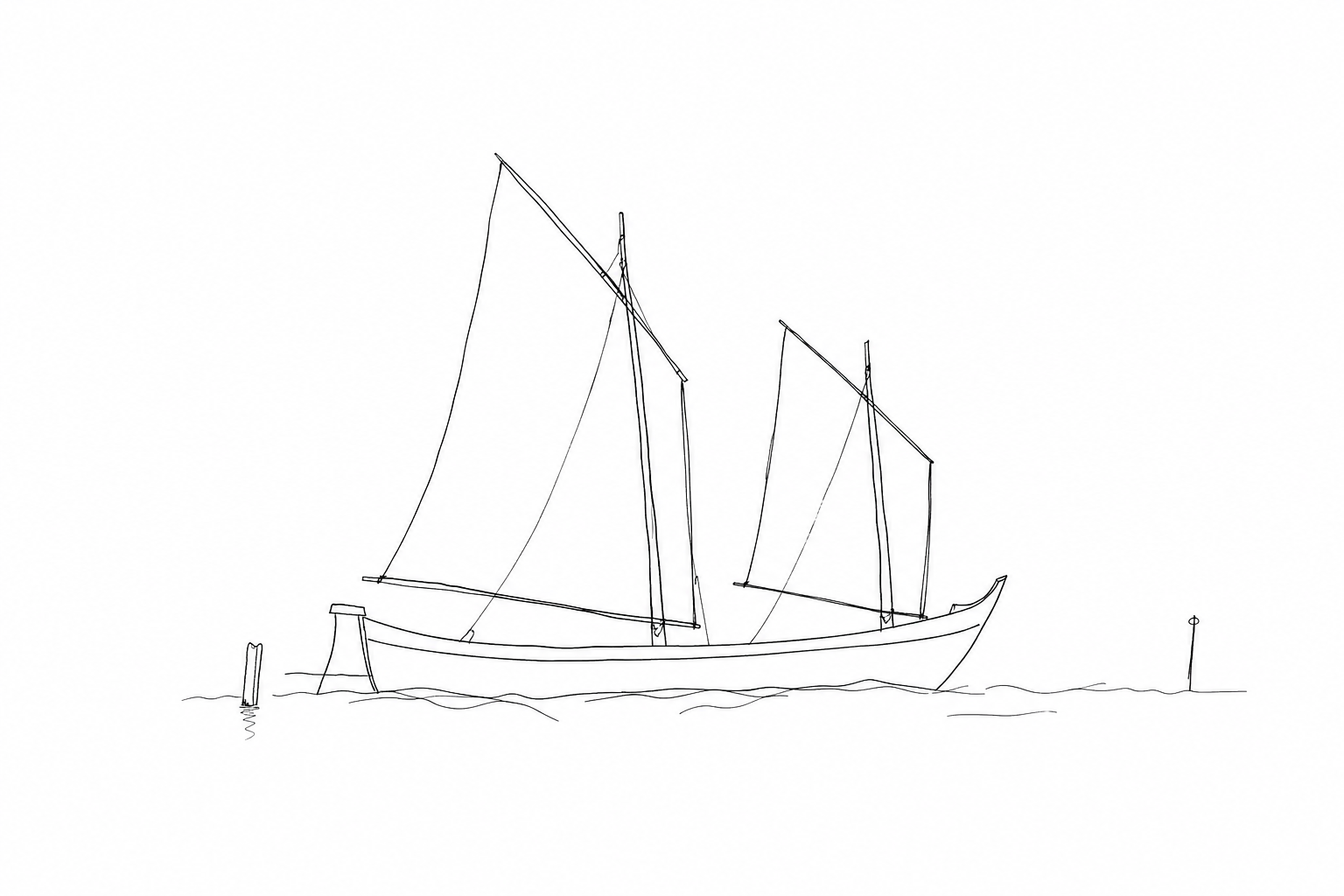

San Nicolò del Lido is one of those places where Venice shows its nature as a threshold city: not yet the open sea, no longer only the inner lagoon. Around the monastic complex, the church and the spaces overlooking the port of Lido, devotion, control of routes, solemn departures and daily life intertwine. Reading San Nicolò means observing Venice from its eastern edge, where for centuries ships, embassies, relics, armies and public ceremonies passed. Not a simple peripheral point, but a symbolic and material gateway of the Serenissima.
Why San Nicolò stands on the threshold of the lagoon
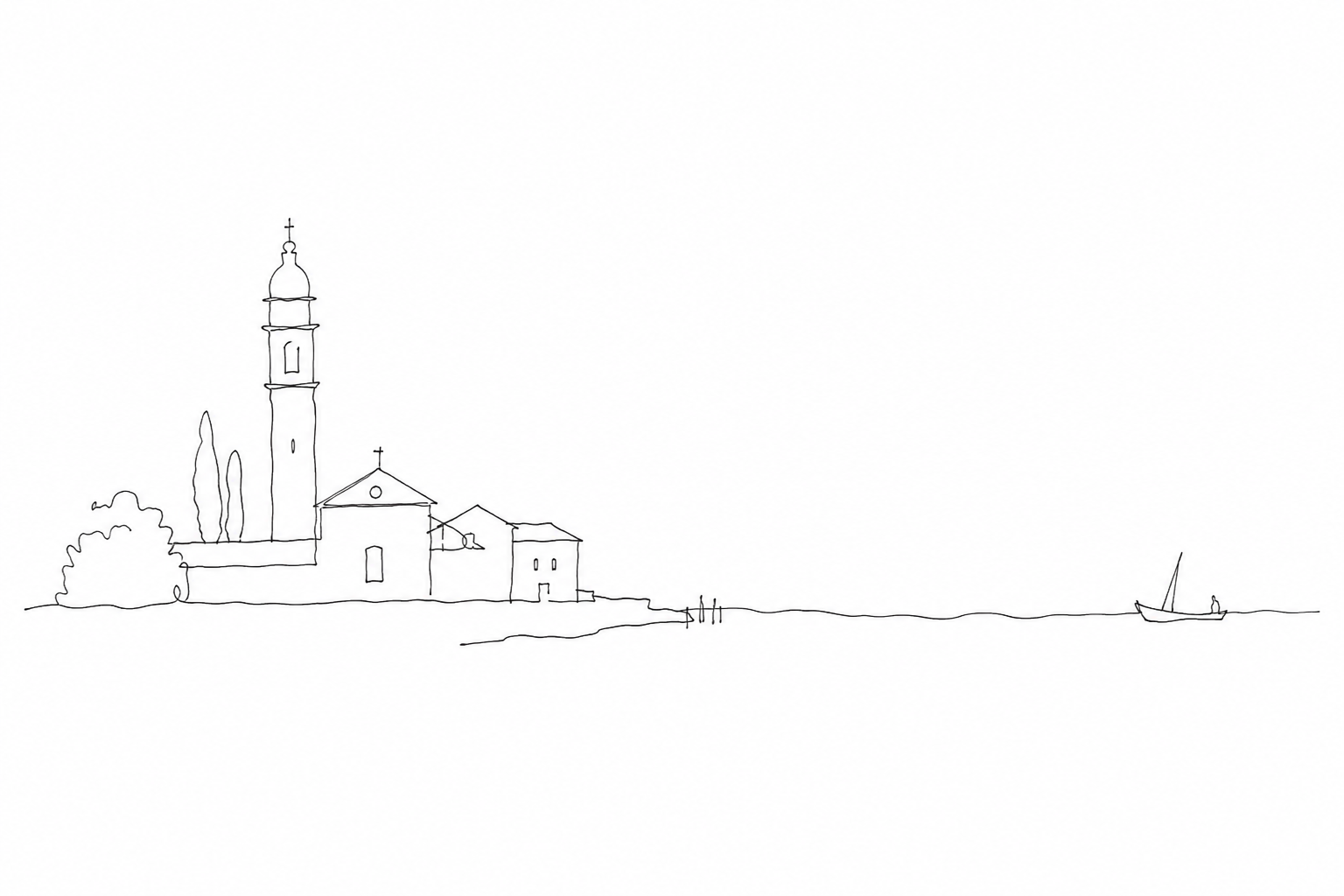
San Nicolò del Lido occupies a decisive point: not the monumental center of Venice, but its maritime threshold. Here the island of the Lido faces the harbor entrance, the passage through which ships entered and left the lagoon toward the Adriatic. For this reason, the church and the ancient Benedictine monastery were not only a place of prayer, but also a visible reference for those who were leaving, landing or waiting for the favorable moment to set out to sea.
The position explains the simultaneously religious, political and ceremonial character of the site. Saint Nicholas, venerated as the protector of sailors, made the presence of rites linked to the sea natural; at the same time, the Republic transformed this water frontier into a public stage. During the Ascension celebrations, the dogal procession reached the area of San Nicolò before the symbolic gesture of the “Marriage of the Sea.” The periphery thus became a theater of Venetian sovereignty.
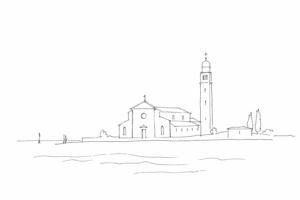
Monks, relics and architecture of the complex
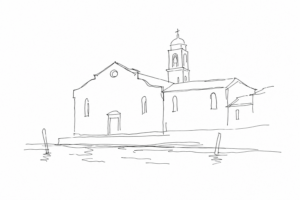
The importance of the San Nicolò complex did not depend only on its position at the harbor entrance. From the medieval period onward, the church and the Benedictine monastery formed a stable religious outpost, capable of giving the maritime frontier a recognizable spiritual authority. The monks preserved liturgies, memories and landed property; in an area exposed to naval passages, their presence transformed the lagoon edge into an ordered, inhabited, ritual place.
The most significant core was the cult of the relics attributed to the holy bishop of Myra, a figure much loved by sailors. In Venice this devotion had a concrete value: protection during the crossing, a link with the East, the affirmation of a city that built its identity also through holy bodies and contested reliquaries.
The architecture visible today tells of successive layers: a monastic layout, conventual spaces, a church renewed in the modern age, sober and functional materials rather than triumphal ones. The complex does not compete with the great city basilicas; rather, it acts as a sacred threshold, where prayer, custody of the relics and departure by sea overlap.
Departures by sea and the power of the Serenissima
San Nicolò del Lido was also a political point, not only a devotional one. Its position near the harbor entrance transformed it into the place where Venice displayed its control of access to the lagoon and, from there, to the routes of the Adriatic and the Levant.
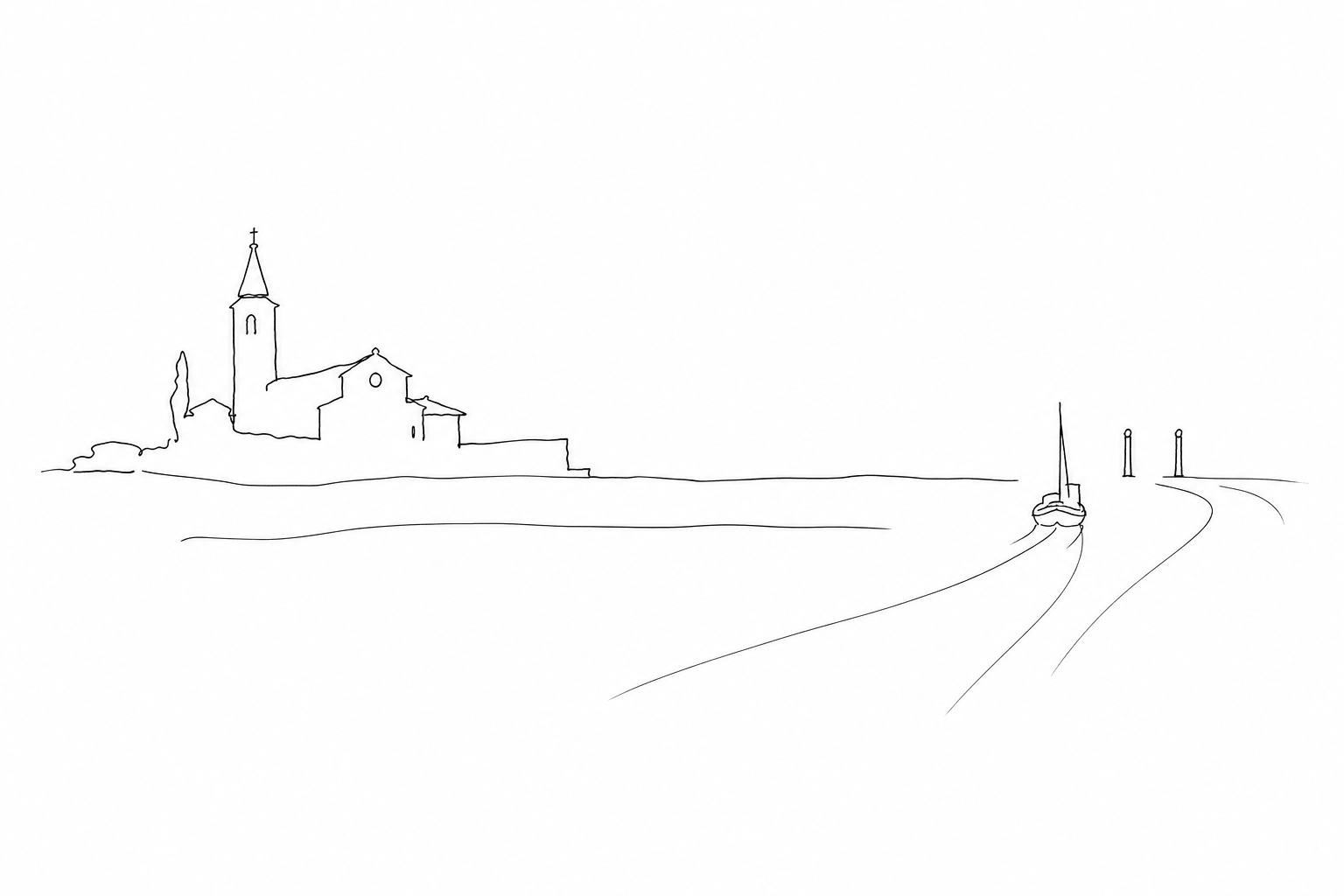
Before the great public voyages, the area could become a gathering scene: galleys, crews, pilgrims, merchants and men-at-arms passed through this urban edge before leaving the protected waters. Departure was never a neutral gesture: it meant trade, war, diplomacy, the collection of duties and the defense of the Republic’s interests.
The link with ceremony is evident in the feast of the Sensa, when the doge reached the Lido on the Bucintoro for the rite of the Marriage of the Sea. The ring thrown into the waters symbolically declared Venetian dominion over the Adriatic, but the message was also understandable in practical terms: whoever governed that passage governed traffic, landings and alliances.
Thus the monastic complex was inserted into a geography of power: prayer and navigation, ducal authority and military horizon met before the open lagoon.
The ceremonial side: how to read it today
To understand this place, it is not enough to look only for the monastery or sacred architecture: one must imagine a public scene. Here Venetian power displayed itself before the open waters, especially during the feast of the Ascension, when the doge went out on the Bucintoro for the rite of the Marriage of the Sea. The ring thrown into the water was not a folkloric gesture, but a political declaration: Venice represented its naval dominion as pact, protection and legitimacy.
Today the most useful reading is to observe the axes: the religious complex, the harbor entrance, the route of the boats, the horizon toward the Adriatic. In this relationship between stone, water and ceremony, one grasps why the area had a value different from a simple island periphery.
- Historical key: the rite transformed departure into an image of government.
- Spatial key: the position made the passage between the city and external routes visible.
- Practical key: for visits, functions or access, always check the updated information.
Visiting San Nicolò del Lido helps one understand a less immediate Venice, built on gestures, waits and precise functions. The monastery, the memories of the relics, the position on the port and the memory of departures tell of a city that lived not only in its central calli, but also in its strategic accesses. Today this side of the lagoon is read at a slow pace: observing the architecture, the relationship with the water, the ceremonial traces and the urban landscape of the Lido. It is a concrete way to approach Venetian history without stopping at its best-known surface.
Related Posts
San Nicolò dei Mendicoli: one of the oldest churches where Venice still seems like an outskirts
History, urban space and details of San Nicolò dei Mendicoli, an ancient church on the inhabited edge of Dorsoduro.San Pietro di Castello: the ancient forgotten cathedral on the margins of the most visited Venice
History, architecture and urban context of San Pietro di Castello, the former Venetian cathedral far from the flow of San Marco.
The Molo of San Marco: columns, departures and the maritime power of the Serenissima
History and interpretation of the Molo of San Marco: the columns, the Basin, State departures and the language of Venetian power.Questions Answered
Why is San Nicolò del Lido considered the threshold of the lagoon?
It marks the harbor entrance controlling ship access to Venice and the Adriatic.What roles did the monks and the monastery play in San Nicolò?
They provided spiritual authority, preserved relics, and maintained ritual order by the lagoon.How did Venice use San Nicolò for political and ceremonial purposes?
It was a public stage for ceremonies like the Marriage of the Sea declaring maritime sovereignty.What is the significance of the Marriage of the Sea ritual?
It symbolized Venetian dominion over the Adriatic and governance of maritime traffic.
Between the Lido, lagoon and Adriatic
Want to follow stops where Venetian history meets the open sea?
 Malamocco on the Lido: the ancient village that recalls a Venice before VeniceHistory, places and urban reading of Malamocco, the village on the Lido linked to the oldest Venice.
 Sant’Andrea and Sanmicheli’s fort: the military gate of the lagoon that controlled the seaHistory, architecture and interpretation of the fort of Sant’Andrea, a lagoon outpost designed by Michele Sanmicheli.
 Alberoni: dunes, oasis and the lagoon where the Lido stops being fashionableAn editorial guide to Alberoni, among protected dunes, pine forest, breakwater and the lagoon edge of the Lido.
 The Festa della Sensa: the marriage of the sea explained without rhetoricWhat the Sensa celebrates, where the marriage of the sea takes place and why it still matters.