


The bragozzo is one of the boats that best recounts the relationship between the Adriatic, the lagoon and daily work. Solid, pot-bellied, recognizable by its lug sails often painted with family colors and symbols, it was not born as a postcard image but as a precise tool: to fish, transport, withstand the shallow and variable sea. Looking at it means reading a material culture made of boatyards, nets, short routes, hierarchies on board and visual signs designed to stand out from a distance. In this guide we observe the bragozzo as a nautical object, a historical document and a presence still visible in Venetian and Adriatic maritime memory.
What the bragozzo is
The bragozzo is a traditional fishing boat of the upper Adriatic, created to work among lagoons, shallow waters, harbor mouths and the open sea near the coast. It is associated above all with Chioggia and the Venetian lagoon, but its presence also marked other Adriatic landing places, where sturdy, capacious hulls capable of facing variable waters were needed.
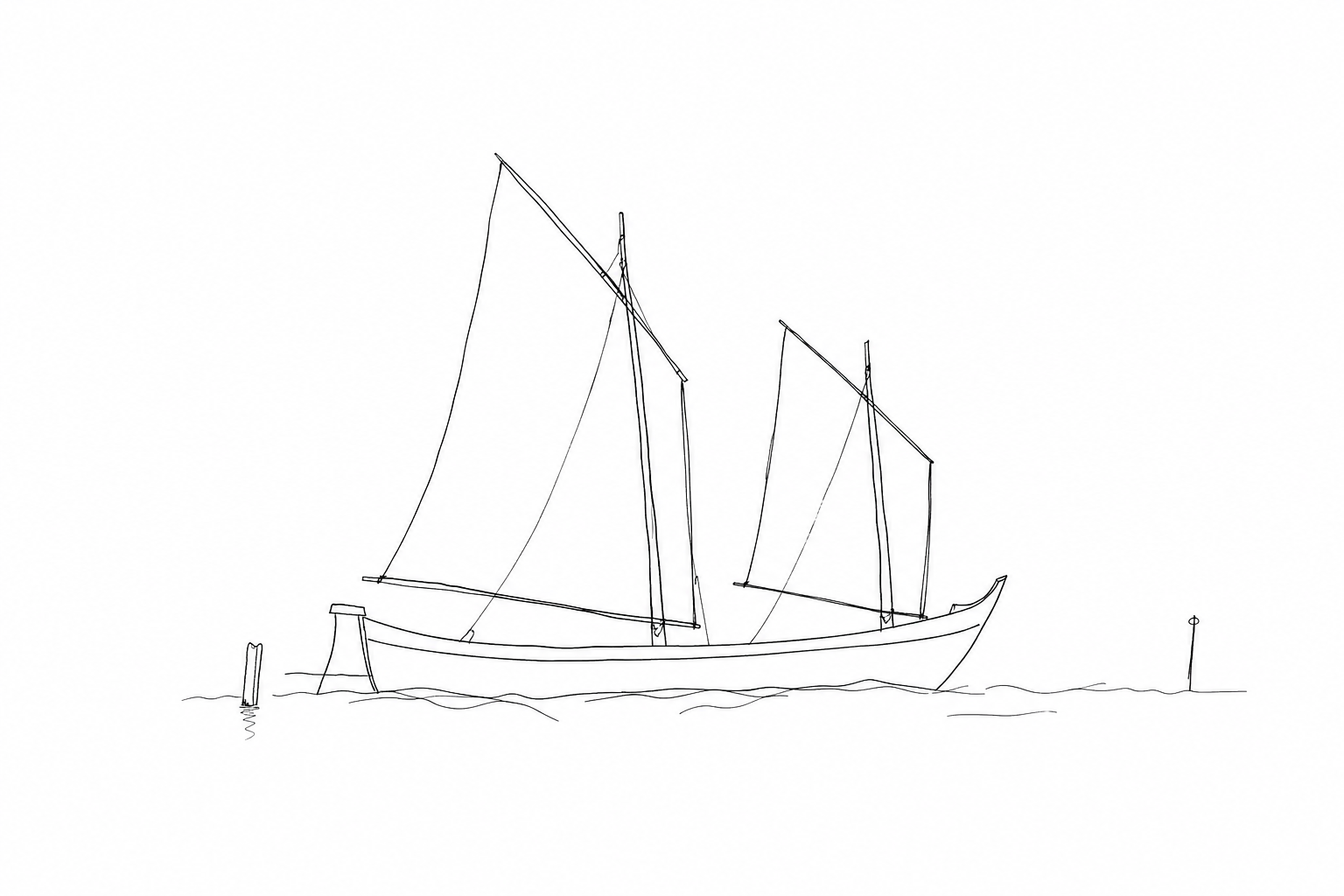
Its shape responded to very concrete needs: a relatively flat bottom to move in shallow waters, full bow and stern, good stability during fishing operations and enough space for nets, tools and catch. What made it immediately recognizable were the lug sails, often brightly painted with colors, family symbols or devotional signs, also useful for distinguishing the boats from a distance.
The bragozzo was therefore not only a means of work: it was a small floating architecture of the lagoon community, shaped by the wind, salt, canals and the daily routes of fishermen.
Lug sails and colors: reading the boat
The bragozzo could be recognized from afar by its rig with lug sails: trapezoidal sails supported by an inclined spar, not centered on the mast but “taken” at about one third of its length. This solution was suited to the variable winds of the Adriatic and allowed quick maneuvers even with reduced crews, a valuable quality during fishing and at lagoon entrances.
The hull was wide, robust, with a relatively flat bottom to face shallow waters and sandbanks without losing stability. The full bow and capacious stern offered space for nets, baskets, tools and catch; the boat had to be at once a work home, a warehouse and a means of navigation.
The painted sails were its visual language. Bright colors, geometric fields, religious symbols, initials or family signs made each vessel recognizable at sea. They were not simple decorations: they helped identify the owner, the port of origin or the fishing community. Among ochre, red, black and white, the bragozzo transformed a practical necessity into a powerful image of lagoon culture.
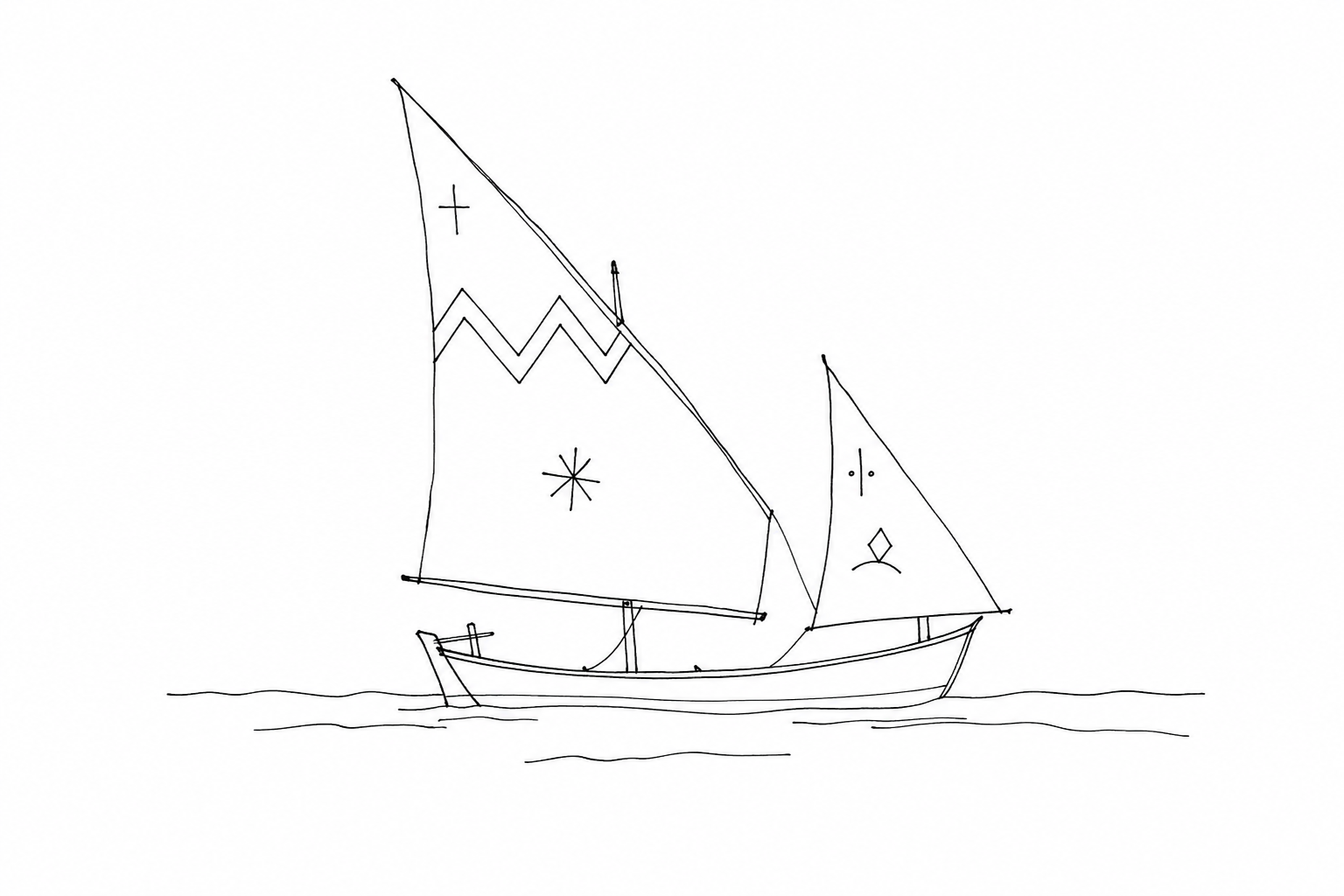
In everyday life, the bragozzo was first and foremost a place of toil. In Chioggia, in Venice and in the coastal centers of the upper Adriatic, it often went out with small family crews: men accustomed to reading seabeds, winds, currents and signs of the sky even before instruments.
The day could begin in the dark, with the nets arranged at the bow or along the sides, essential provisions, fresh water and tools to repair ropes, meshes and wood. At sea they worked with fixed nets or trawl nets, according to the season and area; the catch was divided, cleaned and preserved in the simplest possible way, because space and time were always limited.
Life on board was cramped: little sleep was had, cooking was done on modest stoves, and smells of salt air, tar, fish and wet canvas were shared. Precisely this practical dimension explains the robustness of the hull, the bow capable of facing short waves and the wide stern useful for maneuvers. Every detail arose from a trade, not from decoration as an end in itself.
Where to recognize its traces today
To encounter the bragozzo without turning it into simple nostalgia, it is worth starting from the places where its profile has left material traces: Chioggia, the Venetian shores, the small ports of the upper Adriatic and the collections dedicated to lagoon navigation. In local museums it is possible to observe models, onboard tools, photographs and paintings: before organizing a visit it is prudent to verify updated information with the official venues.
In front of a model or a preserved hull, the keys to interpretation are concrete: observe the wide belly, designed for load and stability; the high bow, useful in rough seas; the external rudder; the decorations of bow and stern, often linked to protection, family identity and recognition from a distance. Even in historical images, the boat should be read alongside the men, the nets, the lanterns and the boxes: only in this way does it return to being a work tool, not a simple picturesque object.
Recognizing a bragozzo today does not only mean identifying a traditional boat: it means grasping the traces of a way of inhabiting the water before tourism simplified its image. Its broad forms, colorful sails, construction details and fishing stories speak of families, minor ports, hard trades and knowledge passed down on board. In museums, in reenactments, in boatyards and in some still-sailing presences, the bragozzo continues to offer a concrete key to reading Venice and the Adriatic as spaces of work, technique and shared identity.
Related Posts
The mascareta: small, agile and Venetian, long before the regatta photos
History and use of the mascareta, a light boat created for rii, canals and the lagoon.Briccole in the lagoon: the posts that guide boats and shape the Venetian landscape
What briccole are, how they guide boats and why they mark the landscape of the Venice lagoon.
The caorlina: the transport boat that became a protagonist of historic regattas
Origins, shape and role of the caorlina: from a working boat of the lagoon to a symbolic presence in Venetian regattas.Questions Answered
What is a bragozzo?
A traditional upper Adriatic fishing boat designed for lagoons and shallow waters.What makes the lug sails special on a bragozzo?
They are trapezoidal sails painted with colors and symbols for identification and quick maneuvers.How was life aboard the bragozzo?
Cramped and hardworking, with family crews managing fishing and repairs daily.Where can the bragozzo still be recognized today?
In Chioggia, Venetian shores, upper Adriatic ports, and maritime museum collections.
From gondolas to waterborne crafts
Which details reveal the work needed to keep a city built on the lagoon moving?
 The caorlina: the transport boat that became a protagonist of historic regattasOrigins, shape and role of the caorlina: from a working boat of the lagoon to a symbolic presence in Venetian regattas.
 The mascareta: small, agile and Venetian, long before the regatta photosHistory and use of the mascareta, a light boat created for rii, canals and the lagoon.
 Regata Storica: how to watch it while understanding boats, colors and hierarchies on the waterA guide to reading the Regata Storica: procession, boats, colors, flags and racing logic on the Grand Canal.
 Pellestrina and the Murazzi: walking between the Adriatic, the lagoon and low fishermen’s housesA slow itinerary on Pellestrina, among the Murazzi, lagoon shores and fishermen’s houses.