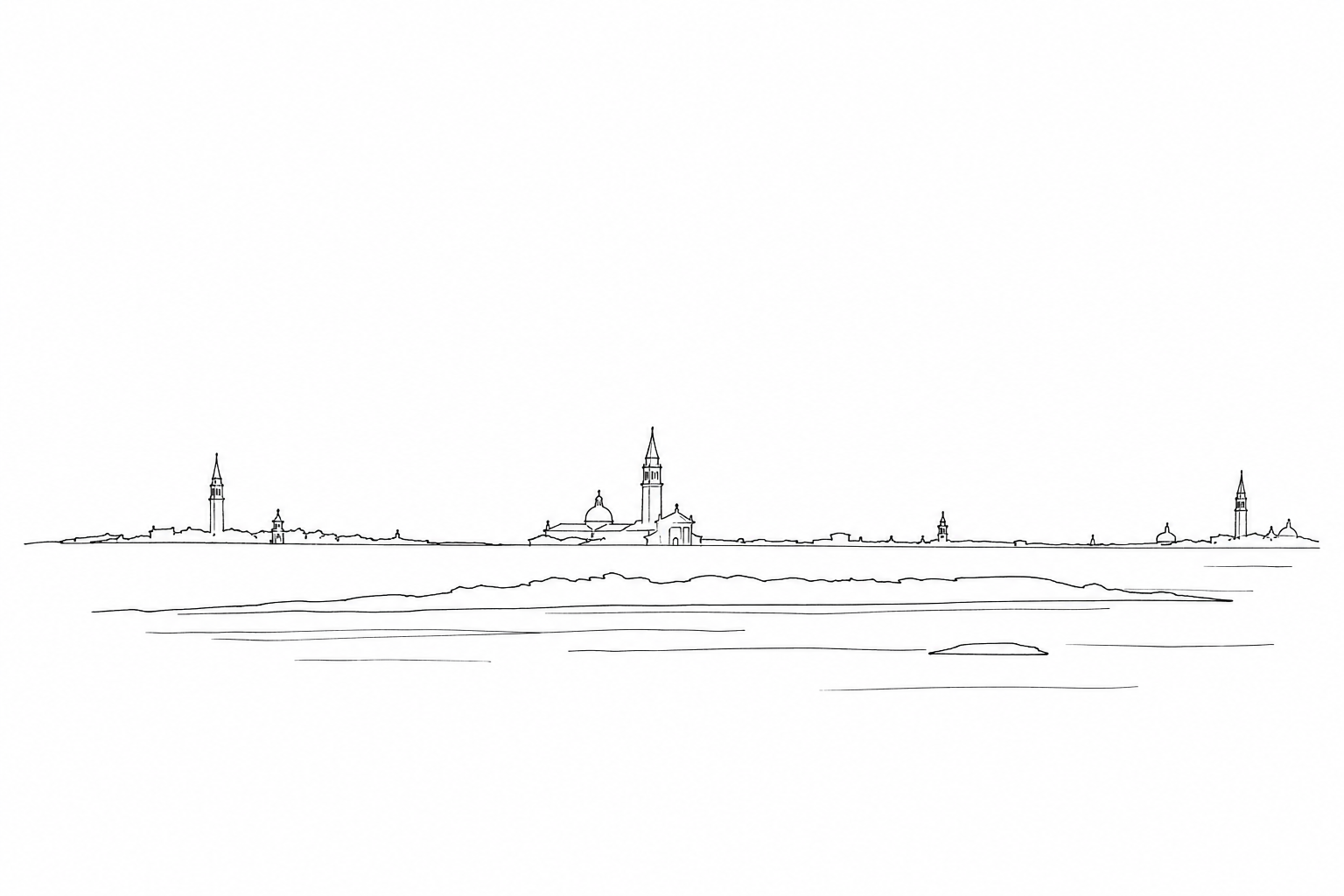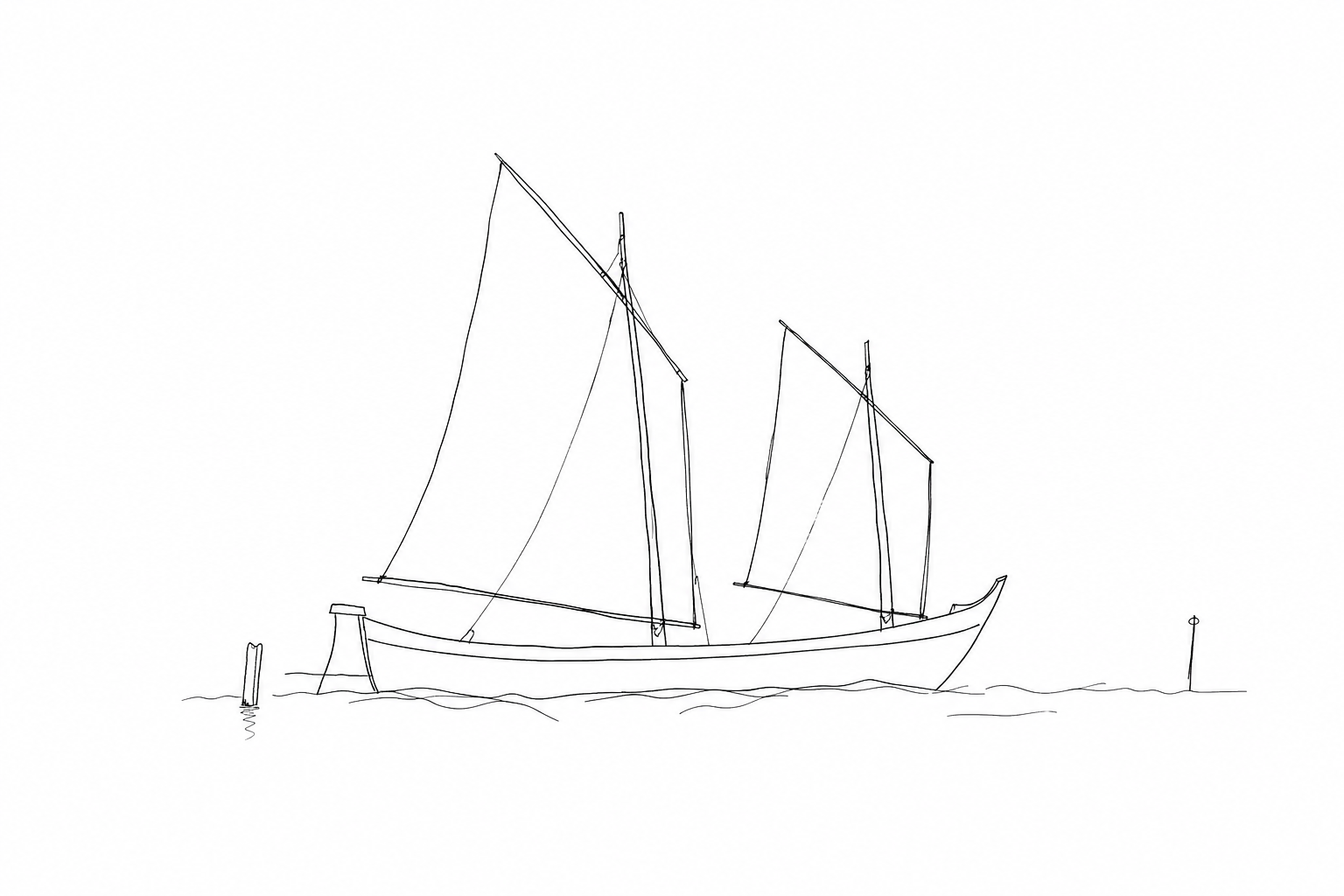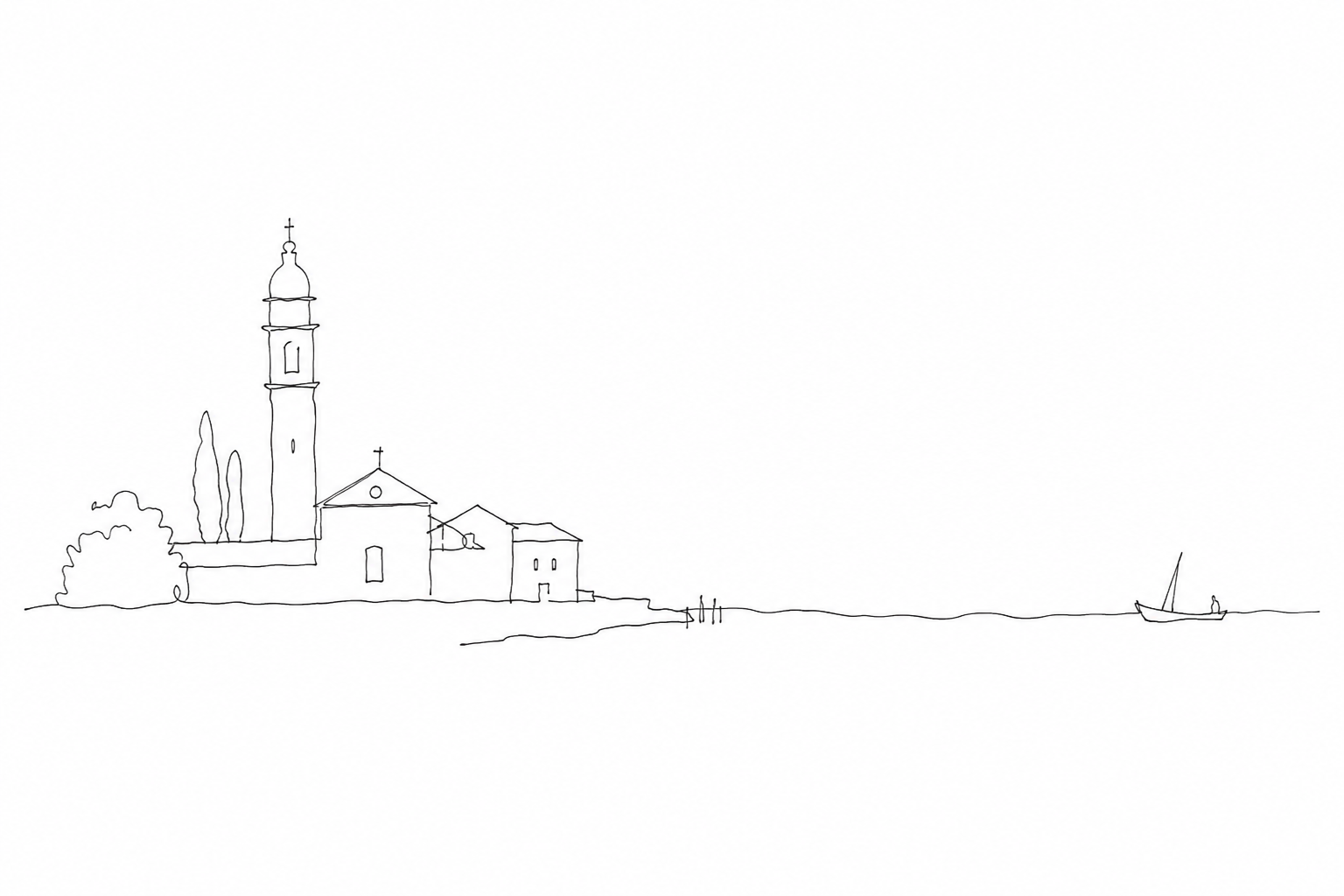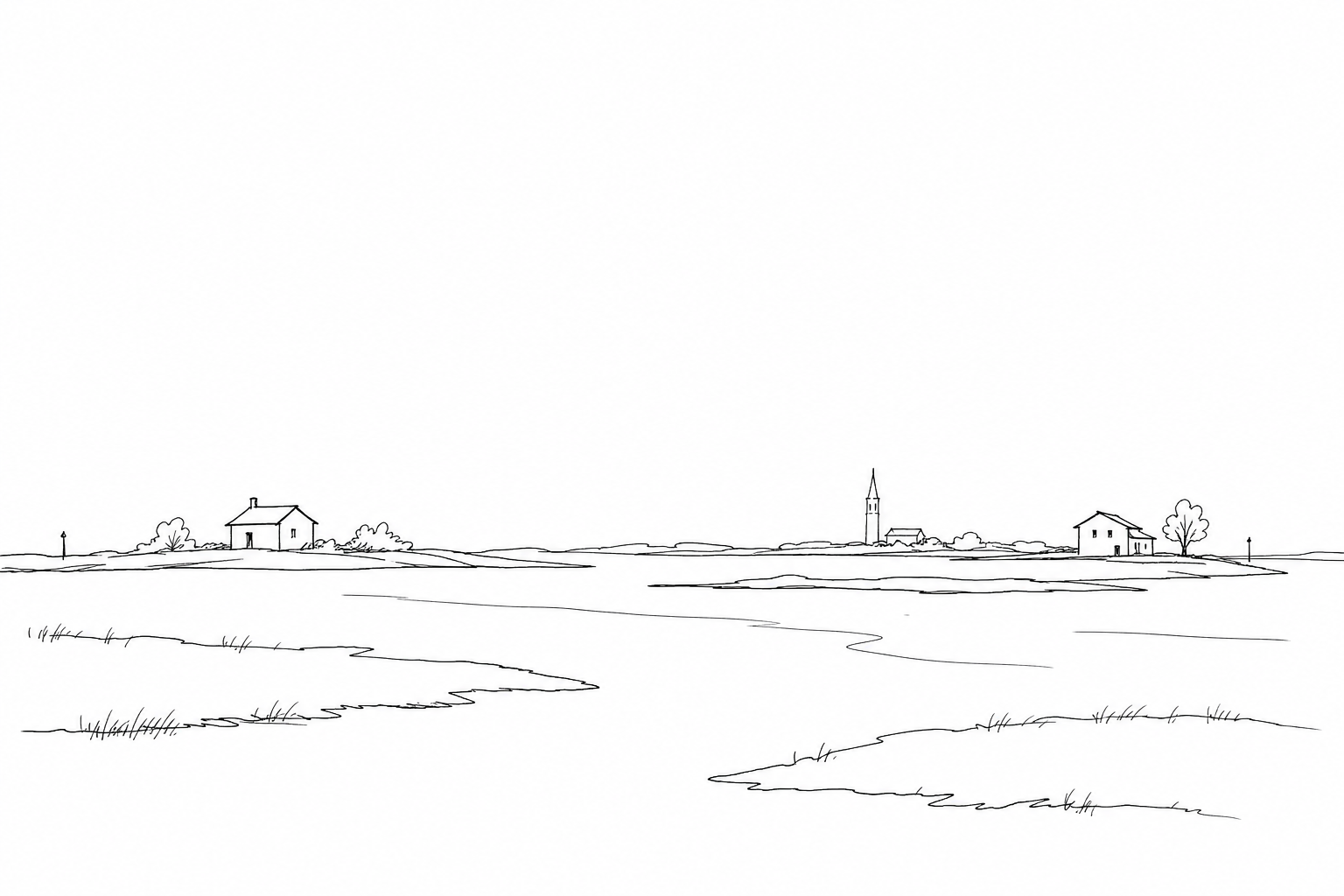
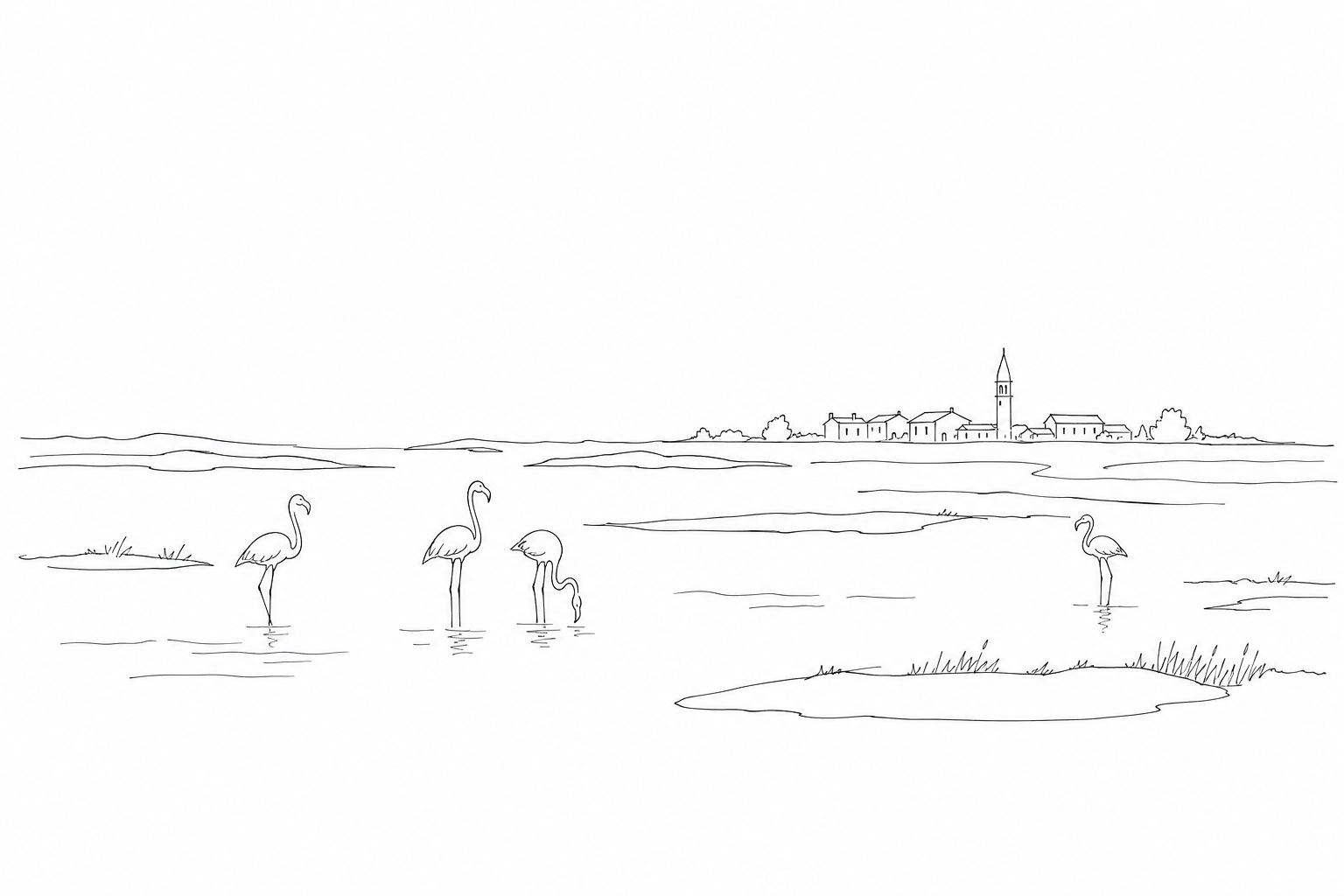
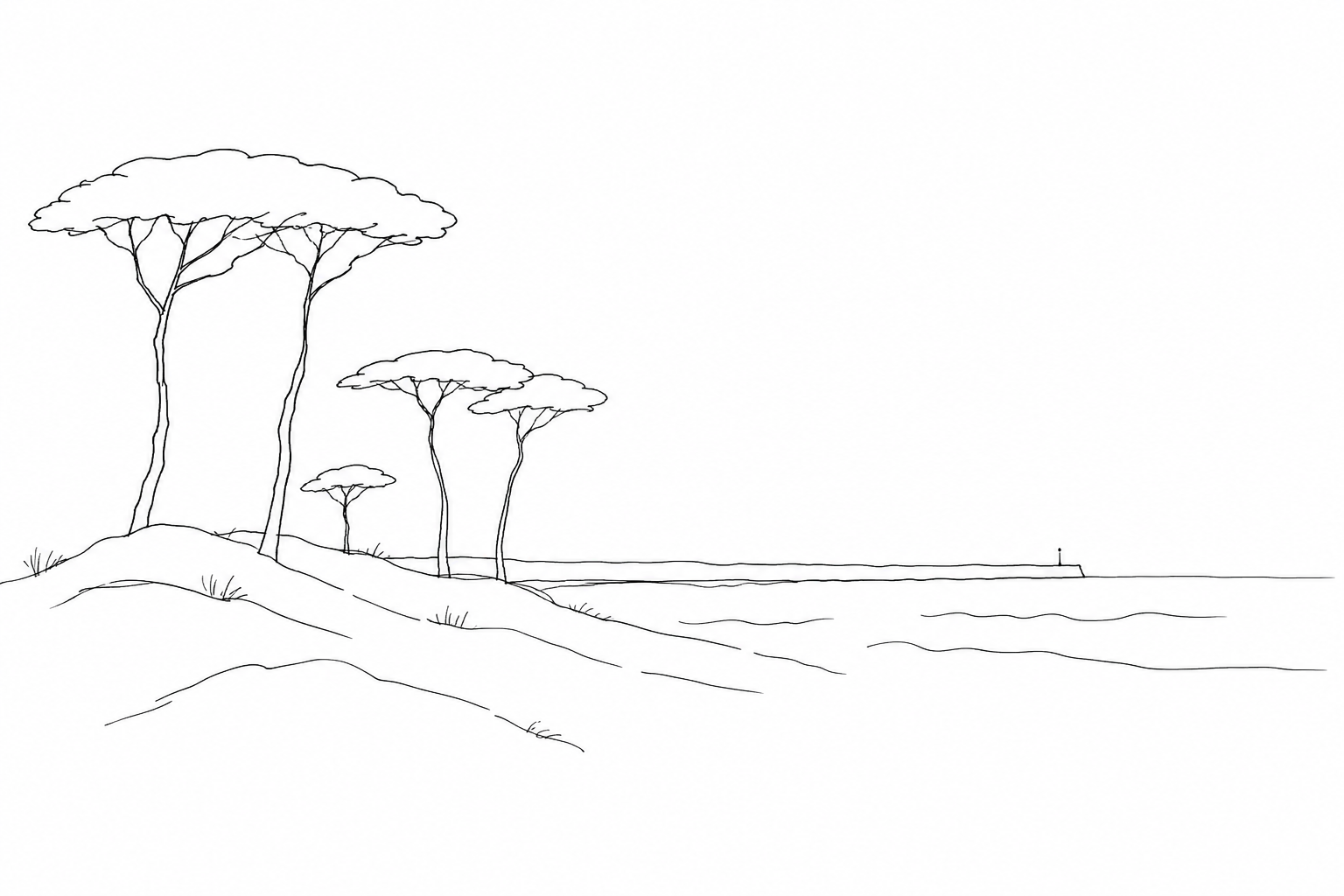

Alberoni is the point where the Lido changes tone: elegant façades and seaside memories give way to dunes, pine forest, watery silences and a lagoon more exposed to the winds. Here Venice does not disappear, but becomes less scenic and more physical: moving sand, salt marshes on the horizon, the breakwater guiding the eye toward the Malamocco inlet. Walking at Alberoni means observing an edge, not a destination to tick off: a place where nature, infrastructure and daily life coexist in a fragile and surprising balance.
Where the Lido changes pace
Alberoni is the southern end of the Lido di Venezia, the point where the long, narrow island stops resembling its more fashionable image. Behind are the avenues of historic hotels, the orderly beach huts and the memory of twentieth-century seaside tourism; ahead opens a lower, sandy landscape, crossed by the wind and the light of the lagoon.
Here the Lido narrows and faces the Malamocco port inlet, one of the historic accesses from the Adriatic Sea to the lagoon. The position explains much of the character of the place: on one side the beach and the dune system, on the other the internal waters, the salt marshes and the nearby presence of Pellestrina. Alberoni is not a simple seaside district, but a geographical threshold.
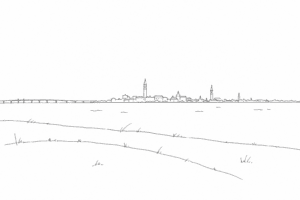
The change of pace can also be felt in the rhythm: fewer elegant façades, more pines, sandy paths, reed beds and open spaces. It is the Lido returning to being an environment, even before being a holiday resort.
Dunes, pine forest and oasis: what you really observe
At Alberoni the beach is not just a strip of sand: it is a living system, built by the wind and held in place by specialized plants. The first dunes, lower and more mobile, host pioneer species such as sea rocket, beach santolina and sea holly; farther inland appear clumps of marram grass, the grass that binds the sand with its roots and allows the dune to grow.
The pine forest behind it, partly the result of historic stabilization works, creates a different environment: shade, dry needles, sparse undergrowth but precious for insects, small reptiles and birds. The transition between shoreline, consolidated dune and woodland is the real naturalistic interest of the area, because it shows in just a few metres an ecological succession that is readable even to those walking without tools.
Toward the lagoon the landscape changes again: reed beds, salt marshes and shallow waters attract herons, waders and ducks, especially during migration periods. It is a place to observe carefully, staying on the marked paths: trampling a dune often means breaking a balance that has required years of wind, sand and roots.
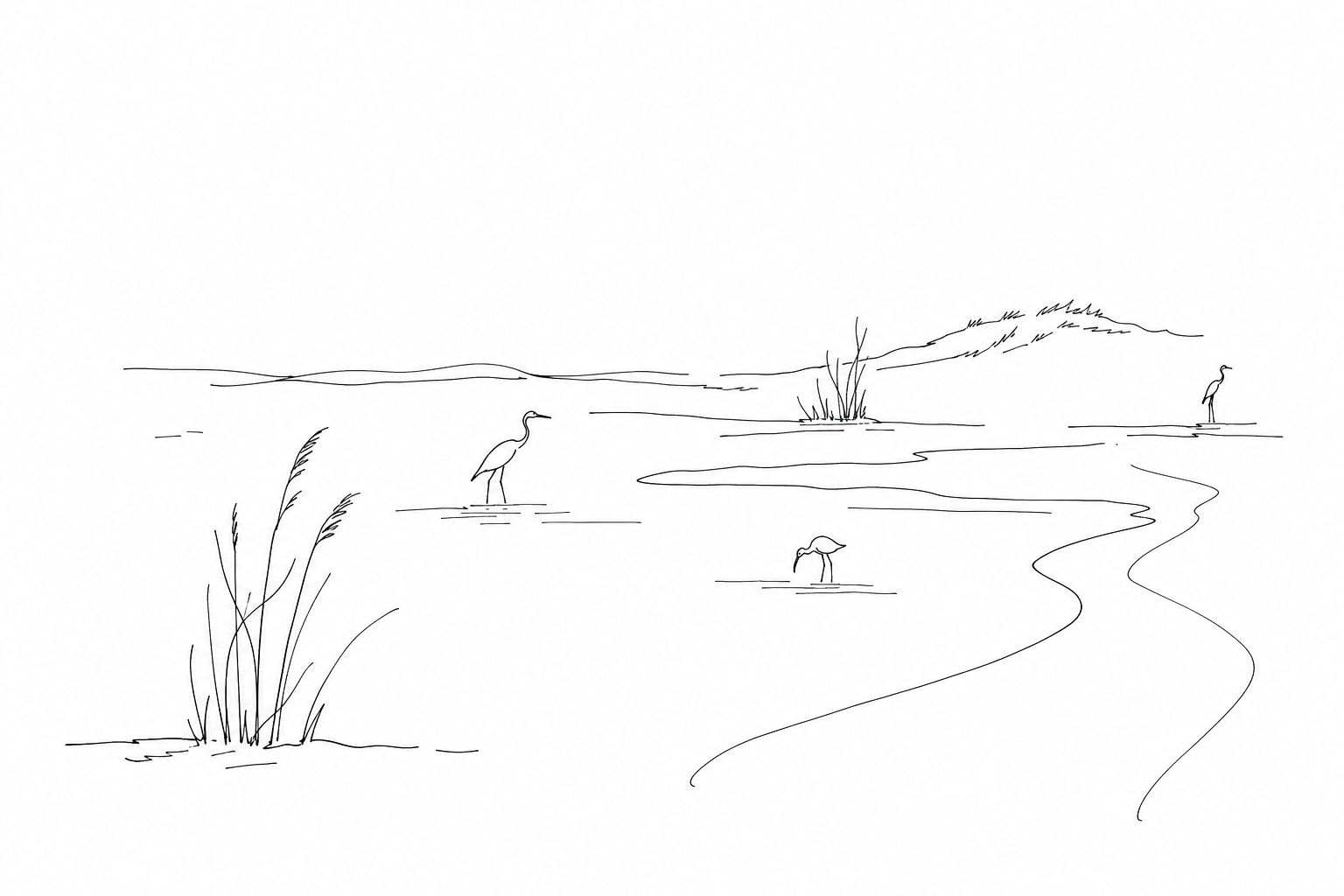
At Alberoni you do not look only toward the open sea: the decisive point is the passage between the Adriatic and the lagoon basin, the Malamocco inlet. It is one of the three historic openings through which water enters and leaves Venice, and for centuries it played a strategic role because it was deeper and more suitable for navigation than other channels.
The Alberoni breakwater, stretching out into the sea, serves to stabilize this entrance and manage sands, currents and seabeds. Walking toward its end, the contrast is clearly perceived: on one side the waves and the line of the horizon, on the other the internal water, the distant salt marshes and the routes of boats heading toward the port.
This geography also explains the secluded character of the place. Alberoni is a threshold, not just a beach: a technical and natural edge at the same time, where hydraulic works, wind, canals and maritime traffic make visible the fragile balance on which Venice lives.
To understand Alberoni without reducing it to a seaside detour, it is worth building a walk in three stages: first the inhabited edge, then the pine forest, and finally the dune system and the waterfront. The pace should remain short and observational: here soil, light and vegetation change within a few hundred metres.
- Start light: comfortable shoes, water and protection from the wind are more useful than a rigid itinerary. Sand and exposed stretches make it helpful to walk without hurry.
- Stay on the paths: the dunes are living forms, held in place by pioneer plants and fragile roots. Leaving the marked passages means wearing down the very thing you came to see.
- Use the breakwater as a reading point: from there you can perceive sea, access channel and lagoon edge together, without needing abstract explanations.
- Allow for silent stops: binoculars or simple attention help you catch birds, currents and changes in the wind.
Before setting off, it is prudent to check any local information on access, nature protection and permitted routes.
Including Alberoni in a slow walk allows you to read the Lido beyond its fashionable image. There is no need to look for great monuments: the profile of the dunes, the shade of the pine forest, the passage of distant ships, the light of the lagoon in the less crowded hours are enough. It is a precious detour for those who want to understand how Venice ends, protects itself and continues to breathe at its edges. The advice is to get there without hurry, leaving room for observation: here the landscape says a great deal, but only to those who give it time.
Related Posts
Pellestrina and the Murazzi: walking between the Adriatic, the lagoon and low fishermen’s houses
A slow itinerary on Pellestrina, among the Murazzi, lagoon shores and fishermen’s houses.Parco San Giuliano: looking at Venice from the mainland without feeling outside history
A route through the park in Mestre overlooking the lagoon, where Venice can be read from afar but remains part of the same urban history.
The Lido by bicycle: Liberty-style villas, beaches and a Venice that runs in a straight line
A cycling itinerary on the Lido among Gran Viale, Liberty-style villas, beaches, waterfront and lagoon.Questions Answered
What makes Alberoni different from the rest of the Lido?
It's a natural and less fashionable edge with dunes and lagoon landscapes.What plants stabilize the dunes at Alberoni?
Pioneer species like sea rocket and marram grass bind and grow the dunes.Why is the Malamocco inlet important?
It is a historic, deep access to Venice's lagoon ideal for navigation.How should visitors approach walking in Alberoni?
Walk slowly, stay on paths, and respect the fragile dune and lagoon ecosystem.
Another side of the Lido
Would you like to connect this stop with nearby places showing a quieter and more historical island?
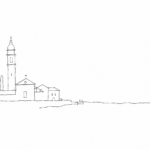 San Nicolò del Lido: monks, departures by sea and the ceremonial side of the lagoonHistory and interpretation of San Nicolò del Lido: monastery, church, harbor entrance, naval departures and public rituals of lagoon Venice.
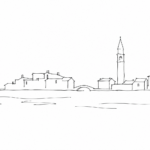 Malamocco on the Lido: the ancient village that recalls a Venice before VeniceHistory, places and urban reading of Malamocco, the village on the Lido linked to the oldest Venice.
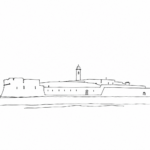 Sant’Andrea and Sanmicheli’s fort: the military gate of the lagoon that controlled the seaHistory, architecture and interpretation of the fort of Sant’Andrea, a lagoon outpost designed by Michele Sanmicheli.
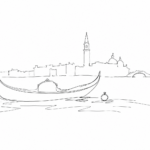 The Festa della Sensa: the marriage of the sea explained without rhetoricWhat the Sensa celebrates, where the marriage of the sea takes place and why it still matters.