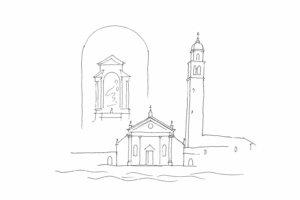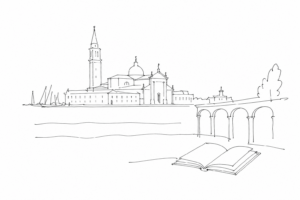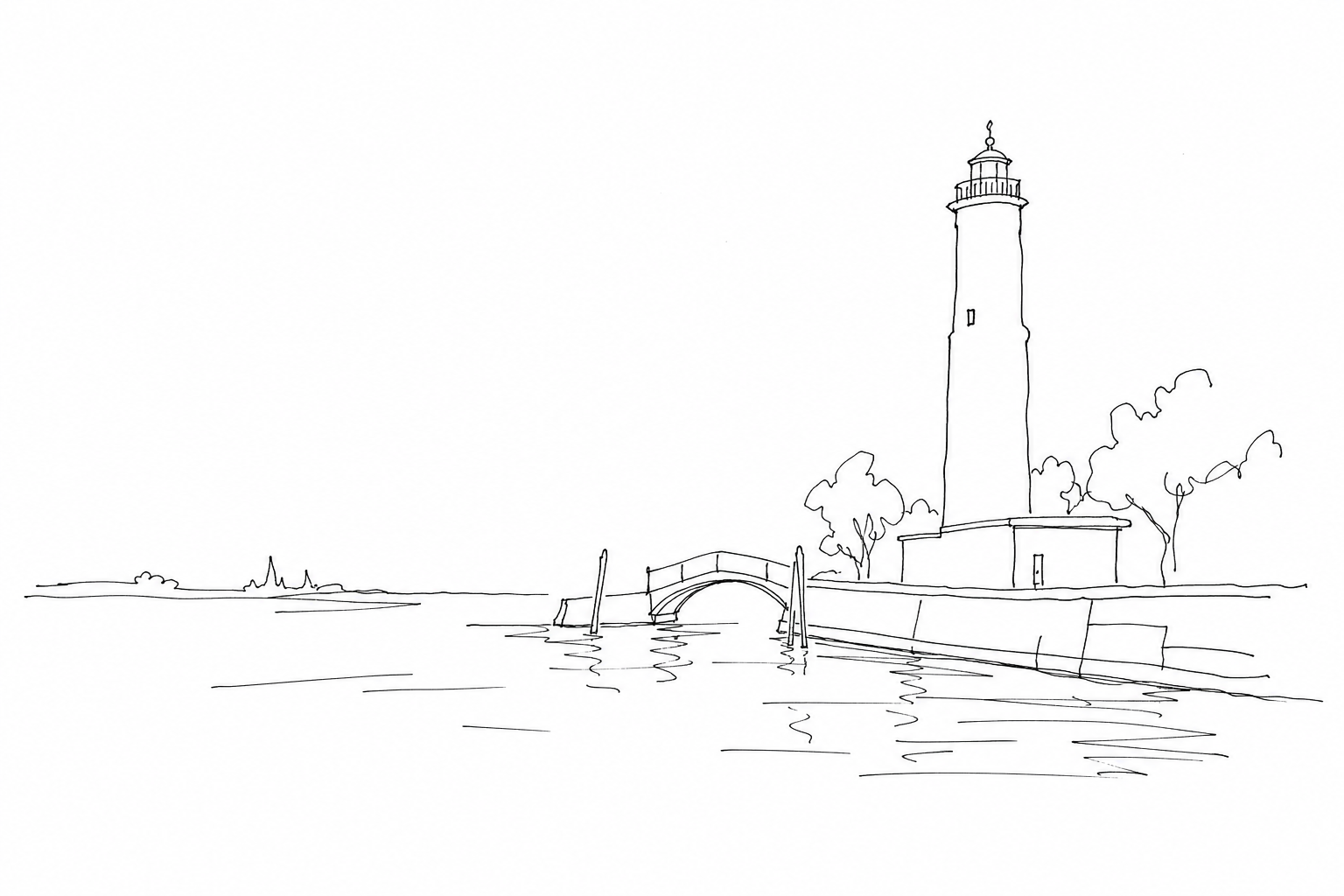
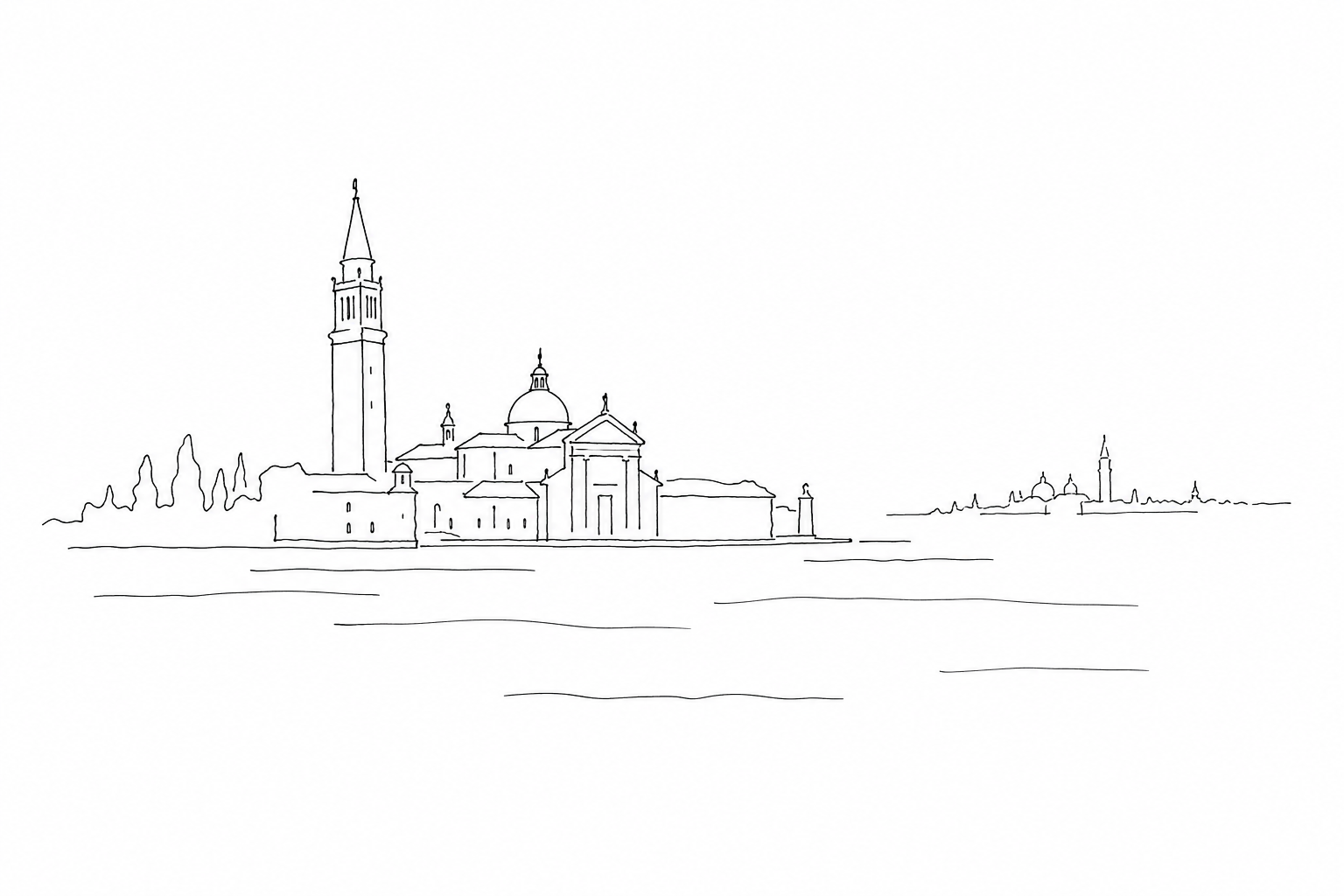

San Giorgio Maggiore is close enough to St Mark’s to seem part of the same scene, but separate enough to change its rhythm completely. The island can be reached in a few minutes, yet it forces you to look at Venice from a different edge: less crowded, more frontal, almost suspended. Here Palladio’s façade, the silence of the monastic complex and the line of the water create a measured experience, where architecture is not a backdrop but a way of finding one’s bearings. Visiting San Giorgio means stepping out for a short while from the apparent centre of the city and discovering how revealing distance can be.
An island in front of St Mark’s, but with another rhythm
San Giorgio Maggiore lies just beyond the Bacino di San Marco, separated from Venice’s most famous shore by a short stretch of water that is enough, however, to completely change the perception of the city. Opposite, you can recognise the Doge’s Palace, the Piazzetta, the domes of St Mark’s; behind, towards the Giudecca, the landscape becomes more open, marked by landing places, convent walls and less crowded spaces.
The island has been linked to the Benedictine presence since the early Middle Ages, but its current image is dominated by the church designed by Andrea Palladio in the sixteenth century: a white, classical and measured façade that seems to respond to the scenography of St Mark’s with an opposite language, quieter and more rational.
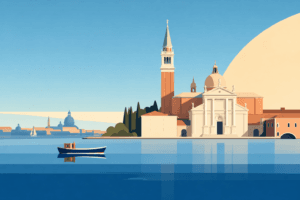
Arriving here means looking at Venice from a minimal and decisive distance. You do not leave the city: you observe it from its reverse angle, where the noise diminishes and the architecture invites you to read proportions, light and space.
The abbey church of San Giorgio Maggiore is one of the places where Andrea Palladio makes his idea of sacred space most legible: not scenic astonishment, but balance between parts, light and route. The project, begun in the 1560s for the Benedictine community, translates the language of antiquity into a Christian church designed to be understood step by step.
The façade, completed after the architect’s death according to his plan, superimposes two temple fronts: one higher for the central nave, one lower for the sides. Columns, pediments and proportions are not applied decoration, but a way to give order to different volumes without concealing them. The pale stone, against the backdrop of the water, accentuates this precision.
Inside, the measure becomes a physical experience. The wide nave, the great arches, the transept and the presbytery lead the gaze towards the altar with almost musical clarity. The light enters high and clear, glides over the white surfaces and makes the geometry perceptible. In this constructed silence, the church also prepares the external vision: Venice and St Mark’s appear more legible because one has first learned to look with order.
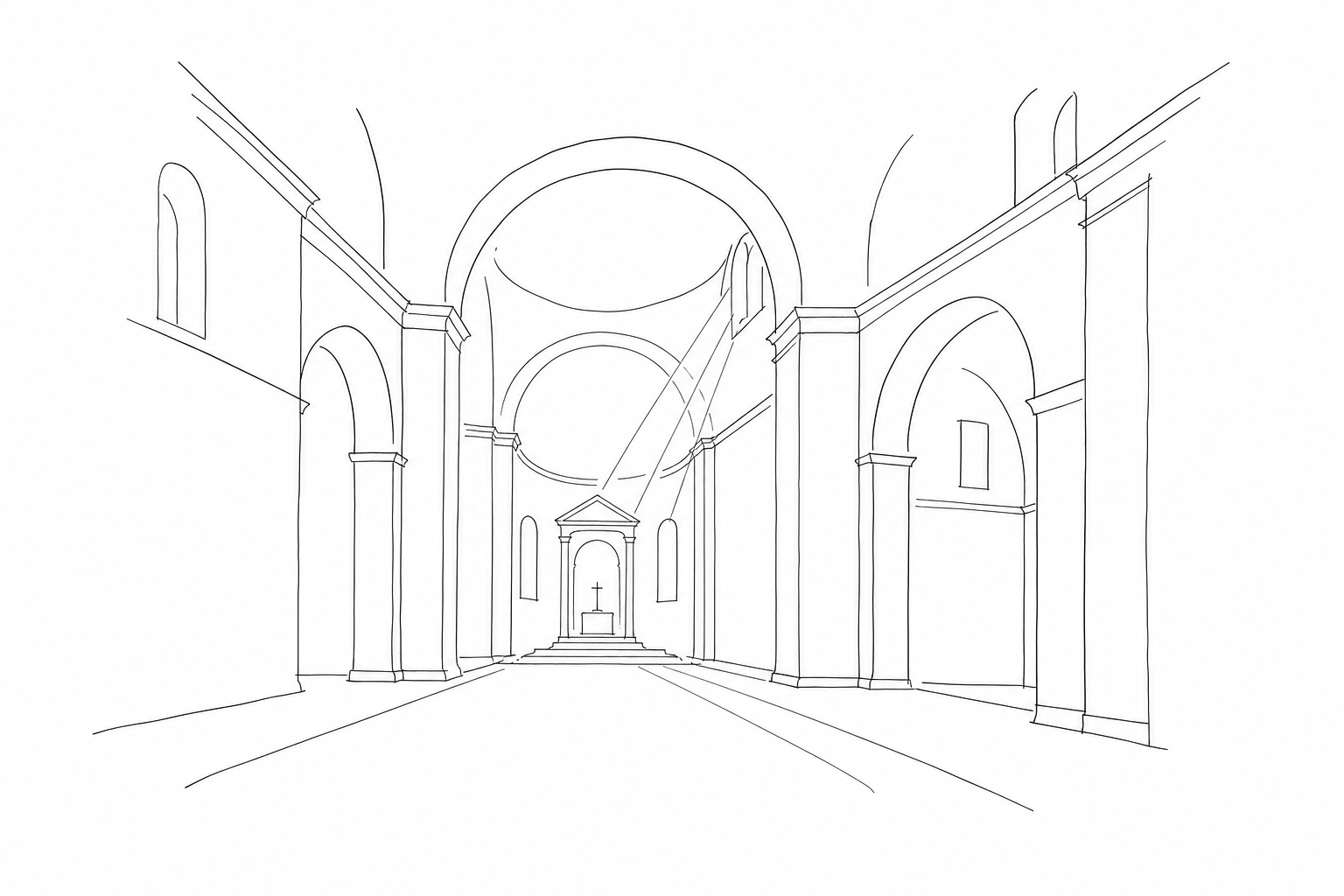
Inside the silence: monastery, art and a slow gaze
San Giorgio Maggiore is not only a perfect façade facing the basin: behind it lives the memory of a Benedictine complex, founded in the Middle Ages and later reorganised in the Renaissance. The rhythm of the cloisters, corridors and communal rooms explains why time seems less urgent here: the island was also designed for study, prayer, reading and daily discipline.
This sense of recollection helps you look at the works inside without haste. In the presbytery, Tintoretto’s canvases, including The Last Supper and The Gathering of the Manna, do not function as simple decorations: they converse with the liturgical space and with the idea of spiritual nourishment dear to the monastic tradition.
The refectory also tells a decisive story: here was located Veronese’s The Wedding at Cana, requisitioned in the Napoleonic era and now at the Louvre. Thinking of that absence makes the visit more intense: silence is not emptiness, but a repository of presences, losses and gazes. From this side, even St Mark’s appears as a meditated vision, not as a postcard.
The clearest way to understand the island is to climb the bell tower, when access is available: before organising the visit, it is advisable to check up-to-date information on openings and procedures. From above, St Mark’s Basilica and the Doge’s Palace cease to be the centre that absorbs everything; they become a front observed beyond the water, aligned with the basin as on a great urban theatre.
The perspective also helps you read Palladio. The façade, usually seen frontally from the quay, is not an isolated backdrop: it is a threshold between the monastic complex and the governing city, built to respond from a distance with proportion, Istrian white stone and classical rhythm. From above, you can also grasp the Giudecca, Punta della Dogana, the Salute, the Lido and the lagoon routes: coordinates that explain why this landing place is both secluded and extremely central.
On leaving, it is worth stopping for a moment on the churchyard: the same panorama, returned to water level, appears less triumphal and more precise.
San Giorgio Maggiore is not a simple panoramic detour, but a privileged point from which to read Venice. Palladio’s church, the spaces of the monastery and the climb up the bell tower make up a short but dense route, made of proportions, light and silences. From here St Mark’s appears close and at the same time different: no longer a place to cross, but an image to observe calmly. It is this controlled distance that makes the island special: it allows you to recognise the city without being overwhelmed by it, giving Venice back a slower, more precise and memorable measure.