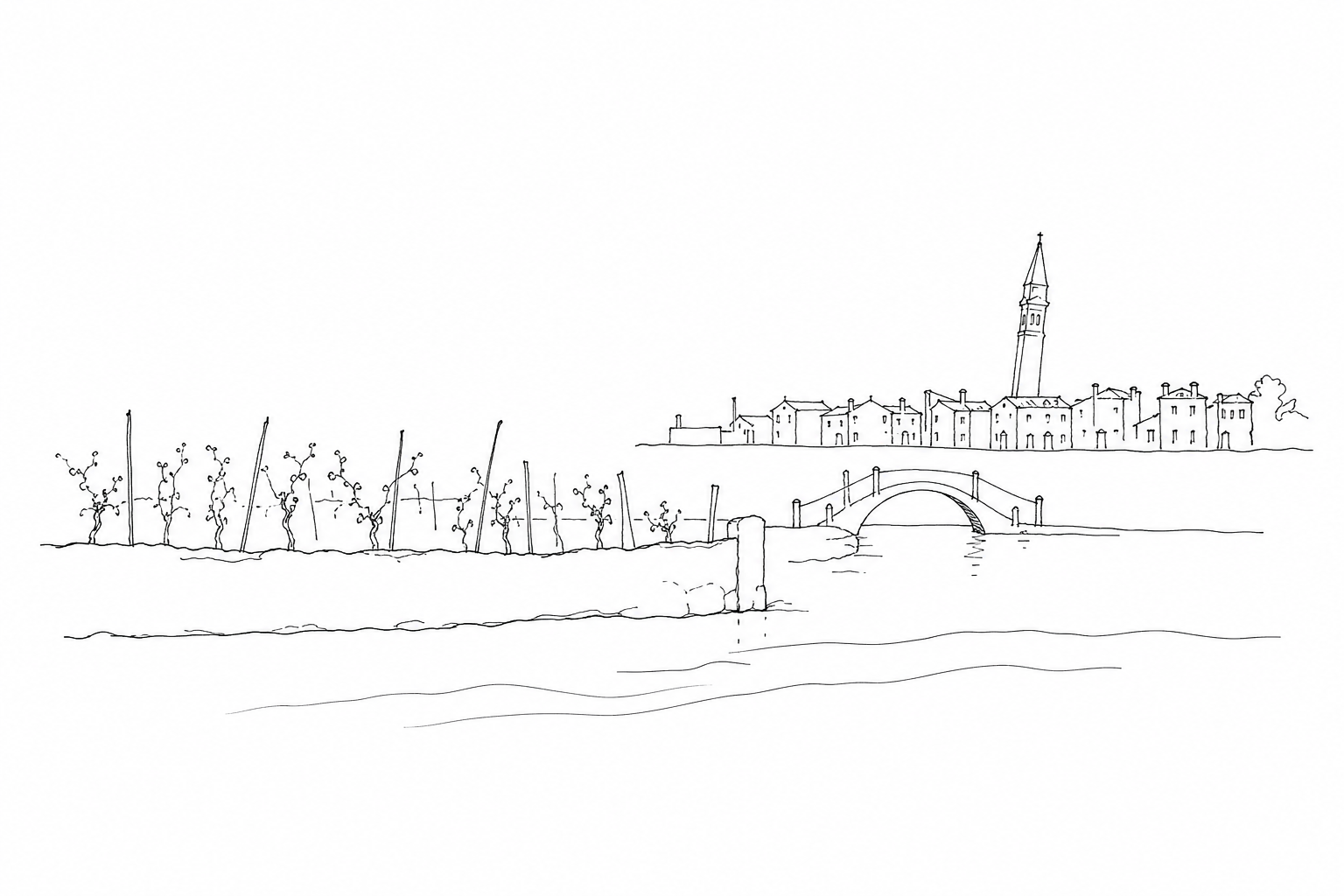
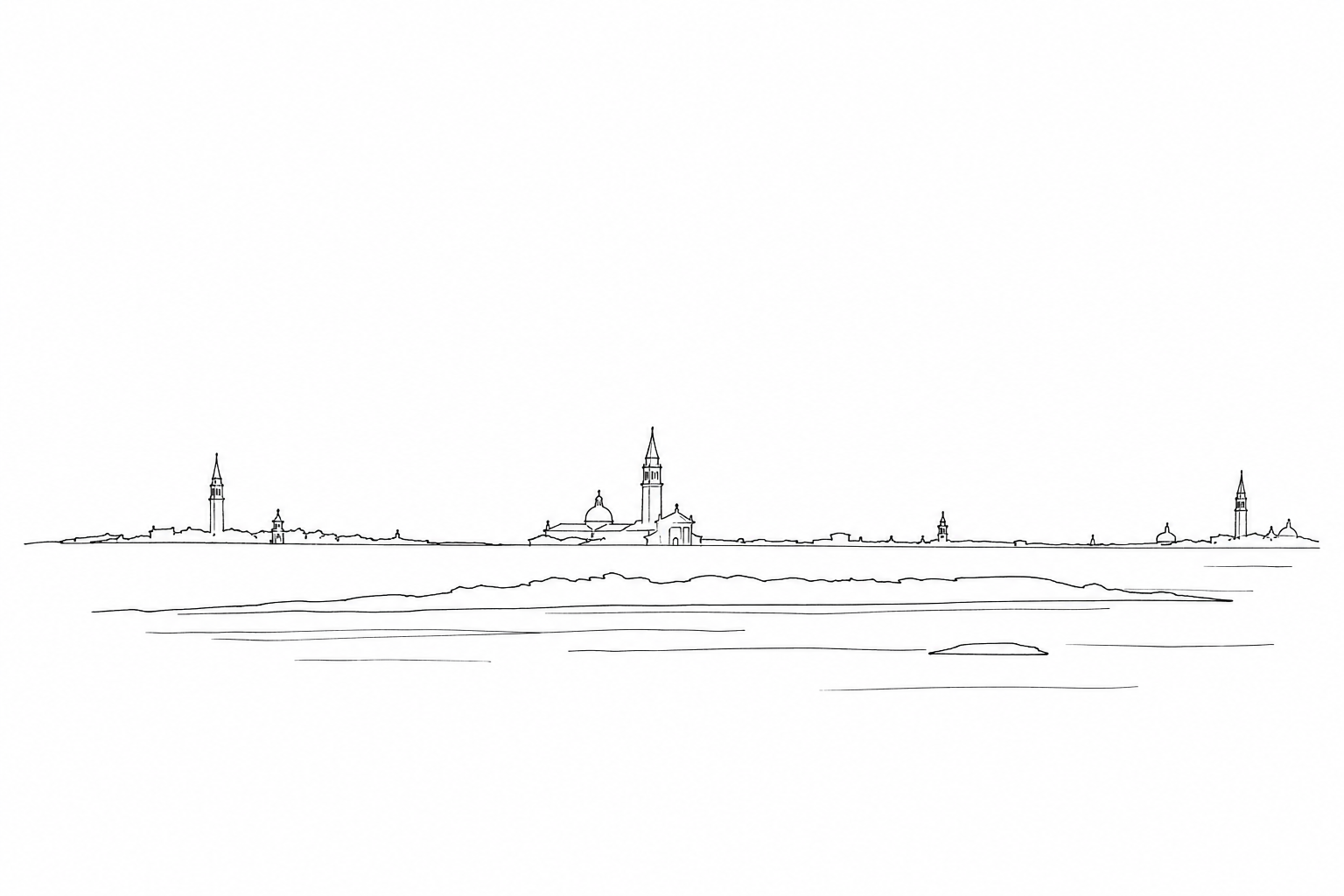

To understand Venice, it is not enough to look at the calli, the bridges and the façades on the water. You have to learn some words of the lagoon: barene and velme, first of all. They seem like technical terms, and in part they are, but they tell of a mobile landscape made of mud, salt-marsh grasses, tides and sediments. They are places that appear and disappear, that protect the city and explain its origin more than Istrian stone or the marble of the palaces. Knowing them means changing perspective: Venice not as a suspended monumental island, but as an urban organism born within a living, fragile and intelligent environment.
Two words for seeing the lagoon
To understand Venice, it is not enough to look at calli, campi and stone façades. You have to learn two words of its shallow water: barene and velme. They are forms of the lagoon landscape, but also a small grammar for reading what appears and disappears with the tide.
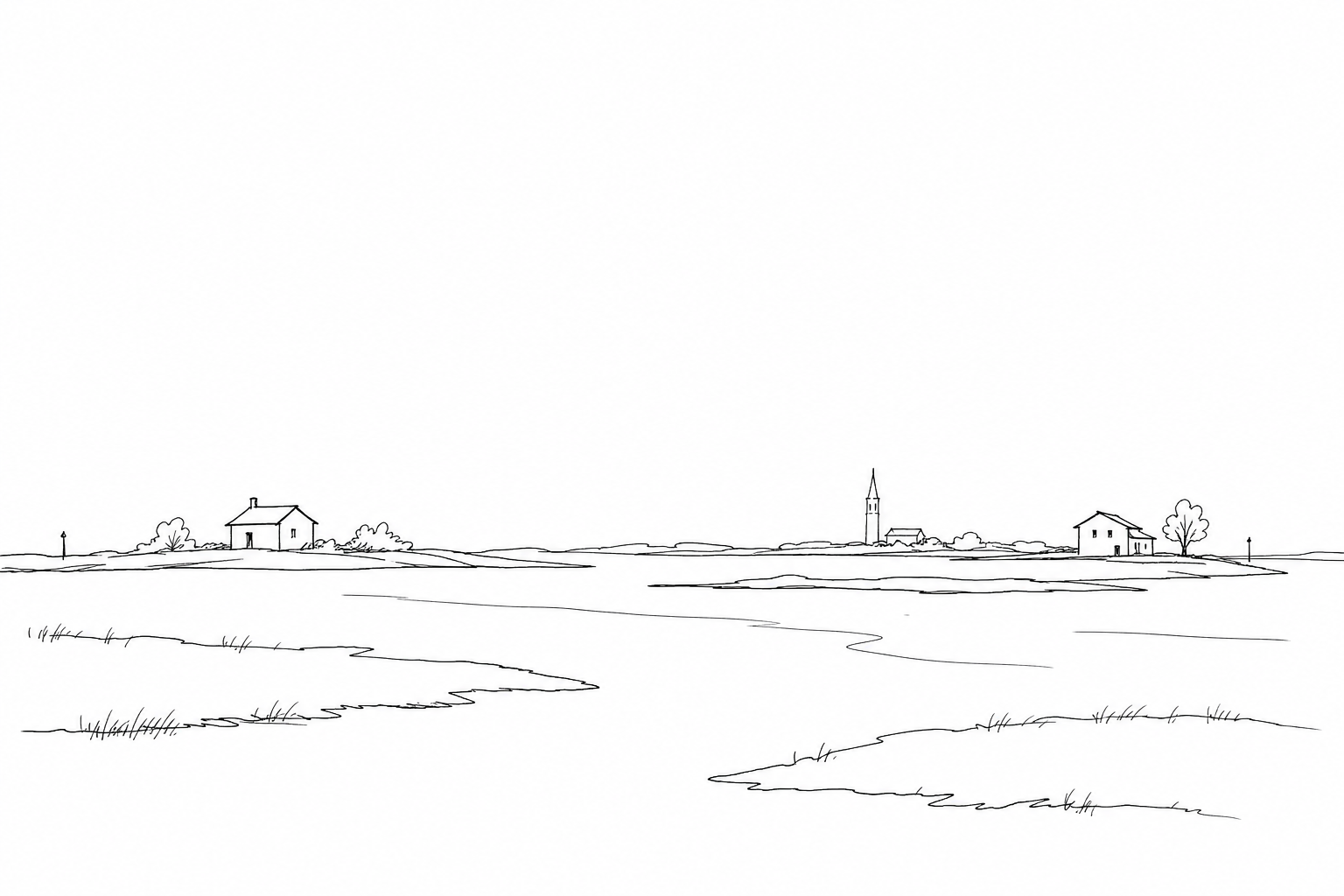
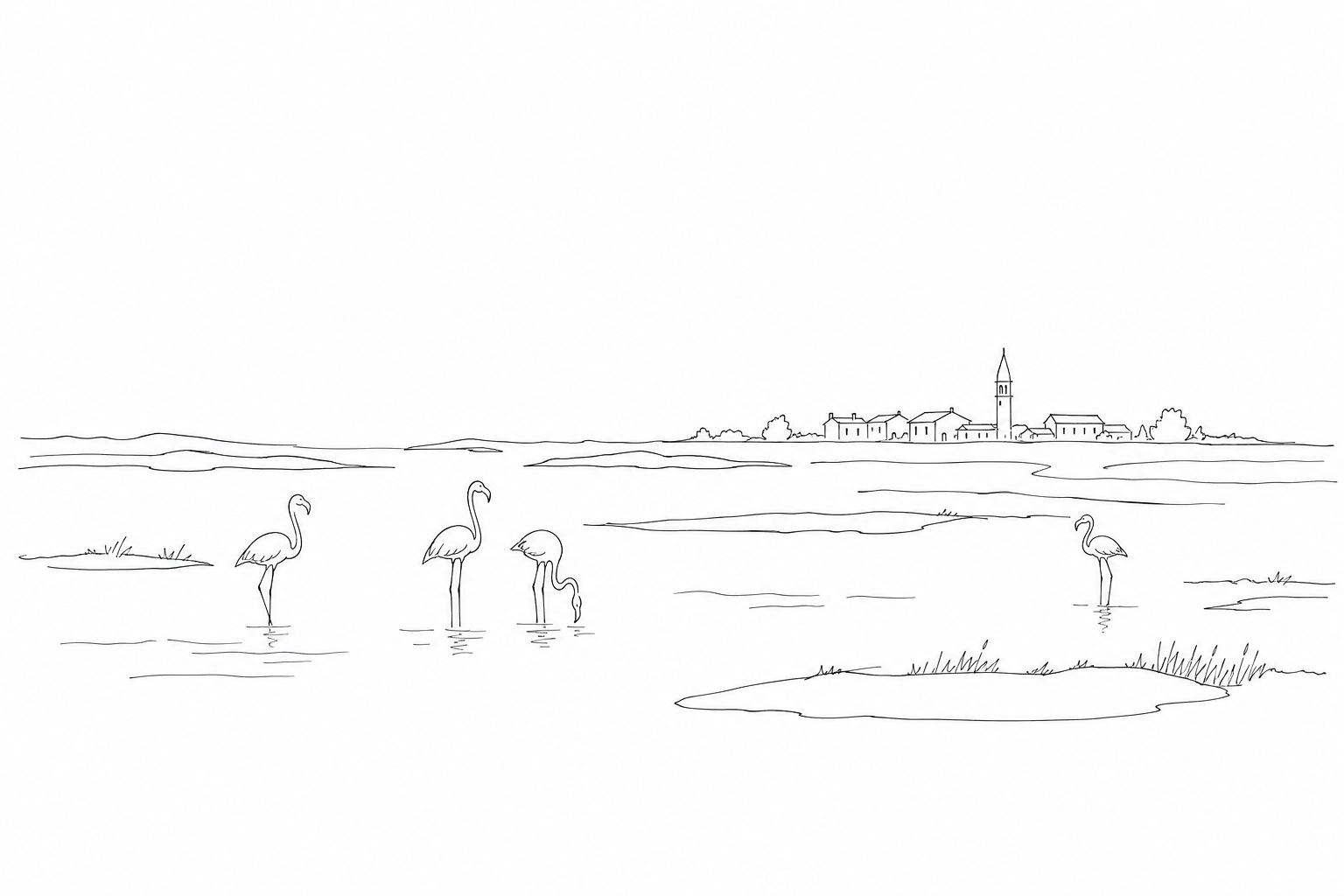
The barene are low lands, often covered with grasses resistant to salt, that emerge even when the water rises. They are not islands in the urban sense of the term: they have no fondamenta, churches or palaces, but they breathe with the lagoon. They retain sediments, slow the waves, and offer shelter to birds and small organisms.
The velme, instead, are muddy surfaces that are uncovered at low tide and become invisible again when the water rises. Seen from afar they may seem like voids, but they are living places: they indicate canals, currents, deposits, fragile balances. Naming barene and velme means recognizing that Venice is also mud, salt, grass and time.
Why Venice does not end at the fondamenta
The Venetian fondamenta give the illusion of a clear boundary: on one side the paving, on the other the lagoon. In reality that edge is a hinge. The historic city rests on piles driven into soft sediments and on a pattern of canals that continues beyond the rii, where shallows, ghebi and natural channels regulate the breathing of the tides.
For this reason the barene should not be imagined as distant countryside, nor the velme as simple exposed mud. They also help us read the stone: they explain why the banks must contend with currents, wave motion and salinity; why mooring posts and bricole mark safe passages; why some smaller islands live in direct relationship with halophytic grasses, migratory birds and small organisms of the seabed.
Venice, therefore, does not end where a calle ends. Its urban space includes a mobile lagoon, made of minimal elevations and slow variations. Without these wet thresholds, the city would lose part of its geography and its vocabulary.
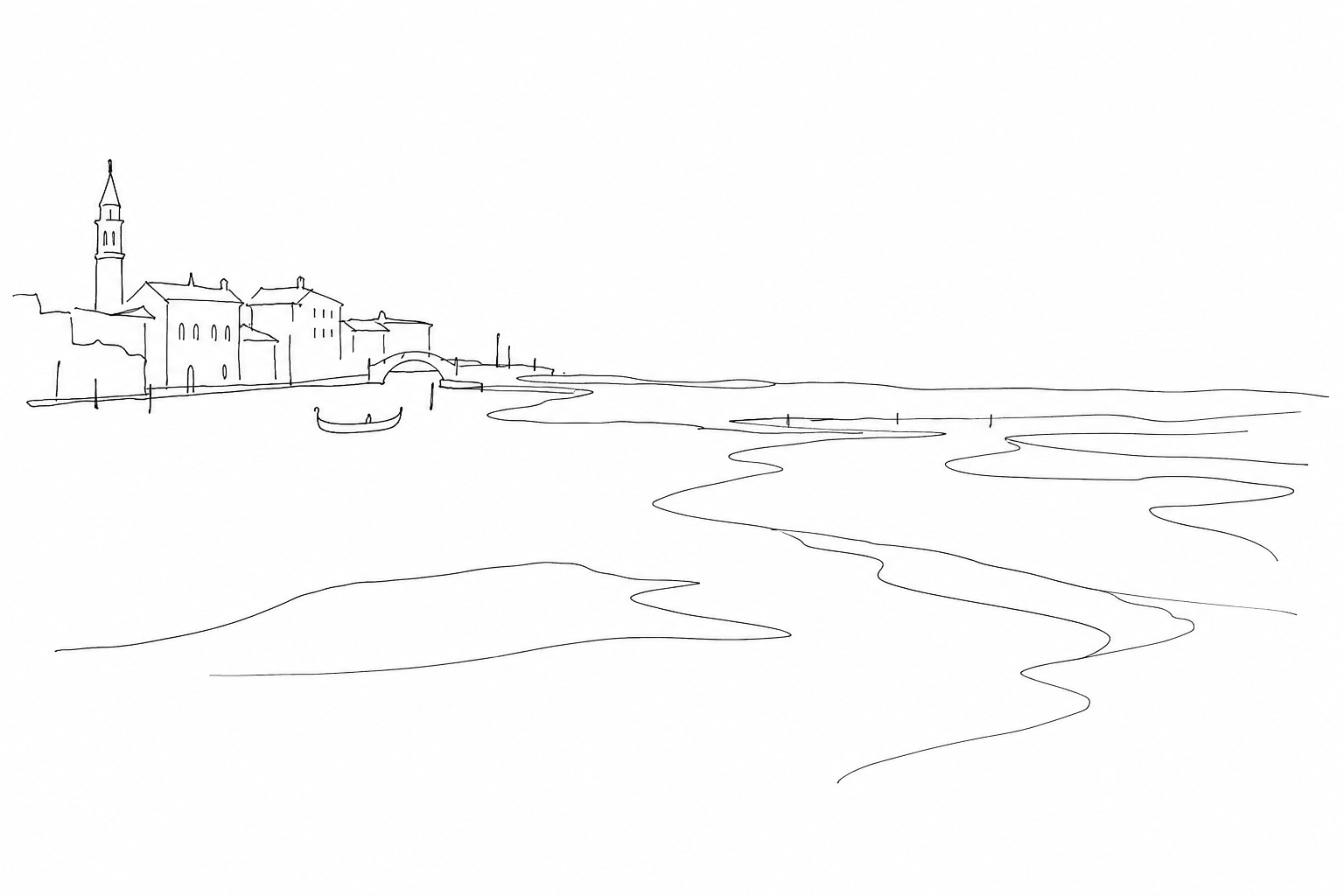
The best way to distinguish barene and velme is to look at the elevation, not the distance from the city. In the northern lagoon, between Murano, Mazzorbo, Burano and Torcello, the passage by boat allows this difference to be read clearly: the former remain slightly raised and carry salt-marsh vegetation; the latter appear as dark, shiny surfaces when the tide goes down.
- Towards Torcello: observe the low edges along the canals. If you see tufts of glasswort, sea lavender or rushes, you are looking at stable amphibious ground, not simple mud.
- Around Mazzorbo and Burano: the openings towards the Canale di Burano clearly show the sinuous cuts of the ghebi, small grooves where the water enters and exits with the tide.
- From Sant’Erasmo and the nearby islands: the lateral view helps you understand how few centimeters separate ground, shallows and navigable channel.
For an on-site reading, it is useful to compare what you see with the tide table of the day: the same area can seem like land, a sheet of water or a muddy plain within a few hours. It is this alternation that explains the Venetian vocabulary better than any abstract definition.
The words barene and velme do not describe only two forms of the landscape: they preserve a way of inhabiting the margin. In the Venetian vocabulary, knowing how to name a surface meant understanding whether it could nourish salt-marsh grasses, welcome birds, slow a wave or disappear with the tide. It was practical knowledge, born before manuals, passed down by fishermen, boatmen, island market gardeners and water technicians.
Alongside these terms lived other names: ghebi for the small winding channels, chiari for the internal stretches of water, paludi and secche to indicate different conditions of depth and use. The ancient hydraulic maps of the Serenissima also recorded this precision, because governing Venice meant above all governing what seemed unstable.
In these words the city ceases to be only stone: it becomes a measure of time, salt, mud and tides.
Barene and velme are not marginal details of the lagoon panorama: they are part of the deep structure of Venice. Observing them teaches you to read the relationship between water and land, between human work and natural processes, between urban history and everyday geography. Even a short stay can make room for this attention, by choosing less obvious viewpoints, slow walks, vaporetto crossings or trips towards the islands. The lagoon speaks with precise words: learning them does not make the visit more complicated, but clearer. And it helps you see Venice for what it truly is: not only stone, but time, balance and water.
Related Posts
Campiello, corte, ramo: a small sentimental guide to the words of the Venetian map
A short guide to reading Venice through the words of its nizioleti: campielli, corti, rami, calli, fondamenta and rii.Treporti and the thin islands: understanding the lagoon by looking at the borderlands
A slow journey through Treporti, salt marshes, fishing valleys and lagoon margins to read Venice from its thinnest border.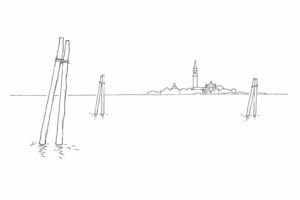
Briccole in the lagoon: the posts that guide boats and shape the Venetian landscape
What briccole are, how they guide boats and why they mark the landscape of the Venice lagoon.Questions Answered
What are barene and velme?
Barene are low salt-marsh lands; velme are muddy tidal surfaces uncovered at low tide.Why do barene and velme matter to Venice’s identity?
They reveal Venice as a living city shaped by the lagoon’s ecology and tides.How does Venice’s lagoon geography affect its urban space?
Its canals, shallow lands, and tides extend urban boundaries beyond stone façades.What traditional knowledge is embedded in lagoon vocabulary?
Terms describe landscape features and guide practical navigation and resource use.
Follow the thread of water
Want to move from this story to others that explain the lagoon beyond postcard views?
 Briccole in the lagoon: the posts that guide boats and shape the Venetian landscapeWhat briccole are, how they guide boats and why they mark the landscape of the Venice lagoon.
 Sant’Andrea and Sanmicheli’s fort: the military gate of the lagoon that controlled the seaHistory, architecture and interpretation of the fort of Sant’Andrea, a lagoon outpost designed by Michele Sanmicheli.
 San Lazzaro degli Armeni: a small island, a library and a piece of the East in the lagoonHistory, library, monastery and atmosphere of San Lazzaro degli Armeni, the Armenian island in the Venice lagoon.
 The bragozzo: sail, fishing and the Adriatic in the colorful boat of lagoon traditionHistory, forms and colors of the bragozzo, a fishing boat linked to Chioggia, the lagoon and the Adriatic.