
To tell the story of Vivaldi from the side of the girls of the Pietà means shifting the gaze: not only the Red Priest, not only the famous concertos, but a complex institution where charity, discipline, education and music intertwined every day. Behind the grilles of the choirs, the musician girls transformed a Venetian hospital into one of the most listened-to musical places in Europe. This article follows that precise and surprising machine, made of rooms, rehearsals, instruments, rules and female talent, in order to read a stretch of Riva degli Schiavoni with less haste and more attention.
The Pietà was not only a place of charity
In eighteenth-century Venice, the Ospedale della Pietà was at once a refuge, an educational institution and a public sound space. Founded to take in abandoned children, it stood in a strategic area of the city, along the route that from the Riva degli Schiavoni led toward San Marco: a point crossed by Venetians, foreigners, ambassadors and Grand Tour travelers.
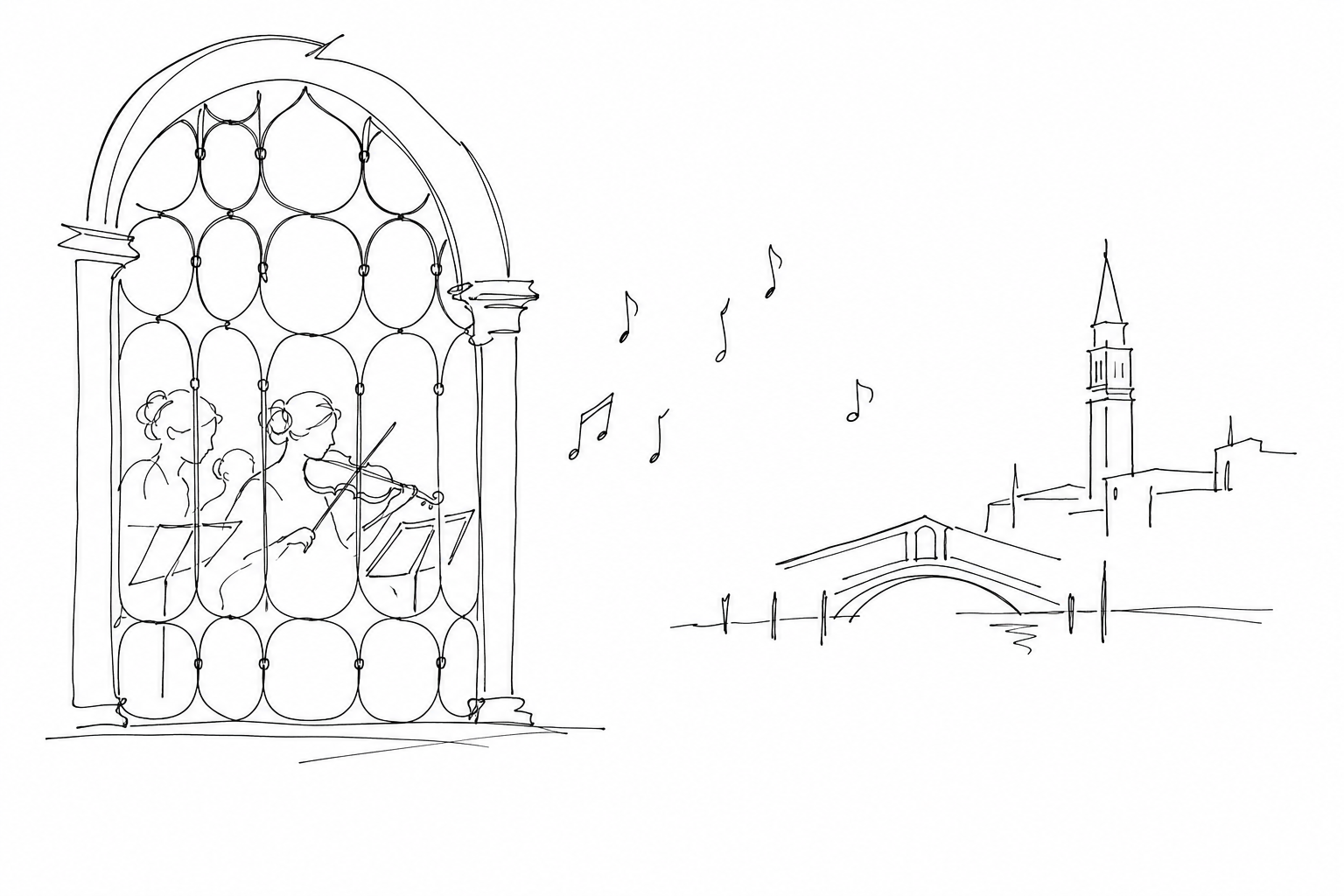
The girls who grew up at the Pietà were not simply recipients of assistance. Many were instructed with rigorous discipline: reading, work useful to the internal community and, for the most gifted, music. The girls played and sang during services, often from spaces screened by grilles, so that their presence was perceived above all through sound.
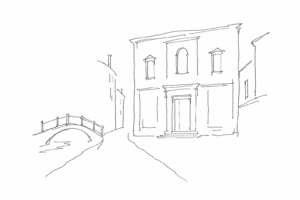
This framework changes the way we look at Vivaldi. When he arrived as violin master in 1703, he entered an already complex system, supported by benefactors, administrators and the city’s reputation. His compositions also arose from the concrete skill of those musicians, capable of transforming a charitable institution into one of the most admired musical places in Venice.
The musician girls were girls who had grown up inside the hospital and had been trained in a sound craft of the highest level. They were not simply occasional performers: they studied singing, violin, viola, cello, organ, oboe, flute, bassoon and other instruments, often from childhood. In the documents they appear as daughters of the choir, a category distinct from girls directed toward other domestic or craft work.
Many did not have a stable family surname and were identified by their name and by their instrument: Anna Maria dal Violin is the most famous example, admired even by foreign visitors. This formula, surprising today, shows how much the public identity of those young women was linked to musical skill. Some became internal teachers, passing on technique and repertoire to the new pupils.
During the performances listened to by Venetians and foreigners, the girls often sang and played from spaces screened by grilles. Their presence was both visible and hidden: the audience perceived virtuosity, discipline and orchestral color, but rarely encountered their faces. Looking at Vivaldi from this perspective means recognizing that many of his pages were born for concrete hands, voices and talents.
Vivaldi inside the musical machine of the Pietà
Antonio Vivaldi entered the Ospedale della Pietà in 1703 as violin master: he was therefore not only the inspired composer we imagine today, but an internal technician within a complex structure. He had to teach, rehearse, write music suited to the available pupils and contribute to the institution’s sonic prestige.
His function changed over time, up to the role of master of the concerts. This meant organizing a repertoire capable of enhancing the female orchestra: concertos for strings, pieces with unusual solo instruments, sacred vocal parts conceived for voices trained in-house. The variety of Vivaldi’s ensembles does not arise only from abstract imagination: it also responded to the concrete presence of violinists, cellists, oboists, bassoonists, singers.
Inside this musical machine, Vivaldi worked together with teachers, copyists, administrators and governors. The scores passed through rehearsals, corrections, purchases of instruments, liturgical occasions and public expectations. Seen from here, the “red priest” appears less isolated: his invention depended on a disciplined community, capable of transforming assistance into a musical profession.
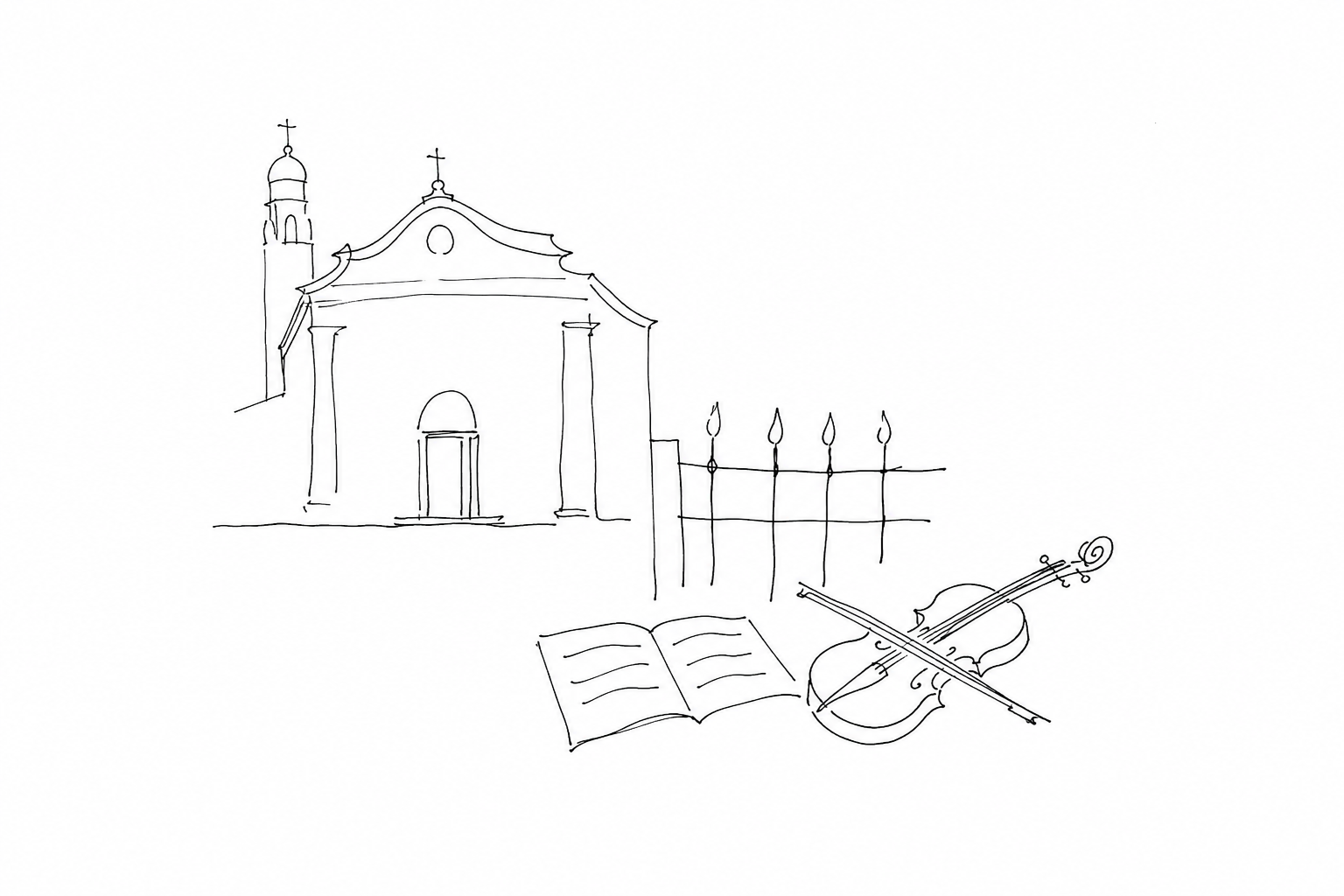
To read the place without turning it into a mere backdrop, it is worth starting from a distance: the current church of Santa Maria della Visitazione, on the Riva degli Schiavoni, was designed by Giorgio Massari in the mature eighteenth century and does not entirely coincide with the spaces in which the young master worked from 1703. This very break helps: what is visited is a stratification, not an intact stage set.
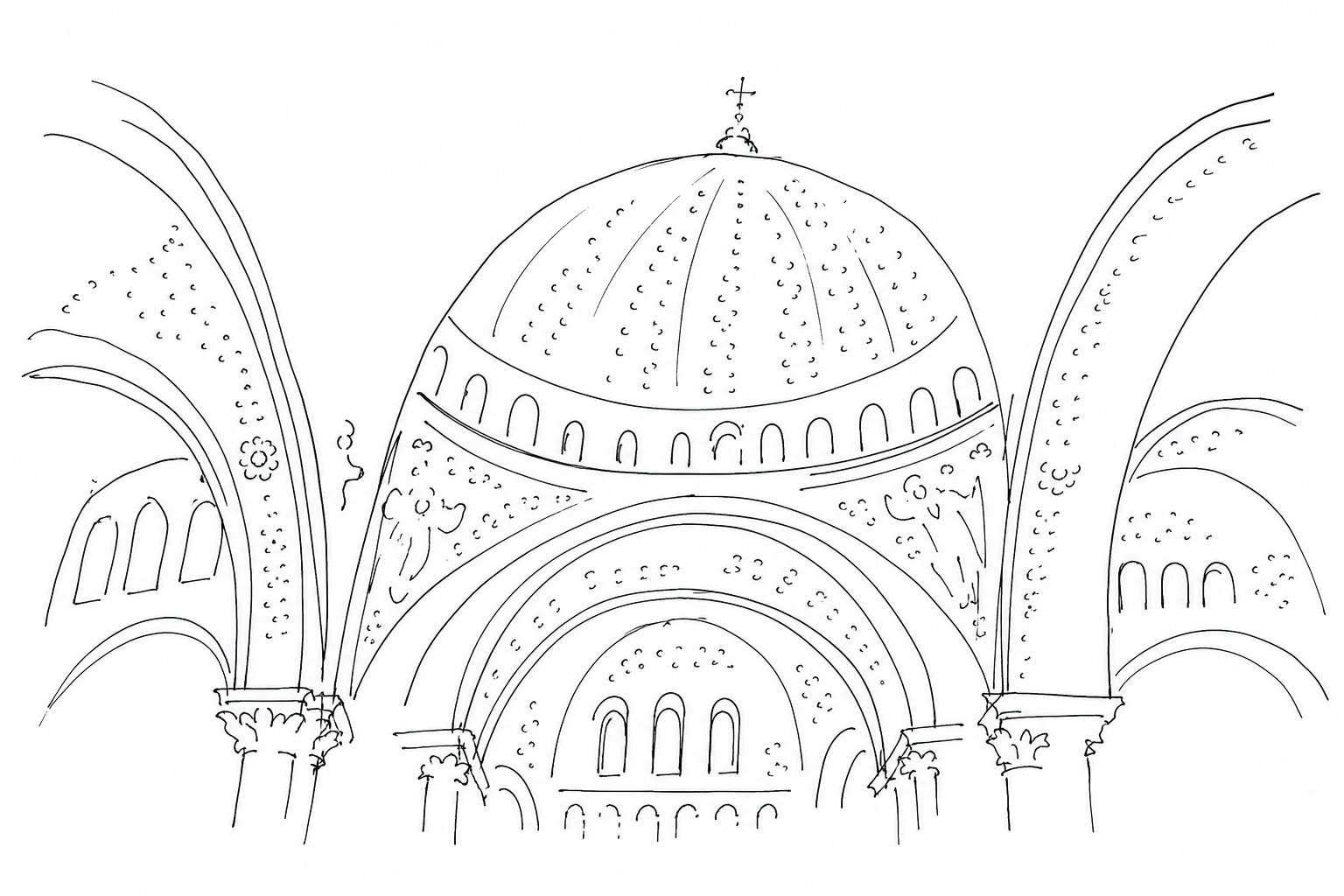
The gaze should be sought high up and to the sides, where choir galleries, grilles and separations recall a particular practice of listening. The performers could be heard more than seen; for travelers, that invisibility increased the charm and at the same time protected the institution’s internal rule. Imagining the violin, oboe, bassoon or voice parts coming from screened areas changes the meaning of the music: not individual display, but disciplined collective presence.
Before planning the visit it is best to check the updated information on access and routes; on site, however, the essential question remains historical: which traces still allow us to listen to Venice from the side of the girls?
Visiting the Pietà today with this gaze does not mean looking for an immobile Venice, but recognizing the traces of a sonic history still present in the places. The story of the musician girls restores depth to a building often observed in passing and places Vivaldi back inside a concrete community, made up of girls, teachers, copyists, benefactors and listeners. It is a slower and more precise way of crossing the city: stopping, imagining what can no longer be seen, and understanding how even spaces of care produced beauty, discipline and memory.
Related Posts
San Giovanni in Bragora: Vivaldi’s baptism and the quiet of Castello away from the large crowds
History, art and atmosphere of San Giovanni in Bragora, a church in Castello linked to Vivaldi’s baptism.La Fenice without a performance: why look at the theater even when you are not going to the opera
Visiting La Fenice without attending an opera helps you read the history, architecture and theatrical life of Venice with greater attention.
Ateneo Veneto: the Scuola dei Picai and the harsher side of Campo San Fantin
History, architecture and memory of the Scuola dei Picai, today the Ateneo Veneto, in the campo next to La Fenice.Questions Answered
What was the Ospedale della Pietà's purpose beyond charity?
It was a refuge, educational institution, and public musical space.How were the girls at the Pietà trained musically?
They learned various instruments and voice from childhood with discipline.What was Vivaldi's actual role at the Pietà?
Violin master and concert master within a structured music system.Why were performances done behind grilles?
To focus on sound, protect internal rules, and create disciplined presence.
Another stretch of Castello
Want to follow the district from major monuments to its quieter waterfronts?
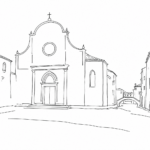 San Giovanni in Bragora: Vivaldi’s baptism and the quiet of Castello away from the large crowdsHistory, art and atmosphere of San Giovanni in Bragora, a church in Castello linked to Vivaldi’s baptism.
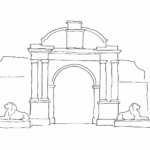 The Porta Magna of the Arsenale: lions, symbols and propaganda carved at the entrance to Venetian naval powerHistory and interpretation of the Porta Magna of the Arsenale, amid Renaissance architecture, marble lions and Venetian political messages.
 The Venice Arsenal: the place where the Serenissima built its powerHistory, spaces and meaning of the Arsenal, the productive and military heart of maritime Venice.
 The marangoni of the Arsenal: the wood artisans who built the strength of the SerenissimaHistory of the marangoni of the Arsenal, ship carpenters who transformed wood into galleys, hulls and Venetian maritime power.