
The Venice Arsenal was not only a place of work: it was the productive machine that made the maritime strength of the Serenissima possible. Behind the walls of Castello were concentrated shipyards, warehouses, specialized workers and technical knowledge capable of transforming wood, hemp and iron into fleets ready to depart. Understanding it means looking at Venice not only as a city of water and palaces, but as a political and industrial organism, built around control of the sea, trade and war.
Why the Arsenal was the heart of Venetian power
To understand the strength of the Serenissima, one must start from the Arsenal, the large productive and military complex built in the eastern part of Venice. It was not a simple shipyard: it was the place where the Republic transformed wood, iron, ropes, sails and technical skills into control of the sea.
Here the ships that supported Venetian trade and protected the routes toward the Adriatic, the Levant and the eastern Mediterranean were built, repaired and armed. Venice’s political power depended in fact on the ability to move merchant and military fleets rapidly, maintaining a balance between commercial wealth and naval defense.
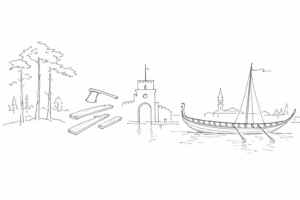
The Arsenal functioned like an organized machine: warehouses, workshops, docks and specialized workers worked in a coordinated way. The arsenalotti, the workers of the Arsenal, preserved precious technical knowledge and represented a strategic component of the State. In this closed and guarded space, the Serenissima concentrated the secret of its autonomy: producing ships in series, keeping them ready for use and adapting them to the needs of war and commerce.
A shipyard-state within the city
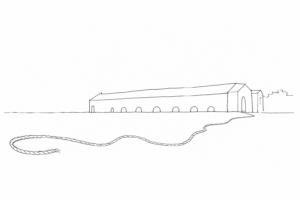
More than a simple port of call, the Arsenal functioned as a city reserved for naval work. Walls, guarded gates and internal basins separated the complex from the urban fabric, creating a controlled environment in which materials, workers and techniques could be managed without dispersion. The organization of the spaces followed a productive logic: the corderie for the hawsers, the squeri for setting up the hulls, the covered tese for storing or completing the boats, warehouses for timber, pitch, iron, sails and oars.
Daily work was divided among specialists: marangoni for carpentry, caulkers to make the hulls watertight, blacksmiths for nails and hardware, sailmakers and oar makers. This coordinated chain anticipated an almost industrial production: each team intervened on a precise phase, while the Republic controlled supplies, wages and construction standards. The arsenalotti were not only workers; they constituted a recognizable technical community, the repository of practical knowledge and often employed also in delicate political moments.
Walls, Porta Magna and visible signs from Castello
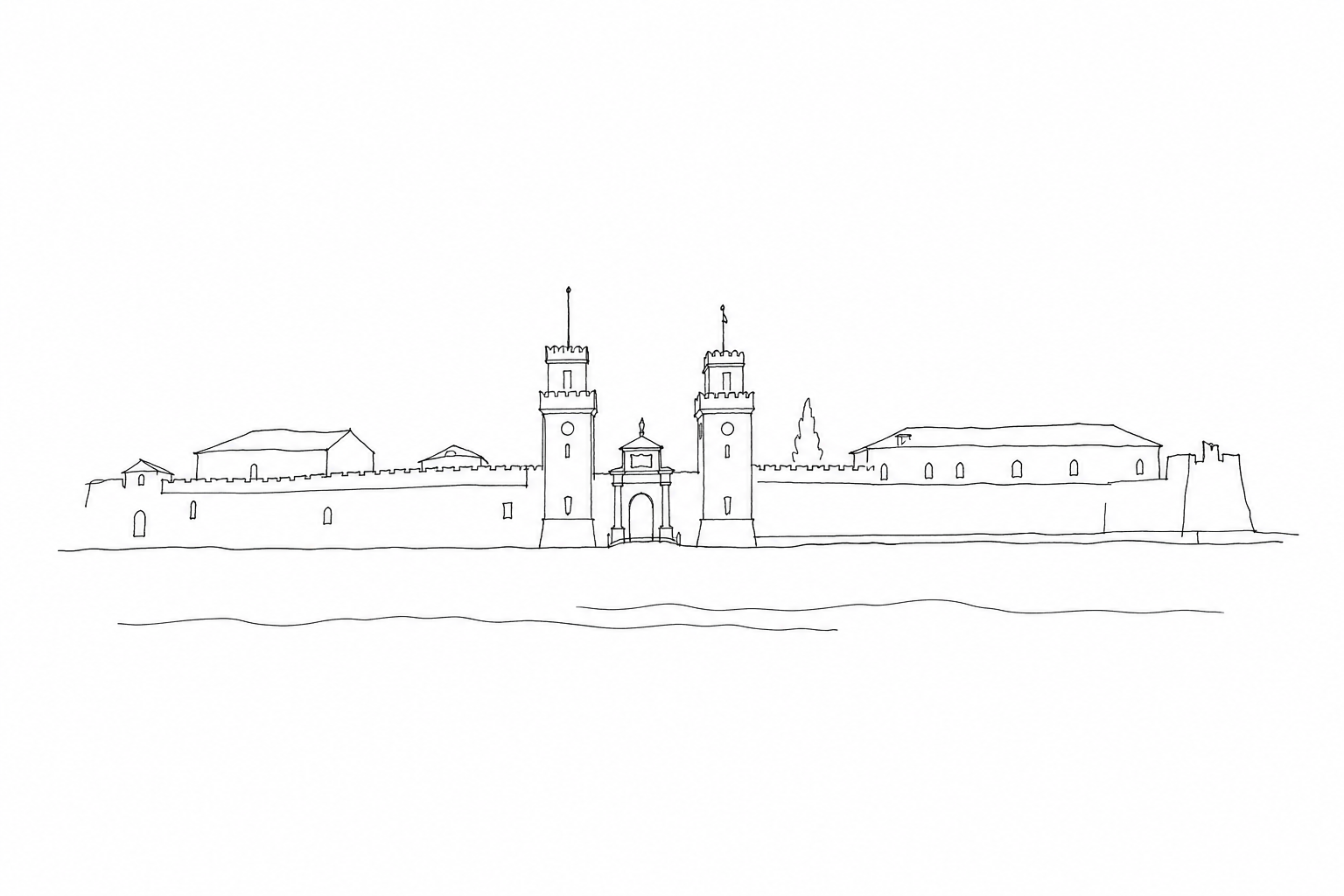
From the Castello district, the reading of the complex begins with its brick walls: not simple fences, but a technical and political boundary. The continuity of the wall surfaces, interrupted by towers, openings and sections overlooking the canals, still communicates the idea of a protected shipyard, where naval knowledge remained preserved within a separate space.
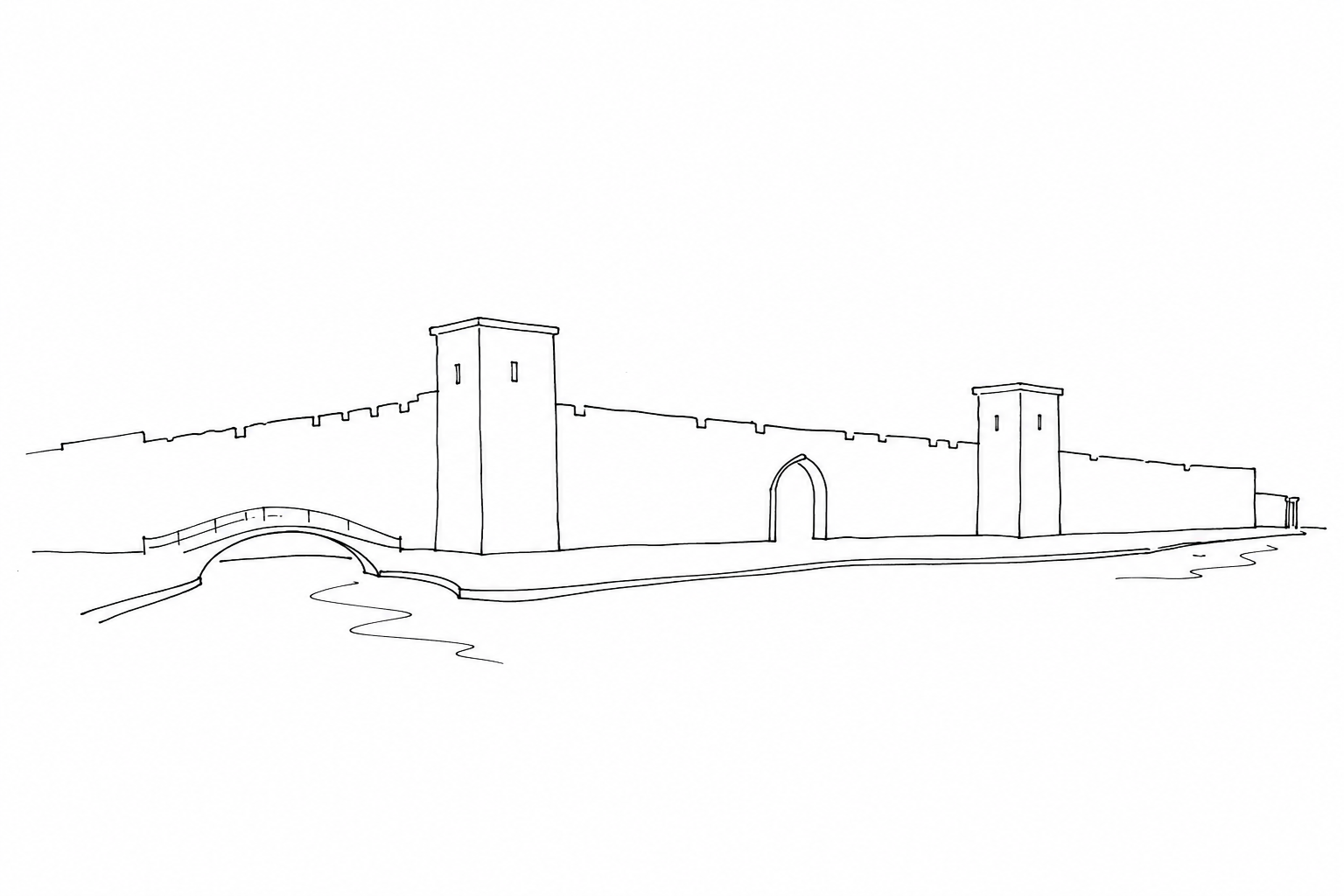
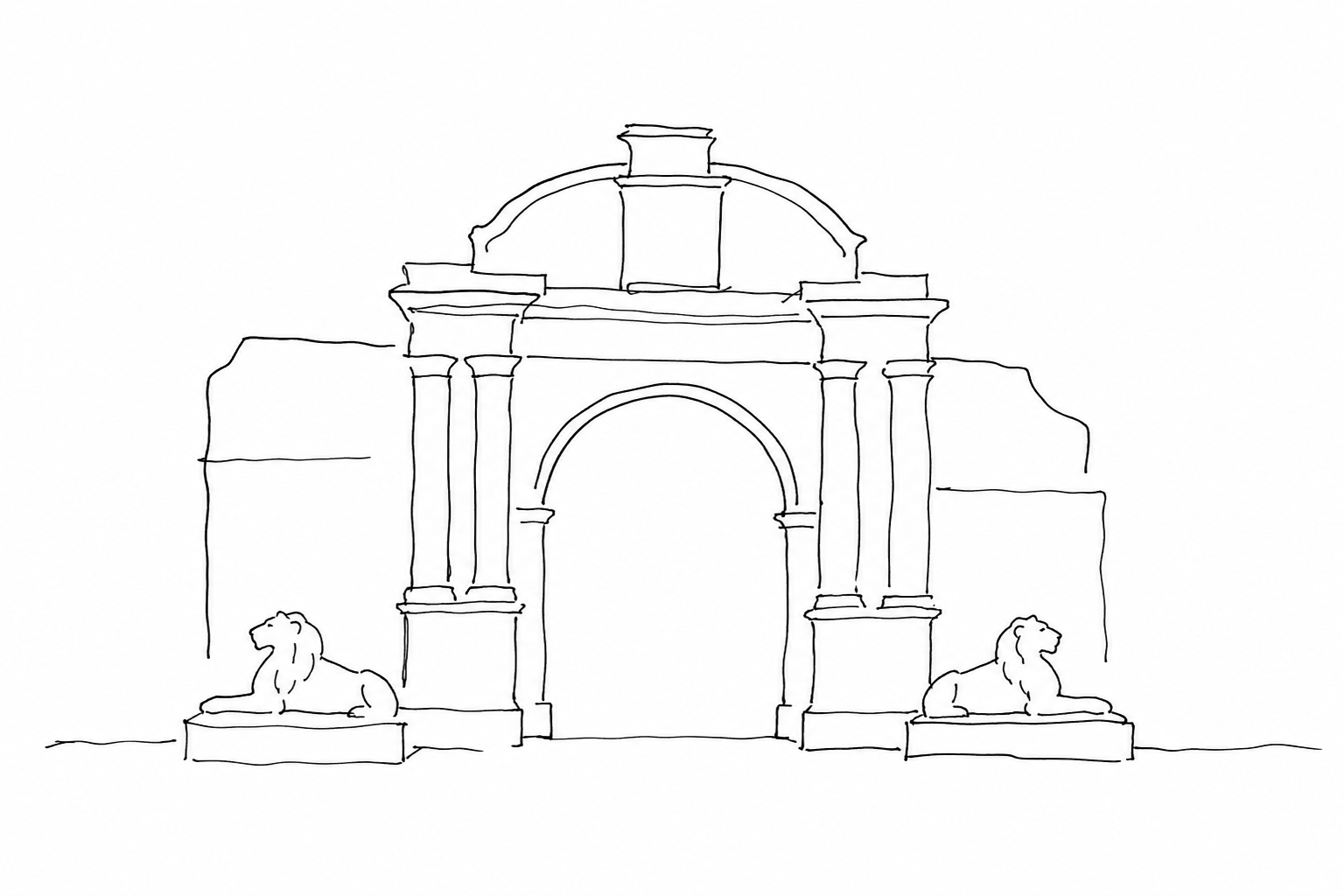
The most eloquent point is the Porta Magna, the fifteenth-century monumental entrance facing the canal. Considered among the first examples of Renaissance language in Venice, it replaced a medieval access with a solemn arch, columns, reliefs and the Lion of Saint Mark: not gratuitous decoration, but a declaration of sovereignty. Entering from there meant passing under the public sign of the Serenissima.
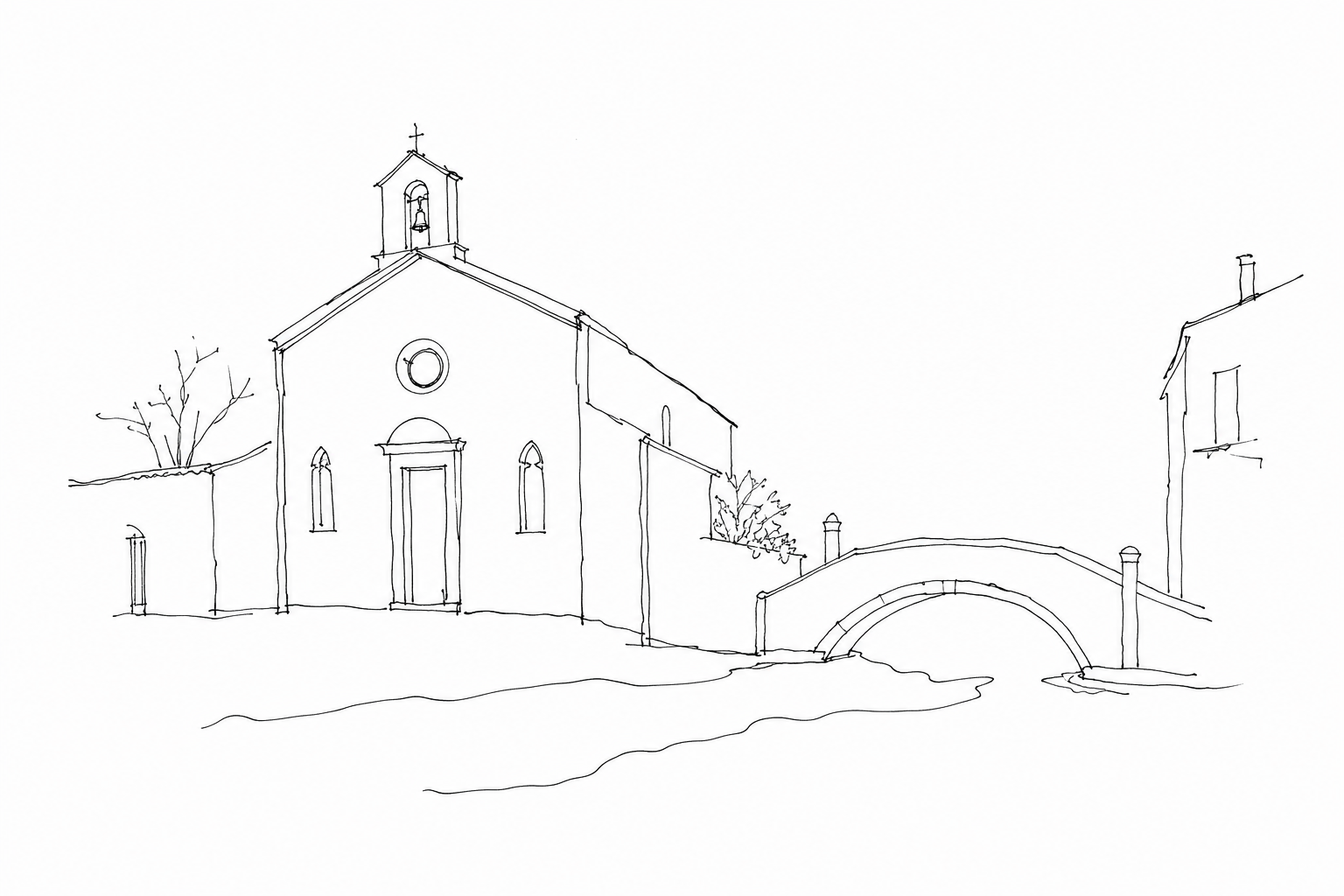
Observing from the outside, one can also distinguish the basins, the docks hidden beyond the walls, the profiles of the industrial roofs and the close relationship with the water. Castello thus preserves a readable map: sober façades, service routes, bridges and foundations show how Venetian power was built in a precise urban space, at once factory, fortress and symbol.
How to interpret it during a visit to Venice
To read the great naval complex without reducing it to a simple view, it is useful to imagine it in three overlapping levels. The first is productive: here ships were not isolated episodes, but the result of an organized chain of timber, ropes, sails, oars, ironwork and specialized labor. The second is military: the concentration of the spaces allowed the Republic of Saint Mark to arm war fleets and commercial escort fleets rapidly.
The third level is urban. Walking in Castello, observe the alternation between water and built space: basins, canals, bridges and foundations remind us that the work depended on transport by canal as much as on the internal workshops. Even when some areas cannot be visited freely, the perimeter tells a great deal: monumental entrances, long brick fronts and water accesses indicate different functions, not random decorations.
Before planning entry into specific spaces, always check updated conditions and accessible areas: the historical reading, however, already begins from the outside.
Visiting or even just walking along the Arsenal allows one to read a less decorative and more concrete Venice. The Porta Magna, the walls, the spaces still partly closed and the proximity to the everyday fabric of Castello tell of a power made of organization, skills and discipline. Including it in a slow itinerary helps to understand how the Serenissima built its greatness not only in the palaces of government, but also in the places where manual work became a strategy of State.
Related Posts
The Arsenale ropewalks: where the ropes that held Venetian naval power together were born
History, function, and interpretation of the Arsenale ropewalks, the long space where Venice produced the ropes for its fleet.The marangoni of the Arsenal: the wood artisans who built the strength of the Serenissima
History of the marangoni of the Arsenal, ship carpenters who transformed wood into galleys, hulls and Venetian maritime power.Naval History Museum: gondolas, models and ships to understand Venice as a maritime city
A route through the Naval History Museum to interpret Venice through gondolas, ship models, the Arsenal and maritime culture.Questions Answered
What made the Venice Arsenal central to Venetian power?
It was the site where materials and skills were combined to build and maintain fleets.Who were the arsenalotti and what role did they play?
They were specialized workers preserving technical knowledge vital to the Arsenal's operation.How was the Arsenal physically structured and protected?
It featured walls, guarded gates, internal basins, and the monumental Porta Magna.How does the Arsenal reflect Venice's urban and military strategy?
Its design integrated production, military functions, and reliance on water transport.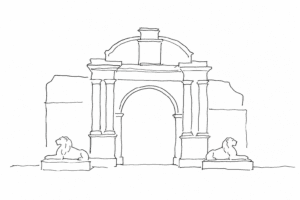
Follow Castello’s naval history
After this stop, which details show Venice from the side of those who built and sailed its ships?
 The marangoni of the Arsenal: the wood artisans who built the strength of the SerenissimaHistory of the marangoni of the Arsenal, ship carpenters who transformed wood into galleys, hulls and Venetian maritime power.
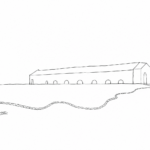 The Arsenale ropewalks: where the ropes that held Venetian naval power together were bornHistory, function, and interpretation of the Arsenale ropewalks, the long space where Venice produced the ropes for its fleet.
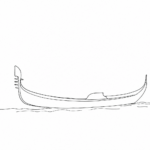 The Ships Pavilion: seeing Venice from the side of boats, not postcardsA route through the Ships Pavilion, among the Arsenale, historic boats and Venice seen from the water.
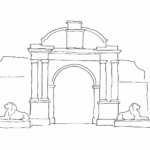 The Porta Magna of the Arsenale: lions, symbols and propaganda carved at the entrance to Venetian naval powerHistory and interpretation of the Porta Magna of the Arsenale, amid Renaissance architecture, marble lions and Venetian political messages.