
Looking at the mosaics of San Marco means entering a place where light is matter, narrative and power. The gold strikes you immediately, but stopping at its splendor risks flattening centuries of artistic, theological and urban choices. Each tessera works with the architecture, with the shadow of the domes, with the steps of visitors and with the history of a Venice projected toward Byzantium and the Mediterranean. This article offers a slower gaze: not to explain everything, but to learn where to rest your eyes and recognize figures, gestures and surfaces without being guided only by the effect of wonder.
Why gold is not just decoration
Entering San Marco means encountering the gold even before the individual figures. But in the mosaics of the Venetian basilica, that glow is not made only to amaze: it serves to build a different space, suspended between architecture, sacred narrative and real light.
From a technical point of view, the golden tesserae are not simple colored fragments. The gold is enclosed between thin layers of glass, according to a process that protects the metal and makes it capable of reflecting irregularly. The surfaces are not perfectly smooth: small inclinations make the light vibrate, so that domes, vaults and walls change appearance as one moves.
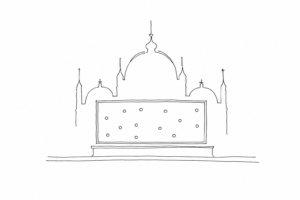
This visual instability has a precise meaning. Gold does not describe a natural landscape, but suggests an otherworldly dimension: the golden background isolates Christ, the Virgin, the apostles and the saints from everyday time. Looking at it carefully, therefore, means not stopping at material richness, but reading how light transforms the basilica into a theological image.
Where to rest your gaze in the basilica
In order not to be overwhelmed by the gold, it is useful to cross San Marco as a narrative arranged in space. The atrium is the first chapter: here the gaze can seek out the scenes from the Old Testament, in particular Genesis, conceived as a narrative threshold before entering the liturgical heart of the church.
In the naves, on the other hand, attention should be shifted from the isolated detail to the rhythm of the surfaces: arches, vaults and walls guide the passage toward the presbytery area. The figures are not placed at random; they accompany the movement of the body, as if the visitor were reading while gradually raising their eyes.
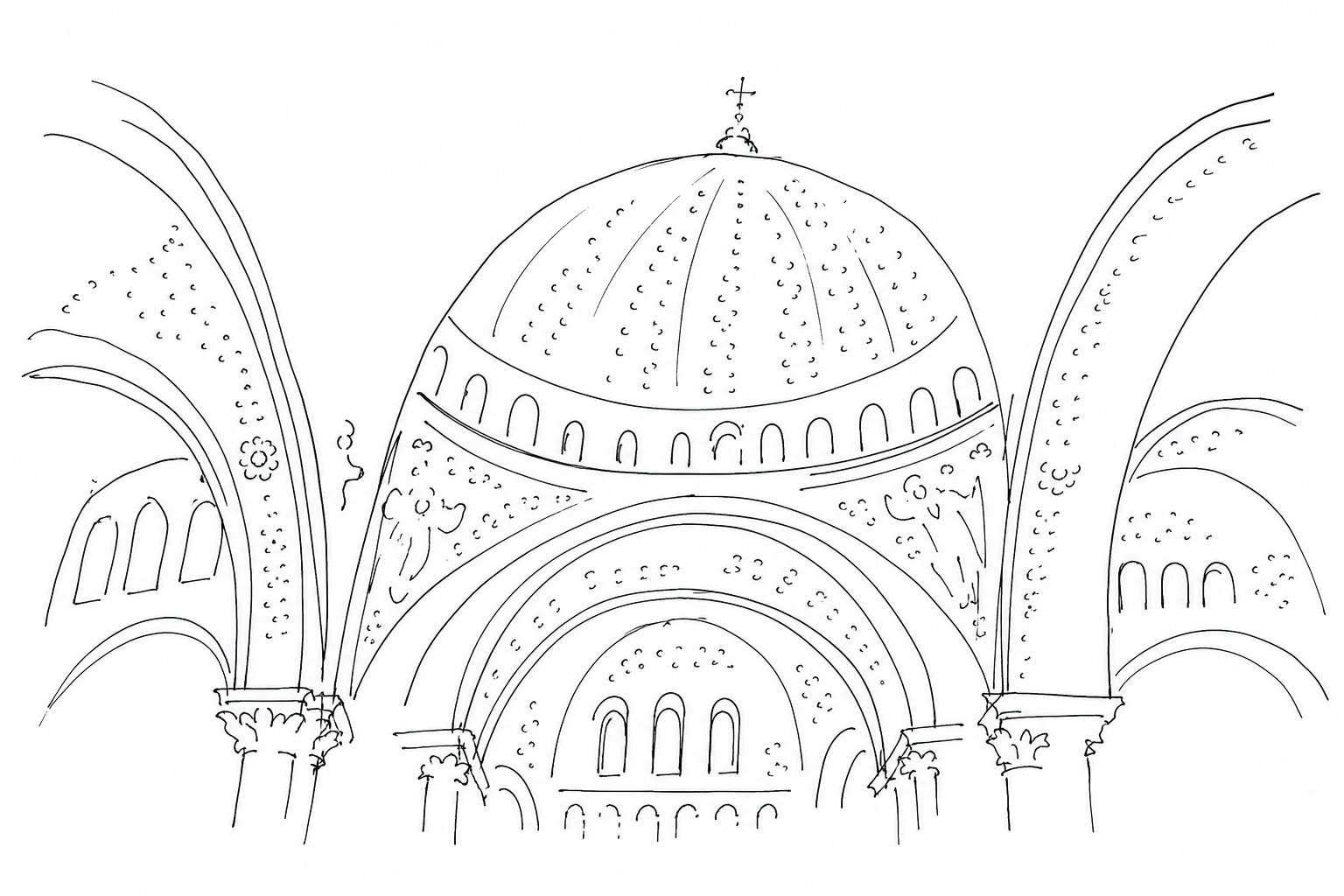
The decisive point is the domes. The basilica, built on the model of a Greek cross and marked by the Byzantine legacy, concentrates the most solemn themes high above: Christ, the Ascension, Pentecost, the presence of the apostles. Stopping under a dome and slowly turning makes it possible to understand the relationship between architecture and image.
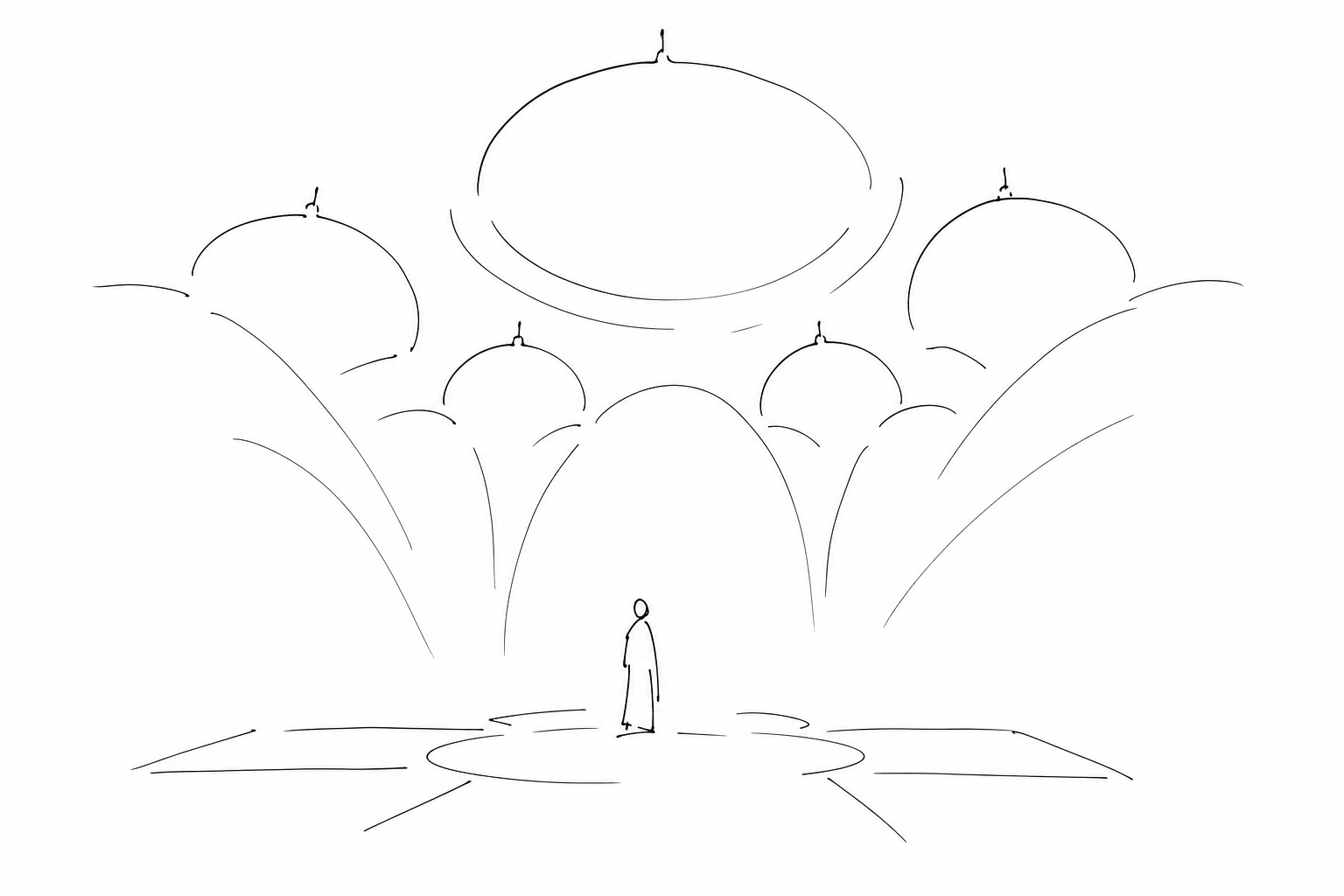
A simple method: look first at the structure, then at the main figures, and finally at the small gestures and inscriptions. In this way the gold stops being a uniform surface and becomes orientation.
Reading faces, gestures and golden backgrounds
In front of the mosaics of San Marco, a good starting point is to distinguish who is speaking, who is listening and who is carrying out the action. In the narrative cycles the characters are not arranged at random: the central position, the halo, the larger size or the throne signal authority. Christ blessing, Mary, apostles, prophets and saints can also be recognized by their attributes: book, scroll, cross, liturgical vestment, evangelical symbol.
Gestures help more than minute details. A raised hand indicates blessing or authoritative speech; an open scroll refers to prophecy; hands covered by a veil suggest respect for what is sacred. Gazes also create direction: they guide from one episode to the next and connect distant scenes.
The golden background should not be read as a simple ornament. It cancels the realistic landscape and places the event in a theological, timeless space. The inscriptions, when present, function as captions: a few names are enough to orient oneself. Reading in this way means moving from enchantment to understanding.
To get beyond a simple how wonderful, it is useful to choose a single portion and give it a few minutes. First you look from afar: you recognize the general layout, the symmetry, the relationship with arches and domes. Then you move closer, when the route allows it, to notice the material: the tesserae are not painting, but small glass and stone elements; in the golden ones the metal leaf is enclosed between layers of glass.
- Identify the center of the scene: it is often the point toward which bodies, gazes and painted architectures converge.
- Observe the margins: that is where narrative details, animals, cities, objects and inscriptions appear.
- Change position by a few steps: the gold changes intensity because many tesserae are inclined in different ways.
This method slows the eye and restores depth to the whole: not only decorative splendor, but narrative, technique, theology of space and the material work of different hands, stratified over centuries.
The mosaics of San Marco do not ask only for admiration, but for attention. The gold becomes more interesting when it stops being a uniform background and reveals differences in light, directions of the gaze, hierarchies among the figures, dialogues with the space. Visiting the basilica slowly means accepting that not everything can be grasped in a few minutes: some images are better understood by moving, going back, raising your gaze after observing a detail. In this way beauty remains intact, but becomes less generic: not a glow to photograph in a hurry, but a visual language to listen to within the long time of Venice.
Related Posts
The Frari Triptych: how to look at Bellini without stopping only at the great basilica
A brief guide to reading Giovanni Bellini’s Frari Triptych, beyond the scale of the basilica.The Pala d’Oro: Stones, Enamels and Byzantine Power Behind the Altar of St. Mark’s
History, materials and symbols of the Pala d’Oro, the great precious altar of St. Mark’s born between Venice and Byzantium.
The floor of St. Mark’s: marble waves, geometries and the feeling of walking on water
A journey across the floor of St. Mark’s Basilica: marbles, waves, geometric mosaics and a slow reading of a Venetian detail.Questions Answered
What is the purpose of gold in San Marco’s mosaics?
Gold builds a sacred, otherworldly space, not just decorative splendor.How should visitors direct their gaze inside the basilica?
By following narrative rhythms and architectural elements to understand the mosaics.How can one recognize key figures in the mosaics?
Using size, position, attributes, gestures, and gaze direction.What viewing method enhances appreciation of the mosaics?
Observing from afar, then up close, and shifting position to grasp light and detail.
Read St Mark’s beyond the square
Want to move from the famous monuments to details that explain power, art and public life?
 Museo Correr: why starting here helps you understand San Marco before the basilicaTo read San Marco more calmly, the Museo Correr offers the civic, political and urban key to the square before the basilica.
 The Tetrarchs of San Marco: four embraced figures and the missing fragment in IstanbulHistory, interpretation and location of the Tetrarchs of San Marco, a porphyry group linked to Constantinople and to a fragment preserved in...
 The Molo of San Marco: columns, departures and the maritime power of the SerenissimaHistory and interpretation of the Molo of San Marco: the columns, the Basin, State departures and the language of Venetian power.
 The Marciana Library: books, painted ceilings and public knowledge next to San MarcoEditorial guide to the Marciana Library: history, rooms, books, paintings and public role in the heart of San Marco.