
Between the Accademia and San Marco, San Vidal and Campo Santo Stefano form one of those Venetian passages where the city changes tone without the need for grand effects. Here coexist a church transformed into a place for music, a broad and measured campo, palaces overlooking it discreetly, a nineteenth-century statue and slightly crooked bridges that force your pace to slow. It is not just a transit area: it is an elegant fragment of Venice, where architecture, everyday life and pedestrian routes say a great deal about the way the city was built and continues to be crossed.
Where we are: an elegant campo between the Accademia and San Marco
Campo Santo Stefano is one of the airiest spaces in the San Marco district, but it occupies a hinge position: on one side the route that arrives from the Accademia, on the other the path toward San Moisè, La Fenice and Piazza San Marco. Here Venice changes pace: less compressed than the shopping calli, more spacious, with noble façades, cafés, palaces and paving that invites you to look upward.
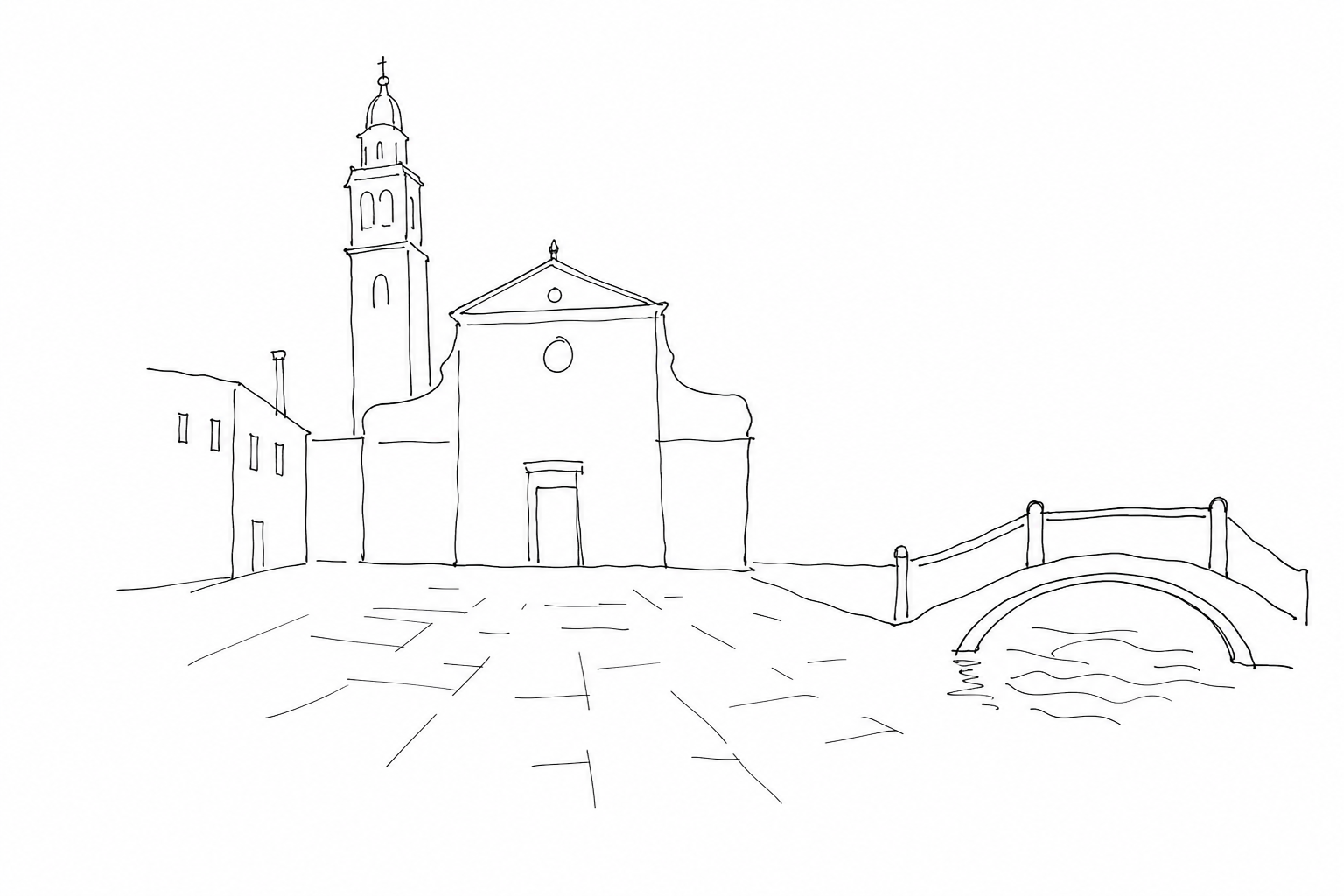
The church of San Vidal overlooks the edge of the campo, close to the bridge of the same name that crosses the rio di San Vidal. It is a recognizable point also because this stretch of the city multiplies the crossings: short bridges, oblique perspectives, glimpses that seem slightly “crooked” because they follow the irregular course of the water and the fondamente.
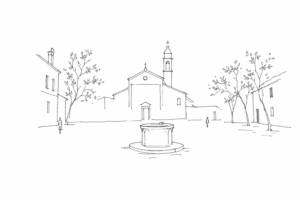
The atmosphere is elegant without being monumental in a rigid sense. Campo Santo Stefano functions like an urban hall: large enough to breathe, Venetian enough to preserve minute details, among Istrian stone, wells, side entrances and passages toward places of art and music.
San Vidal: a church turned into a music hall
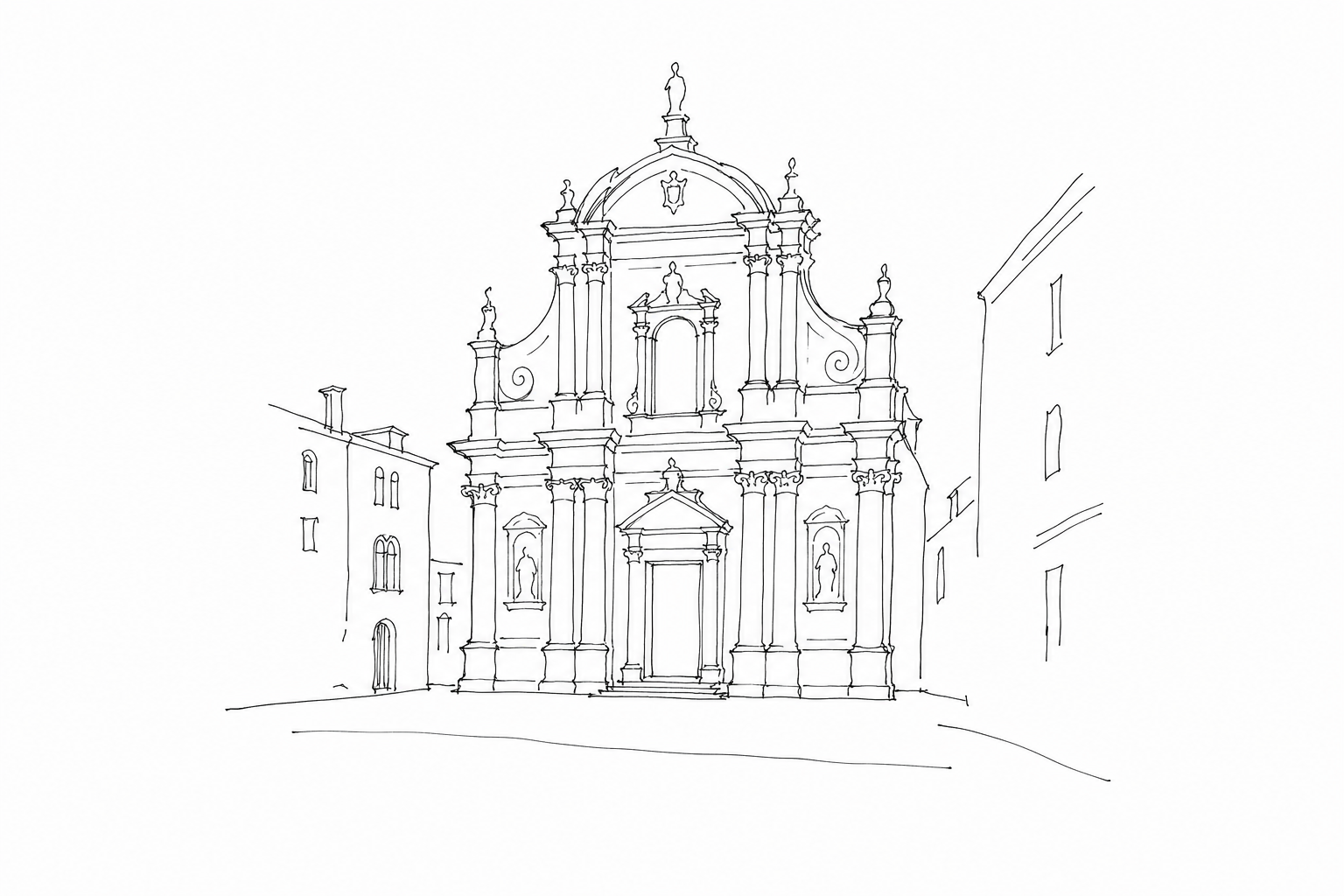
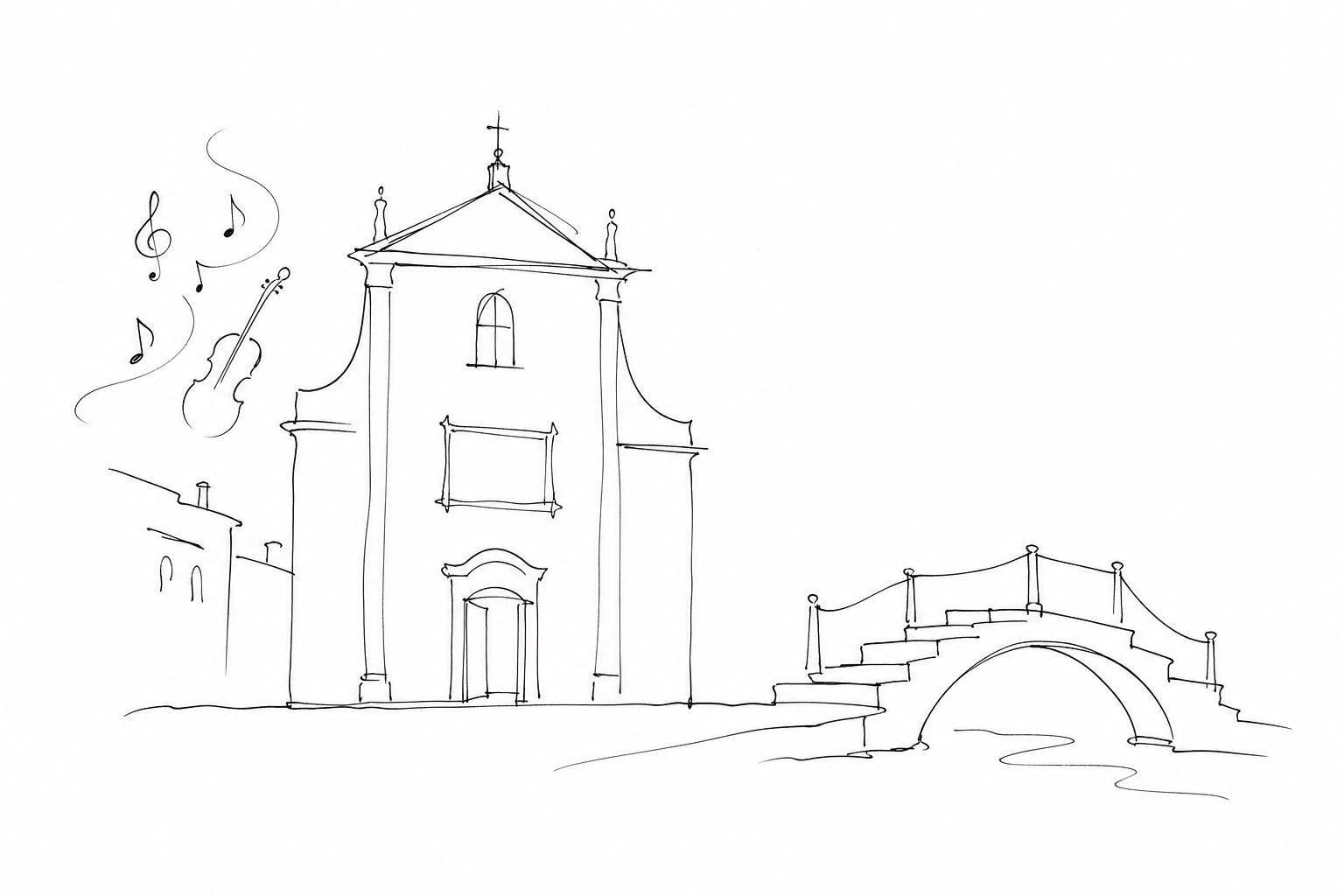
The church of San Vidal, dedicated to Saint Vitalis, shows well how Venice knows how to reuse its buildings without erasing their character. Of medieval origin and renovated in the modern age, it has a sober façade attributed to Andrea Tirali, overlooking the western side of Campo Santo Stefano. The interior, with a single nave, can be read as an intimate space: articulated walls, side altars, controlled light and a perspective that leads to the high altar.
The best-known artistic feature is the large altarpiece by Vittore Carpaccio with Saint Vitalis on Horseback and Saints, a work that links Venetian devotion to the narrative painting of the early sixteenth century. In this context, its transformation into a concert venue does not seem accidental: the church offers proportions suited to close listening, a ready-made historical setting and acoustics perceived as part of the experience.
Those who enter for the music are not merely visiting a hall: they pass through a building that preserves liturgical memory, painting, architecture and a contemporary cultural function. For any concerts or visits, it is advisable to check the updated details with official sources.
Campo Santo Stefano: palaces, statue and Gothic
A few steps from San Vidal, Campo Santo Stefano reads like a sequence of aristocratic wings rather than a simple urban opening. The façades of the Loredan, Morosini and Pisani palaces recall the weight of Venetian families: Istrian stone, orderly windows, solemn portals and elevations designed to be seen while walking, not from an immobile square.
At the center stands out the monument to Niccolò Tommaseo, a Dalmatian man of letters and protagonist of the Venetian Risorgimento. The statue, modeled by Francesco Barzaghi in the nineteenth century, has also entered popular vocabulary because of the ironic nickname linked to the books carved behind him: a detail that shows how Venice knows how to transform official memory into everyday storytelling.
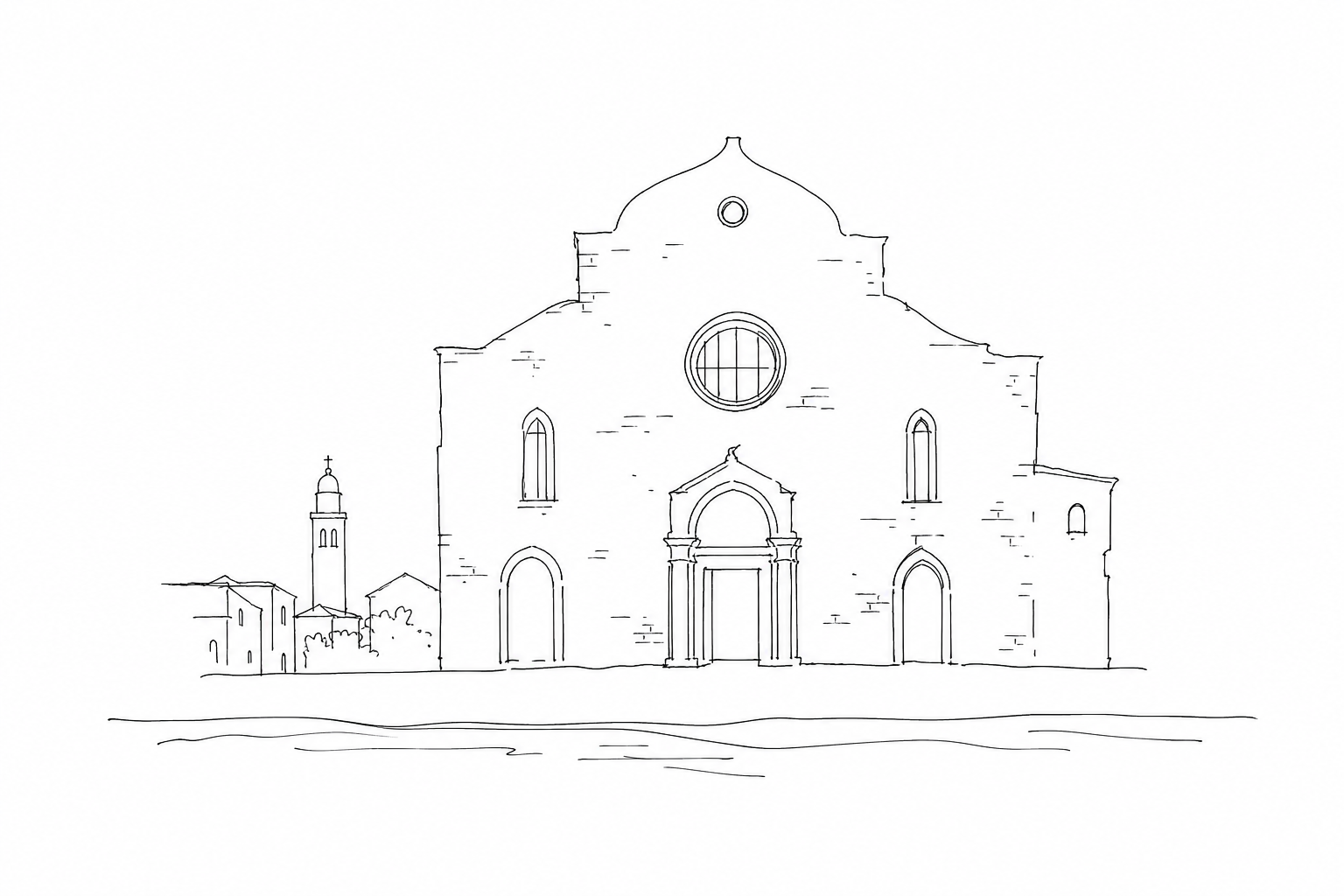
On the northern side, the church of Santo Stefano brings the verticality of mendicant Gothic into the space: brick, pointed arches and an interior created for Augustinian preaching. Its leaning bell tower adds a physical, almost theatrical note to the theme of the “crooked bridges” and the imperfect geometries of the area. Here elegance is not polished: it arises from the encounter between palaces, devotion, civic history and small Venetian imbalances.
Crooked bridges and the rhythm of the walk
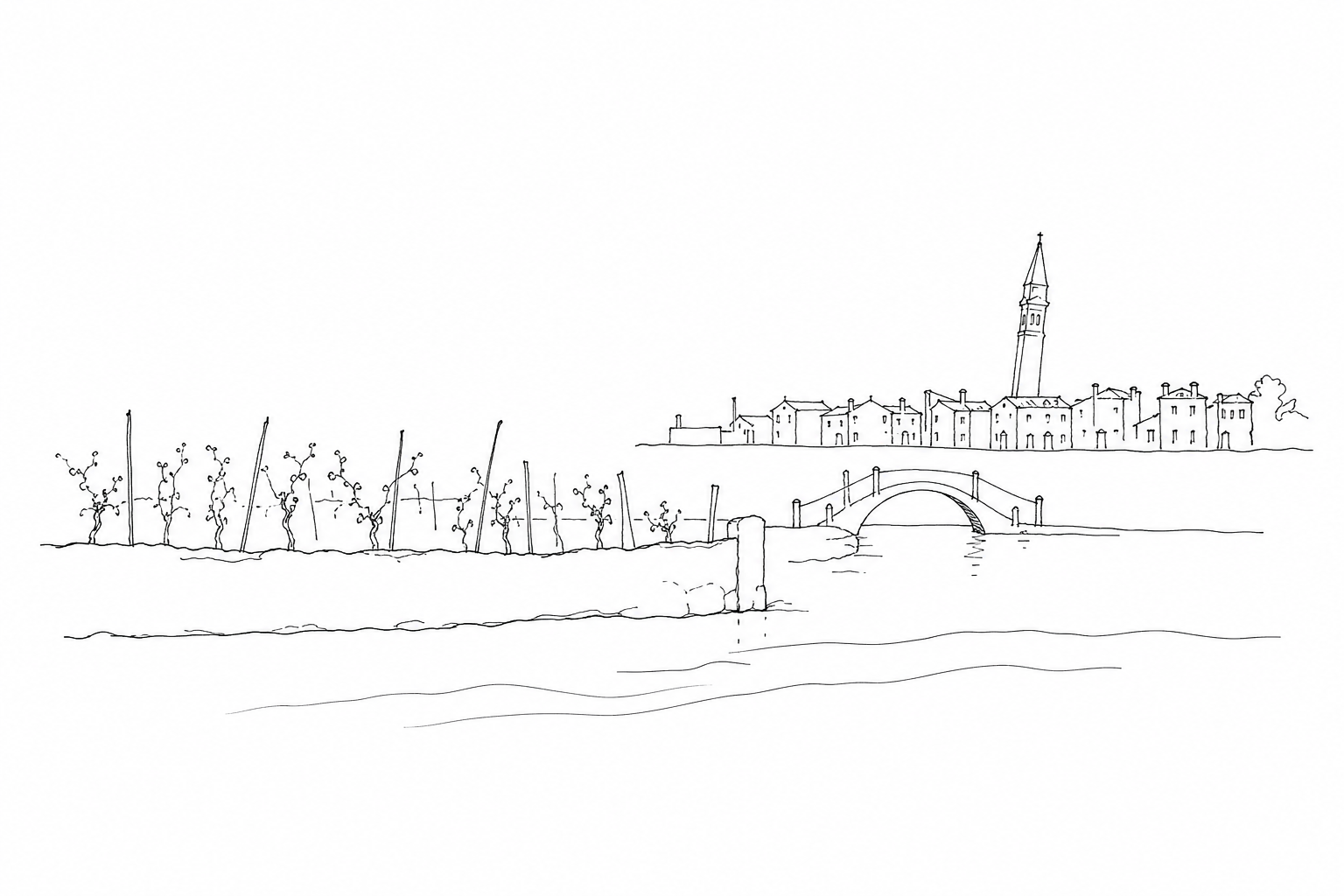
In this area the route never proceeds in a straight line: the small bridges function as hinges, forcing you to change your angle of view. Leaving the San Vidal area toward the rio of the same name, it is worth slowing down before climbing the steps: the axis of the bridge does not perfectly coincide with that of the calle, and precisely this shift reveals the Venetian logic, made of adaptations to the water rather than design symmetries.
- Look at the parapets: the worn Istrian stone signals repeated passages, not mere decoration.
- Observe the entrances: often one ramp points toward a façade, the other toward a sottoportego or a sudden turn.
- Listen to the rhythm: footsteps, steps and brief pauses break up the walk like a musical measure, in dialogue with the nearby concert halls.
The charm arises here: not from disorder, but from an oblique precision, calibrated to rii, narrow calli and side perspectives.
Walking between San Vidal and Campo Santo Stefano means reading Venice at a more everyday level: not only famous façades or photographed views, but relationships between churches, campi, bridges, music and urban habits. It is a short stretch, yet rich in variations: the intimacy of San Vidal, the breadth of Santo Stefano, the irregular lines of the passages over the water. This contained measure is precisely what makes it interesting for those who want to understand the city without rushing, observing how even an apparently simple itinerary can reveal history, elegance and movement.
Related Posts
Campo San Luca: the Venice of quick passage, among cafés, offices and intersecting calli
A central, everyday campo, between Rialto and San Marco, read as an urban junction of passages, short stops, offices and calli.Campo San Giacomo dell’Orio in the evening: why some Venetian campi do not need monuments
An evening reading of Campo San Giacomo dell’Orio: space, history and everyday life in the Santa Croce sestiere.
Campo Santa Margherita: how to read a Venetian square that is still a space of daily life
A concrete reading of Campo Santa Margherita: history, urban edges, daily uses and details that help understand a lively square in Dorsoduro.Questions Answered
What makes Campo Santo Stefano an elegant urban space?
It functions as a broad, measured campo with noble façades and Venetian details.How has the church of San Vidal been repurposed?
It has been converted into a concert venue preserving its historical character.Why are the bridges around San Vidal described as 'crooked'?
They follow irregular water courses, forcing walkers to slow and change view angles.What unique experience does walking between San Vidal and Campo Santo Stefano offer?
An intimate, layered look at Venice's history, architecture, music, and pedestrian movement.
St Mark’s seen through its details
Want to connect architecture, ceremony and power without stopping at the postcard view?
 Palazzo Loredan in Santo Stefano: science, busts and Venetian culture outside the best-known museumsEditorial guide to Palazzo Loredan in Santo Stefano: cultural venue, civil architecture and the Pantheon Veneto in the heart of Venice.
 The Hall of the Great Council: when Venice painted itself as an immense republicHistory, political function and images of the Hall of the Great Council in the Doge’s Palace.
 San Moisè: the most theatrical Baroque façade that still divides VenetiansHistory, excesses and interpretation of the controversial Baroque façade of San Moisè, just steps from St. Mark’s.
 The Venice Mint: Coins, Metal, and Public Trust Beside the Marciana LibraryHistory and urban reading of the Venice Mint, between coinage, solid architecture, and public role on the Molo of San Marco.