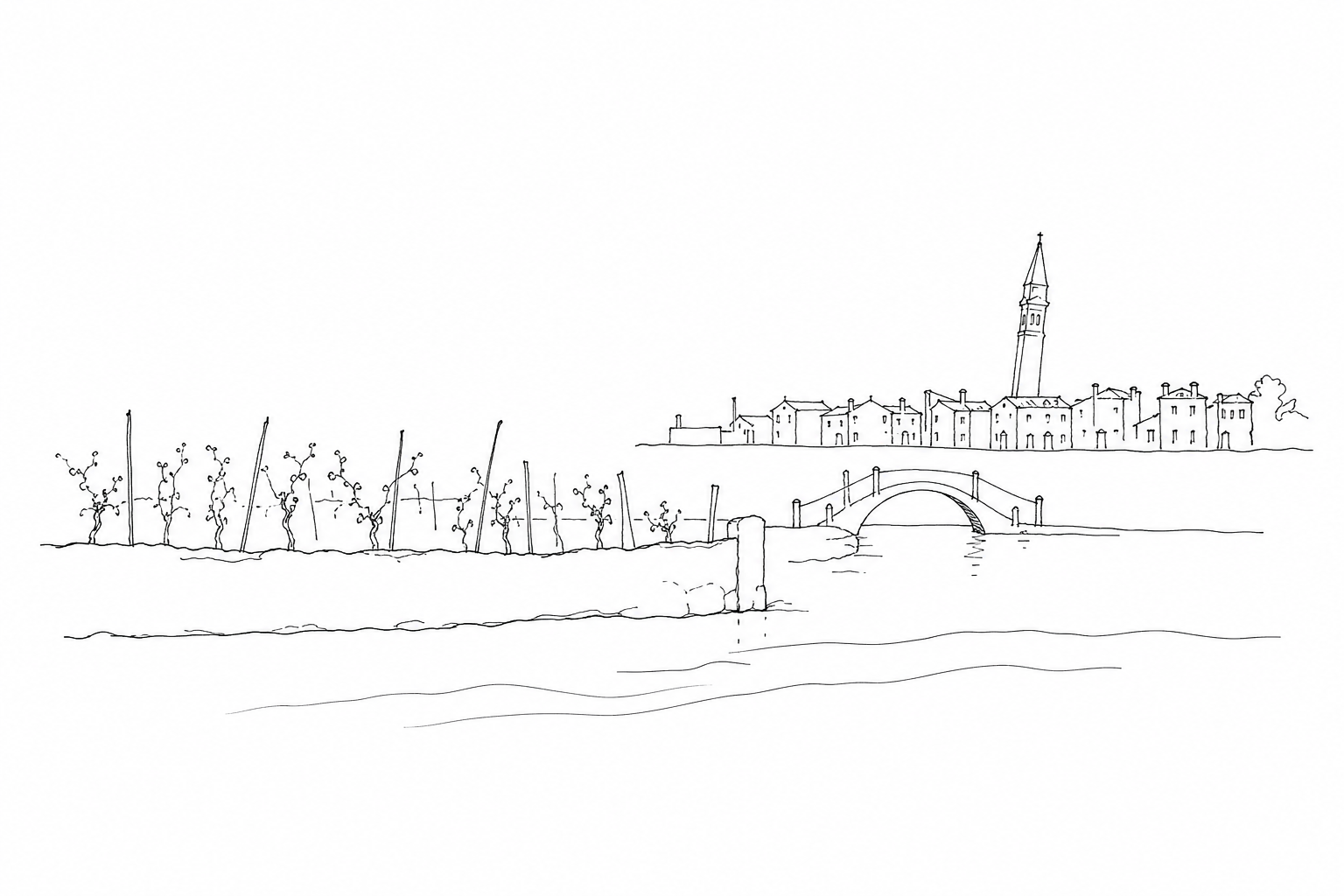
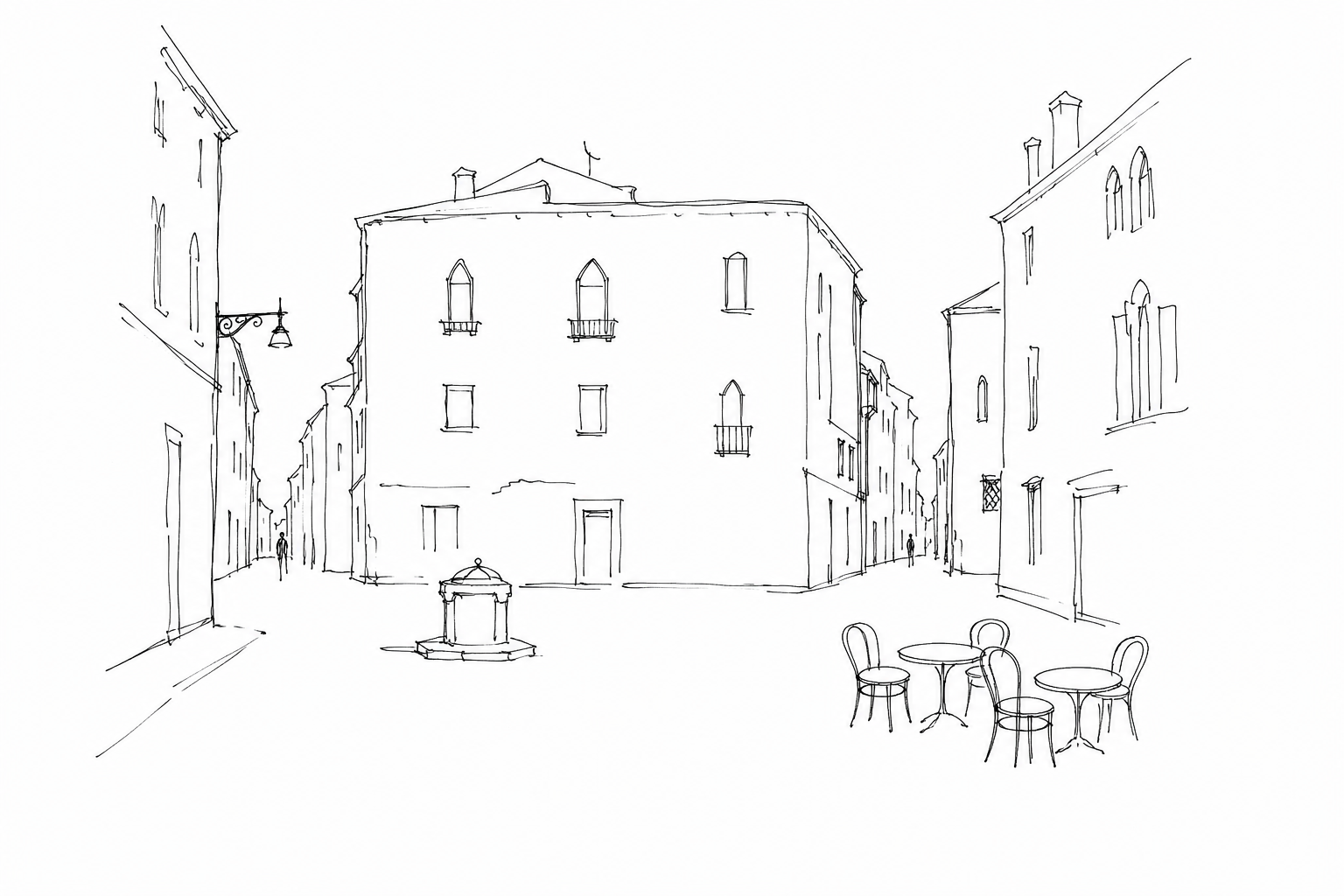

Campo San Luca is one of those Venetian places that are better understood by walking through them than by stopping to observe them. It does not have the theatricality of other, more famous campi, but it functions as an urban hinge: residents, office workers, students, and travelers heading elsewhere pass through here. Among converging calli, shop windows, cafés and the discreet presence of the church, the campo tells of a practical, fast Venice, still inhabited. It is a space of transit, but not for this reason without character: you only need to slow down a little to grasp its rhythm, layers and small everyday details.
A campo more crossed than contemplated
Campo San Luca has a different character from the Venetian campi that invite long stops. Here the first impression is movement: quick steps between one calle and another, people cutting across the space without stopping, small tables and shop windows forming the edge of a continuous flow. Its position, in the sestiere of San Marco and not far from the pedestrian axis between Rialto and Piazza San Marco, makes it more a point of passage than an isolated destination.
The campo takes its name from the church of San Luca Evangelista, a historic presence that recalls how these spaces were at once religious, civic and practical places. Today its rhythm is marked by cafés, offices, discreet entrances and intersecting calli: elements that tell of an everyday Venice, less scenic but very real.
Observing it means reading a minute geography: those arriving from a narrow calle suddenly find room to breathe, then immediately set off again. Campo San Luca works this way, like a brief pause within the fast city.
Where the calli narrow and intersect
Campo San Luca is understood by first observing the entrances, not the center. In the sestiere of San Marco, along a much-used route between Rialto, the Mercerie and the area around San Marco, this open space works like a small urban distributor: it receives people from several calli, orients them for a few seconds and sends them on toward other passages.
The difference lies in the scale. The arrival streets are narrow, often bent by corners that reduce the view; then the space opens enough to allow a direction to be chosen, but not so much as to truly interrupt the pace. Different routes intersect here: those proceeding toward offices and studios, those stopping at the counter of a café, those using the square as a shortcut to reach nearby shops and bridges.
The church of San Luca also takes part in this reading: rather than dominating the scene, it serves as a silent reference within a continuous circulation. It is a practical Venice, made of short detours, quick encounters and instinctive orientation.
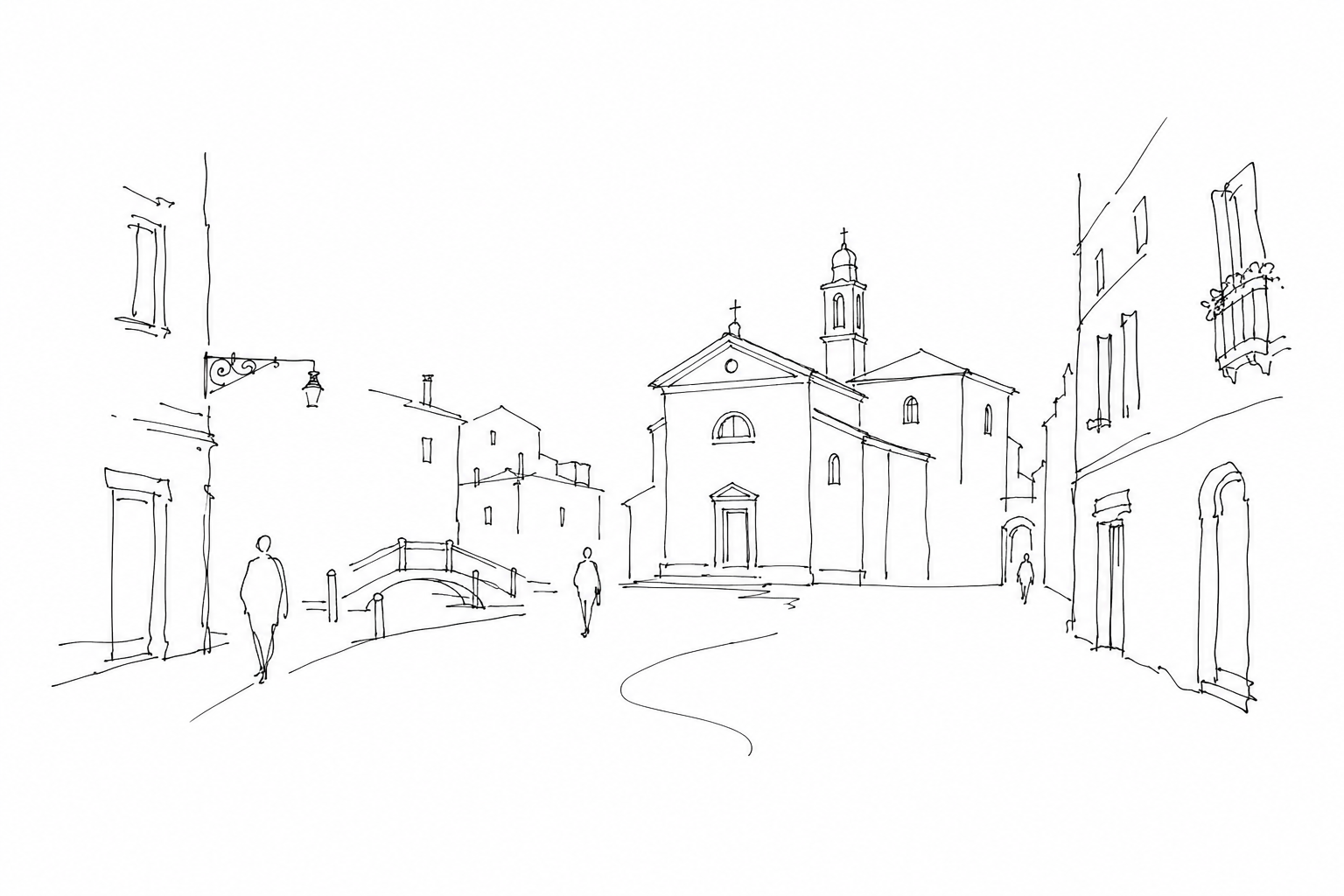
The church and the memory of the place
The church of San Luca Evangelista adds a less visible depth to everyday passage. The building, documented in the medieval period and renovated in the following centuries, does not present itself with monumental theatricality: instead it remains embedded in the urban fabric, almost confirming the operational character of the area. The dedication to the evangelist, traditionally also associated with sacred painting, recalls an ancient link between devotion, images and city life.
The memory of the place also passes through historical figures. Here tradition places the burial of Pietro Aretino, a writer of sixteenth-century Venice, famous for his polemical voice and for his relationships with artists and the powerful of the time; the tomb is not today a major public sign, but the reference is enough to suggest how close this part of the city was to cultural, publishing and political circles.
For those crossing the area without stopping, the church thus functions as an offbeat: it recalls that behind offices, cafés and quick turns there exists a long, discreet stratification, continually brushed by movement.
To read Campo San Luca during a visit, it is best not only to cross it in a straight line. Stopping at the edges, leaving the flow free, makes it possible to understand its function: it is not a square to contemplate at length, but a crossing node between routes directed toward Rialto, the area around San Marco and the internal commercial streets.
The clearest sign is the alternation of steps. Alongside visitors with a map appear office workers, residents, students, couriers with trolleys, people using the café for a quick break and not for a long scenic stop. The offices around the open space explain this practical energy: here Venice is not presented only as an image, but as a place of appointments, errands, deliveries and shortcuts.
A good way to orient yourself is to observe the entrances and the nizioleti, the street names painted on the walls. They indicate a city made of short detours: every exit narrows the space, changes the light, noise and speed. Before setting off again, it is worth turning around: the whole appears less monumental, but very Venetian, because it tells of everyday life as it passes.
Campo San Luca does not ask for a long stop, but it deserves an attentive look. Its identity lies precisely in the balance between movement and permanence: the calli that cross it, the offices that animate it, the café tables, the religious and urban memory that emerges without imposing itself. It is a less scenic and more concrete Venice, useful for understanding how the city continues to function beyond the best-known images. Passing through it slowly, even for just a few minutes, means reading an authentic fragment of its everyday rhythm.
Related Posts
Campo Santa Margherita: how to read a Venetian square that is still a space of daily life
A concrete reading of Campo Santa Margherita: history, urban edges, daily uses and details that help understand a lively square in Dorsoduro.San Vidal and Campo Santo Stefano: music, crooked bridges and an elegant piece of Venice
A short route through San Vidal, Campo Santo Stefano, music, architecture and oblique bridges.
San Cassiano: Tintoretto, market and silence a few minutes from the chaos of Rialto
A short route between Rialto and San Cassiano: market, quiet calli, church and canvases by Tintoretto.Questions Answered
What is the character of Campo San Luca compared to other Venetian squares?
It is more a place of quick passage than long contemplation.How does the church of San Luca Evangelista influence the area?
It adds historical depth without dominating the everyday urban flow.What role do the intersecting calli play around Campo San Luca?
They create a network of narrow routes that shape movement and decisions.Who uses Campo San Luca and why is it significant?
Residents, workers, students, and travelers pass through it as a practical transit point.
Keep exploring the Venice of St Mark’s
Which spaces help you read the square as a system of symbols, institutions and images?
 Campo San Bartolomeo: Goldoni, Rialto and the city’s most restless meeting pointCampo San Bartolomeo read as an urban node: Goldoni, Rialto, flows, pauses and details to observe.
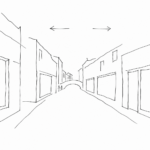 Le Mercerie: the commercial route between Rialto and San Marco that was not created for modern shoppingHistory and urban reading of the Mercerie, a dense axis of calli between Rialto and San Marco born from civic, artisan and...
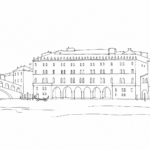 Fondaco dei Tedeschi: from warehouse of Northern merchants to terrace over the cityHistory, architecture and urban interpretation of the Fondaco dei Tedeschi, between Rialto, northern trade and a view over the rooftops of Venice.
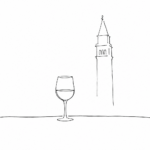 Why in Venice They Say “ombra”: history and legend of the most Venetian glass of wineOrigin, legend and everyday use of the ombra, the glass of wine linked to Venetian bacari.