
In Venice, asking for an ombra means ordering a glass of wine, but also entering into a word that preserves traces of the square, trade and everyday habits. It is not just a picturesque saying: behind this term are intertwined the legend of the Bell Tower of St. Mark, the role of Rialto as a wine market and a sociability made up of counters, calli and brief stops. Understanding why in Venice they say ombra helps to read the city up close, through a simple gesture that still today belongs to its most concrete rhythm.
What an ombra is in Venice
In Venice, asking for an ombra means ordering a small glass of wine, usually served at the counter in a bacaro or in an osteria. It is not the name of a grape variety, nor an official measure: it is a wholly Venetian way of indicating a quick, simple drink, linked to conversation and often accompanied by a cicchetto.
The expression belongs to the city’s everyday language. One can say “to go and drink an ombra” or “to have an ombra,” meaning not only the wine, but also the social gesture: stopping for a few minutes, exchanging a few words, setting off again. Traditionally the ombra was white or red, without particular emphasis on the label, because what mattered above all were freshness, pouring and conviviality.
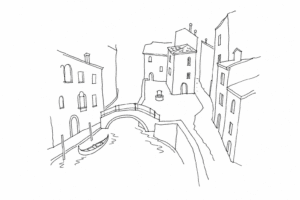
This very word, so short and concrete, preserves an urban memory: it recalls Venice as a city of calli, campi, markets and quick stops.
The legend of the Bell Tower’s shadow
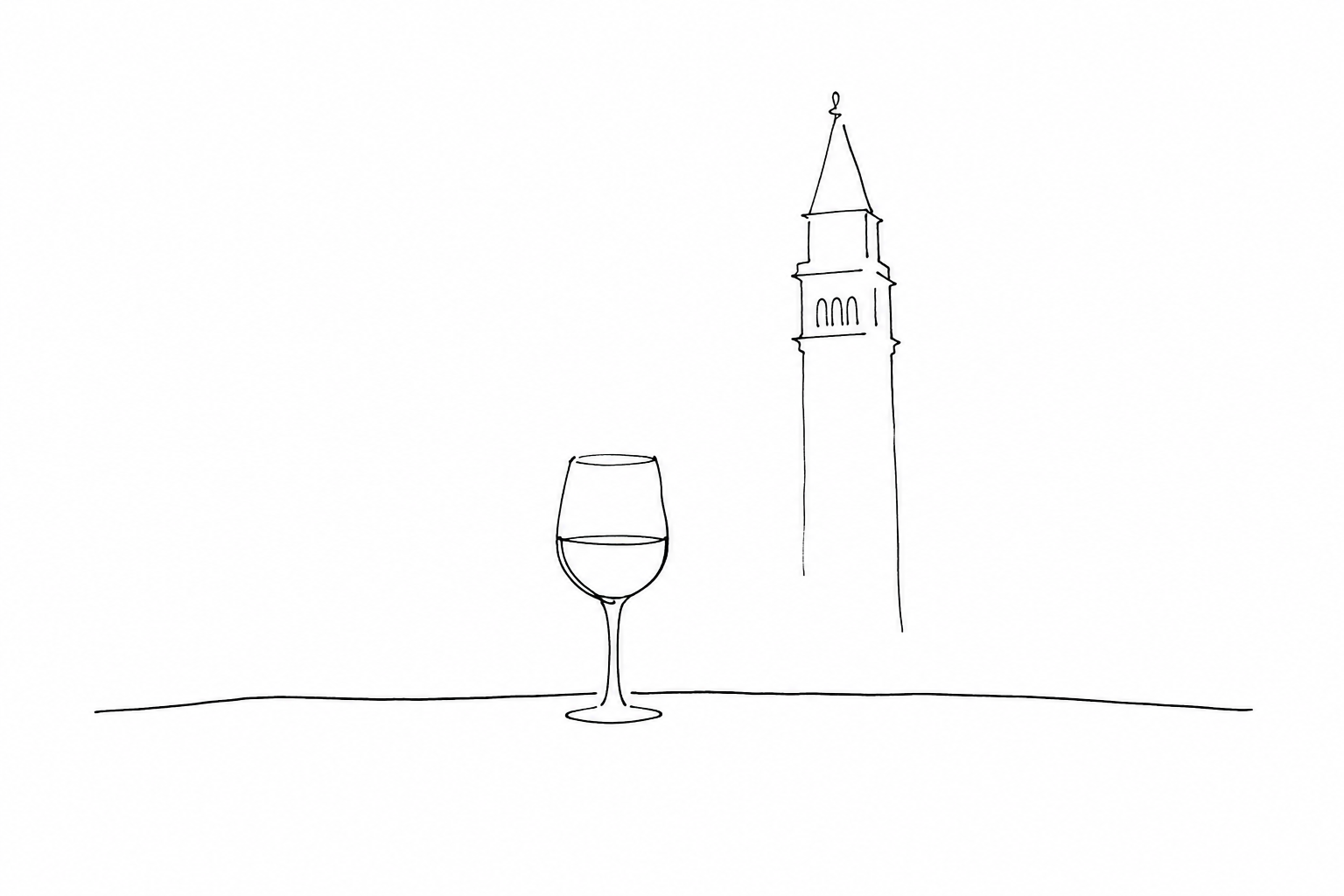
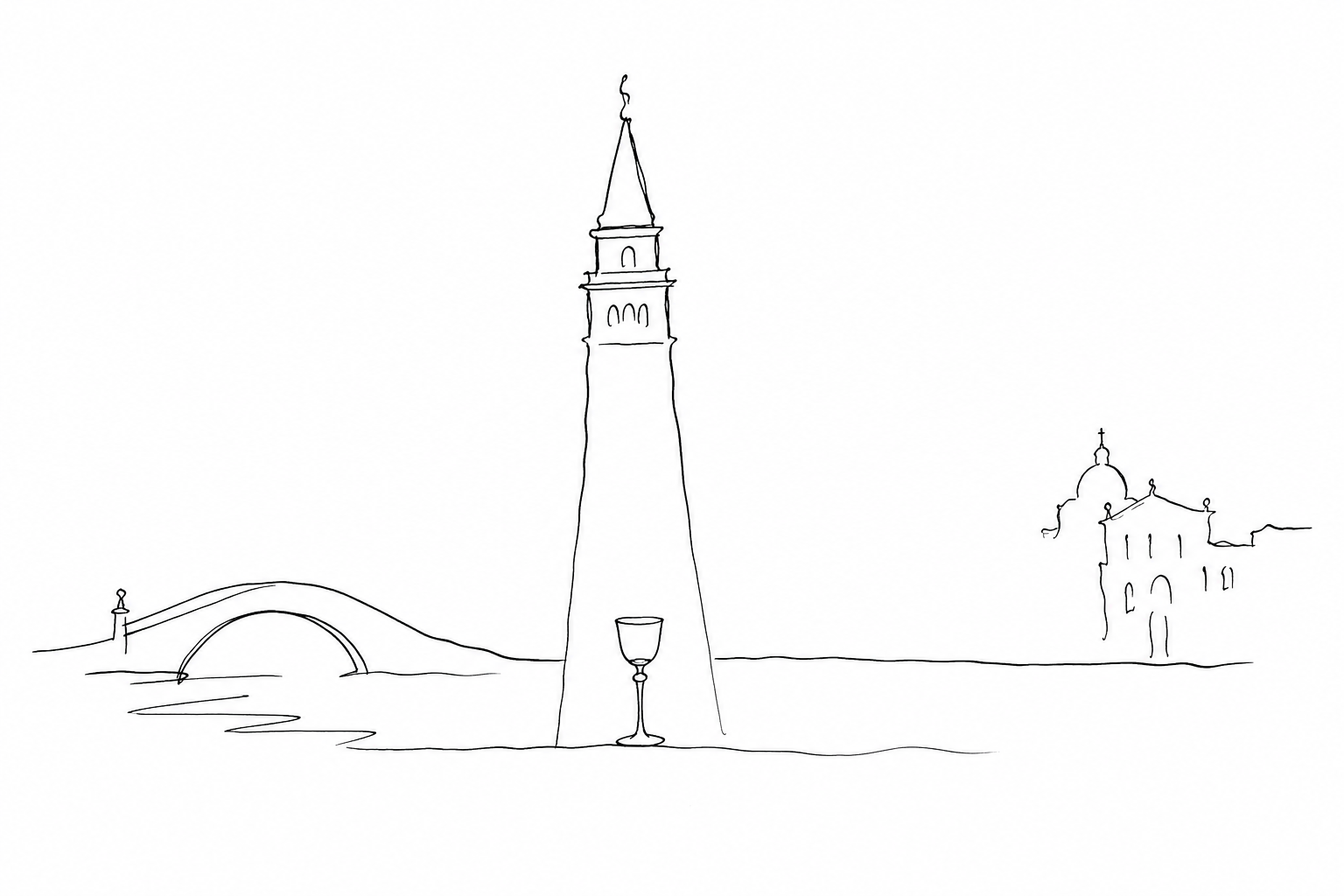
The most famous explanation leads directly to St. Mark’s Square. According to the popular tale, the wine sellers who once stopped in the area of the square would move during the day following the cool area cast by the Bell Tower. The wine, served outdoors and without modern preservation possibilities, had to remain as sheltered from the sun as possible: hence the habit of saying that one went to drink “in the shade.”
It is a perfect story for Venice because it links an everyday word to a concrete urban gesture: moving with the light, seeking shelter among Istrian stone, bricks and porticoes, transforming a stop into language. The Bell Tower, almost one hundred meters high, really did function as a large visual sundial for the square; however, it should be remembered that the current one is the reconstruction inaugurated in 1912 after the collapse of 1902, “where it was and as it was.”
Precisely for this reason the legend should be told as such: fascinating, plausible in the imagination, but not a philological certainty. Its value lies in showing how the Venetian glass is inseparable from the places where it was drunk.
Rialto, wine and the mercantile city
To understand why that glass took on such a local name, one must move from St. Mark’s to the economic heart of the city: Rialto. For centuries this area was the point where goods, money and news met. Boats loaded with products from the Venetian hinterland, from Istria, from Dalmatia and from the Adriatic routes arrived here; among these goods there were also barrels intended for everyday consumption.
The drink was not only convivial pleasure: it was part of urban life, exchanges and work breaks. Merchants, porters, boatmen, artisans and small shopkeepers frequented osterie and wine counters near the market areas. In such a dense environment, the quick, inexpensive and informal glass became a recognizable habit, linked not to an aristocratic salon but to the industrious city.
Rialto therefore helps to read the word ombra not only as the legend of the Bell Tower, but as an expression born within a system of places: crowded calli, counters, fondachi, loading banks and small stops. The term works because it condenses an urban gesture: drinking a little, standing up, close to work and to the continuous passage of goods.
Why the word still matters today
Today saying an ombra does not only mean ordering wine: it means entering, even for a few minutes, into a city code. In the bàcari the term preserves a social measure even before an enological one: a contained quantity, consumed without ceremony, often beside a cicchetto, between counter and calle. For those who visit Venice, understanding it helps to distinguish this habit from a simple tasting.
The word also tells of the city’s relationship with dialect. It is not a tourist label created after the fact, but a word in use that has endured because it is short, concrete, linked to an everyday gesture. Asking for it means recognizing that here traditional drinking has long been mobile, quick, intertwined with the paths of work and sociability.
Precisely for this reason the name still matters: it reminds us that behind a small glass there is not only a drink, but a local grammar made of stops, counter, closeness and conversation.
The Venetian ombra endures because it indicates not only a measure or a drink, but a relationship with the city: quick, convivial, linked to places and words. Whether its origin lies in the outline of the Bell Tower or in the traffic of Rialto, the term tells of a less monumental and more everyday Venice, where history also passes through a glass set on the counter. For this reason, ordering an ombra is not a folkloric detail, but a small way to listen to an urban language that is still alive.
Related Posts
Bacari and Cicchetti: Understanding Venice Through Its Simplest Ritual
Bacari and cicchetti are more than bites and drinks—they embody Venice's rhythm of short stops, local interaction, and walking, offering taste and experience in bite-sized,…Campiello, corte, ramo: a small sentimental guide to the words of the Venetian map
A short guide to reading Venice through the words of its nizioleti: campielli, corti, rami, calli, fondamenta and rii.
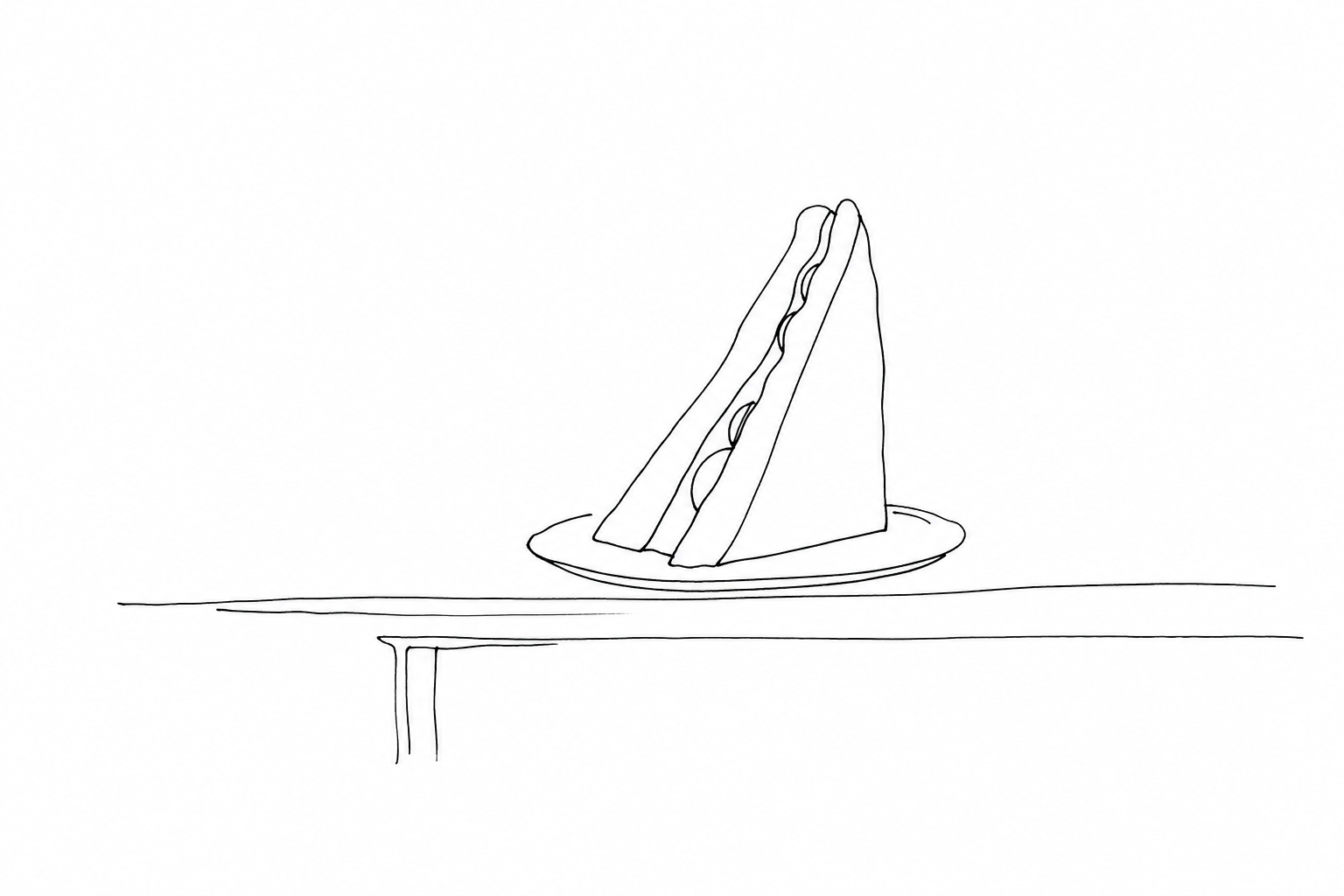
The Venetian tramezzino: how a simple food became a counter habit
History, form and daily ritual of the Venetian tramezzino, among bars, bacari and stops at the counter.Questions Answered
What does it mean to order an ombra in Venice?
It means ordering a small glass of wine linked to a quick social gesture.What is the legend behind the term ombra?
Wine sellers sought shade from St. Mark's Bell Tower to keep wine cool.How did Rialto influence the tradition of drinking an ombra?
Rialto’s role as a busy market shaped the habit of informal, quick wine breaks.Why does the word ombra still matter today?
It signifies a living urban language and tradition of convivial drinking.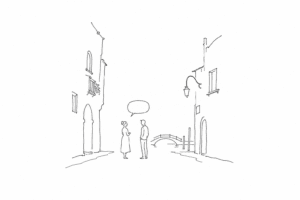
Keep tasting your way through Venice
Want to see how dishes, cicchetti and counter habits tell the city better than a simple menu?
 Bacari and Cicchetti: Understanding Venice Through Its Simplest RitualIn Venice, some experiences do not need to be overplanned. You enter a small place, look at the counter, choose a couple...
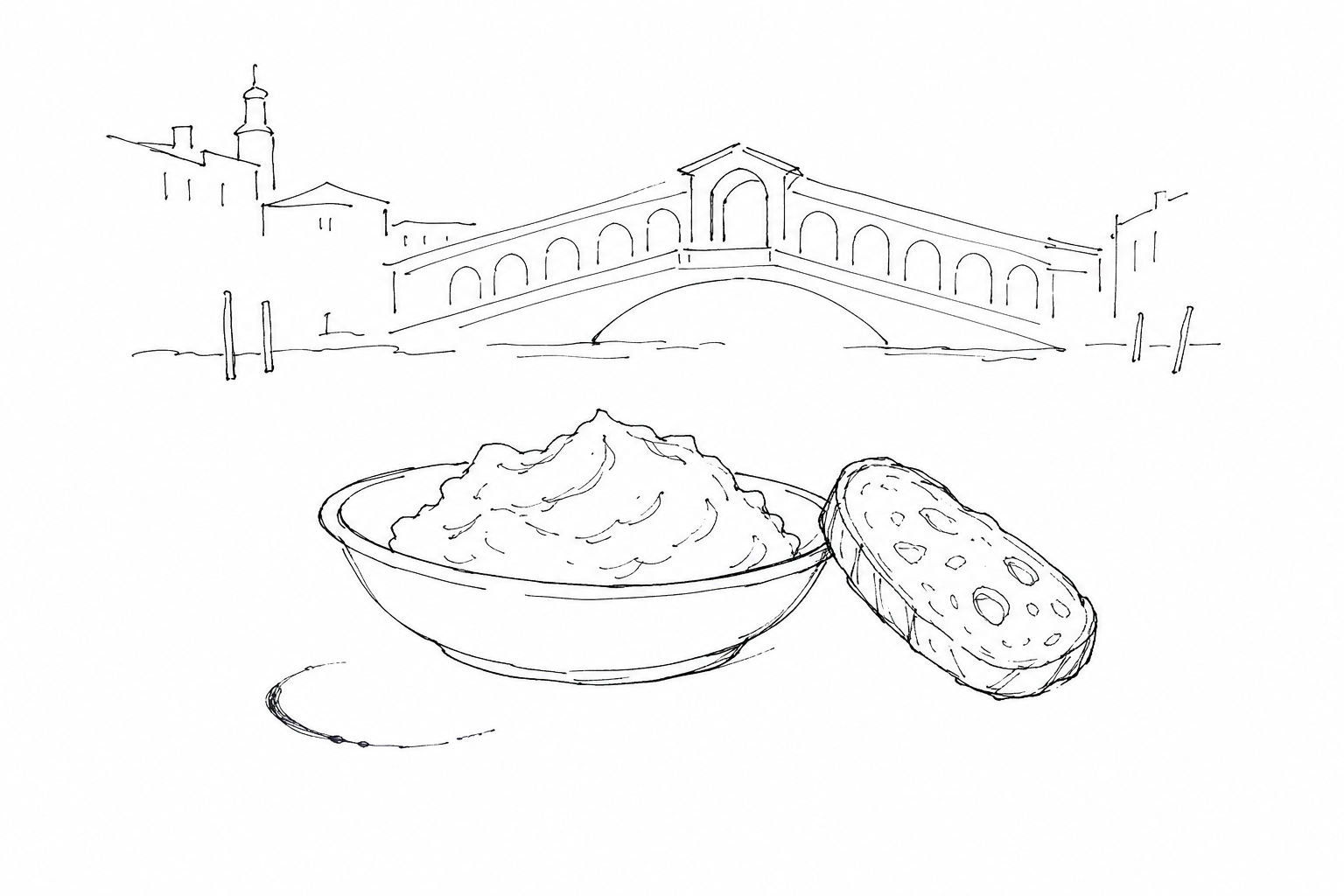
 Baccalà mantecato: why a fish from the North became one of the most Venetian flavorsHistory, technique and places of baccalà mantecato, from Nordic cod to Venetian tables.
 The Venetian tramezzino: how a simple food became a counter habitHistory, form and daily ritual of the Venetian tramezzino, among bars, bacari and stops at the counter.
 “Xe” and “ghe sboro”: a small prudent guide to Venetian words a tourist hears but doesn’t understandWhat “xe” and “ghe sboro” mean, where they are heard in Venice and why it is useful to understand them without imitating...