
The Bocche di Leone are among the most unsettling and revealing signs of the Venice of the Serenissima: stone masks, often carved as feral faces, intended to receive secret denunciations. They were not simple decorative curiosities, but instruments of a widespread administration, capable of transforming walls, calli and palaces into listening points of power. Observing them today means reading a city different from that of the famous façades: a Venice made of control, suspicion, daily rules and fears organized with institutional precision.
What the Bocche di Leone really were
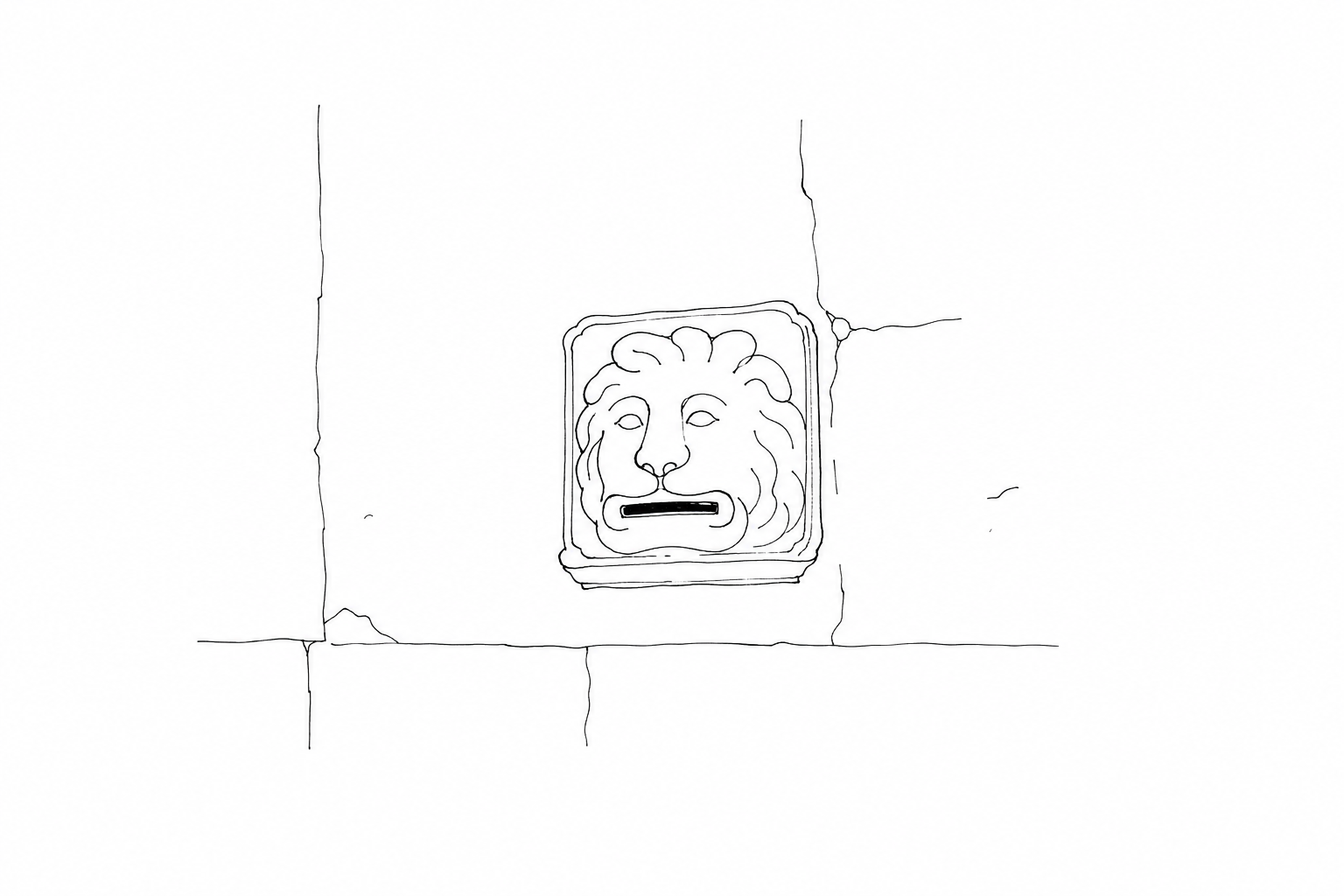
The Bocche di Leone were boxes for anonymous denunciations set into the walls of Venetian public buildings, often carved as lion heads, masks or simple openings in stone. They were not curious decorations: they were administrative instruments of the Republic of Venice, designed to collect reports on fraud, treason, smuggling, corruption, abuses by magistrates or threats to the security of the State.
Their strength lay in the combination of visibility and secrecy. The citizen saw the slot, read the inscription indicating the type of offense to denounce, and could insert a sheet without exposing himself publicly. The denunciation, however, did not automatically produce a conviction: it had to be evaluated by the competent bodies, such as the Council of Ten, and often required corroboration.
In this system, fear was not disorder: it was a controlled political resource. The mouths transformed private suspicions into material for government, making surveillance part of the urban life of the Serenissima.
Where they were found and how to read them
To understand them, one must look for them at the points where Venetian power met daily passage: porticoes, courtyards, entrances to magistracies, walls near public offices. The best-known example can be seen at the Doge’s Palace, where the denunciation ideally entered the institutional heart of Venice; other examples appeared at administrative offices connected with health, taxation, blasphemy, smuggling or security.
The reading begins with the form. The lion evokes Saint Mark and therefore state authority, but not all the slots have a carved muzzle: some are simple openings in stone, made official by the inscription. It is precisely the text that explains to whom the sheet was addressed and which offense was to be reported.
- Figure: lion, mask or stone frame indicated control and solemnity.
- Slot: the narrow cut protected anonymity and prevented easy retrieval.
- Inscription: formulas such as denontie secrete guided the citizen toward a specific magistracy.
- Place: the position made the invitation to denounce visible without showing the denouncer.
Secret denunciation, control and administered fear
The slot was not enough to transform a suspicion into a conviction. The sheet inserted into the bocche di leone entered a procedure: it was collected by authorized officials, registered and read by the magistracy indicated by the inscription. Depending on the case, it could end up with the Council of Ten, the State Inquisitors or offices responsible for fraud, health, duties, blasphemies, smuggling, abuses by public officials.
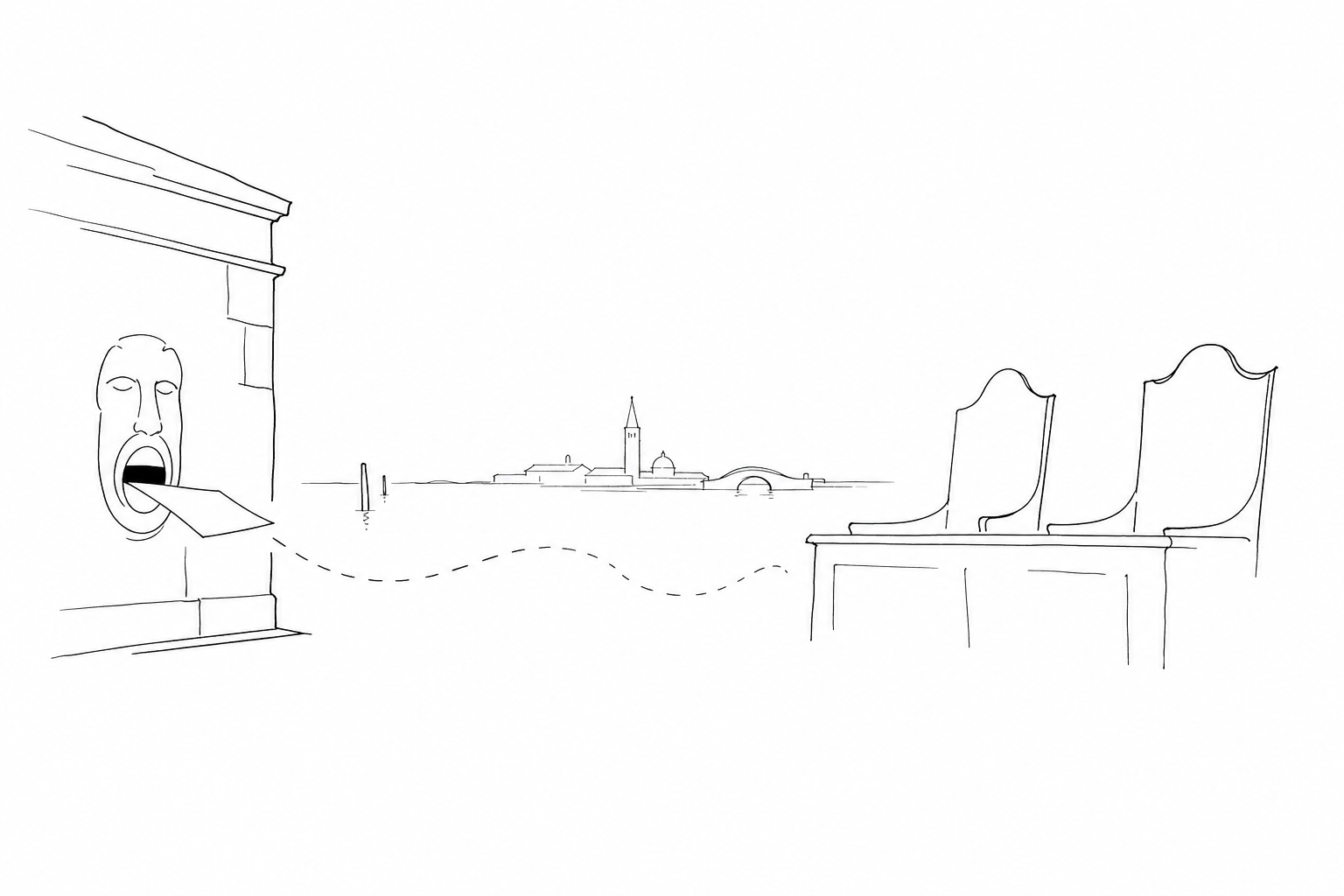
The decisive point lay in the filter. The secret denunciation did not always coincide with an anonymous accusation accepted without proof: names, circumstances, corroboration, witnesses were often needed. The Venetian authorities knew that information could arise from rivalries, family vendettas, commercial competition. For this reason the suspicion was verified before becoming an investigation.
The strength of the instrument, however, went beyond the single trial. Every citizen saw the possibility of being observed by neighbors, colleagues, servants, business partners. Control did not need soldiers in every calle: it was enough to make credible the idea that a written word could reach a secret office.
Thus the Serenissima administered fear: not chaos, but regulated unease, channeled into archives, keys, registers and magistracies.
Why observe them today in the calli of Venice
For the attentive visitor, these masks are not simple black curiosities set into the walls. They should be read as small urban devices: the slot, the inscription and the location tell what matter could be reported and to which magistracy the sheet would arrive.
The first clue is the position. They are often found near government offices, institutional courtyards or very busy passages: places public enough to guarantee access, supervised enough to suggest caution. The second clue is the writing, sometimes in administrative Venetian, with formulas that restricted use to fiscal offenses, fraud, blasphemies, usury, State secrets or behaviors considered dangerous.
Observing them today therefore means changing scale: not looking only at palaces, bridges and façades, but at the exact point where an anonymous hand could deliver an accusation. In that tiny detail Venice shows an essential part of its power: not only ceremonial spectacle, but widespread government, written in stone and entrusted to the discipline of the gaze.
Stopping in front of a Bocca di Leone, in a side calle or under a little-observed portico, changes the way of looking at Venice. Those walled-up or still legible openings tell of a refined and severe city, where beauty coexisted with surveillance and public life also passed through the anonymous gesture of a denunciation. Searching for them is not a macabre exercise, but a way to approach the Serenissima in its complexity: not only maritime power and art, but also archives, magistracies, fears and control of urban coexistence.
Related Posts
Hidden St. Mark’s lions: where to look for Venice’s symbol away from the flags
A guide to the less obvious St. Mark's lions: reliefs, coats of arms, stones and façades to observe among calli, campi and the lagoon.The Porta Magna of the Arsenale: lions, symbols and propaganda carved at the entrance to Venetian naval power
History and interpretation of the Porta Magna of the Arsenale, amid Renaissance architecture, marble lions and Venetian political messages.
The Porta della Carta: entering the Doge’s Palace by reading stone, power and propaganda
A close reading of the Porta della Carta: ceremonial threshold, Gothic sculpture and political manifesto between St. Mark's and the Doge's Palace.Questions Answered
What were the Bocche di Leone?
They were stone boxes for anonymous denunciations in Venice.How did the Bocche di Leone maintain anonymity?
Through narrow slots and inscriptions guiding citizens to report offenses.Did denunciations lead to automatic convictions?
No, accusations required verification and corroboration.What was the political purpose of these denunciations?
To administer regulated fear and maintain social control.
From the square to the rooms of power
Would you like to follow other places showing how Venice represented itself at the heart of St Mark’s?
 The Piombi and Pozzi: the prisons of the Doge’s Palace beyond the legend of CasanovaHistory, spaces and meaning of the prisons of the Doge’s Palace, from the Piombi to the Pozzi, beyond the myth of Casanova’s...
 The Bridge of Sighs from the inside: what those passing toward the New Prisons really sawA precise look at the internal passage of the Bridge of Sighs: route, light, windows and the true view of detainees toward...
 The Porta della Carta: entering the Doge’s Palace by reading stone, power and propagandaA close reading of the Porta della Carta: ceremonial threshold, Gothic sculpture and political manifesto between St. Mark's and the Doge's Palace.
 The Hall of the Great Council: when Venice painted itself as an immense republicHistory, political function and images of the Hall of the Great Council in the Doge’s Palace.