
A few minutes from the Rialto Bridge, San Cassiano seems to change the scale of Venice: the noise of the market fades, the calli become more domestic, the church appears within an urban fabric that is lived in more than displayed. This short itinerary does not seek a spectacular detour, but a precise point of observation: where art, commerce and silence coexist without separating. Entering San Cassiano means reading a fragment of the city through Tintoretto, the habits of the neighborhood and that continuous passage between very well-known places and spaces that require a slower pace.
From Rialto to San Cassiano: a few steps, another rhythm
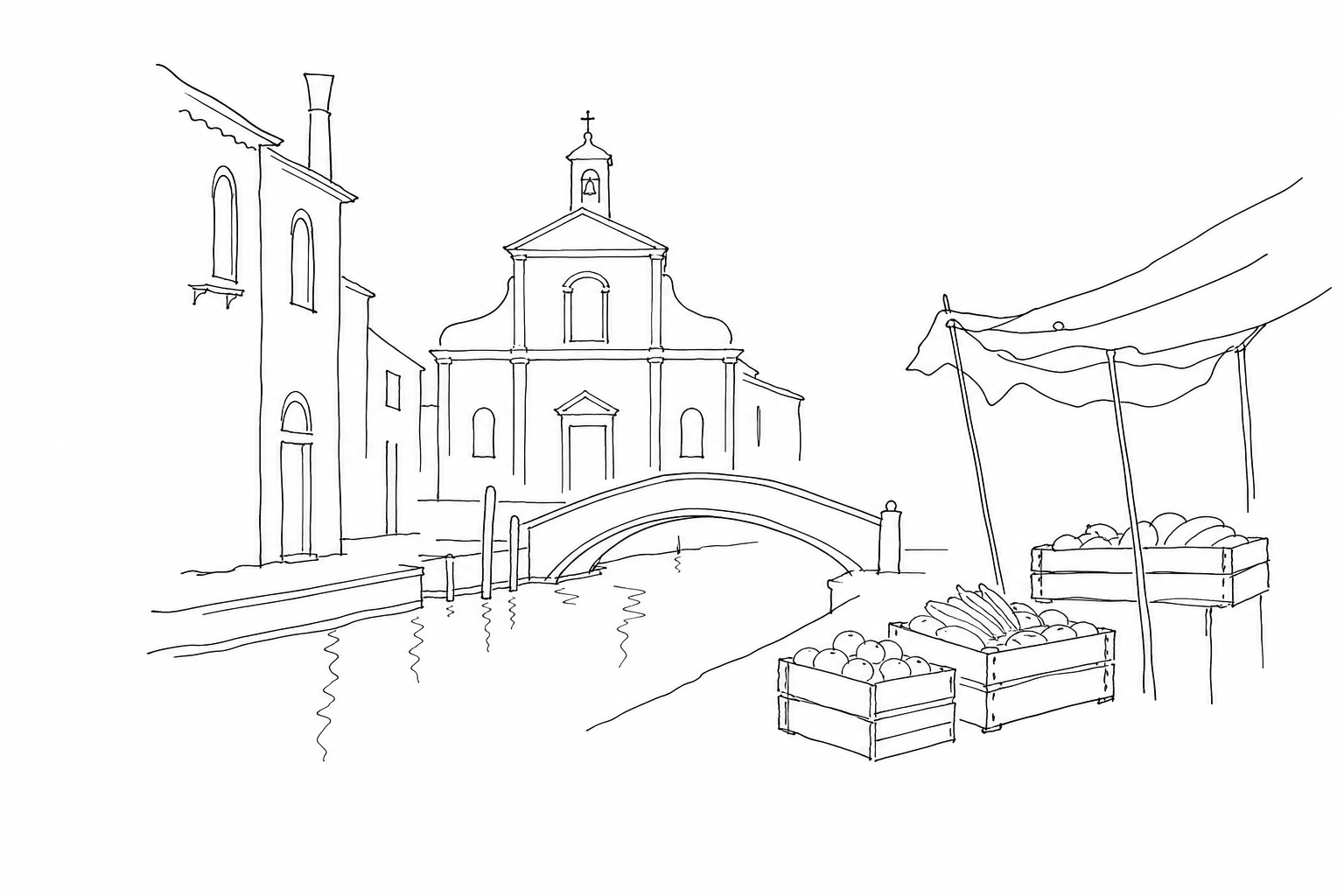
San Cassiano is located in the San Polo district, close enough to Rialto to still hear the echo of the market, but already outside its most evident pressure. The passage is short: from the stalls of the Erberia and the Pescheria, where Venice shows its most operative and morning side, you enter a network of side calli and the volume changes almost immediately.
Here the theme is not distance, but the threshold. Rialto concentrates crossings, goods, voices, bridges and quick stops; San Cassiano instead introduces a more contained rhythm, linked to the church, the campo and the façades that seem to absorb the noise. It is still a central Venice, not peripheral, but less exposed.
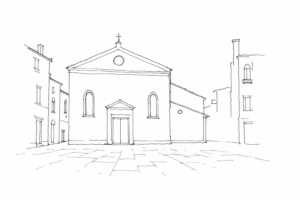
This proximity explains the charm of the place: a few minutes from the commercial chaos, you encounter a space where you can better read the stratification of the city. The church of San Cassiano, with the memory of Tintoretto inside it, thus becomes a concrete pause between market, religious history and urban silence.
The church of San Cassiano and its urban space
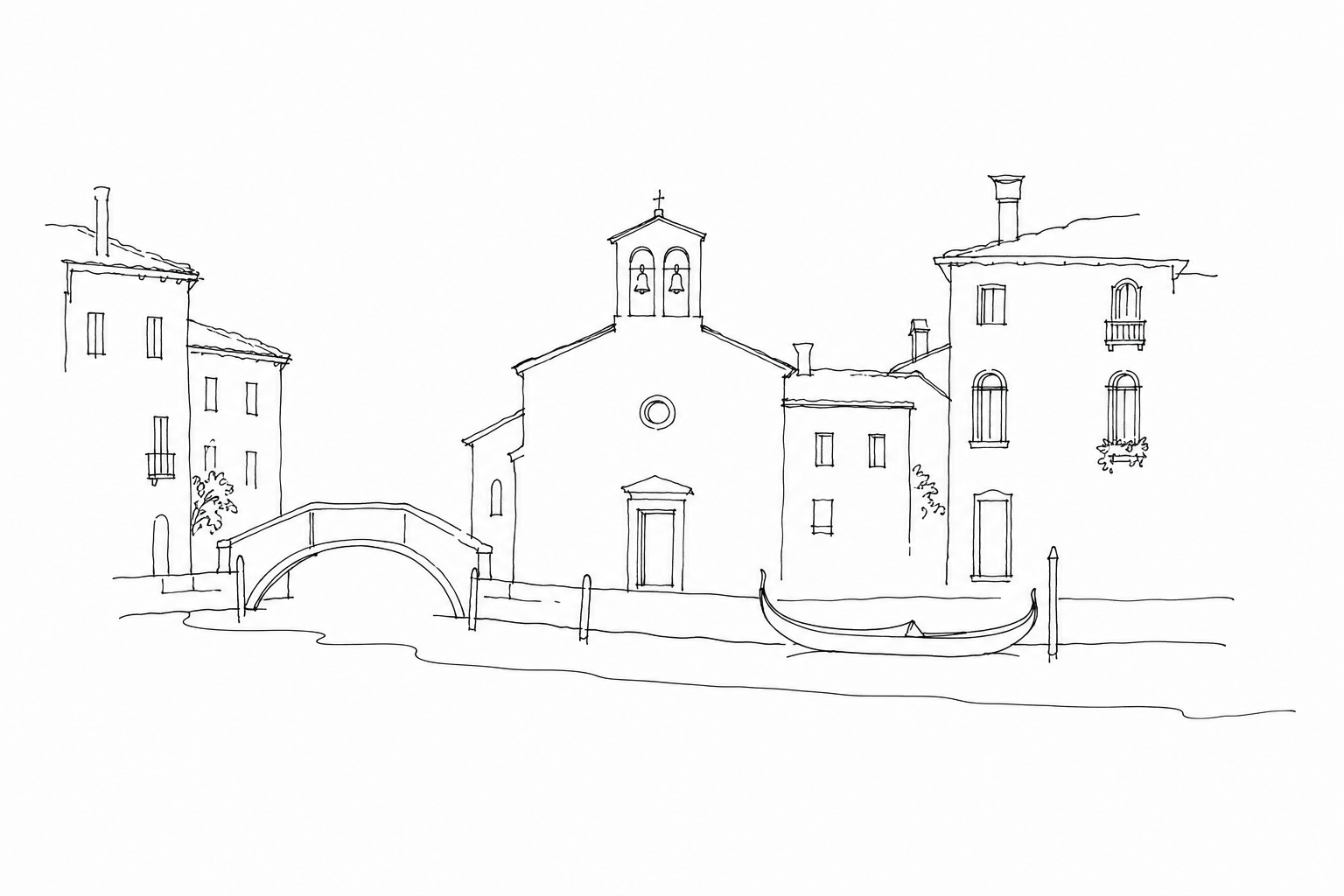
Arriving from the market, the change of scale can be read even before entering the church. The campo of San Cassiano does not have the scenic breadth of other Venetian spaces: it is a contained void, shaped by domestic façades, narrow passages and small views onto the water. Here the religious building does not dominate with a monumental façade, but fits into the fabric of the houses, almost like an ancient presence left to watch over daily life.
The church, of medieval origin and transformed several times, has a sober character on the outside, consistent with this less displayed stretch of San Polo. The relationship with the nearby rii is essential: water is not a picturesque backdrop, but urban infrastructure, service route, boundary and orientation. The calli that converge toward the campo filter the noise of Rialto and prepare you for the interior half-light, where Tintoretto’s artistic memory finds a contained context.
Observing this space means understanding a minute Venice: church, homes and canals compose a compact system, lived in more than celebratory.
Tintoretto in San Cassiano: what to really look at
In the presbytery the decisive name is Jacopo Tintoretto, but the point is not only to recognize the author. The canvases should be observed as a small dramatic cycle: Crucifixion, Resurrection and Descent into Limbo do not function as isolated images, but as scenes charged with movement, designed to guide the gaze toward the altar.
In the Crucifixion it is worth pausing on the diagonals: bodies, spears, ladders and gestures do not build a calm devotion, but a continuous tension. Tintoretto does not seek a reassuring symmetry; he places the viewer inside a crowded, almost unstable event. It is a painting that asks for time, because the details emerge progressively from the contrast between shadow and light.
The other two scenes complete the reasoning. In the Resurrection the energy is not only in the body of Christ, but in the physical displacement of the soldiers, surprised and overwhelmed. In the Descent into Limbo the light becomes a narrative guide: it separates the faces, opens up the depth, transforms a theological theme into visible action.
This is the real leap compared with the noise of the market and the flow of Rialto: a few minutes are enough to pass from daily movement to a painting that uses the same dynamism, but concentrates it in a sacred, contained and intensely powerful scene.
From the fish stall to the silence of the campo
To truly understand San Cassiano, it is worth arriving on foot from the area of the Pescheria and the Erberia, not as a casual detour but as a change of register. The noise of trolleys, crates and voices dies down as you enter the campo: here the simple façade does not fully prepare you for the density of the presbytery.
- Before entering, stop outside for a minute: measure the minimal distance from Rialto and the different urban scale, more domestic and less scenic.
- Inside, avoid a rushed visit: let your eyes adjust to the half-light, then look at the high altar and the relationship between side light, frames and canvases.
- Afterward, return toward the market: the contrast helps you remember why this place works, suspended between daily life and recollection.
Before visiting, always check the current access: in this area entries can depend on services, restorations or local management.
San Cassiano works precisely because it does not ask to be isolated from the rest of the visit: it stands next to Rialto, its market and its flows, but offers a different rhythm for looking at them better. The church, Tintoretto’s canvases, the side calli and the small pauses along the route compose an essential experience, suitable for those who want to understand Venice without accumulating stops. All it takes is attention, a few extra minutes and the willingness to leave the most crowded trajectory: often it is there that the city becomes readable again.
Related Posts
San Giobbe in Cannaregio: the hidden Venetian Renaissance near the station
Guide to San Giobbe, a Renaissance church in Cannaregio just a short walk from Santa Lucia.San Zulian: the small church near St. Mark’s where Sansovino left his mark
A brief guide to San Zulian, a church between St. Mark's and the Mercerie, with the facade linked to Sansovino and the physician Tommaso Rangone.
San Francesco della Vigna: vineyards, proportions and silence at the far end of Castello
Outline on the history, vineyards, architecture and urban quiet of San Francesco della Vigna.Questions Answered
How does San Cassiano differ from the Rialto area?
It offers a quieter, more domestic rhythm away from market chaos.What is the significance of the church of San Cassiano in its urban context?
It integrates modestly within the urban fabric, blending with homes and waterways.What should visitors focus on when viewing Tintoretto’s paintings in San Cassiano?
Observe the dynamic narrative cycle and the dramatic tension in the canvases.What is the recommended way to approach San Cassiano for best experience?
Arriving on foot from Pescheria to sense the rhythm change and atmosphere.
Keep reading Rialto
Want to see how the market, churches, shops and palaces tell the story of the same commercial heart?
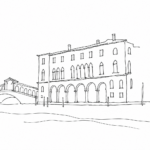 Palazzo dei Camerlenghi: money, public offices and economic power next to RialtoHistory and interpretation of the Palazzo dei Camerlenghi, the financial seat of public Venice next to Rialto.
 San Giovanni Elemosinario: the almost invisible church hidden among the shops of RialtoA short guide to the church of San Giovanni Elemosinario, amid the Rialto market, Renaissance history, and works by Titian and Pordenone.
 Rialto at dawn: the fish market before the photographs arriveRialto at dawn told through work: stalls, crates, voices, lagoon and respect before the tourist gaze.
 Ruga Rialto: a street of shops for understanding Venetian commerce before global storefrontsA reading of Ruga Rialto as a living trace of Venetian commerce: shops, place names, markets and urban rhythm before global chains.