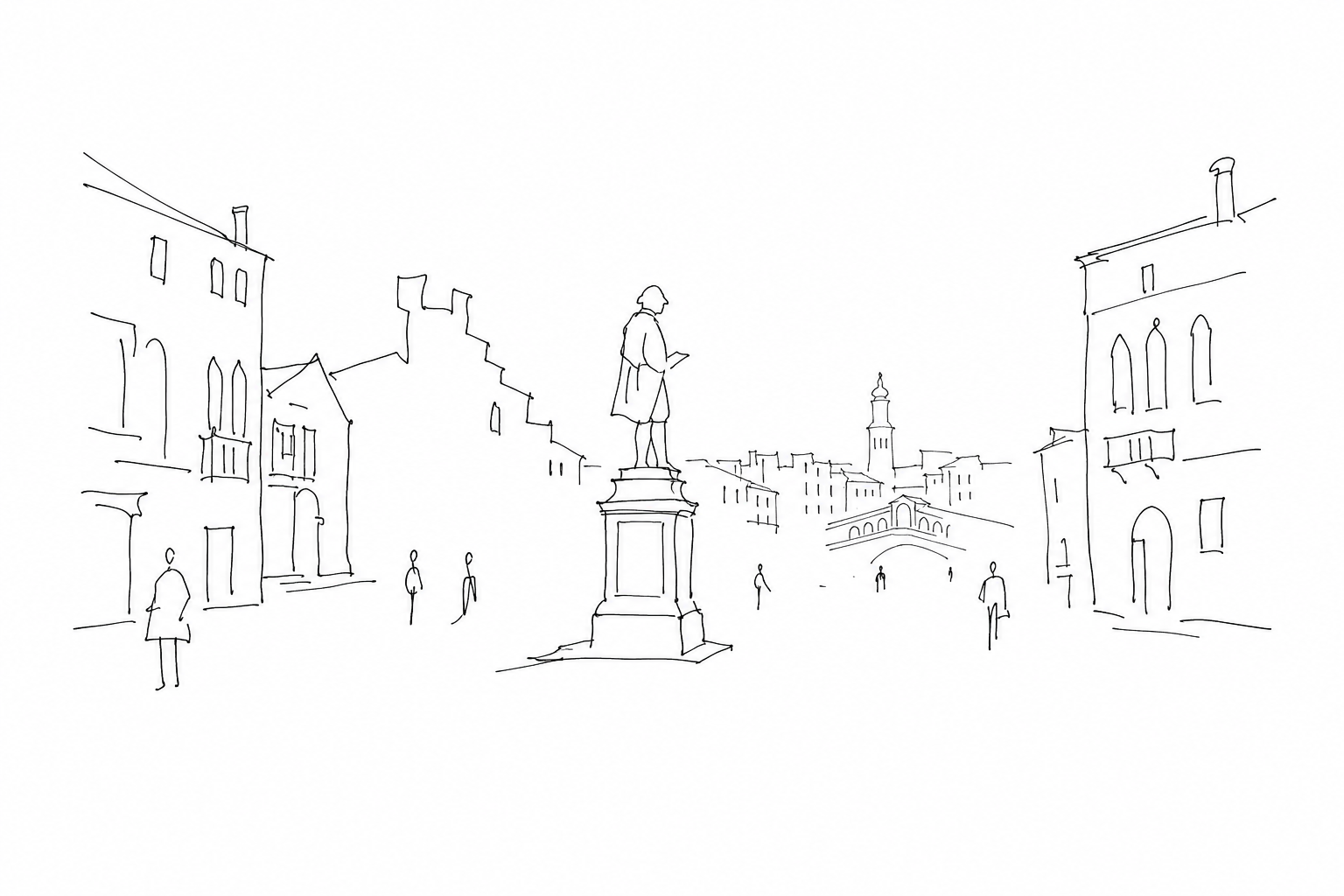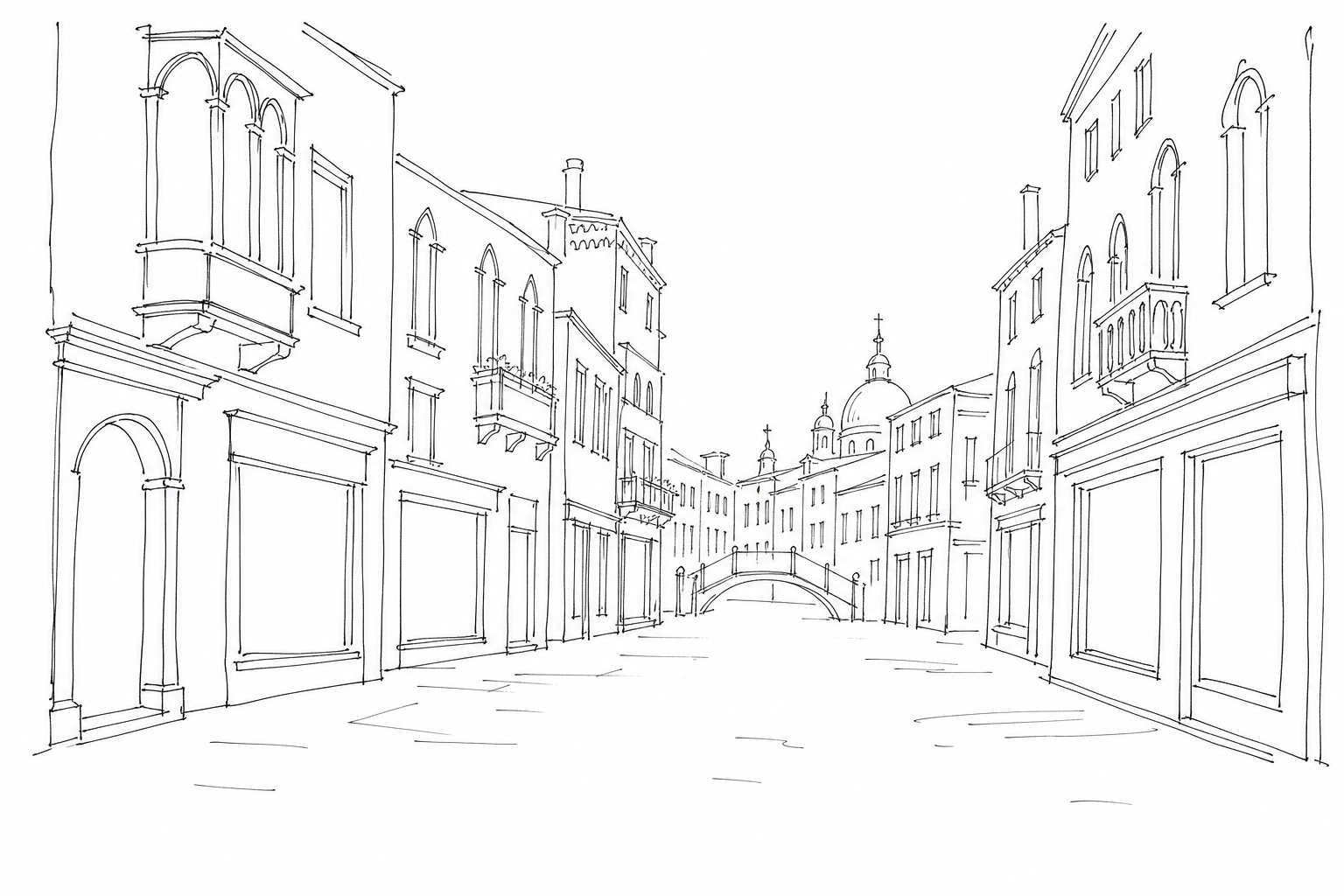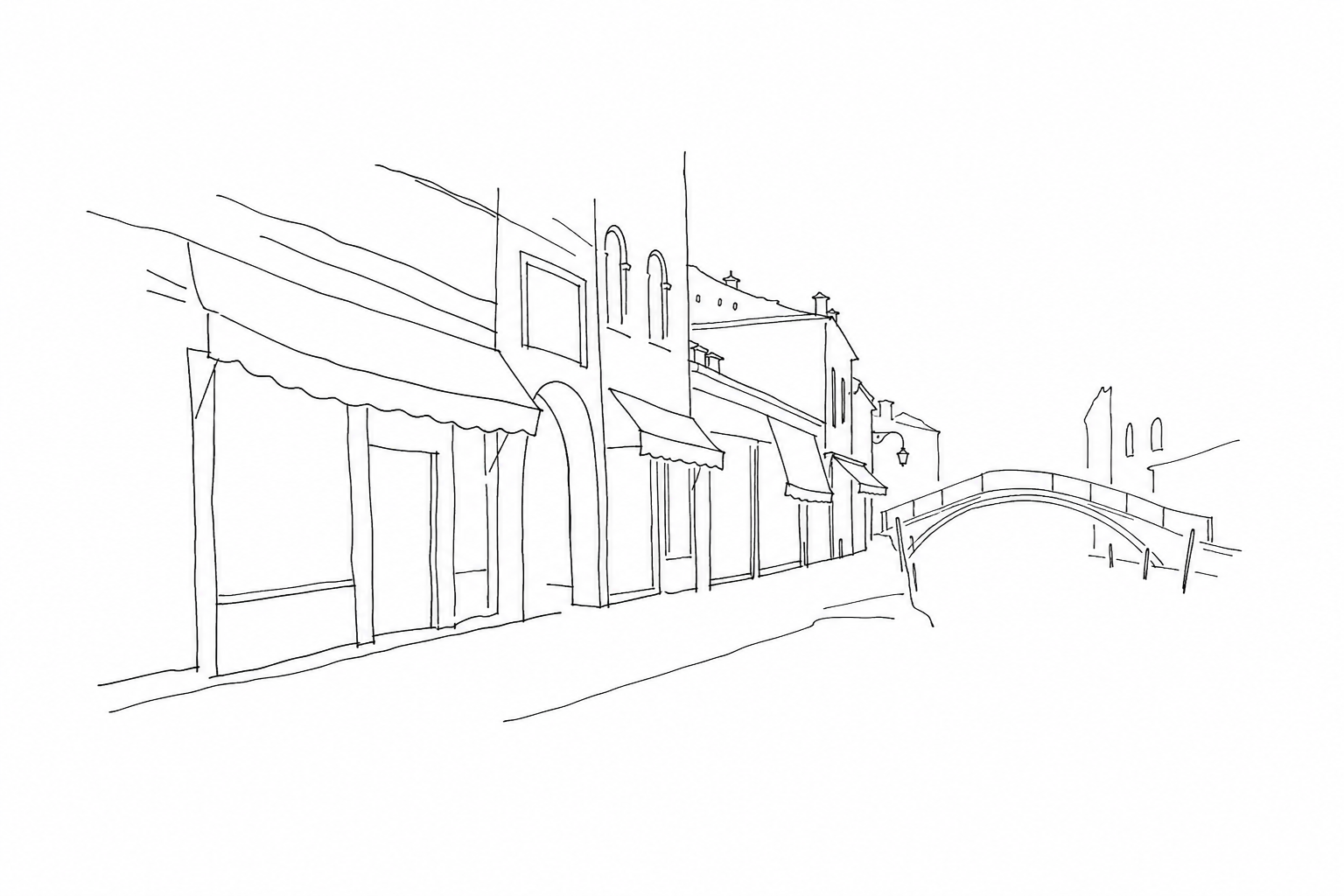

Le Mercerie are today one of the busiest passages between Rialto and San Marco, but reading them only as a sequence of shops means losing the sense of their origin. This axis arose where Venice concentrated political power, mercantile exchanges and daily life: a necessary route before it was a pleasant one, crossed by artisans, officials, buyers, ambassadors and residents. Observing it carefully makes it possible to grasp a less immediate city, made of narrow passages, signs, altered façades, architectural survivals and urban habits sedimented over time.
An axis born between power, market and daily life
Le Mercerie did not arise as a modern shopping street, but as a functional connection between two decisive poles of medieval and Renaissance Venice: Rialto, the heart of exchanges and finance, and San Marco, the political, religious and ceremonial center of the Republic. Their commercial value derived above all from this obligatory position.
Those who moved between the Rialto market, the seats of government, the Basilica and the Doge’s Palace passed through a sequence of dense calli, workshops and small service spaces. The route was therefore part of the city’s daily life: merchants, artisans, officials, foreigners, couriers, servants and Venetians heading to business or institutions passed through it.
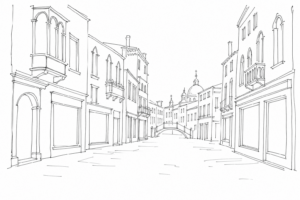
The name recalls goods and haberdashers, but it does not indicate a street designed for contemporary consumption. Activities clustered there because the flow was constant and qualified: fabrics, small objects, accessories, valuable products found here a clientele close to the places of power and money. The commercial vocation was therefore a consequence of urban geography, not a tourist invention.
The route: from the Mercerie dell’Orologio to San Salvador
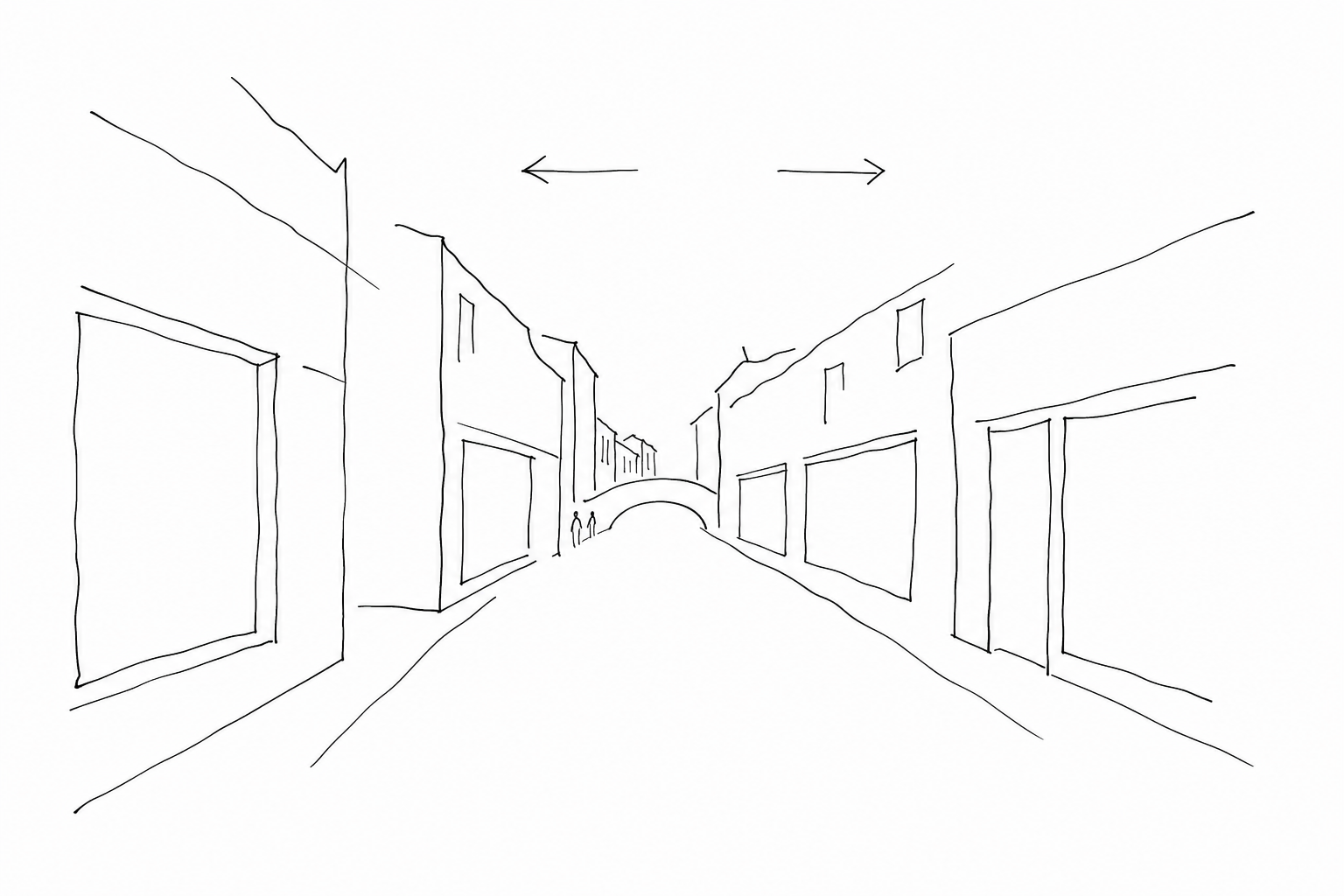
The most recognizable stretch of the Mercerie begins under the Clock Tower, on the north side of Piazza San Marco. Here the passage is almost a threshold: one leaves the monumental space of the square and enters a sequence of narrow calli, where the perception changes immediately. The perspective shortens, the façades come closer and the walk becomes more minute, marked by shop windows, entrances, sottoporticoes and secondary intersections.
The traditional names help to read the route: from the Mercerie dell’Orologio one proceeds toward the Mercerie di San Zulian, then toward the area of San Salvador, before continuing in the direction of Rialto. It is not a straight boulevard, but a chain of connected urban segments, bent by the ancient form of the Venetian built fabric.
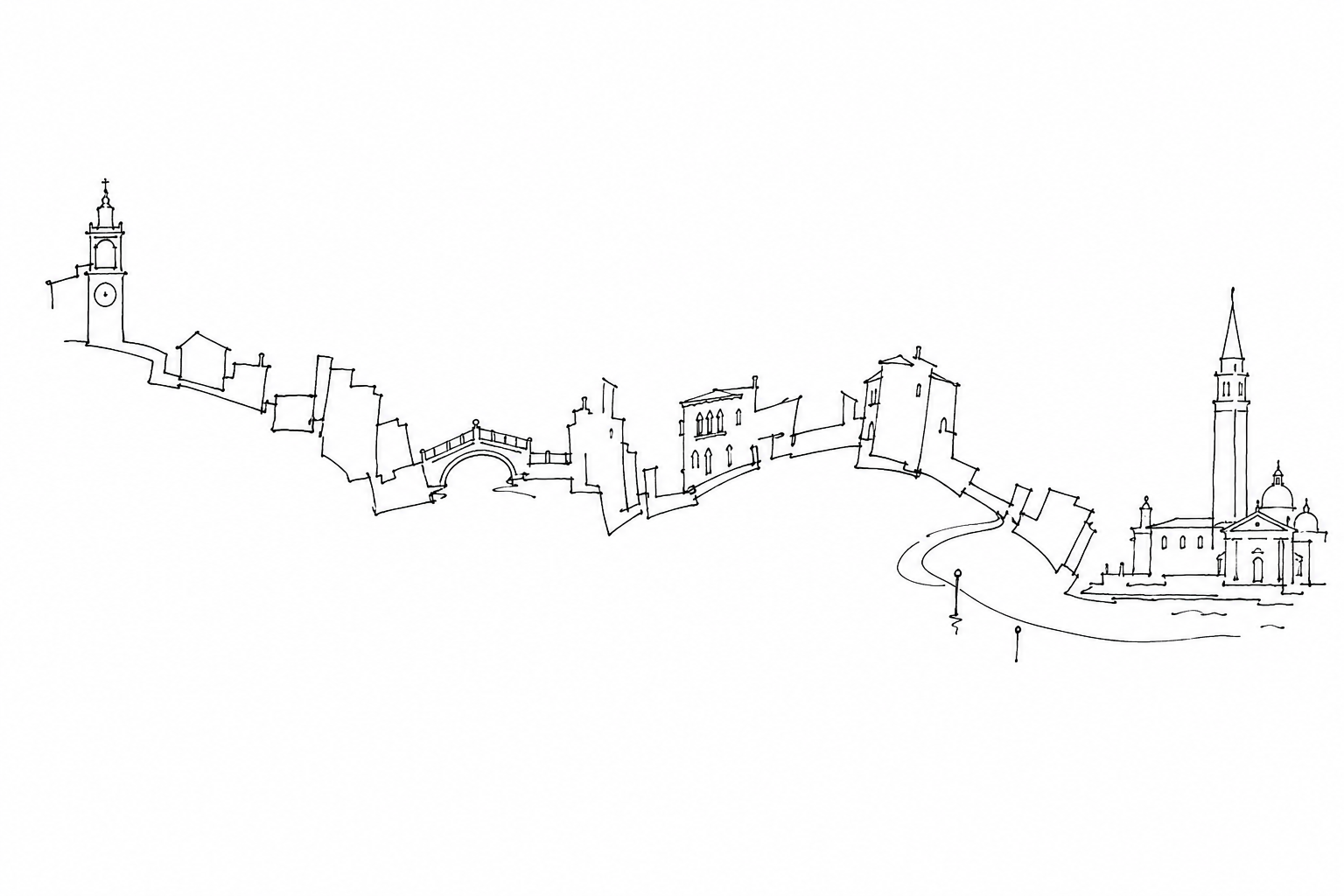
This continuous change of scale is essential: from the representational space of San Marco one passes into a dense, commercial and inhabited fabric, up to the area of San Salvador, where the presence of the church and the small campi interrupts the pressure of the calle. Le Mercerie thus function as a route of transition, not as a simple street: they compress, orient and distribute movement between the political center and the mercantile one.
Shops, signs and architecture: what to observe
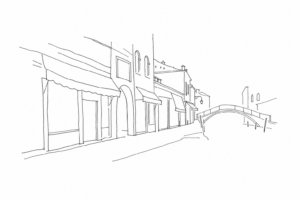
To read this axis today, it is better to look less at the brands displayed and more at the form of the spaces. Many ground floors preserve the imprint of the Venetian shop: narrow openings, Istrian stone thresholds, deep rooms and limited heights, suited to selling small and precious objects more than to creating large halls.
The signs help to understand the stratification. Modern ones often occupy points already predisposed to attract attention in a crowded calle: above the lintel, projecting outward, or within frames that follow the rhythm of the façades. The nizioleti, the toponyms painted on the walls, instead recall the minute geography of arts, trades and side passages.
- Observe the thresholds: they mark the boundary between public space and selling, often without setbacks.
- Notice the narrow passages: they force a slow pace and make shop windows and entrances visible.
- Look upward: windows, frames and plasterwork show house-shops more than buildings born for modern shopping.
Crossing them without reducing them to shopping
For a mindful walk, it is best to proceed in short stretches and read the thresholds. From the Rialto side toward San Marco, Le Mercerie are not a simple shortcut: they are a succession of narrow calli, small open spaces and inhabited fronts that for centuries regulated flows of merchants, messengers, residents and visitors.
- Stop at the intersections: every deviation leads to campi, churches or rii, not to a corridor designed for rapid consumption.
- Listen to the rhythm: the noise changes in the narrow passages, under the porticoes and near the open spaces; this too reveals a city built for footsteps and small deliveries.
- Use the historic signs: names of saints, trades and places help to recompose the geography preceding the current shop windows.
The best crossing is slow: it does not look only for shops, but recognizes an ancient adapted axis, not one born modern.
Crossing Le Mercerie without reducing them to a shopping street requires only a change of pace: looking upward, reading the names, noticing the proportions of the buildings, imagining the continuous relationship between Rialto and San Marco. It is a short stretch, often crowded, but still capable of telling how Venice transformed commercial necessities into urban form. Between contemporary shop windows and ancient traces, it remains a route to be interpreted more than consumed.
Related Posts
Ruga Rialto: a street of shops for understanding Venetian commerce before global storefronts
A reading of Ruga Rialto as a living trace of Venetian commerce: shops, place names, markets and urban rhythm before global chains.Calle Larga XXII Marzo: luxury, hotels and modern transformations near San Marco
History and urban reading of Calle Larga XXII Marzo, a modern axis of luxury between San Moisè, Giglio and San Marco.
Riva degli Schiavoni: reading the ancient port behind the most photographed promenade
An urban reading of the Riva degli Schiavoni: landings, palaces, mercantile memory and a slow gaze between San Marco and Castello.Questions Answered
What was the original purpose of Le Mercerie?
They served as a vital connection between political and mercantile centers, not modern shopping.How is the route of Le Mercerie structured?
It consists of narrow, connected urban segments with changing scales from monumental to dense areas.What architectural features define the shops along Le Mercerie?
Narrow openings, deep rooms, and historical signs suited for small valuable goods.How should one experience Le Mercerie today?
With slow, mindful walking noticing thresholds, signs, and architecture beyond shopping.
Keep exploring the Venice of St Mark’s
Which spaces help you read the square as a system of symbols, institutions and images?
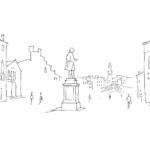 Campo San Bartolomeo: Goldoni, Rialto and the city’s most restless meeting pointCampo San Bartolomeo read as an urban node: Goldoni, Rialto, flows, pauses and details to observe.
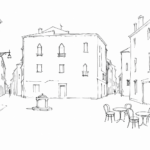 Campo San Luca: the Venice of quick passage, among cafés, offices and intersecting calliA central, everyday campo, between Rialto and San Marco, read as an urban junction of passages, short stops, offices and calli.
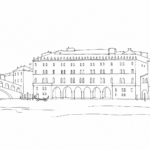 Fondaco dei Tedeschi: from warehouse of Northern merchants to terrace over the cityHistory, architecture and urban interpretation of the Fondaco dei Tedeschi, between Rialto, northern trade and a view over the rooftops of Venice.
 Why in Venice They Say “ombra”: history and legend of the most Venetian glass of wineOrigin, legend and everyday use of the ombra, the glass of wine linked to Venetian bacari.