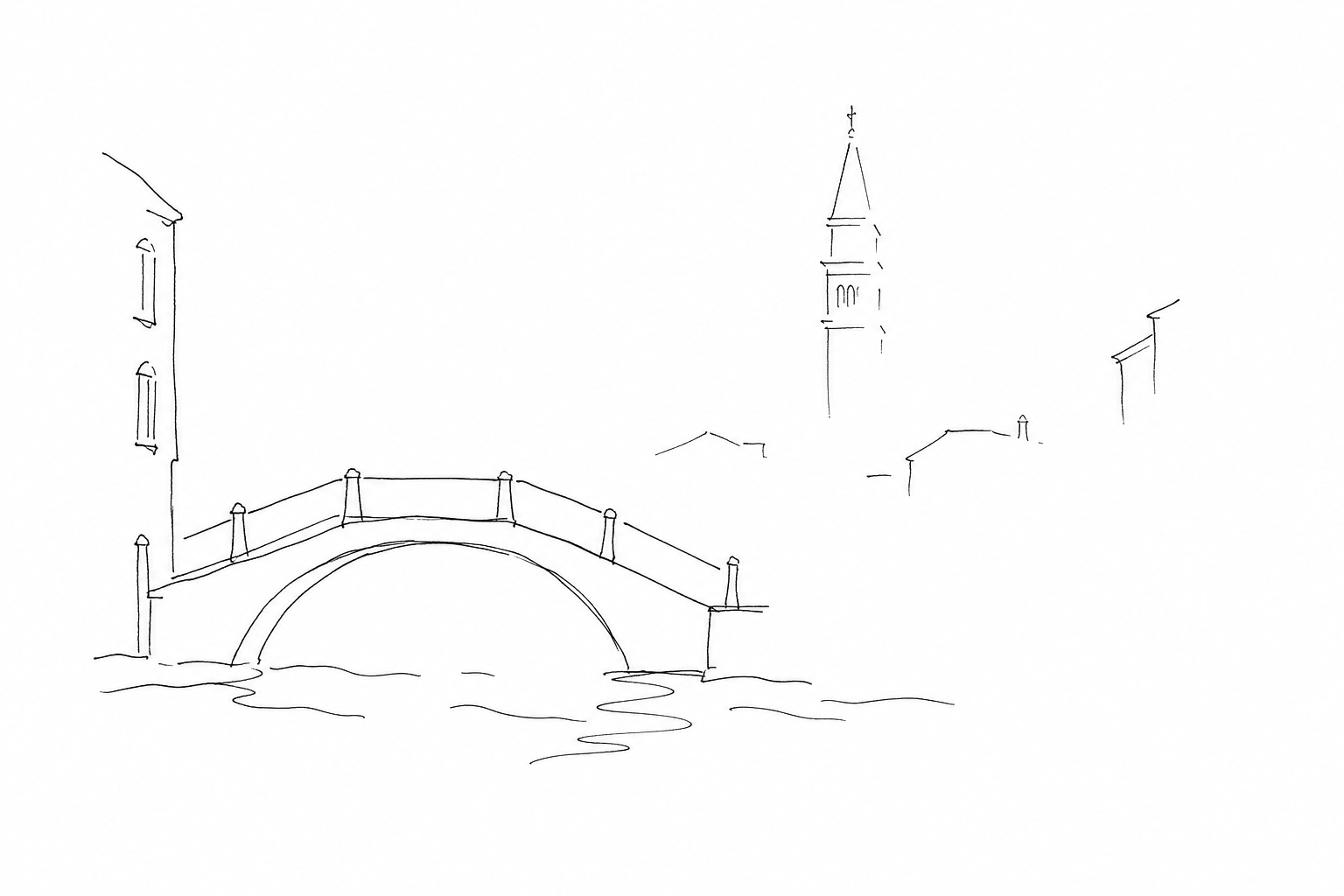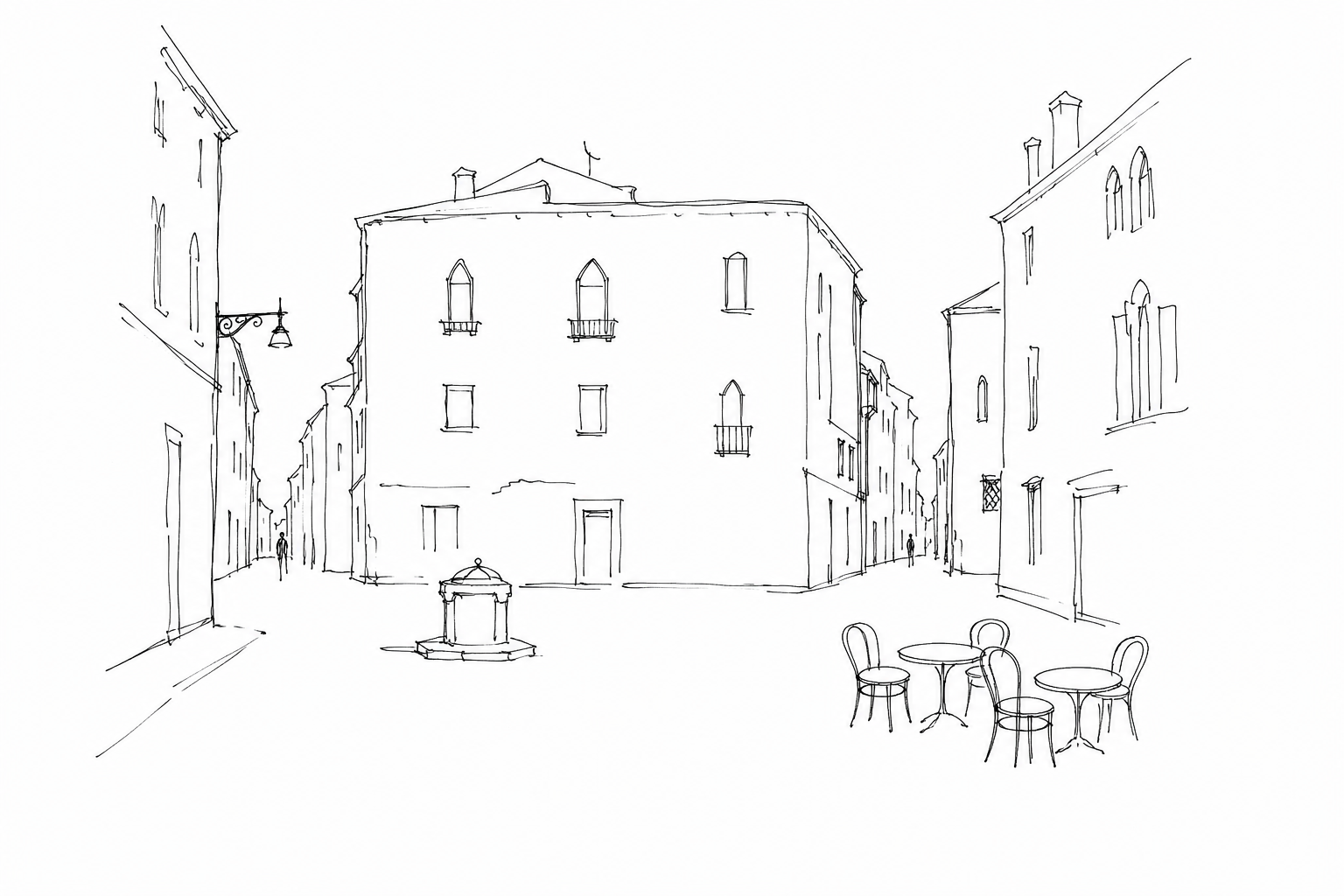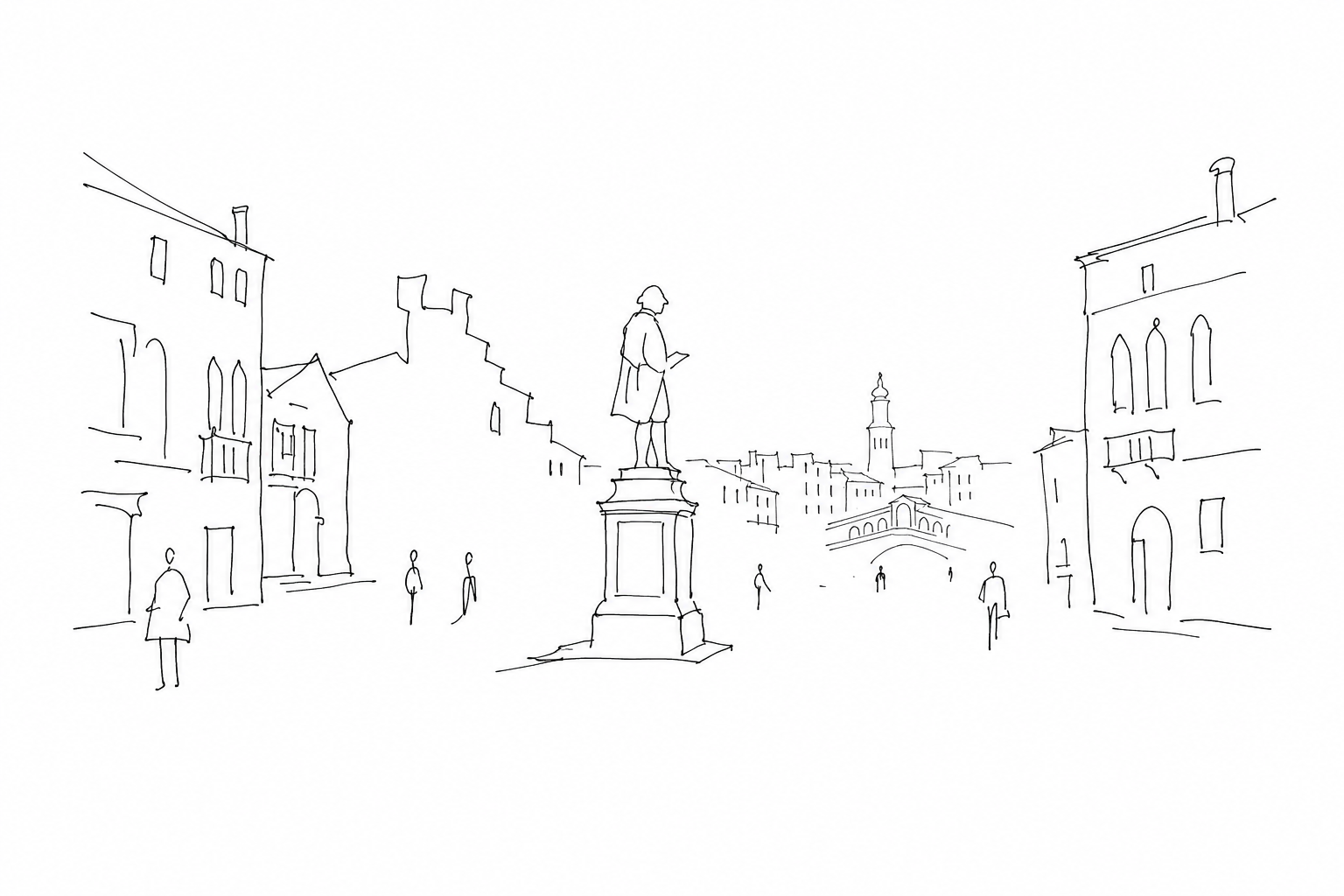
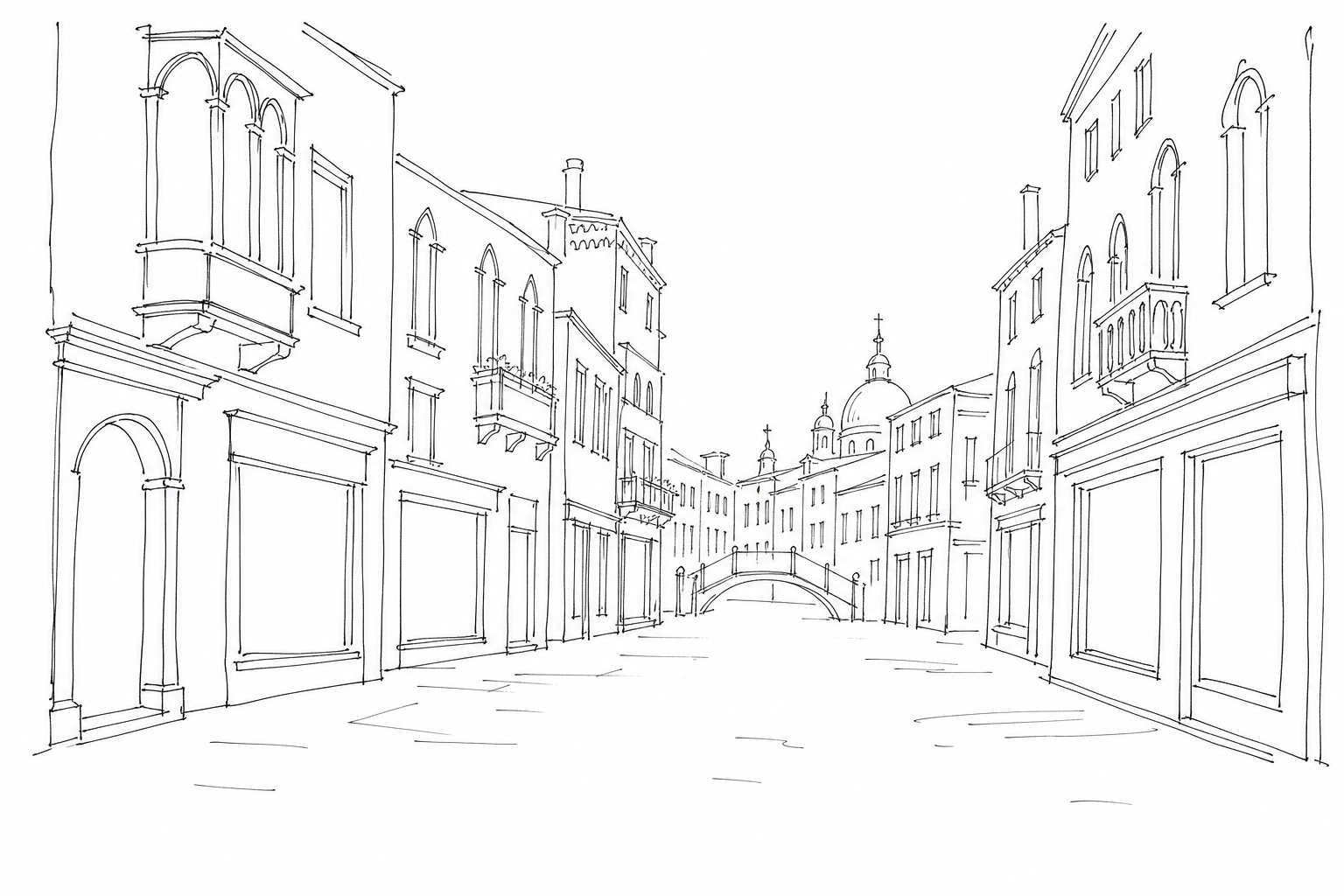

Calle Larga XXII Marzo is one of the most eloquent anomalies of the Venetian center: wide, straight, built for passage and for the gaze, a few minutes from San Marco but with a character different from the smaller calli. Here nineteenth-century and modern Venice takes the stage through shop windows, hotels, restored façades and daily flows. It is not just a shopping street: it is an urban stretch where political, social and commercial transformations can be read, from Risorgimento memory to contemporary luxury. Walking along it slowly means observing how the historic city has been able to adapt without completely losing its own stratification.
Where it is and why it is different from the other calli
Calle Larga XXII Marzo is located in the San Marco sestiere, a short distance from Piazza San Marco, and functions as an elegant axis between the San Moisè area and that of Santa Maria del Giglio. Its name recalls March 22, 1848, the day of the Venetian uprising against Austrian rule and of the rebirth of the Republic of San Marco led by Daniele Manin.
It is “large” not only in name: compared with the more common Venetian calli, narrow, winding and often born from small medieval routes, this street has an almost nineteenth-century breadth. The wider section allows continuous shop windows, visible hotel façades and a more fluid pedestrian passage, turning it into a kind of commercial drawing room near the monumental heart of the city.
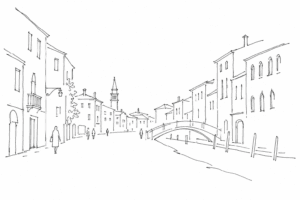
Its particularity lies precisely in the contrast: just a few steps separate the ceremonial landscape of San Marco from a modern street in use and image, where luxury, hospitality and urban transformations have redesigned the everyday face of the Venetian center.
The name XXII Marzo and the city that modernizes
The name of the calle is not decorative: it refers to March 22, 1848, a decisive day in the Venetian uprising against the Austrian government. In those hours Daniele Manin and Niccolò Tommaseo were freed, the Arsenale passed to the insurgents and Venice began the brief republican season of the Risorgimento. Naming such a visible street after that date meant fixing a political memory in the urban topography, readable every day by residents, hotel guests and travelers.
Its wide form, however, also tells another story: that of nineteenth-century Venice intervening on the minute fabric of the calli to obtain more regular, representative axes suited to new flows. Here the urban cut does not follow the medieval labyrinthine logic, but a modern sensibility, close to European commercial boulevards: more open perspectives, aligned façades, shop windows and hotel entrances designed to be seen.
For this reason the street combines patriotic memory and building transformation: it is both a commemoration of 1848 and the scene of the city that, in the nineteenth century, updated its face without leaving the historic center.
Boutiques, shop windows and hotels: luxury as landscape
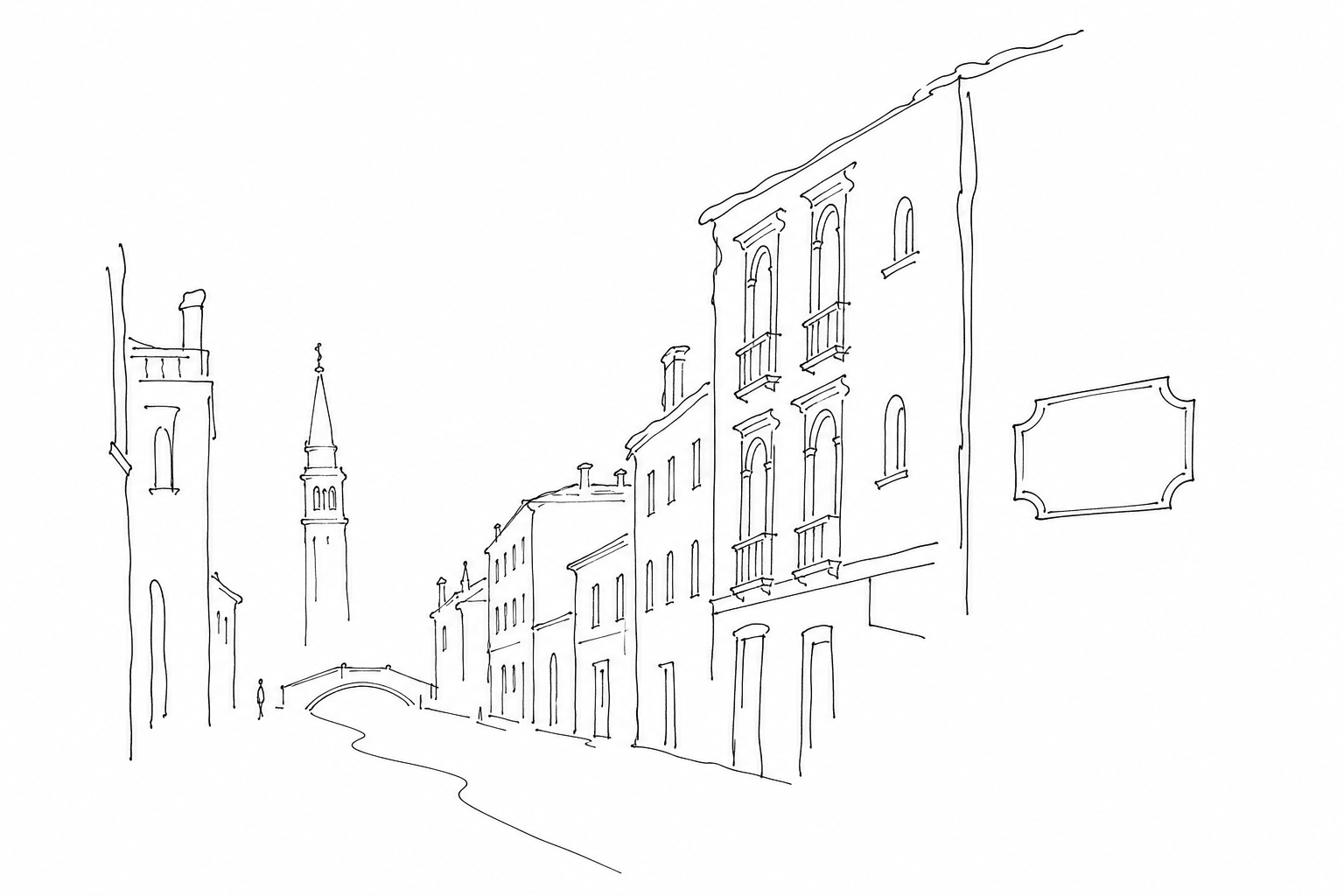
On XXII Marzo, luxury is not only merchandise on display: it is a way of organizing space. The shop windows occupy the ground floors, often inserted into historic buildings with sober façades, Istrian stone frames and portals that recall previous residential or aristocratic functions. The contrast is part of the reading: behind perfect glass and controlled signage remains the Venetian weave of passages, campielli and water accesses.
The hotels reinforce this commercial scene. Near San Moisè and the axis toward the Marcian area, hotel entrances, porters, water taxis and guests with luggage produce a landscape of arrivals, more than of simple strolling. The street thus becomes a threshold between international consumption and the inhabited historic center, where prestige is also measured in the maintenance of the façades, in the care of the lighting and in the discretion of the services.
Reading it without a promotional tone means observing who uses these spaces: tourists, hotel staff, shop assistants, residents passing through. Luxury then appears as a visible economy and as a daily transformation of the Venetian center.
How to observe it during a slow walk
To understand it on site, it is best to walk along it without looking only at the shop windows, starting from San Moisè and proceeding toward Santa Maria del Giglio, or vice versa. The first exercise is to raise your gaze: above the signs you can still read windows, frames, plasterwork and proportions of transformed houses, clues to a residential and noble Venice adapted to commerce and hospitality.
Then stop at the side entrances. The smaller calli show the back of the scene: service entrances, narrower passages, sudden changes of light, small views toward canals or campielli. It is here that the pressure exerted by the proximity to San Marco is best perceived: the main street concentrates the flow, while the edges preserve a more Venetian scale.
- Compare the ground floors: materials, thresholds and doors reveal recent renovations.
- Observe the hotel entrances: they often seek monumentality in compressed urban spaces.
- Listen to the rhythms: deliveries, trolleys and footsteps tell of different functions in the same sequence.
Looking at Calle Larga XXII Marzo with attention helps to go beyond the immediate impression of a simple elegant street near San Marco. Its width, its name, the sequence of shops and hotels tell of a more recent idea of Venice, linked to modernization, hospitality and the representation of prestige. On a slow walk, it is worth alternating the shop windows with the details of the façades, the hotel entrances with the side glimpses that lead back toward narrower and quieter calli. It is precisely in this contrast that the street reveals its value: not outside authentic Venice, but within one of its most visible transformations.
Related Posts
Le Mercerie: the commercial route between Rialto and San Marco that was not created for modern shopping
History and urban reading of the Mercerie, a dense axis of calli between Rialto and San Marco born from civic, artisan and mercantile functions.Via Garibaldi: Venice’s only “via” and the district that breathes like a village
History, urban form and daily life of Via Garibaldi, a wide and popular axis in the Castello sestiere.
Strada Nova: the modern street that changed the way of crossing Cannaregio
Strada Nova is not just a convenient passage: it is an urban transformation that redesigned Cannaregio and the way of moving through Venice.Questions Answered
What is unique about Calle Larga XXII Marzo compared to other Venetian calli?
It is wider and straighter, reflecting 19th-century urban modernization.Why is March 22 important to this street?
It commemorates the 1848 Venetian uprising against Austrian rule.How does luxury manifest on this street?
Through shop windows, hotel façades, and the organization of urban space.How can visitors best experience Calle Larga XXII Marzo?
By walking slowly and observing both fronts and side passages.
From the square to the rooms of power
Would you like to follow other places showing how Venice represented itself at the heart of St Mark’s?
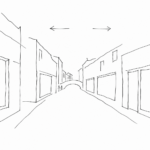 Le Mercerie: the commercial route between Rialto and San Marco that was not created for modern shoppingHistory and urban reading of the Mercerie, a dense axis of calli between Rialto and San Marco born from civic, artisan and...
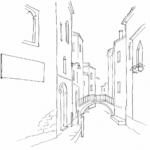 Calle dei Assassini: history, atmosphere and caution behind a striking nameA strong name, a calle in San Marco and what it really tells: toponym, urban context and interpretive caution.
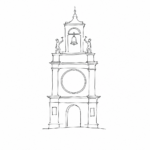 The Moors of St. Mark’s: why two statues strike the hours above the cityWho the Moors of the Clock Tower are, why they strike the bell, and what they tell about Venice’s public time.
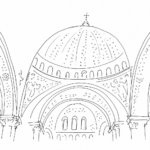 The mosaics of San Marco: how to look at the gold without being dazzled only by its beautyA brief guide to reading the mosaics of San Marco: gold, light, scenes, spaces and details to observe calmly.