
Lista di Spagna is one of the first places many people cross when arriving in Venice, often without giving it a name. Between Santa Lucia station, the Scalzi Bridge and the continuous flow toward Rialto and San Marco, this street seems only like an obligatory passage. In reality, it says a great deal about the way the city welcomes, orients and selects gazes: signs, shops, palaces, side views and historical traces coexist within a few meters. Understanding where Lista di Spagna really begins means reading the first impact with Venice not as a simple entrance, but as a dense, commercial and layered urban corridor.
Where the first impact with Venice really begins
For many travelers, Venice begins not in Piazza San Marco, but just outside Santa Lucia station. Once out on the steps, the Grand Canal appears in front; a few steps farther on, following the natural movement of the crowd to the left, one enters Lista di Spagna, in the Cannaregio sestiere. This is the first commercial corridor that many cross without naming it, convinced they are simply “on the road to the center.”
Its position explains everything: on one side the railway station, on the other the junction of Campo San Geremia and the route toward Strada Nova and Rialto. A few meters away, the Scalzi Bridge connects the opposite bank, but those who remain on this side are channeled into a dense sequence of signs, hotels, shops, bars and narrow passages. The name “Lista” historically recalls an area linked to foreign representations; “di Spagna” preserves the memory of the Spanish embassy that was located in this area.
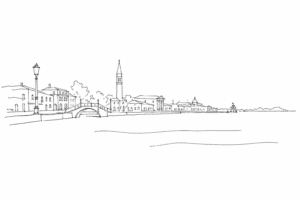
Understanding where you are helps you read the first impact better: not a neutral entrance, but an urban, commercial and historical threshold of Cannaregio.
Why it is called Lista di Spagna
The name has nothing to do with a list in the modern sense of an inventory. In Venetian toponymy, lista indicated a strip of street connected to the residence of a foreign ambassador: a recognizable space, placed under special diplomatic attention, where the ceremonial of the Republic mattered as much as geography.
The specification di Spagna refers to the presence, in this area of Cannaregio, of the seat of the Spanish embassy to the Serenissima. Venice, a commercial and political power, hosted foreign representations in strategic points of the city; around these seats, places were formed marked by privileges, customs and limits on the intervention of local authorities.
For this reason the place name preserves a precise memory: it does not describe only a street crowded with shops and passersby, but recalls an urban stretch linked to European diplomacy. Those who today walk along Lista di Spagna from the station toward the heart of Venice therefore cross a name born from the institutional language of the Republic, then surviving within the city’s everyday use.
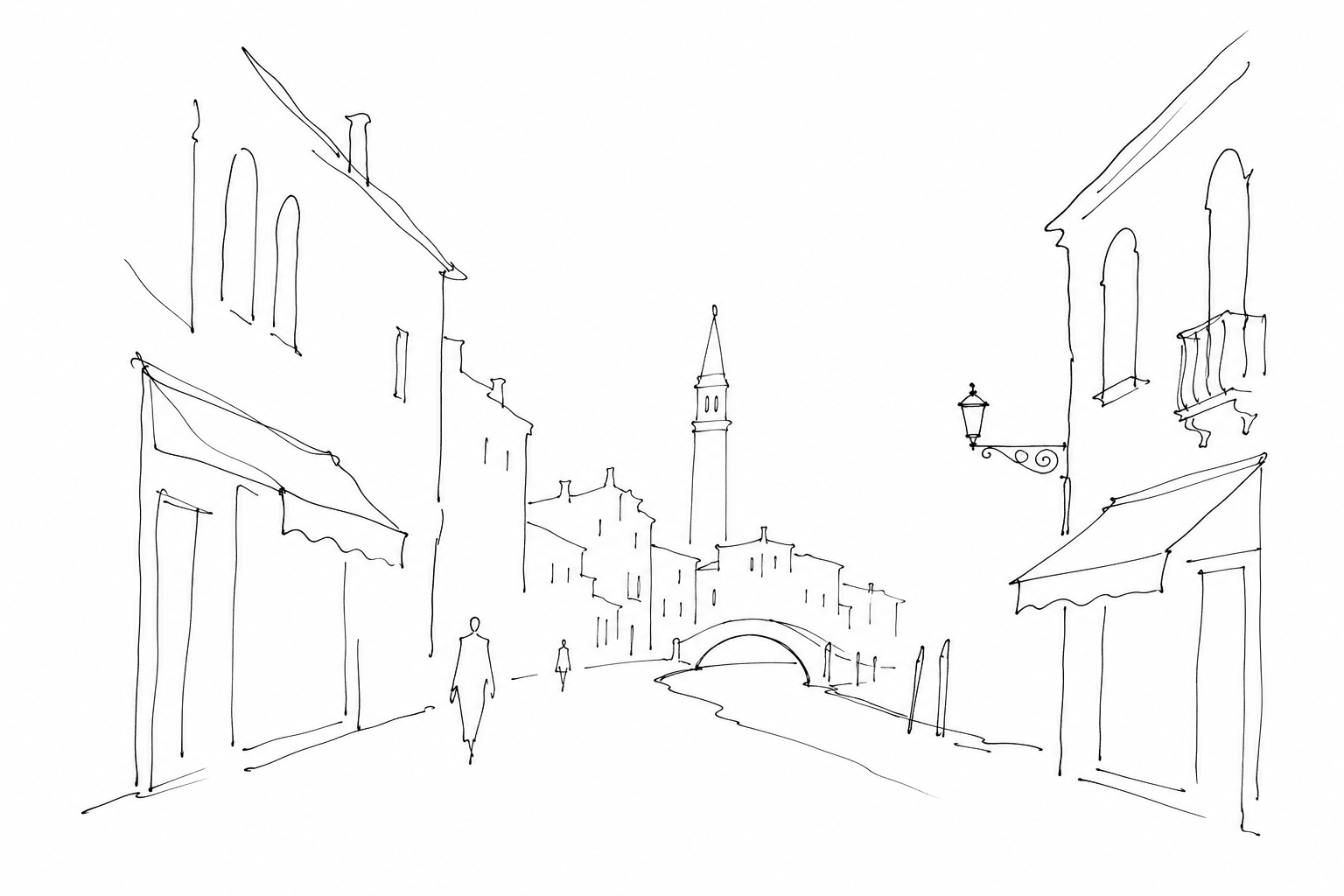
A commercial corridor, not just a street of passage
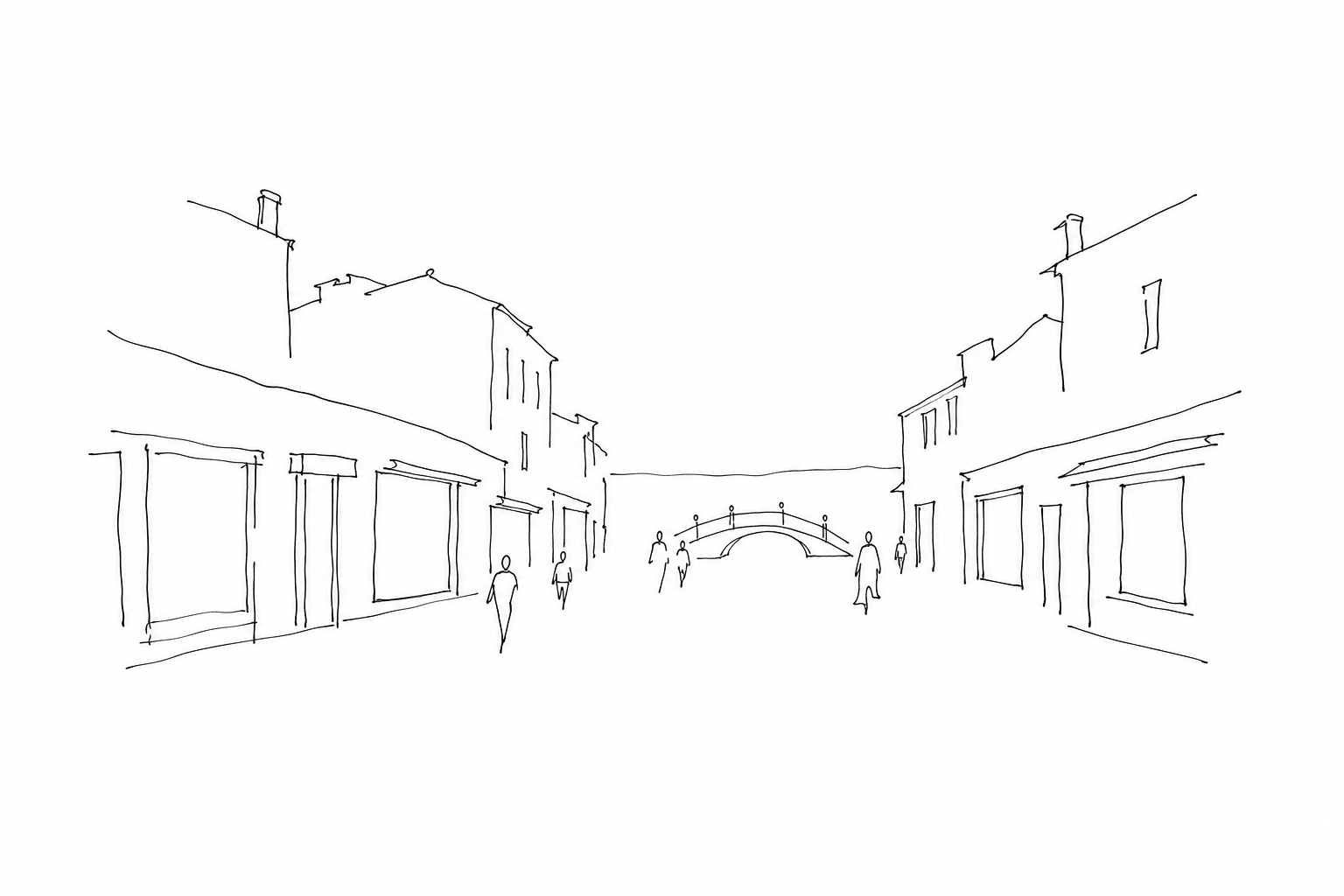
Those who leave Santa Lucia encounter Lista di Spagna as a practical threshold: not yet monument, not simple transfer. The stretch works as a filter between railway arrival and the inhabited city, and precisely for this reason it concentrates signs, shop windows, small hotels, bars, retailers and services aimed at those who need to orient themselves quickly.
Its urban reading passes through the lower floors of the buildings. Many fronts are occupied by activities open to the pedestrian flow; above, the facades remind us that this is not a center closed to daily life, but houses, historic guesthouses, rooms overlooking the passage. Suitcases, deliveries with handcarts, residents heading to errands and visitors who have just arrived produce a rhythm different from that of the more secluded calli.
This does not make the route banal. On the contrary, it shows a Venice built also on hospitality, on transit and on the adaptation of spaces. Looking at the thresholds, the heights of the missing porticoes, the close succession of shops helps one understand why this place is often crossed even before being recognized.
How to cross it with more attention
To read it better, it is worth slowing down immediately after the Scalzi Bridge, instead of only following the flow toward Rialto. The route is not straight: small variations in axis, closely spaced signs and side openings reveal successive adaptations more than a single design.
- Look up: above the shop windows there often appear frames, walled-up arches, Gothic or nineteenth-century windows that tell of the buildings’ previous life.
- Observe the names of the hotels: many recall the route’s long hospitality function, linked to the station and the arrival of foreign travelers.
- Notice the side calli: just a few steps off the main thoroughfare are enough to perceive a more domestic fabric, with small campi, water entrances and sudden silences.
- Use the breathing points: the area of San Geremia and the proximity of the Ghetto help with orientation, distinguishing rapid passage from a more conscious visit.
Those who proceed in this way transform a crowded route into a first reading of the city: not a pause from the journey, but the beginning of its interpretation.
Crossing Lista di Spagna with more attention does not necessarily mean slowing down, but ceasing to consider it an anonymous stretch between arrival and destination. Its name, its commercial function and its position explain a concrete part of Venice: the everyday, crowded, useful one, exposed to continuous passage. Looking at the facades, the side calli, the relationship with the Grand Canal and the movement of people helps to grasp its character. Even a very frequented route can reveal significant details, if it is observed as a place in the city and not only as a street to get through.