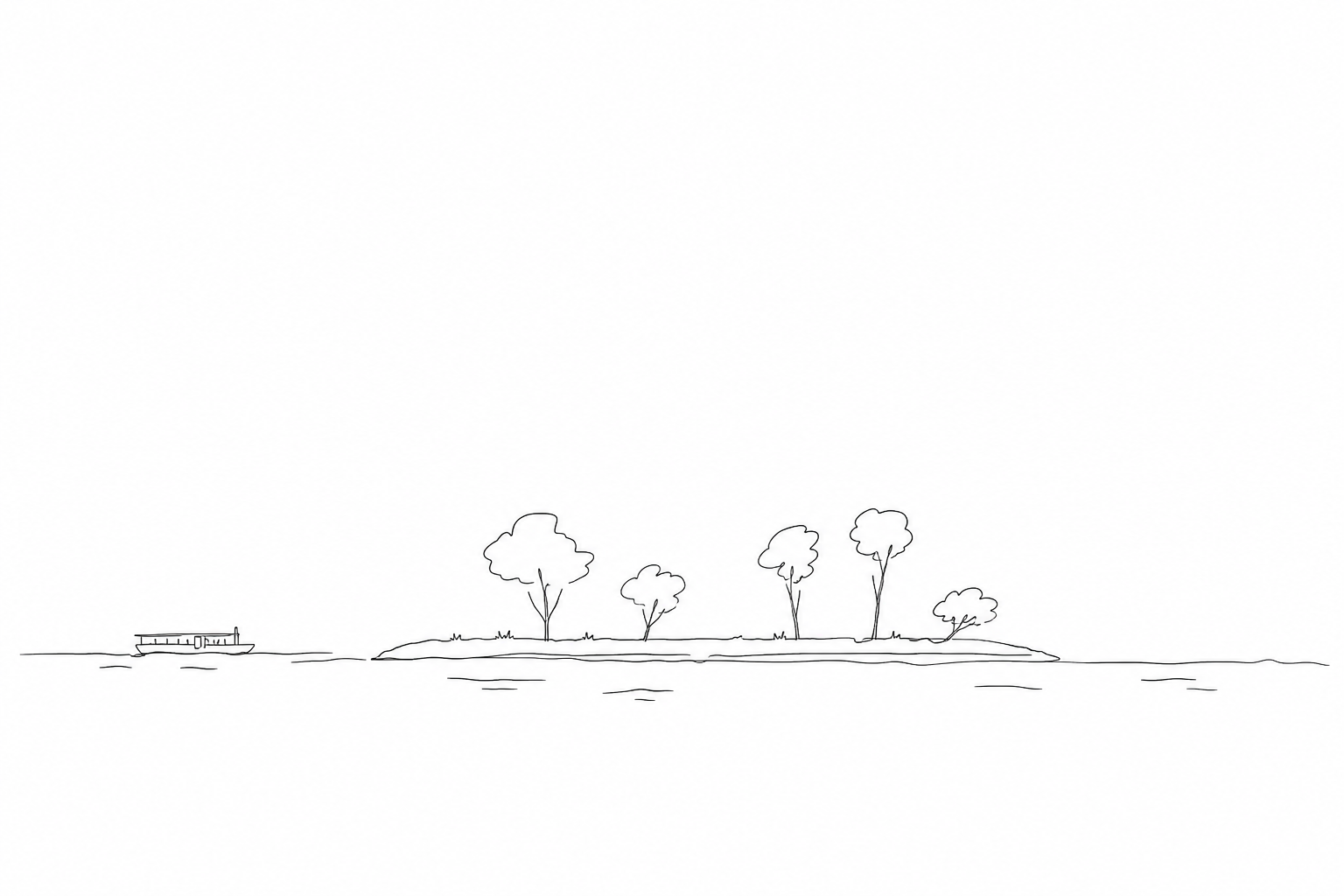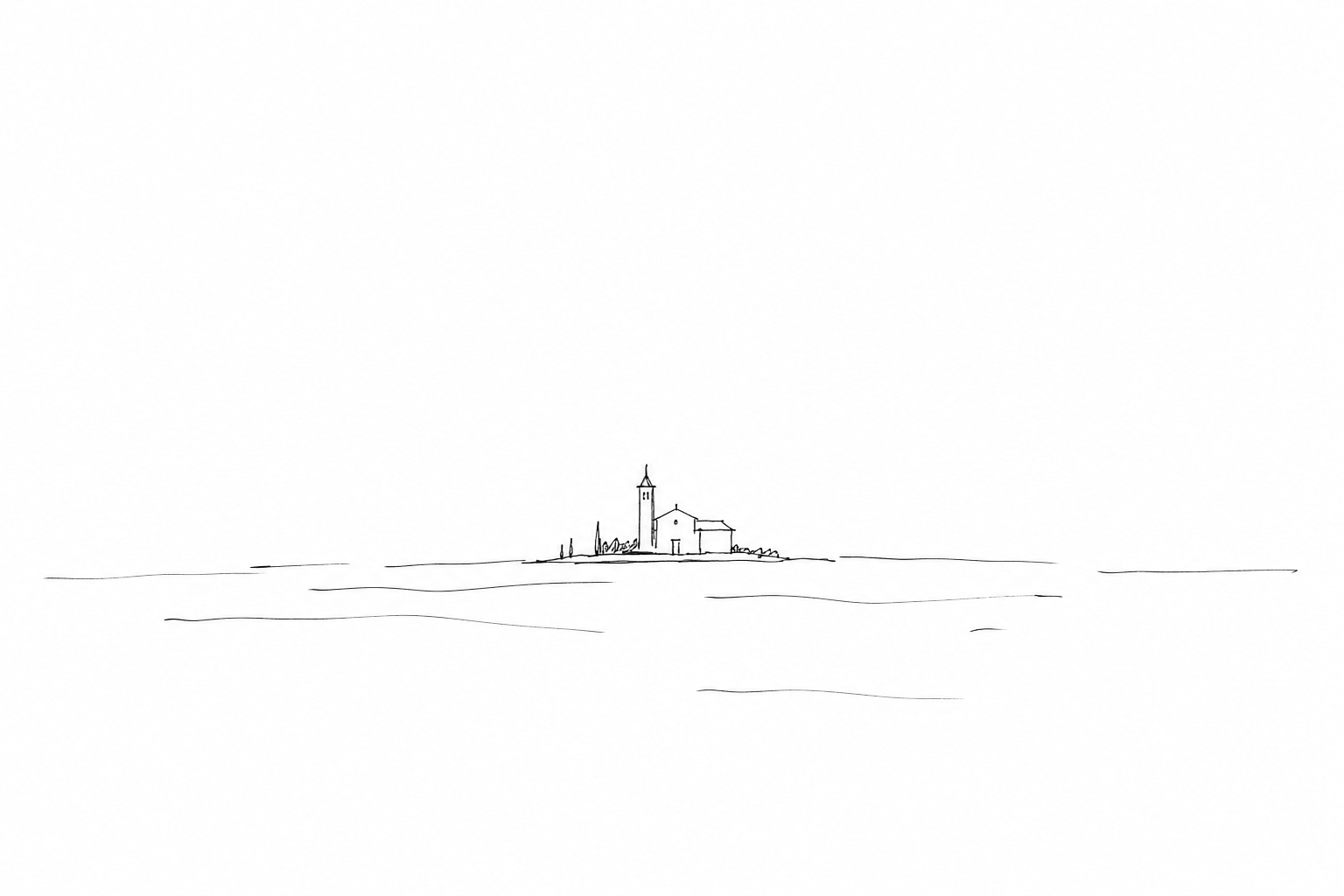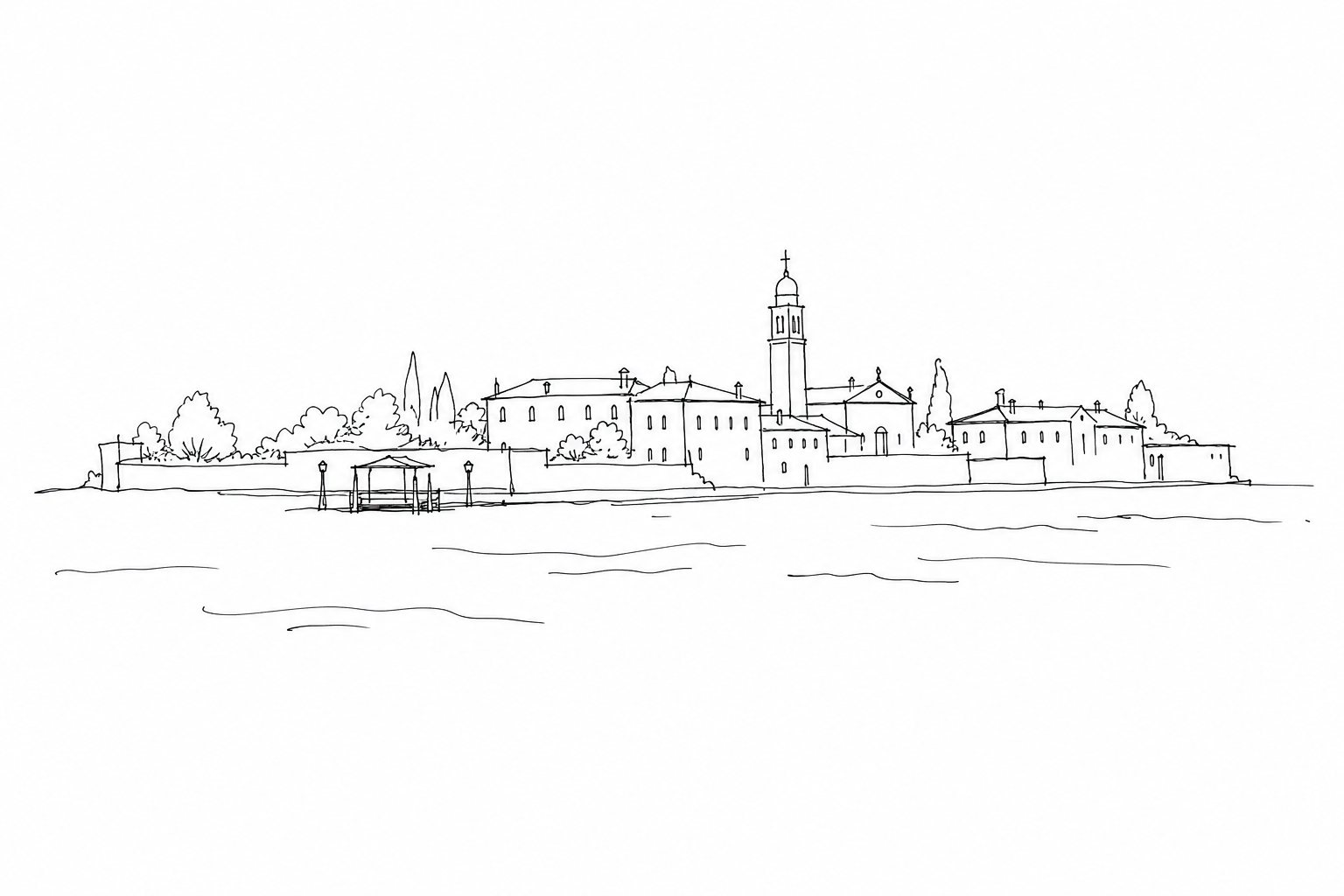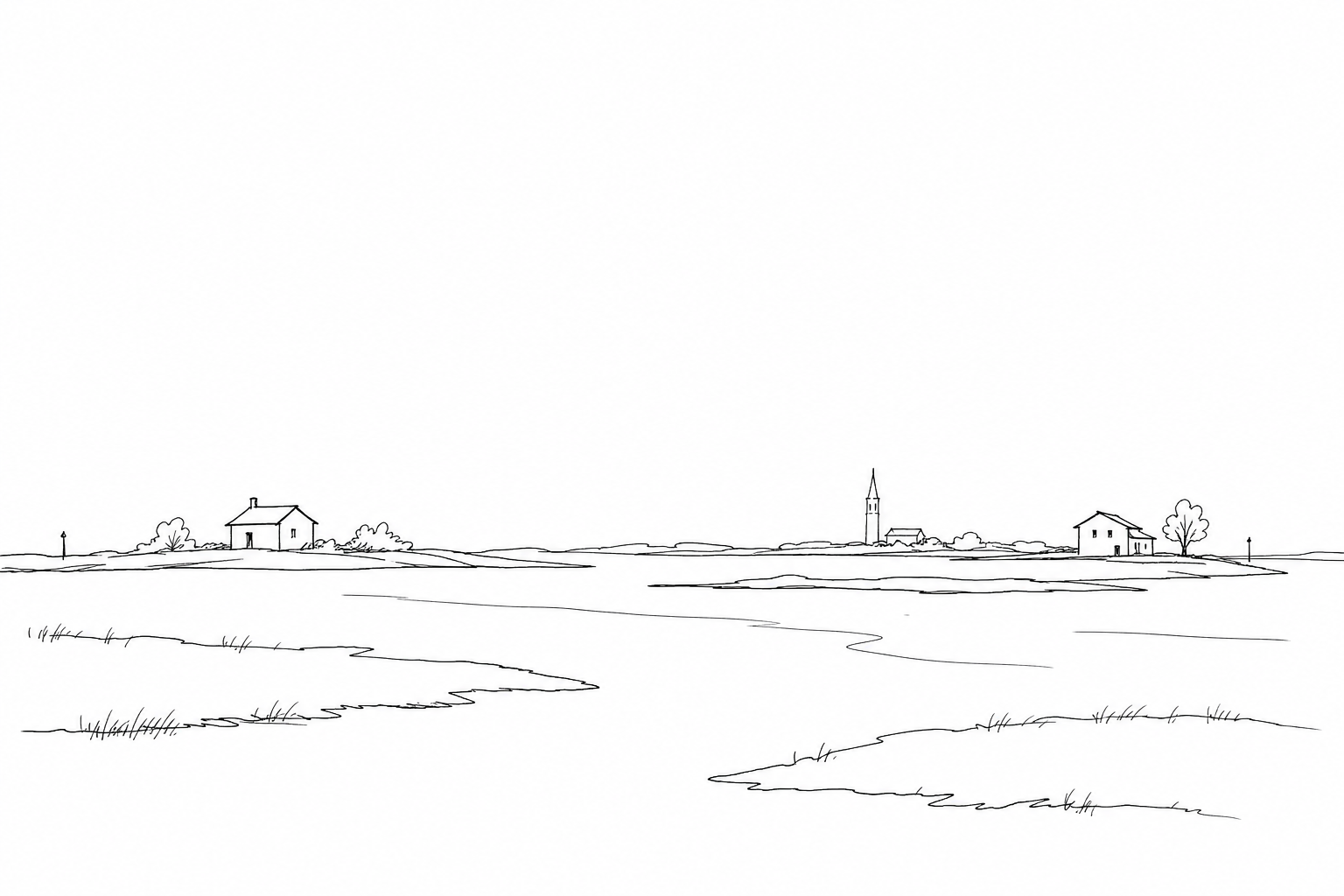

Every year, on the days dedicated to the dead, Venice performs a rare gesture: it builds a temporary bridge over the water to reach San Michele, the cemetery island. It is neither a stage set nor a picturesque detour, but a collective crossing that unites the city of the living with that of memory. From Fondamente Nove, the suspended walk toward the island makes visible an ancient bond, made of devotion, family habits, silent architecture and lagoon landscape. The votive bridge for San Michele tells of an everyday and profound Venice, where even a temporary infrastructure becomes an urban rite.
A temporary bridge toward the island of the dead
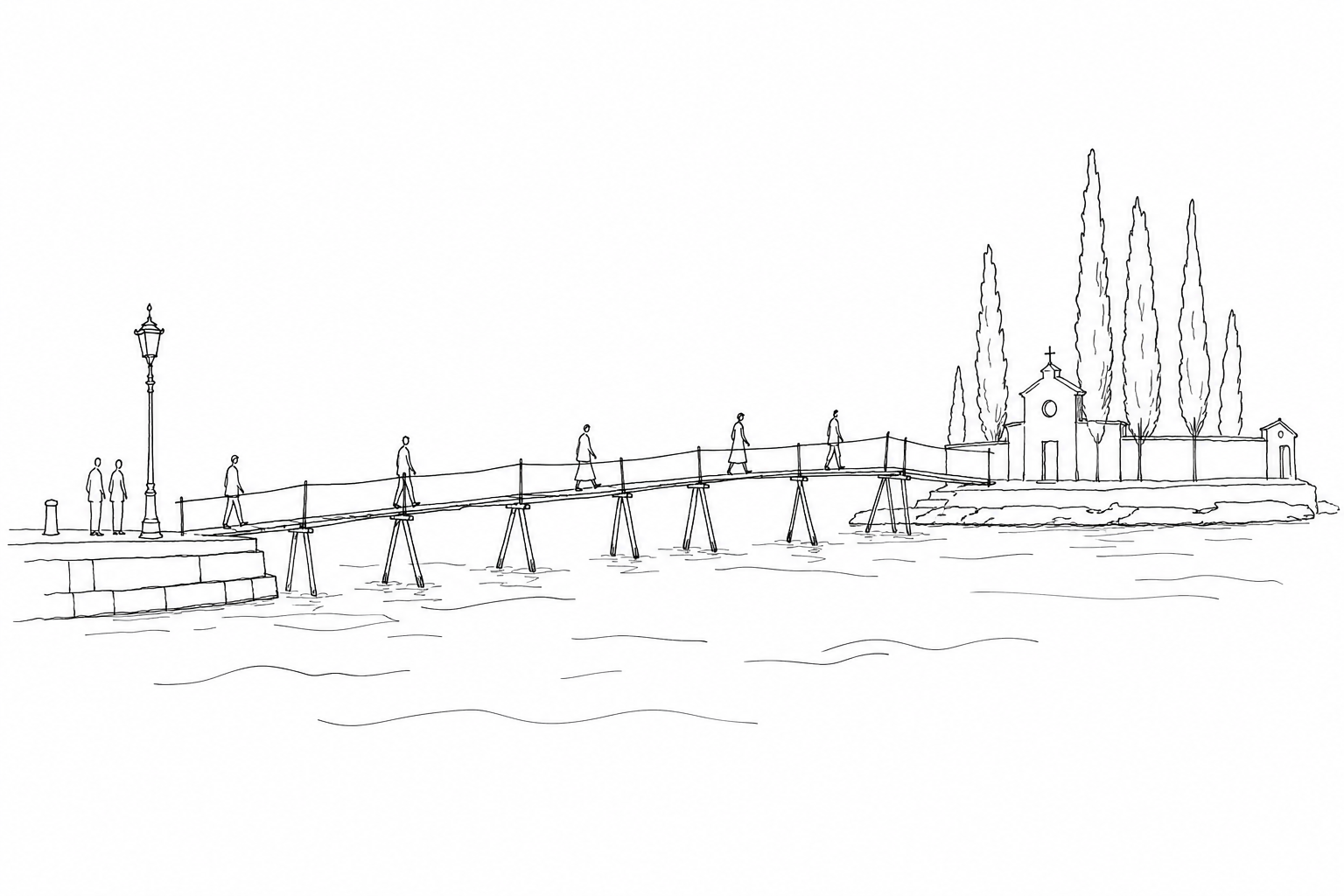
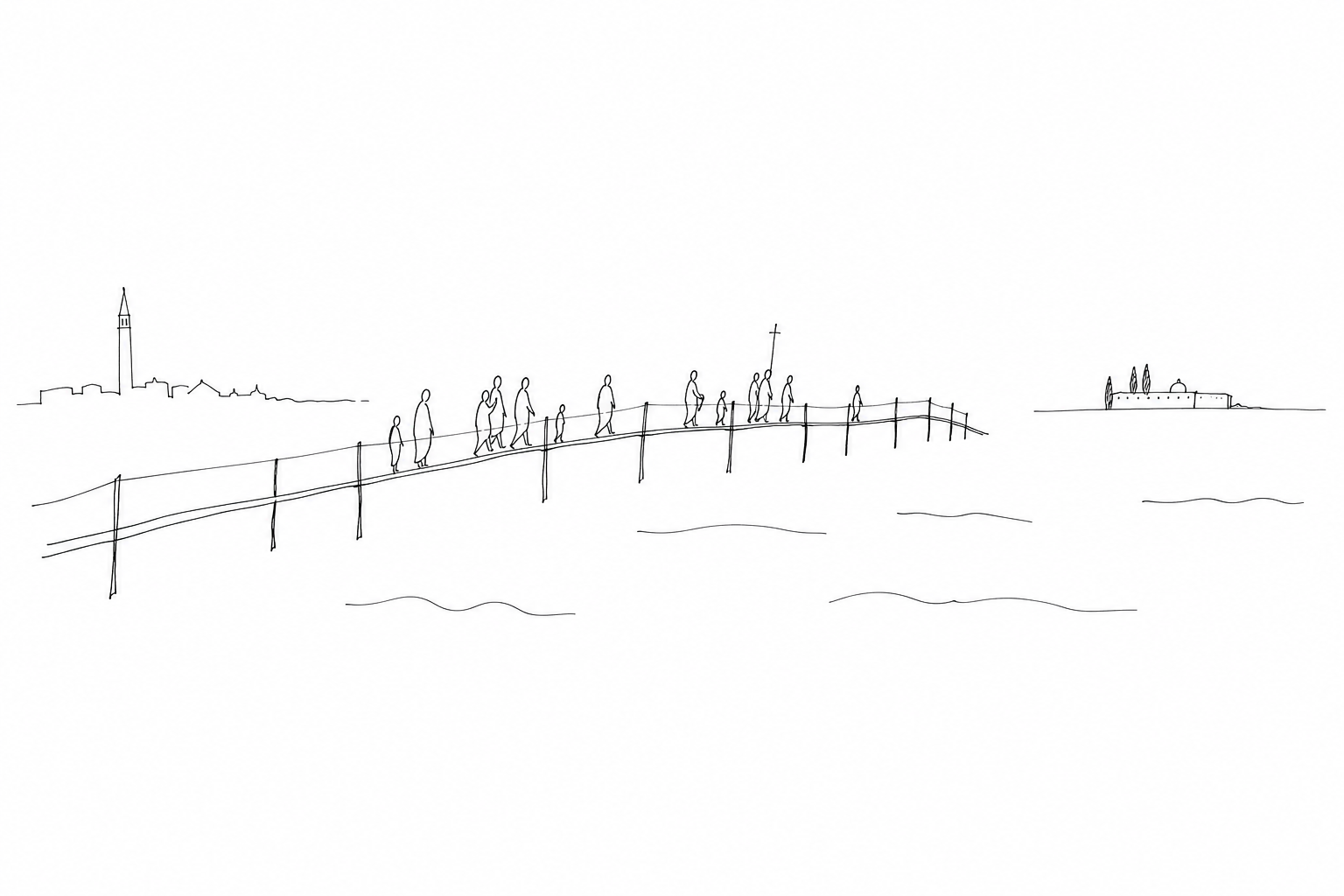
For a few days, around the commemoration of the dead, Venice adds an unusual passage to its geography: a floating bridge that connects Fondamente Nove to the island of San Michele, the city’s large cemetery. It is not an ordinary infrastructure, but a votive bridge: a temporary route built to transform remembrance into a walk, allowing Venetians to reach the graves of family members on foot by crossing the lagoon.
Its value arises precisely from its exceptional nature. San Michele, separated by the water and normally reachable by boat, for a short period becomes part of the city’s pedestrian continuity. The gesture recalls the Venetian tradition of devotional bridges, such as the one for the Redentore, but here the tone is more intimate: not a celebration of liberation, but a civic and family pilgrimage toward the island of the dead.
The destination also preserves a strong historical density: San Michele has housed the Venetian cemetery since the Napoleonic era and preserves churches, burial enclosures and memories of illustrious Venetians and foreigners.
From Fondamente Nove to San Michele: the act of crossing
The walk begins at Fondamente Nove, the northern edge of the historic city, where Venice ceases to be alleys and small squares and opens to the breath of the lagoon. From here, on the days of commemoration, the crossing toward San Michele is no longer just a vaporetto journey: it becomes a slow gesture, exposed to the water, the wind and the distance.
The votive walkway transforms a stretch of lagoon into a temporary pedestrian space. As one walks, one physically perceives what usually remains separate: the city of the living behind, the enclosure of the dead ahead. The low profile of the cemetery, the cypresses, the perimeter walls and the church of San Michele in Isola gradually emerge, without the speed of ordinary transport.
This suspended passage also changes the urban gaze. The water is no longer only a boundary or navigation route, but a surface crossed in a civic and family procession. Each step measures the distance between private memory and collective rite.
San Michele: monastery and Venetian memory
Before becoming Venice’s large cemetery, San Michele was a monastic place. The Camaldolese operated there, and the church of San Michele in Isola, begun in 1469 to a design by Mauro Codussi, remains one of the clearest signs of the early Renaissance in Venice: an Istrian stone façade, measured proportions, an almost abstract profile against the sky.
The funerary transformation came in the Napoleonic era, when burials within the city were progressively moved away for sanitary and administrative reasons. At first the nearby San Cristoforo della Pace was involved; then, in the nineteenth century, the canal that separated the two nuclei was filled in, creating a single space dedicated to the memory of the dead.
The votive walk thus takes on a deeper meaning: it leads not only to family graves, but to a landscape built to preserve the relationship between Venice and its dead. Among cloisters, enclosures, chapels and orderly avenues, the cemetery preserves a solemnity different from that of the city churches: here devotion becomes a visit, an engraved name, a flower, shared silence.
Why this bridge still speaks to the city
The votive passage is not only a logistical solution: it is a civic gesture. For a few days, the city suspends the usual distance between the shores and transforms the route toward the necropolis of San Michele into a collective, slow, visible walk. Those who cross it do not make only a private visit; they enter a shared memory, made of families, parishes, confraternities, vanished trades and names that built Venice before us.
Its value also lies in the reversal of everyday geography. Where one usually travels by boat, the foot becomes the measure of remembrance: each step makes the bond with the dead physical. This is why the rite still speaks to the Venetian community. It reminds us that a city is not composed only of buildings and routes, but also of moral obligations: to care for graves, to name those who are no longer here, to recognize that public memory is born from simple gestures, repeated together.
The votive bridge for San Michele lasts only a few days, but it brings out an essential part of the city: the concrete relationship between Venice, the water and remembrance. Crossing it means observing the lagoon from an unusual level, following a shared route and understanding how the memory of the dead remains inscribed in urban space. San Michele is not only a monumental cemetery, but a place where religious history, funerary art and Venetian life continue to meet. Precisely because of its simplicity, this bridge still speaks to the city: because it transforms private mourning into a common walk.
Related Posts
San Michele: the cemetery island where Venice learned to separate the living from the dead
History, spaces and memory of San Michele, the lagoon cemetery born when Venice moved the dead outside the inhabited city.The Jewish cemetery on the Lido: gravestones, sand and silence near San Nicolò
History and reading of the Jewish cemetery on the Lido, among ancient gravestones, sand and quiet near San Nicolò.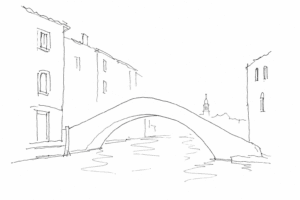
Ponte Chiodo in Cannaregio: the bridge without a parapet that Venice has almost forgotten
History, form and context of Ponte Chiodo, a rare Venetian bridge without a parapet in Cannaregio.Questions Answered
What is the votive bridge for San Michele?
A temporary floating bridge connecting the city to its cemetery island.Why is the bridge considered a civic gesture?
It transforms remembrance into a shared public procession.What historical importance does San Michele hold?
It is Venice’s cemetery since the Napoleonic era with monastic origins.How does the bridge change Venetians’ perception of the city?
It makes walking across the lagoon a physical act of remembrance.
Follow the thread of water
Want to move from this story to others that explain the lagoon beyond postcard views?
 Le Vignole: vegetable gardens, vineyards and a rural Venice just minutes from the Fondamente NoveA quiet island in the northern lagoon, among vegetable gardens, vineyards, canals and military history, close to the Fondamente Nove.
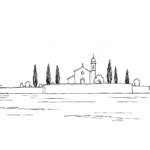 San Michele: the cemetery island where Venice learned to separate the living from the deadHistory, spaces and memory of San Michele, the lagoon cemetery born when Venice moved the dead outside the inhabited city.
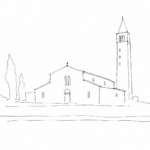 Torcello Without Hurrying: What Remains of the First Venice When the Noise DisappearsA slow itinerary on Torcello among lagoon origins, mosaics, isolated stones and silences that help read the first Venice.
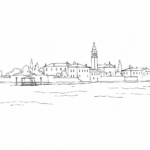 San Servolo: the island of the asylum and the uncomfortable memory of psychiatric careHistory and visit to San Servolo, an island in the lagoon marked by the Venetian asylum and the Museum of the Asylum.