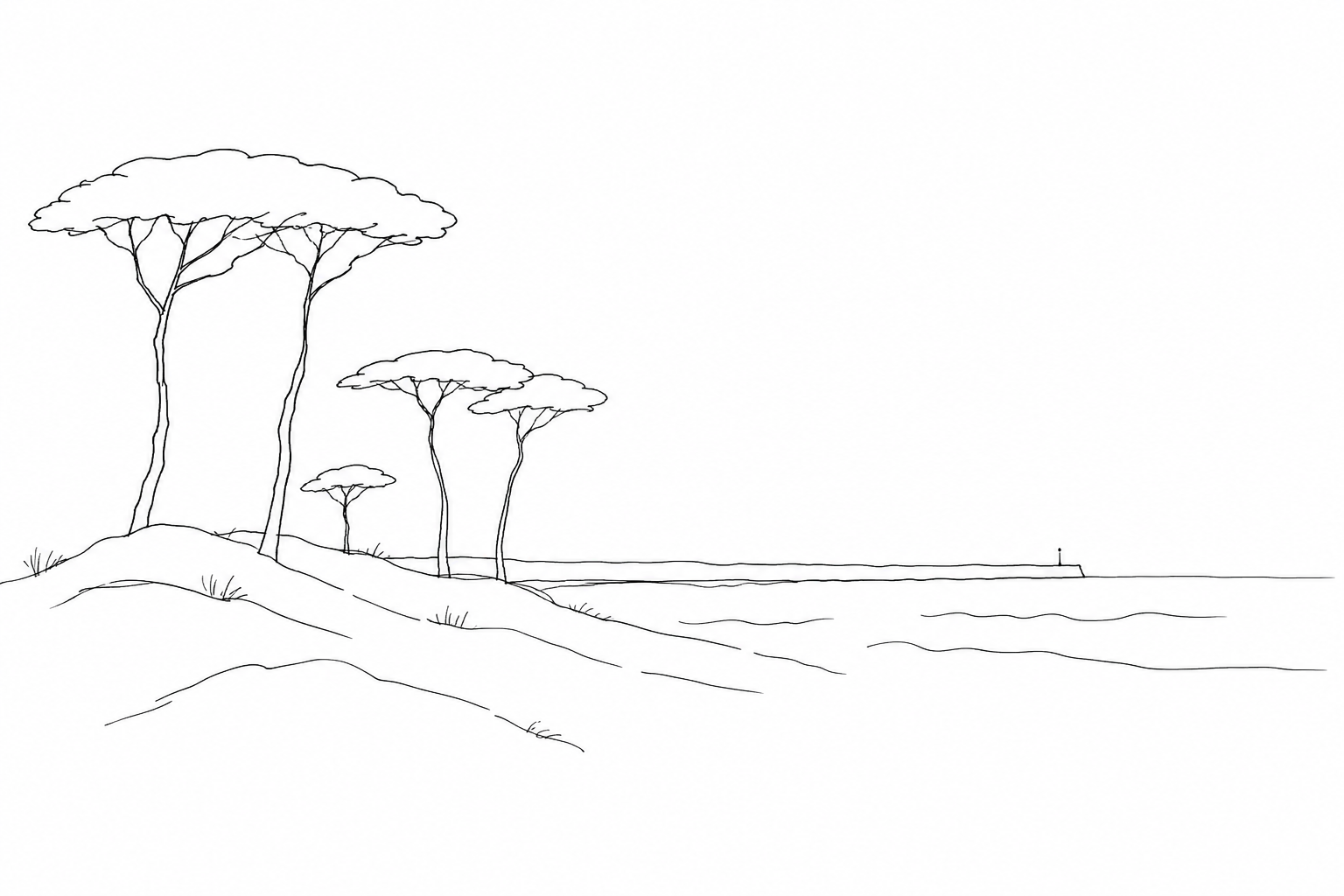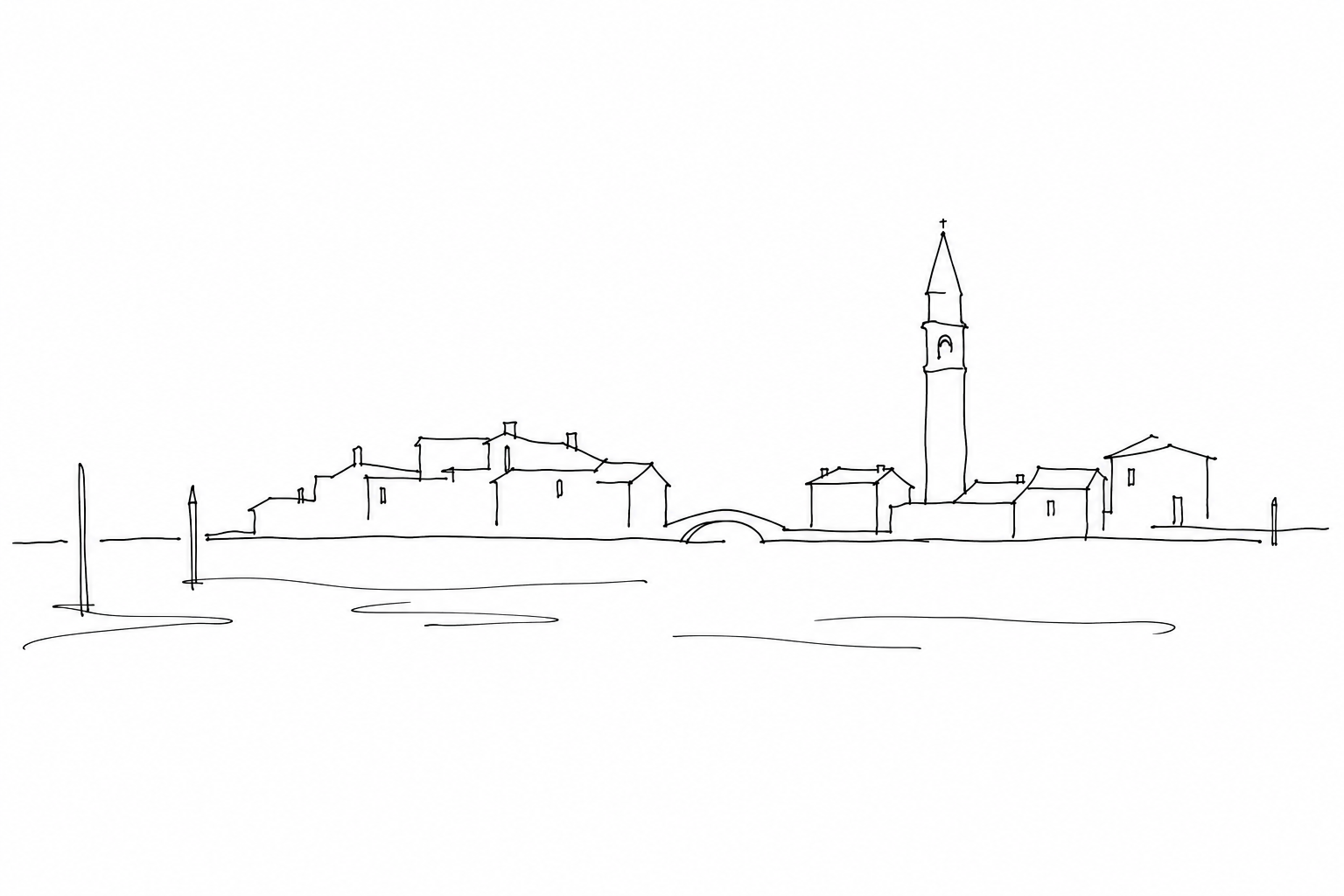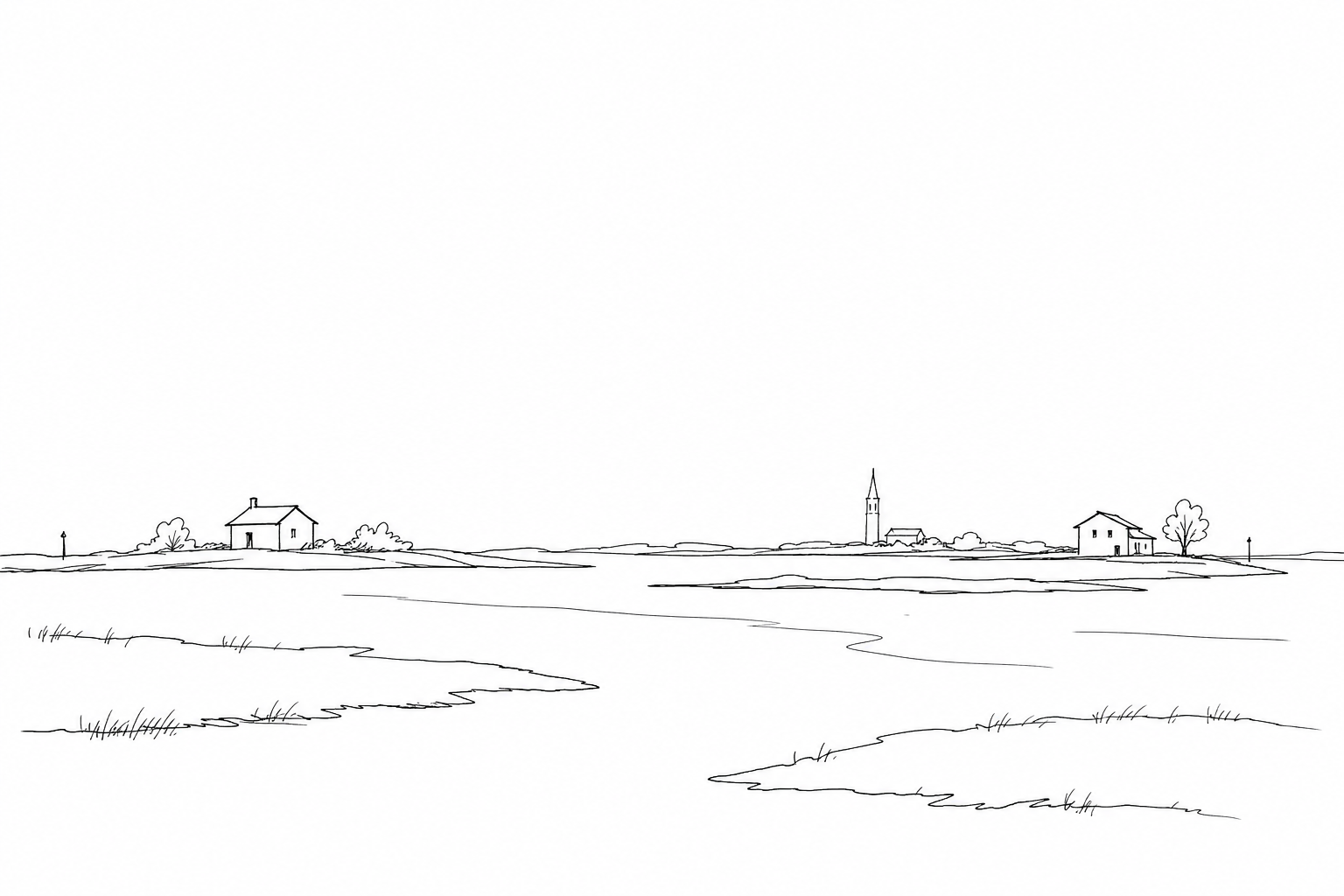
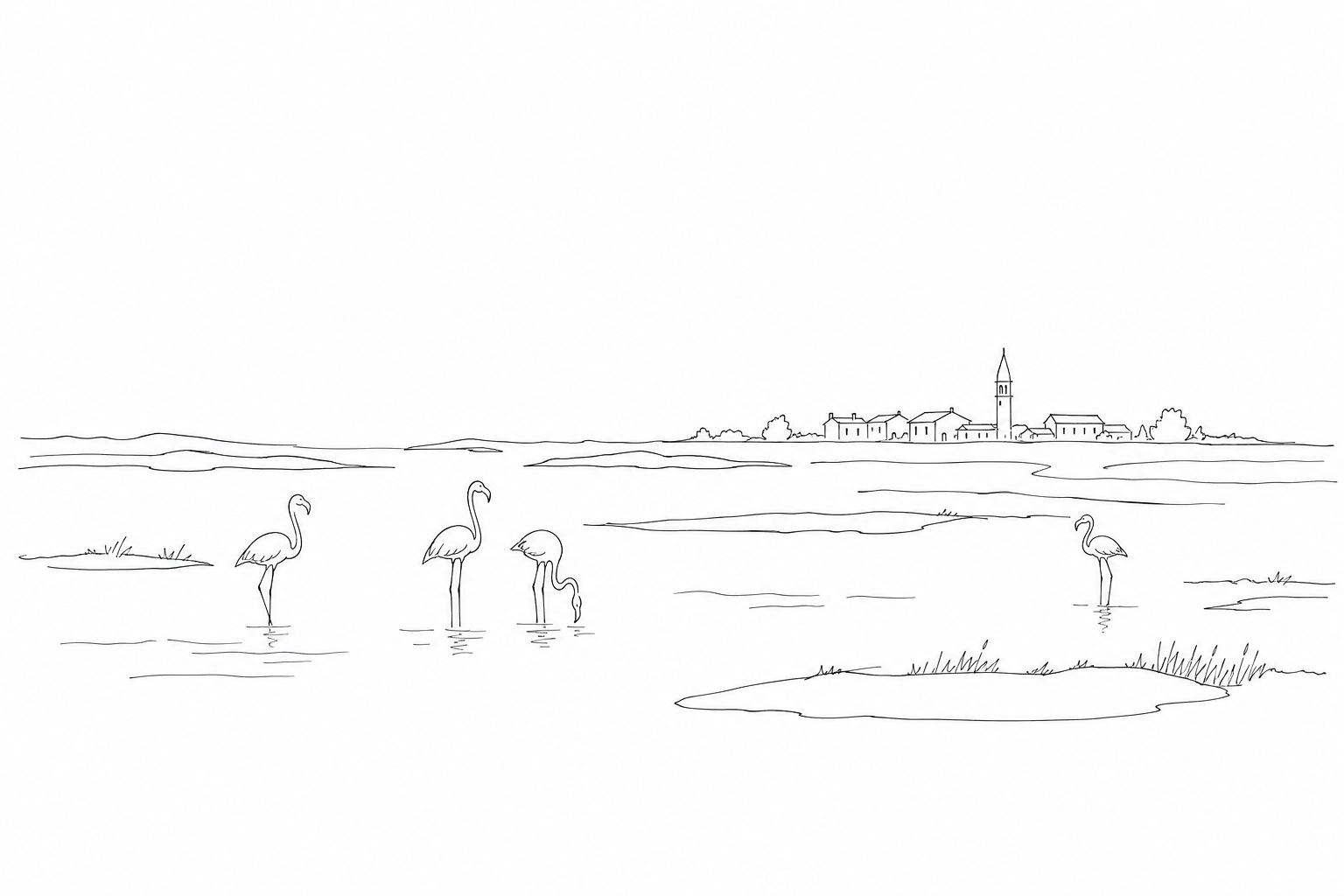
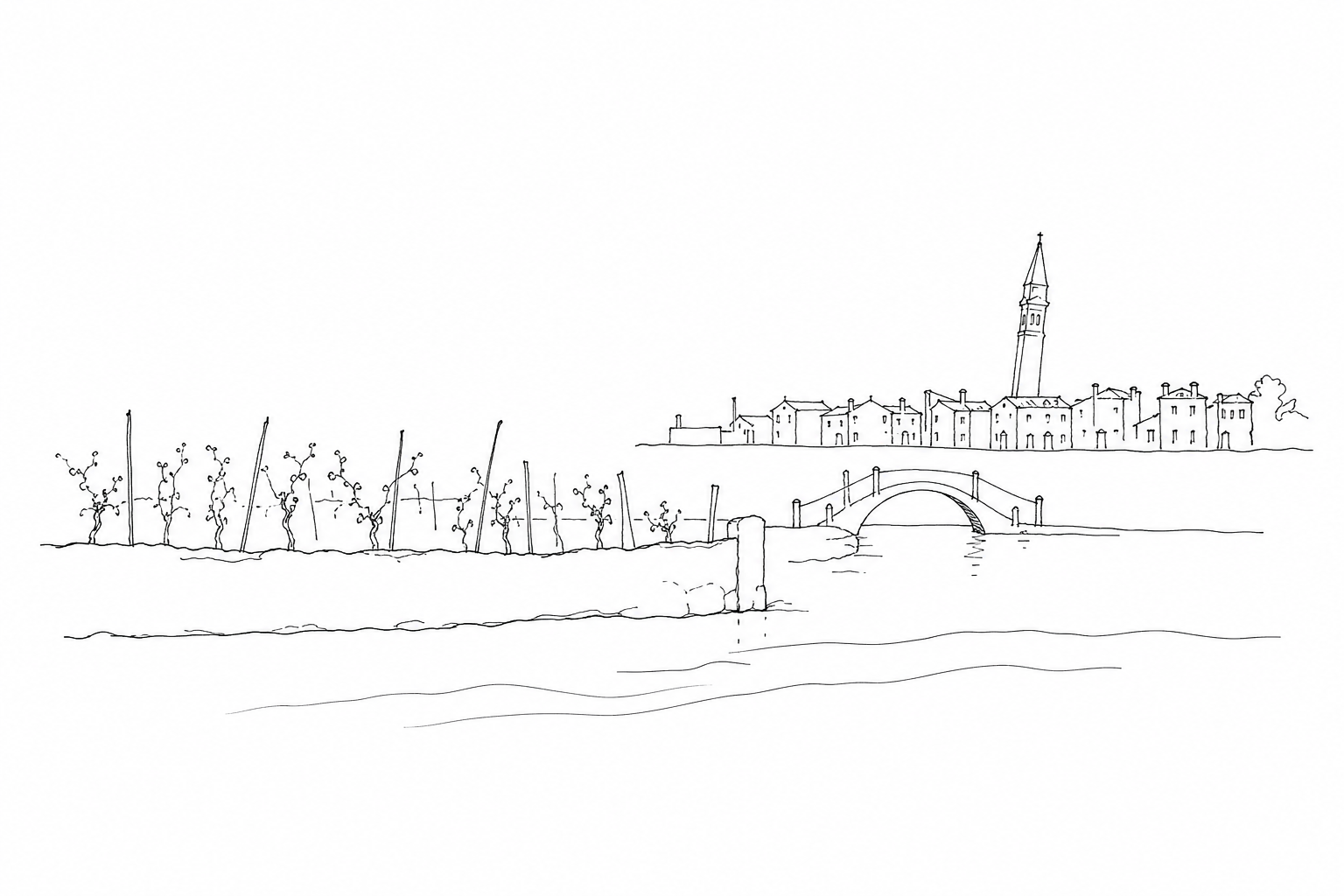
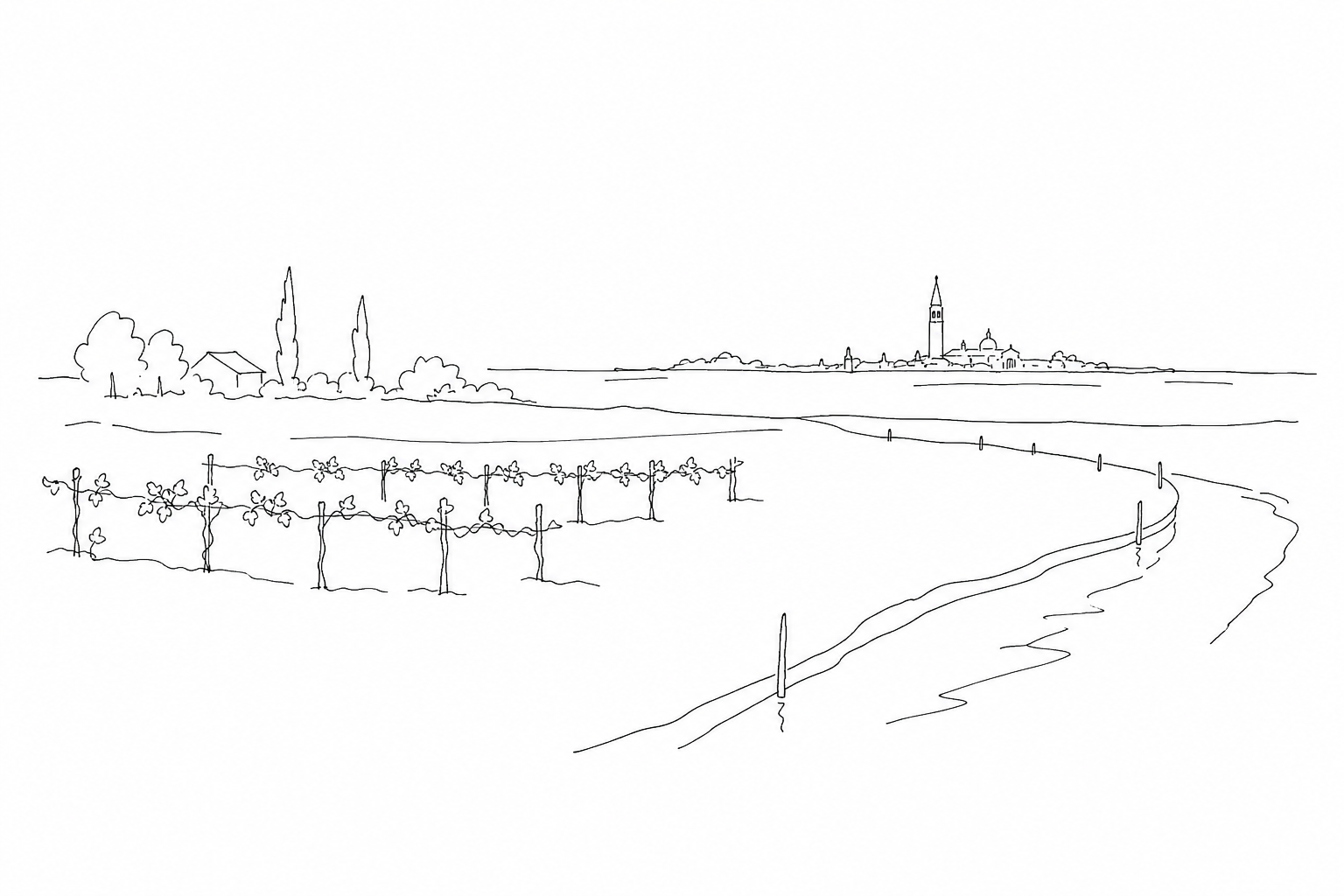

Just a few minutes by vaporetto from the Fondamente Nove, Le Vignole reveal a less compact and more land-based Venice: rows of vines, vegetable gardens, low banks, scattered houses, silences interrupted by the passage of boats. The island does not present itself as a spectacular stop, but as an inhabited edge of the lagoon, where its agricultural function has left traces that are still legible. Walking through it means observing distances, enclosures, canals, small military and religious outposts, without looking for obligatory monuments. It is precisely this discreet measure that makes it interesting.
Where Le Vignole are and why they surprise
Le Vignole are in the north-eastern lagoon, close enough to Venice to sense its outline, but already immersed in a different landscape: shallow water, embankments, vegetable gardens, rows of vines and scattered houses. They are normally reached from the Fondamente Nove area with public lagoon connections; before leaving, it is advisable to check updated lines and timetables, because they may change.
The surprise lies precisely in the physical shift: a few minutes separate the city’s densest shores from an island where the human presence appears agricultural and rarefied. The name recalls the vineyards that once characterized this part of the lagoon, together with the crops intended for the Venetian market. Close to Sant’Erasmo, the island shares the horticultural vocation of the northern lagoon, but preserves a more secluded character.
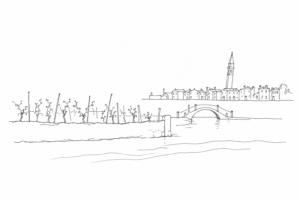
Le Vignole are not read as a single monument: they are understood by observing the fabric of canals, banks, cultivated fields and silences, that is, a rural Venice remaining within sight of the historic city.
Vegetable gardens and vineyards: the island’s rural root
The name Vignole preserves a precise trace: here the countryside is not a decorative memory, but the very form of the place. For centuries the small islands close to Venice functioned as a productive belt: fresh vegetables, fruit, aromatic herbs and rows of vines entered the city’s daily life by light boats, rather than by roads.
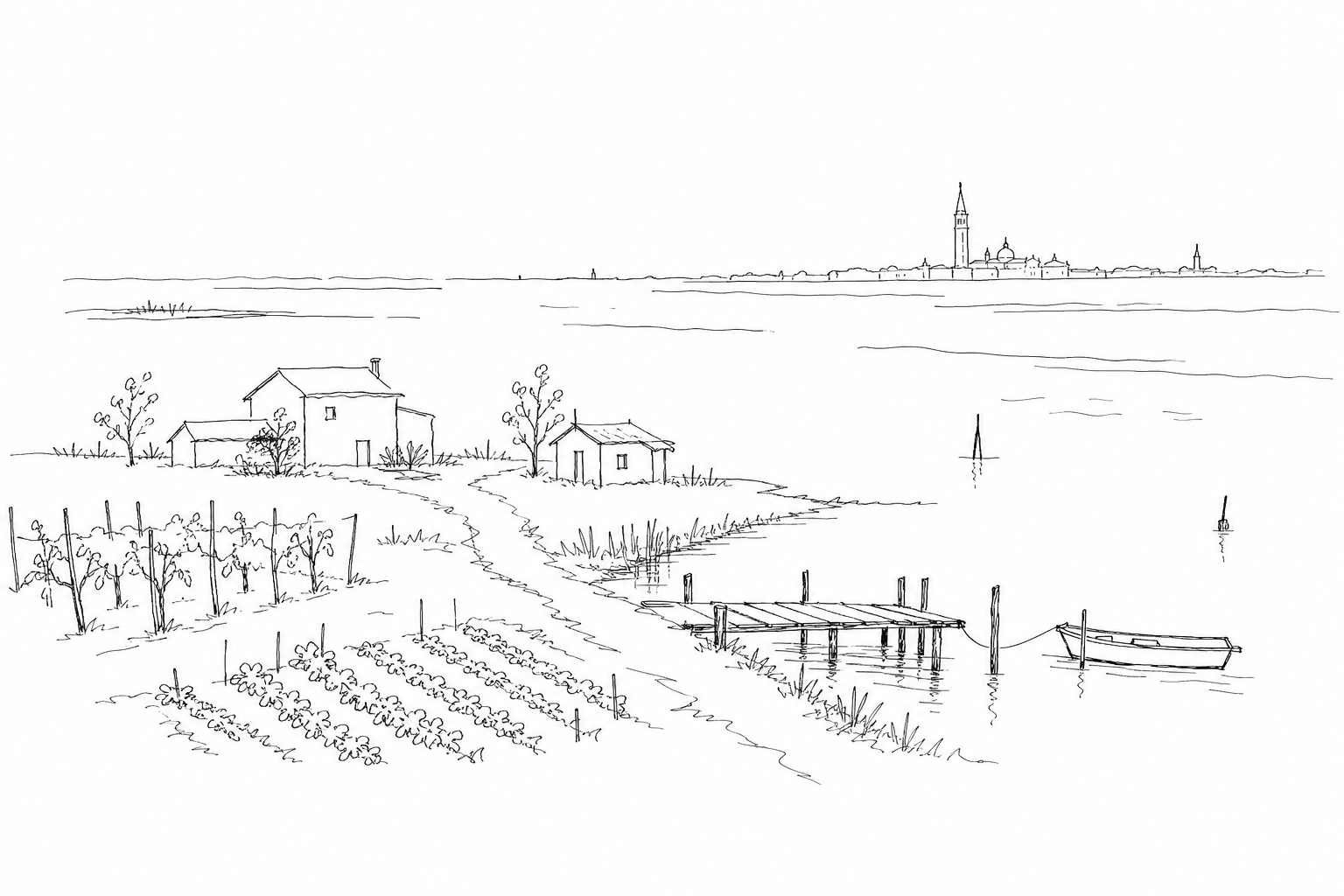
On this island the agricultural landscape can be read in the low fields, the enclosures, the drainage ditches and the raised areas that protect the crops from brackish water. The vine, recalled by the place name, dialogues with family vegetable gardens and small plots: not large estates, but a patient pattern, adapted to the wind, the salt and the need to drain the soil.
This rurality also helps interpret the rhythm of the place. The scattered houses, the small landings and the internal roads do not create a “picturesque” scene for the visitor: they are the result of an amphibious economy, in which people cultivate while watching the tides and reach the market on the water. A few minutes from the Fondamente Nove, the contrast is clear: Venice appears close, but the dominant vocabulary becomes that of clods, pergolas, embankments and seasons.
History, outposts and details to observe
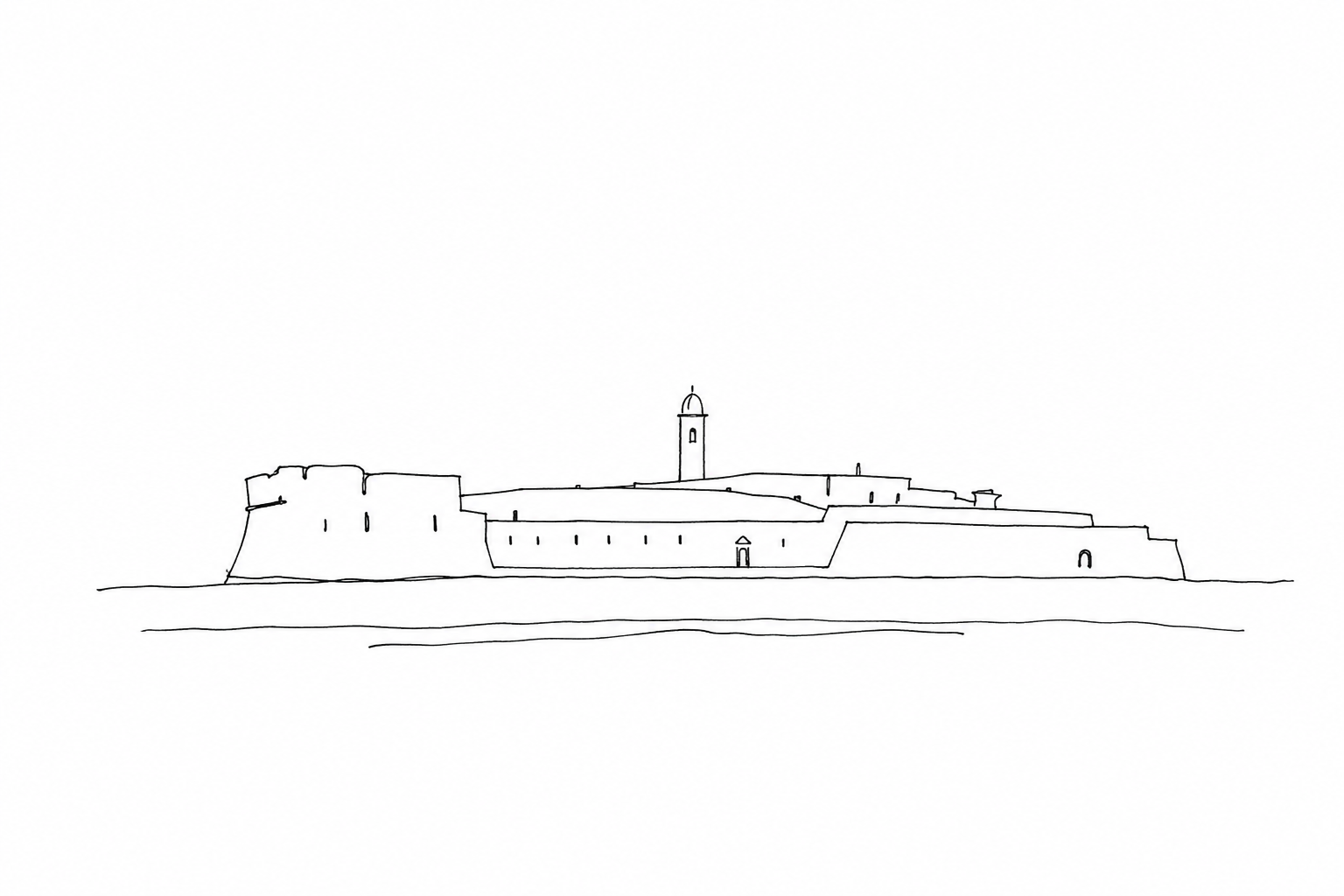
The reading of the place changes if, alongside the rows of vines and the fields, one observes its function as a threshold. This small archipelago was not only cultivated space: it lay along the water access of the Lido, one of the strategic passages toward the St Mark’s basin. For this reason, near the eastern part, the Forte di Sant’Andrea recalls the military control exercised by the Serenissima. The sixteenth-century fortress, linked to the project of Michele Sanmicheli, dialogues with the water through low masonry, loopholes and fronts designed to defend the port entrance.
In the inhabited core, attention is also deserved by the small church of Sant’Eurosia, the scattered houses, the cavane, the service canals and the embankments: minor elements, but decisive for understanding a community built more on daily work than on monumental representation. Here the architecture is often functional: protecting boats, draining land, marking boundaries, sheltering from the wind.
Some areas may be private, military or not freely visitable; it is therefore advisable always to check the updated conditions and to read the landscape above all from the banks and the permitted routes.
A slow visit should begin already at the landing: before looking for “things to see,” it is advisable to recognize the agricultural rhythm that still structures the landscape. The low walls, gates, nets and ditches are not random obstacles, but the sign of cultivated land and property to be respected. Here the best observation is often lateral: from the banks, from the little bridges, from the edges of the permitted routes.
To read the island without forcing access, one can proceed by clues: the alignment of the rows of vines, the plots raised above the water, the cavane and small landings, the views toward Sant’Erasmo, the Certosa and the Lazzaretto Nuovo. Silence also helps: compared with the center of Venice, the noises of boats, tools and wind make a productive lagoon perceptible, not just a scenic one.
Practical advice: avoid treating every dirt road as public. Connections, access and restrictions may change; before leaving it is better to check the updated information and, once there, follow the signage and the routes that are clearly open.
Le Vignole require a short time but long attention: not to accumulate visits, but to understand how Venice has always also lived from vegetable gardens, landings, defenses and daily work. In a slow itinerary, the island becomes a useful pause for reading the lagoon as a productive and inhabited space, not just a scenic one. Among vineyards, canals and historical fragments, there remains the impression of a rural Venice very close to the center and yet separate, capable of changing the rhythm of the gaze.
Related Posts
Sant’Erasmo: vegetable gardens, violet artichokes and the agricultural Venice few imagine
A slow journey to Sant’Erasmo, the island of Venetian vegetable gardens, among violet artichokes, the northern lagoon and agricultural life.Mazzorbo: the walled vineyard and the quiet side next to Burano
Mazzorbo seen through its walled vineyard, slow fondamenta and connection with Burano.
La Certosa: the green island between Castello and the northern lagoon that many see only from the vaporetto
Brief guide to La Certosa: location, history, greenery, landing places and the meaning of this island between Castello and the northern lagoon.Questions Answered
Where are Le Vignole located and what makes them unique?
Located near Fondamente Nove, they offer a rare agricultural landscape close to Venice.What agricultural activities characterize Le Vignole?
Vineyards, vegetable gardens, and small plots adapted to the lagoon environment.What historical elements are found on Le Vignole?
Forte di Sant’Andrea and the church of Sant’Eurosia mark military and religious presence.How should visitors approach exploring Le Vignole?
With respect for private areas, following signage and understanding the agricultural setting.
Follow the thread of water
Want to move from this story to others that explain the lagoon beyond postcard views?
 The votive bridge for San Michele: when Venice walks on water to remember the deadThe votive bridge for San Michele tells of the bond between Venice, the lagoon and the memory of the dead.
 Sant’Erasmo: vegetable gardens, violet artichokes and the agricultural Venice few imagineA slow journey to Sant’Erasmo, the island of Venetian vegetable gardens, among violet artichokes, the northern lagoon and agricultural life.
 San Michele: the cemetery island where Venice learned to separate the living from the deadHistory, spaces and memory of San Michele, the lagoon cemetery born when Venice moved the dead outside the inhabited city.
 San Clemente: from monastery to hospital, the island Venice has always kept at a distanceHistory of San Clemente, a lagoon island used for worship, care, and separation.