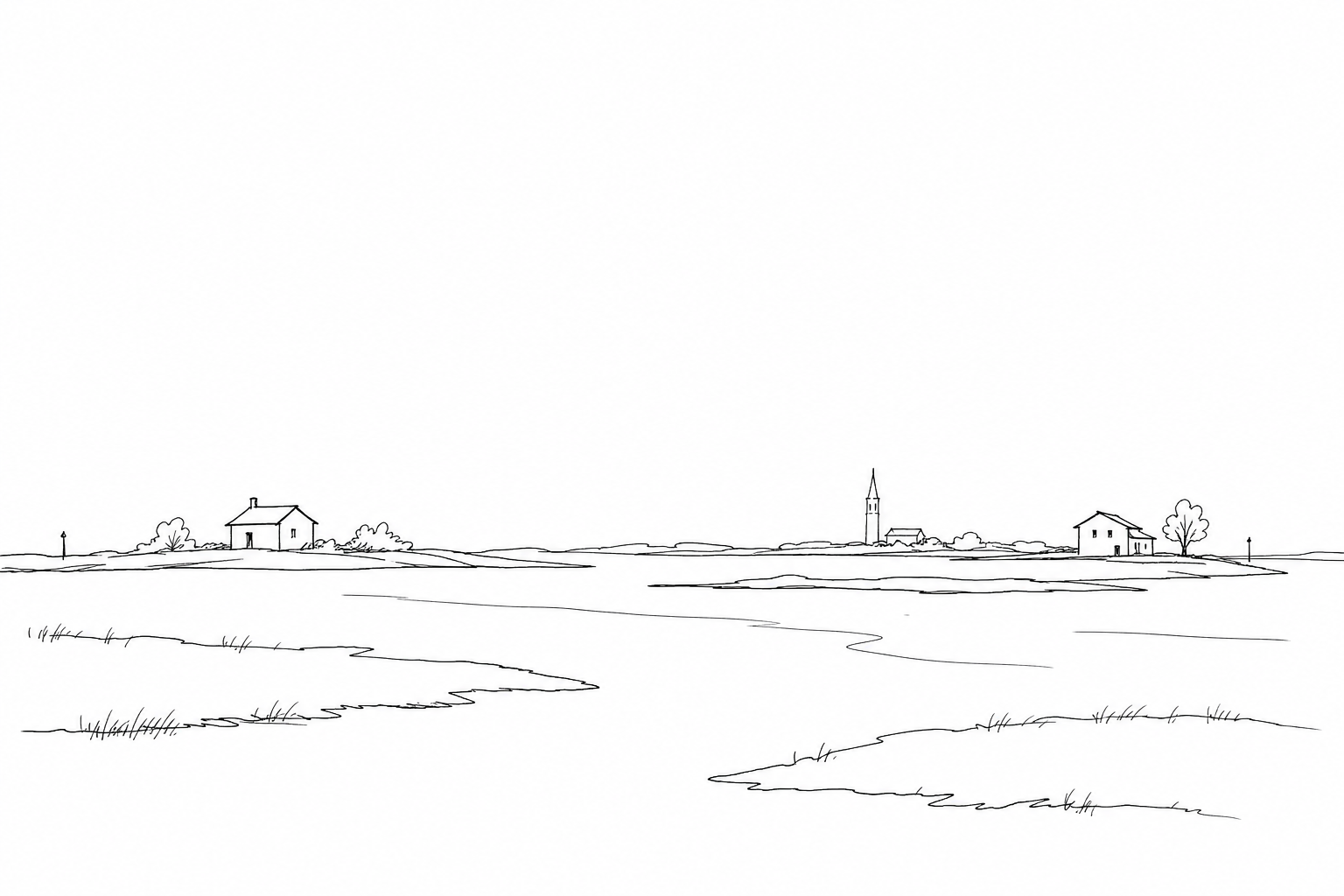
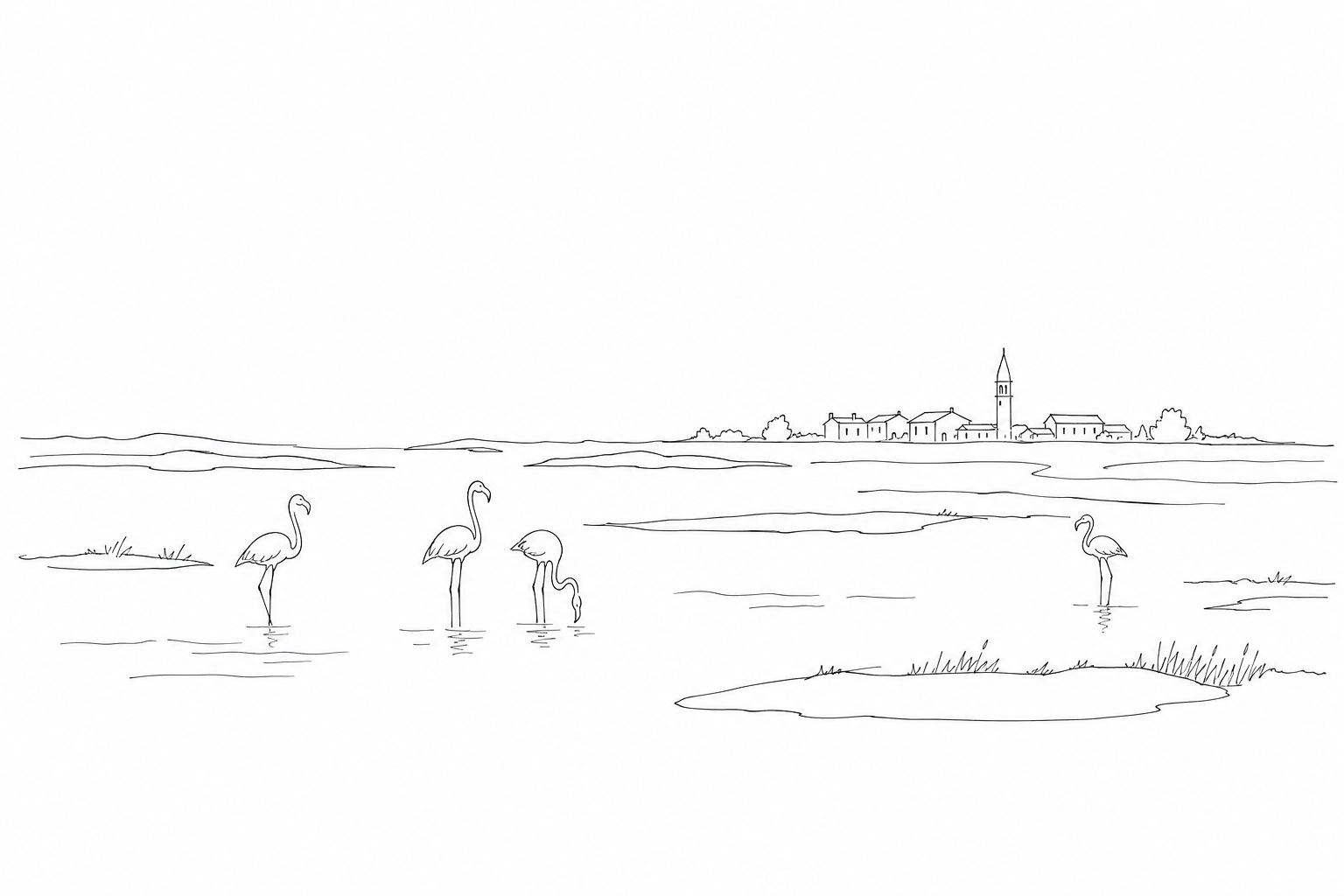
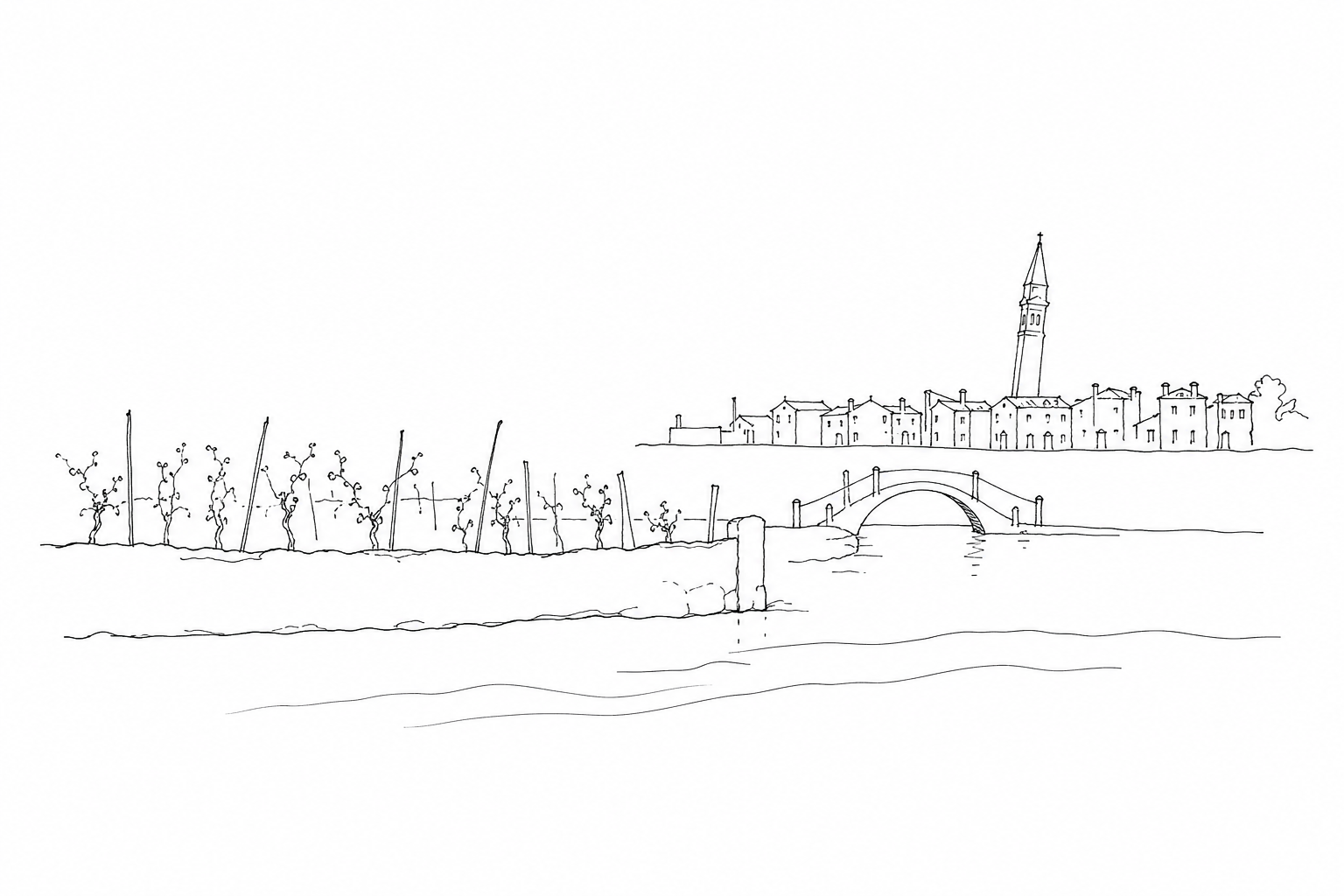

Near San Nicolò, where the Lido looks toward the lagoon and the routes to the sea, the Jewish cemetery appears as a secluded place, made of leaning gravestones, sand, low vegetation and clear silences. It is not a stop to be consumed in haste: it tells an essential part of the Jewish presence in Venice, preceding and parallel to the history of the Ghetto, through inscriptions, funerary forms, languages and materials marked by time. Entering it means reading a fragile landscape, in which religious memory, urban history and the lagoon environment intertwine without any need for scenery.
Where it is and why it matters
The Jewish cemetery on the Lido is found in the San Nicolò area, at the northern end of the island, where Venice looks at once toward the lagoon, the harbor entrance and the open sea. It is not a “central” place in the monumental sense of the term: its strength comes precisely from its secluded position, among sand, low vegetation, boundary walls and the silence of an urban edge.
Here the Venetian Jewish community obtained a burial space in the late Middle Ages, long before the Ghetto was established in 1516. For this reason the site is essential: it tells of a Jewish presence rooted in the city, but physically located outside the dense island fabric of Venice.
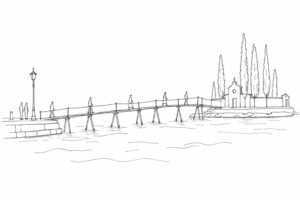
The gravestones, often worn by salt air and time, make the landscape of San Nicolò an open-air archive: not only religious memory, but also a history of boundaries, waters and the fragile lands of the Lido.
One of the oldest Jewish necropolises
The history of the Jewish cemetery on the Lido begins in the late Middle Ages: in 1386 the Jewish community obtained from the Republic of Venice a plot of land near San Nicolò to be used for burials. This fact places it among the oldest preserved Jewish funerary sites in Europe and helps explain why the site is not merely a collection of isolated gravestones, but a testimony to the Venetian Jewish presence before and after the birth of the Ghetto.
The choice of the Lido met a practical need. According to Jewish tradition, the grave must remain stable and respected over time; therefore a recognizable space was needed, separate but reachable from the city. Venetian Jews of different origins were buried here: Italian, Levantine, Ponentine and Ashkenazi, as suggested by the names, languages and formulas carved into the stones.
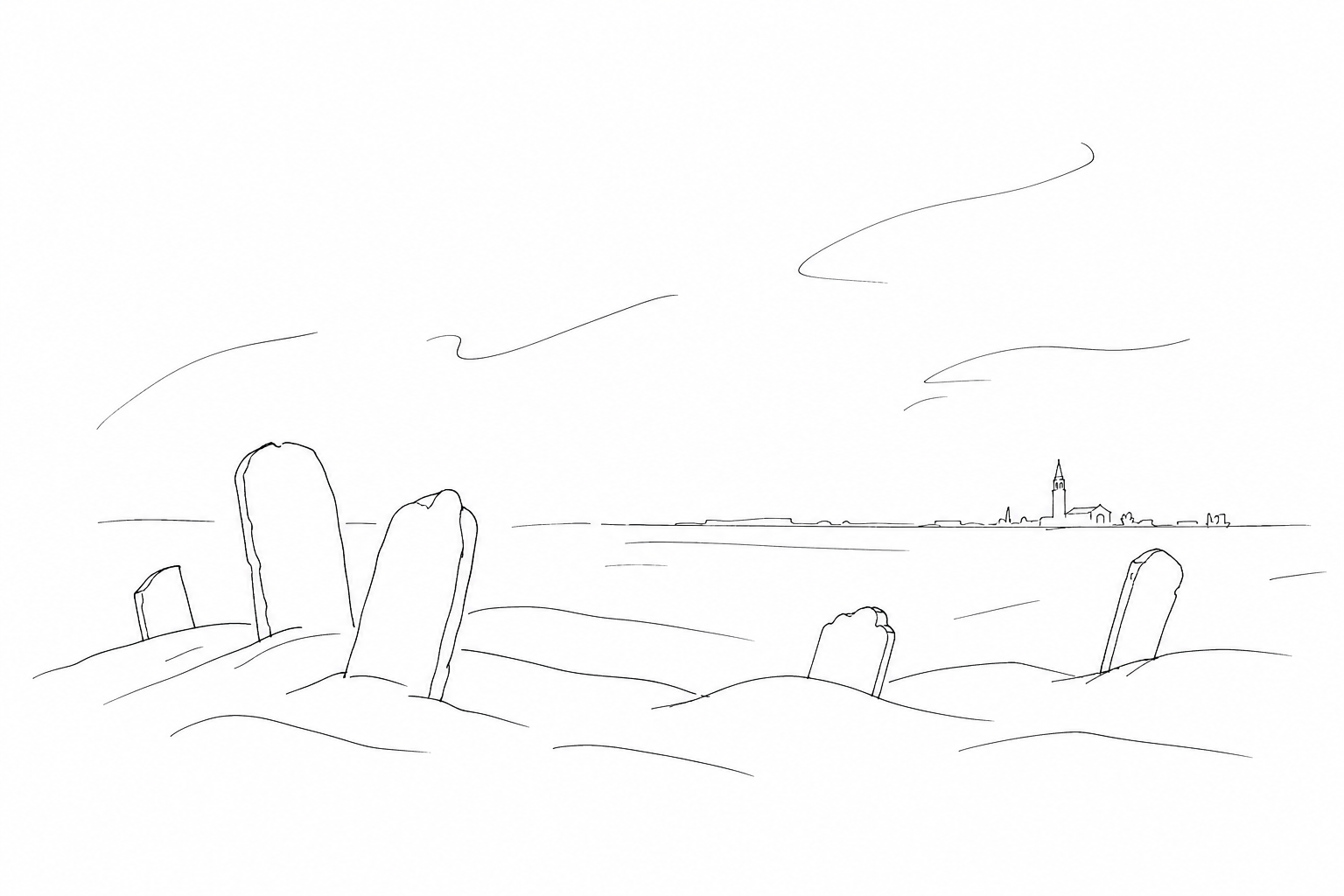
Over the centuries the area suffered damage, sand shifts, neglect and military transformations along the edge of San Nicolò. Precisely for this reason the surviving gravestones, often leaning or worn, also tell of the long physical vulnerability of memory in a lagoon environment exposed to salt, wind and changes in the ground.
Gravestones, languages and sand
The artistic reading of the burial ground passes first of all through the materials. Many markers are in Istrian stone or light-colored marbles, chosen to withstand the brackish humidity but today marked by crusts, abrasions and small fractures. The sand, carried by the wind and by movements of the ground, is not just a backdrop: it covers bases, softens edges, makes some inscriptions readable only in places.
The oldest writings are above all in Hebrew, with traditional funerary formulas, names, patronymics and dates according to the Hebrew calendar. In some burials of families connected to the Sephardic diaspora, linguistic traces linked to the Iberian area and the mercantile Mediterranean also appear. The stone thus becomes an archive of migrations, rites and belonging.
Beyond the words, the signs matter: crowns, vegetal motifs, the blessing hands of the priests, pitchers associated with the Levites, carved frames. They are not random ornaments, but clues to religious identity, lineage and eschatological hope. Seen up close, these worn surfaces show how lagoon time has transformed engraved memory into a more fragile, silent and almost tactile presence.
Visiting with respect and attention
This place, near San Nicolò, should be approached first as a burial area and only then as a historical document. A visit requires a slow pace: the ground may be uneven, the stones leaning or worn, and many inscriptions cannot tolerate unnecessary contact. It is better to observe without rubbing, tracing or wetting the characters, because even an apparently harmless gesture can accelerate wear.
A good criterion is to read the whole before the detail: orientation of the graves, distance between the markers, presence of family coats of arms, formulas in Hebrew or Italian, traces of restorations. In this way the burial ground reveals the long continuity of the Venetian community without turning into a simple collection of curiosities.
- Stay on recognizable paths and do not move fragments or small objects.
- Photograph discreetly, avoiding intrusive poses.
- Always check in advance the updated access and visiting arrangements.
The Jewish cemetery on the Lido calls for a slow and respectful gaze. Its strength does not lie in monumentality, but in the details: a worn date, an inscription in Hebrew, a stone half-emerged from the sand, the discreet closeness of San Nicolò. By visiting it attentively, one better understands how much Venice is also made of margins, communities, burial practices and less visible traces. It is a place to pass through in silence, letting the gravestones and the landscape restore the depth of an ancient history.