
Torcello asks you to change pace even before getting off the vaporetto. Here the lagoon widens, the houses thin out, the noise of Venice is left behind. And yet this seemingly marginal place was one of the most important nuclei of its history: an inhabited, powerful island, with churches, trade, bishops and an urban landscape that has almost disappeared today. Visiting Torcello without hurrying means reading what remains: the mosaics of the basilica, the silent geometry of Santa Fosca, the bridges, the stones, the empty spaces. Not a romantic detour, but a way to understand where Venice began to take shape.
Arriving in Torcello by lowering the pace
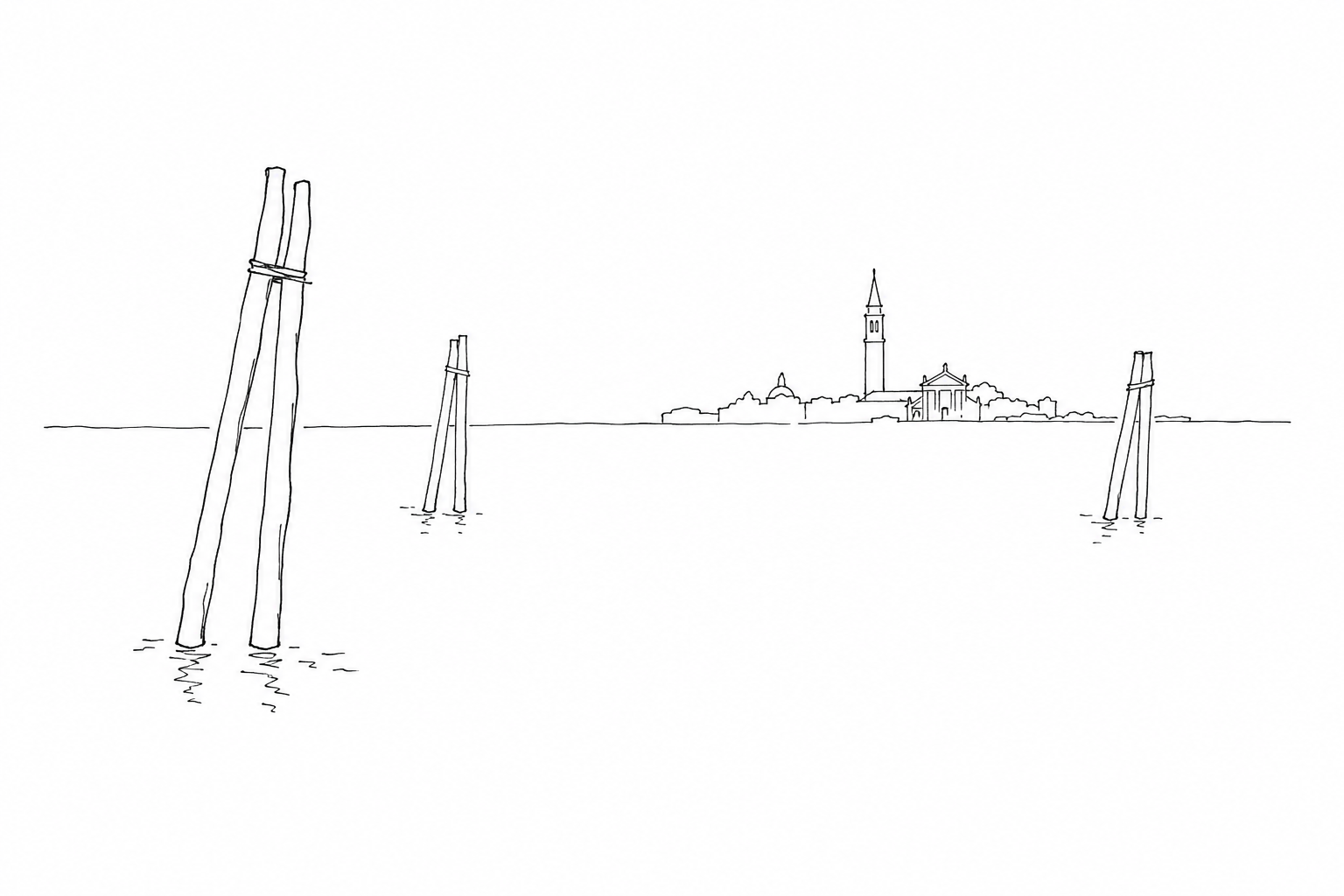
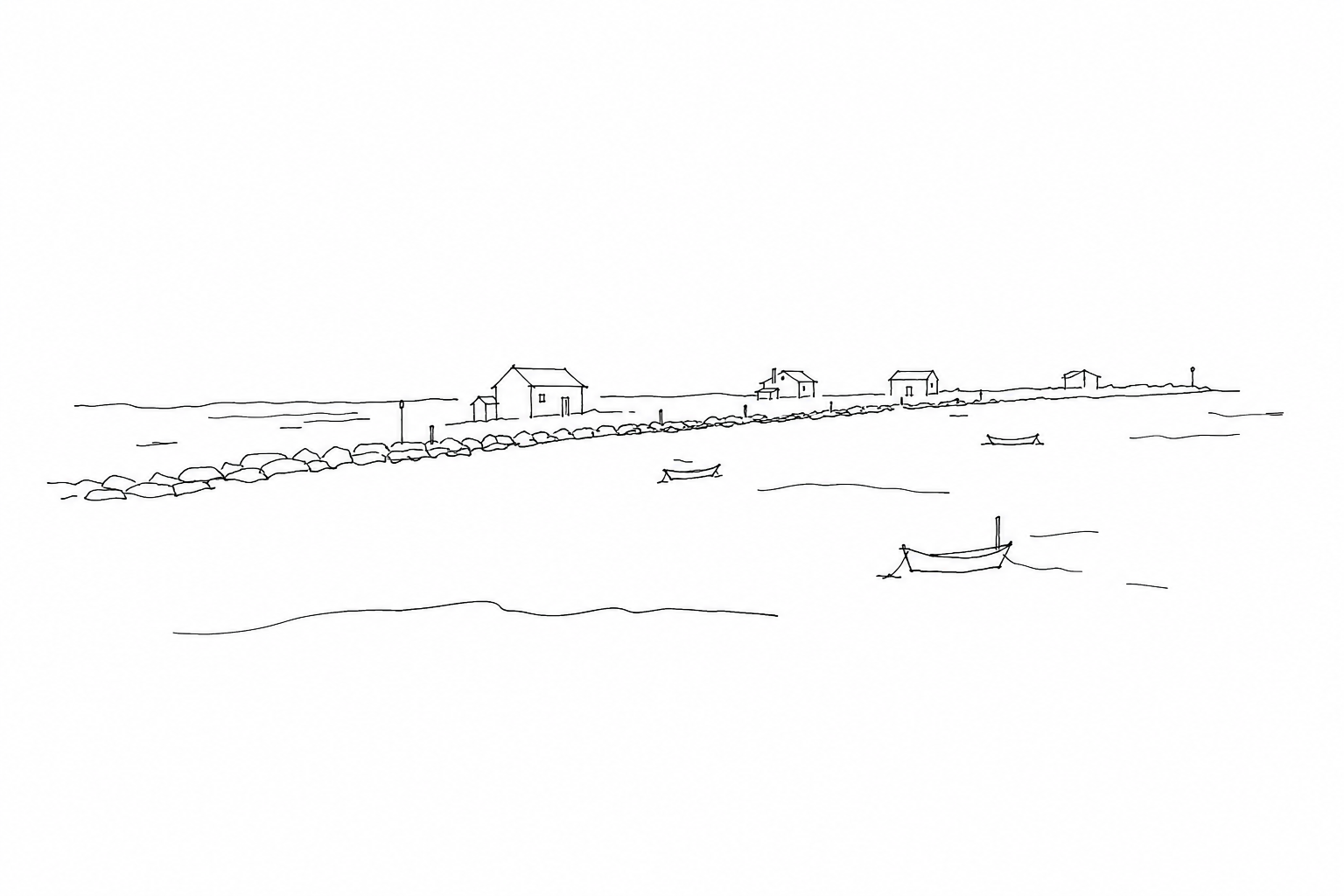
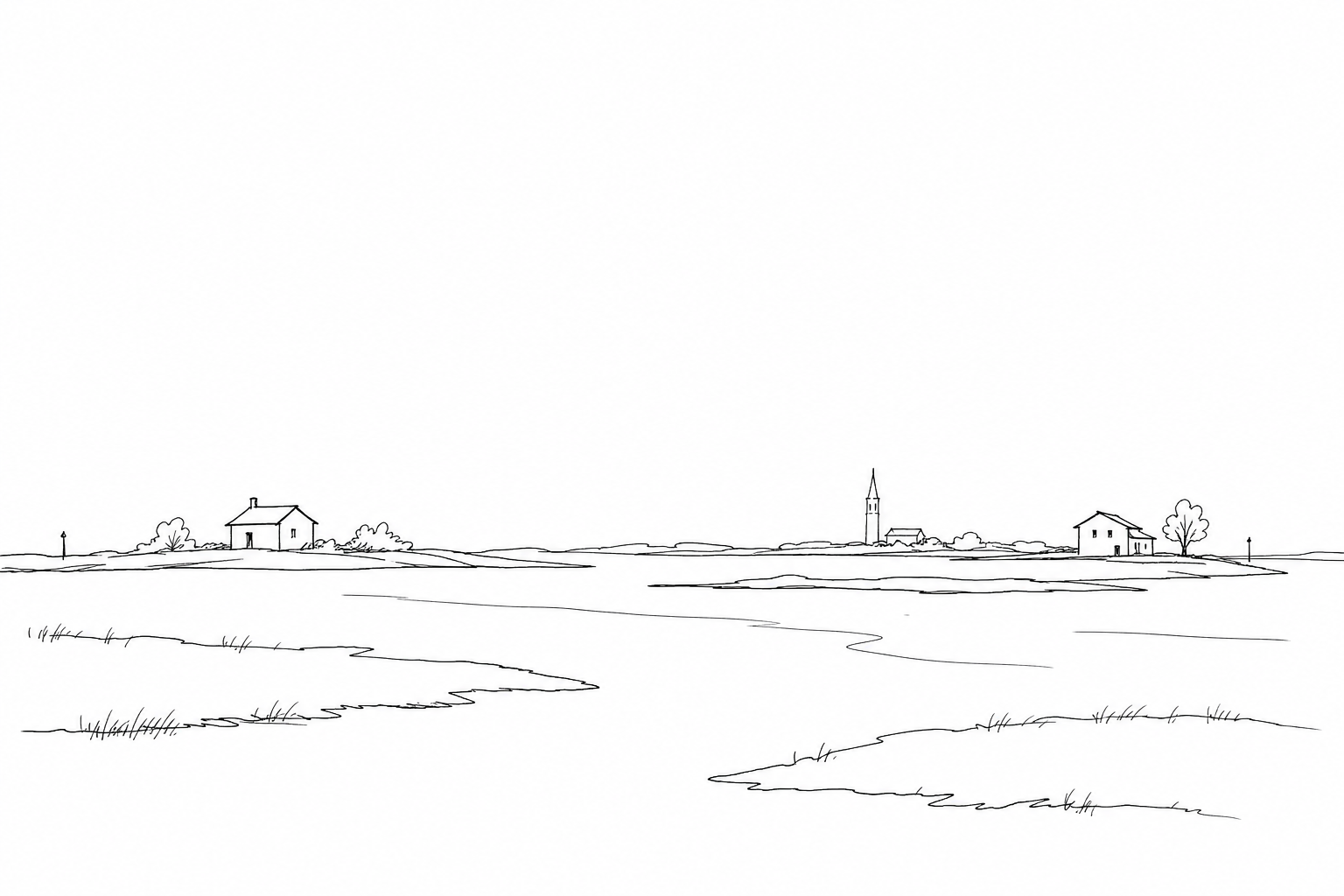
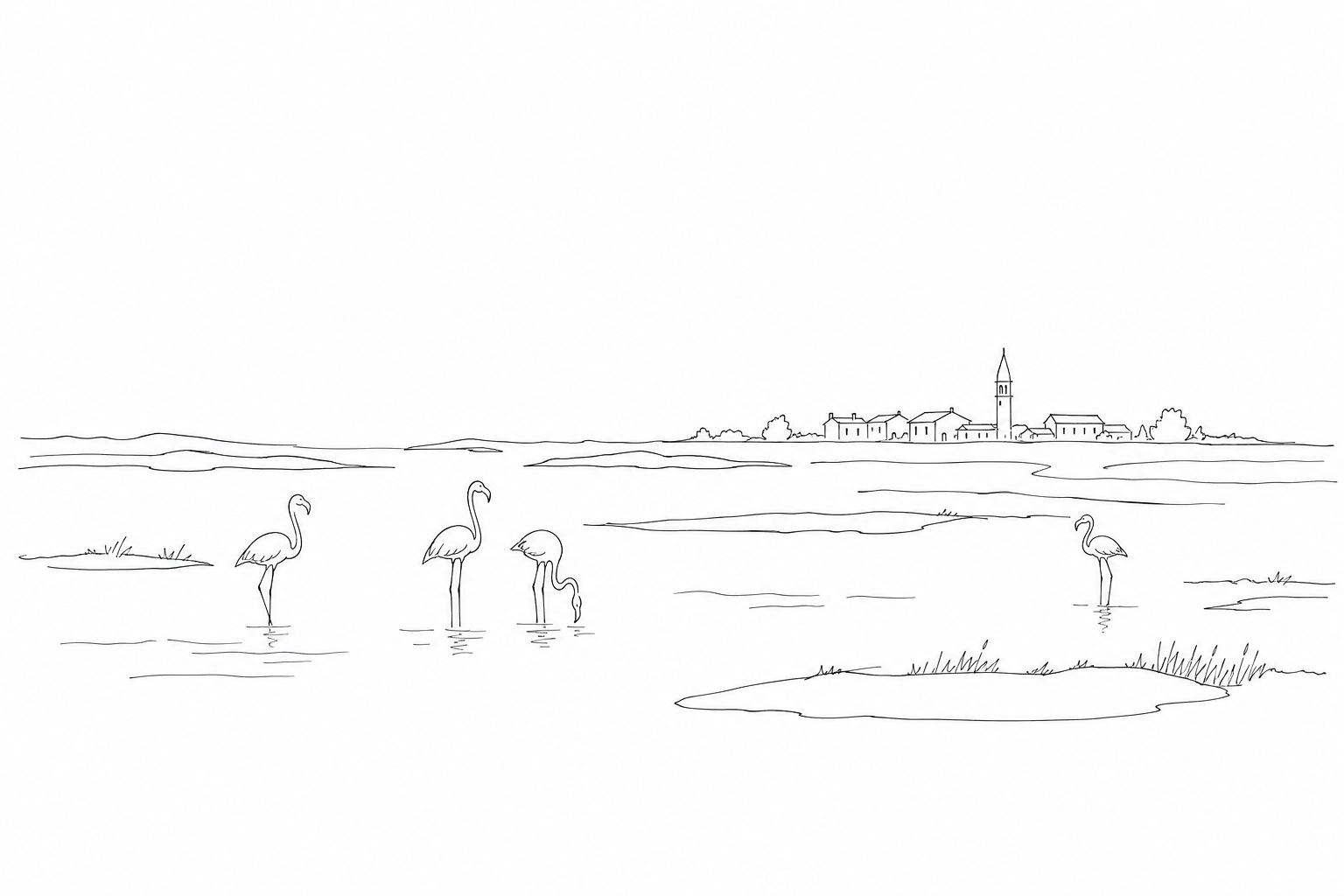
Torcello begins before landing, when the northern lagoon widens and the voices of Venice become a distant noise. After Burano, the water seems to take up more space than the journey: salt marshes, shallow canals, poles driven into the mud and an almost horizontal horizon prepare the island better than any guide.
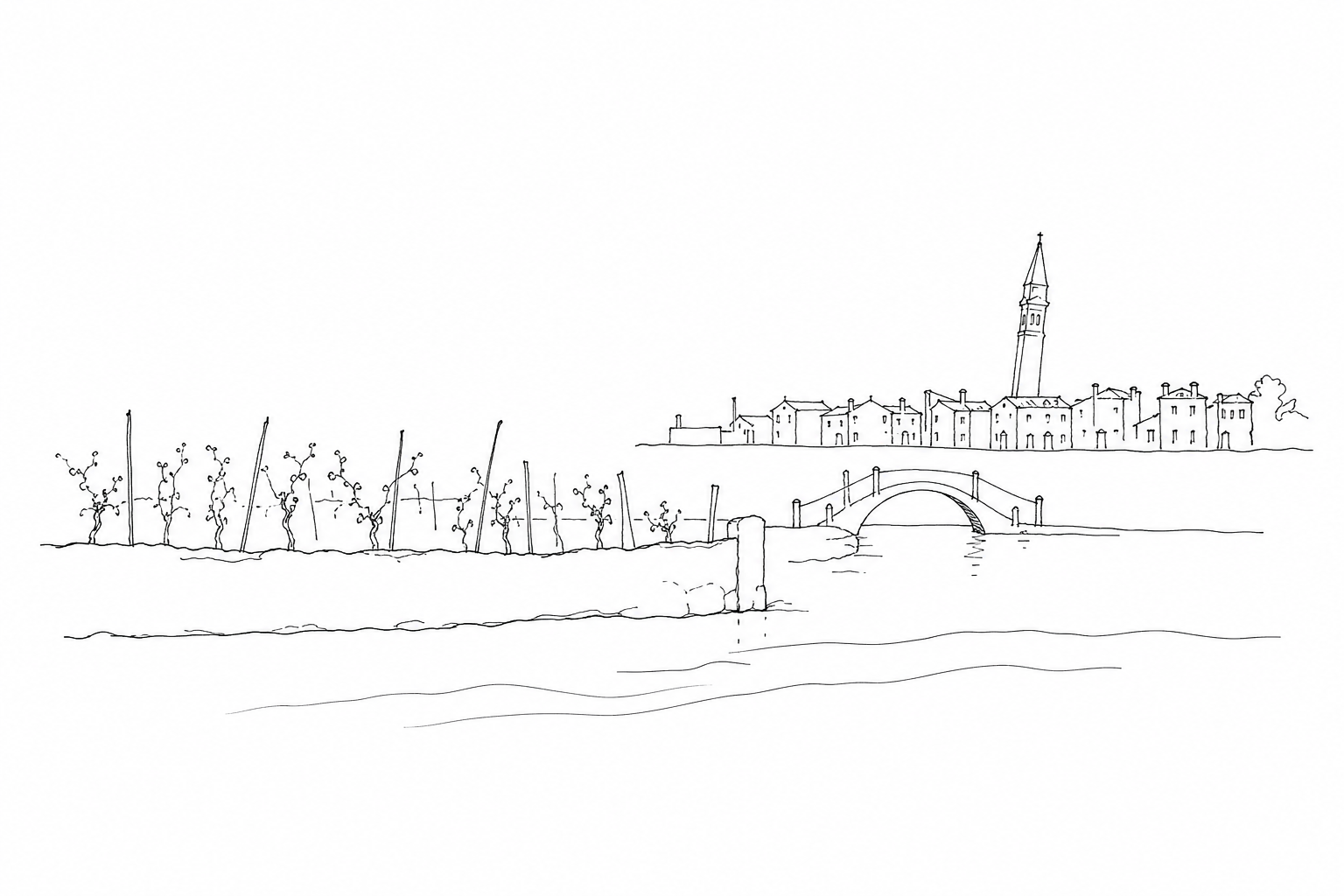
Here silence is not absence, but a method of reading. Walking along the canal that leads to the small monumental center, the pace slows by itself: a few houses, vegetable gardens, grassy banks, the profile of the bell tower and, further on, the ancient mass of the basilica of Santa Maria Assunta. It is in this distance from the din that Torcello reveals its paradox: it was one of the first hearts of lagoon Venice, today it appears as a place reduced to the essentials.
Arriving without hurrying means accepting that the island speaks by subtraction: not with crowds and continuous façades, but with stones, empty spaces, mosaics, memory and wind.
The first Venice: why Torcello truly mattered
Before Rialto became the political and commercial heart of the Serenissima, Torcello was one of the most important points in the lagoon. Its strength did not lie in the monumental appearance that we associate with Venice today, but in its position: protected enough from the unstable mainland, close enough to the Adriatic routes, solid enough to welcome communities, exchanges and religious authorities.
Between the 6th and 7th centuries, while the Roman cities of the mainland were undergoing crises, wars and population movements, the island grew as a refuge and as an organized center. Inhabitants linked to Altino and its territory arrived here; an episcopal seat was consolidated here; here the relationship with water was not yet scenery, but a daily condition of survival.
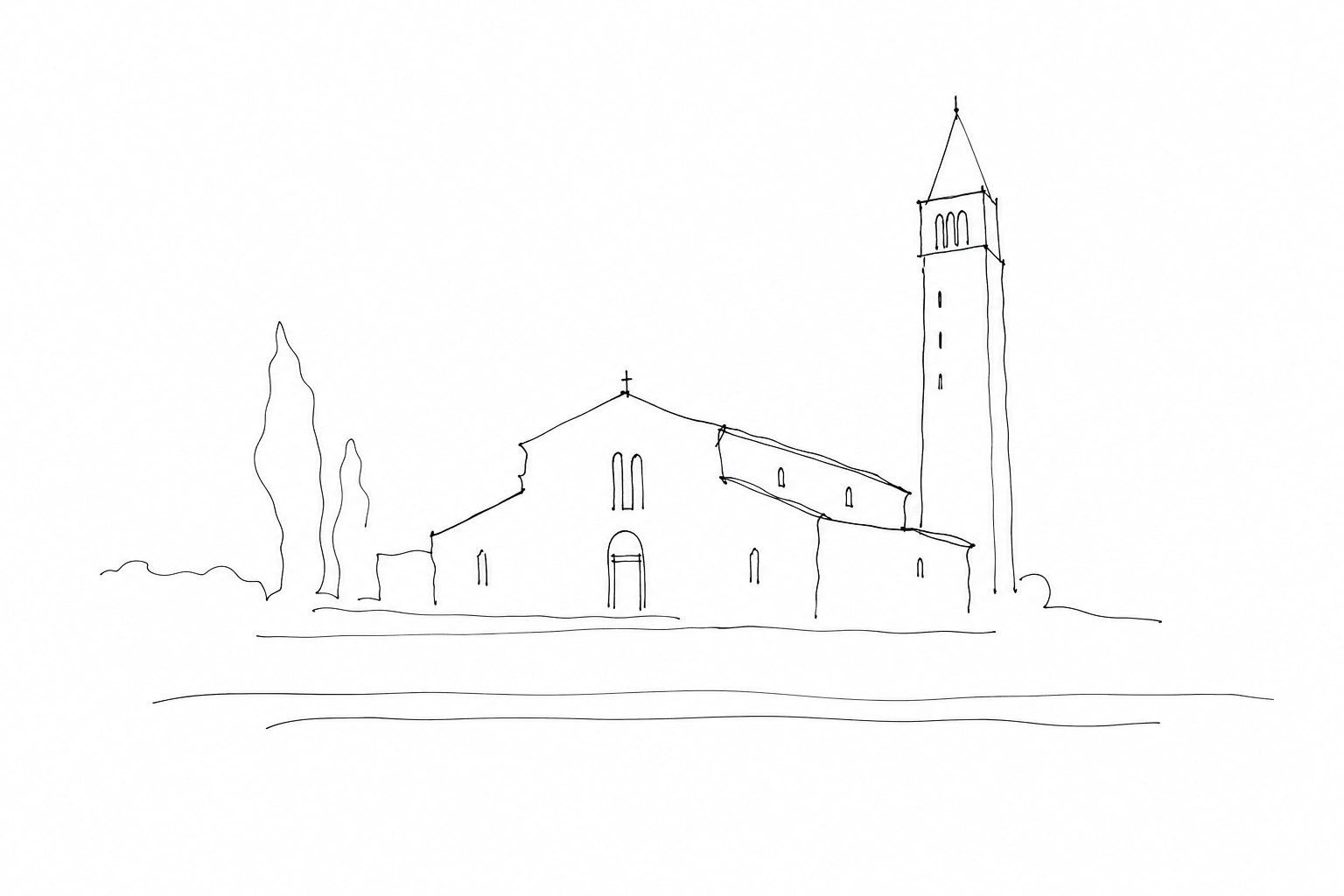
The cathedral of Santa Maria Assunta still tells of that ancient weight. Its early medieval origins, later reworked over the centuries, remind us that Torcello was not a picturesque margin, but a center capable of producing architecture, liturgy and power. Looking at it without hurrying means understanding one simple thing: Venice was not born already splendid and compact, but dispersed, amphibious, fragile. Torcello preserves precisely that initial phase, when the lagoon was a laboratory before it became a stage.
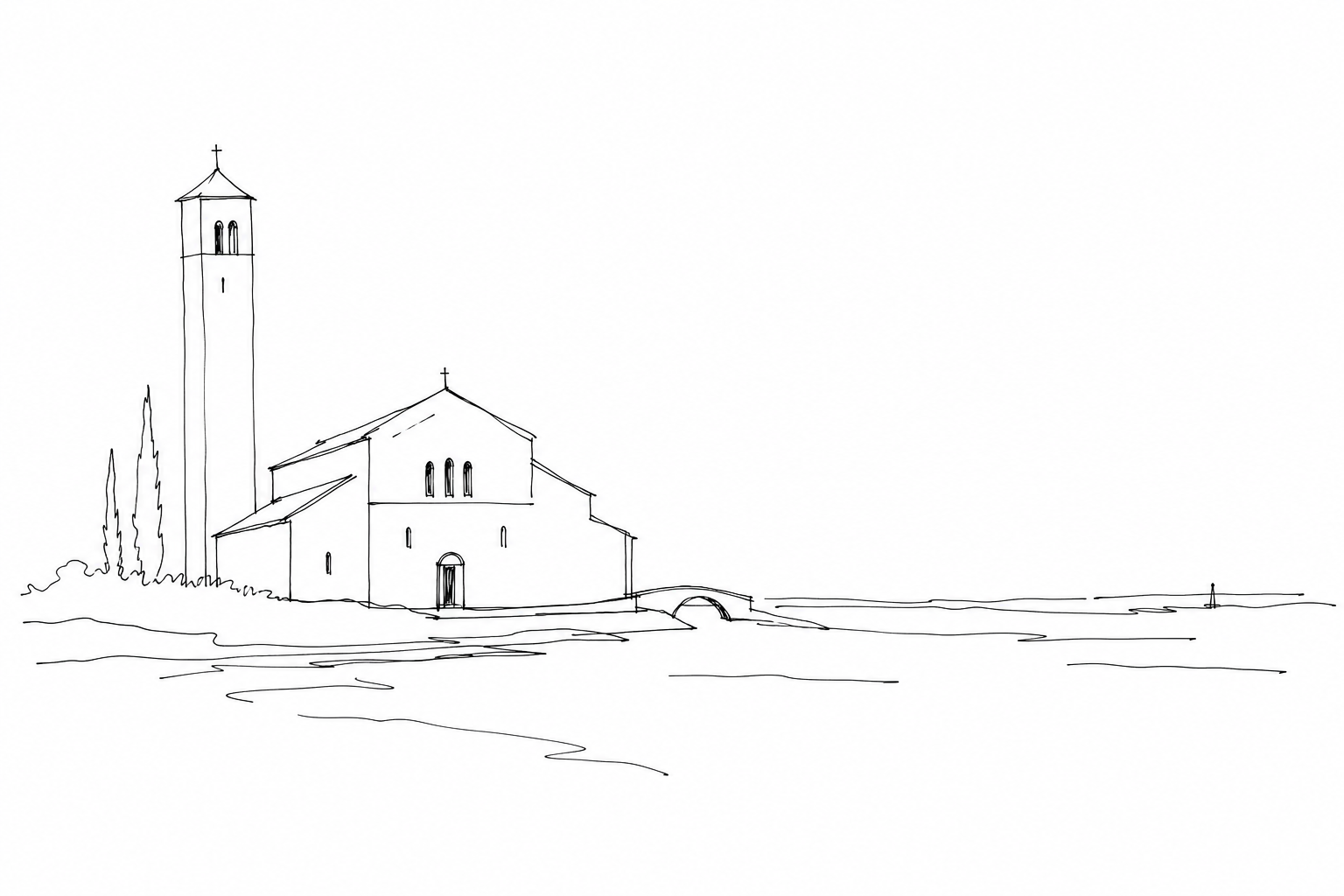
Basilica, Santa Fosca and mosaics: the heart that remains
In the center of the island, the silence seems to concentrate around two buildings: the basilica of Santa Maria Assunta and the church of Santa Fosca. The first preserves the most solemn imprint: founded in the early Middle Ages and transformed several times, it still shows the idea of a community that wanted to give itself a stable, visible, liturgical center. The interior, with its columns, floor with geometric motifs and apse, speaks a language that is more Byzantine than Renaissance.
The detail that truly stops your step is the great mosaic of the Last Judgment on the counter-façade. It is not a background decoration: it occupies the gaze, arranges fear, hope, salvation and condemnation in a vertical narrative. In the apse, the Virgin on a gold background instead offers a quieter and more frontal image, almost suspended outside time.
Beside it, Santa Fosca changes rhythm. The central plan, the portico and the compact volume create a more intimate, measured, severe architecture. Here what matters is not the monumental effect, but the relationship between solids, shadows and stone. Looking at these two buildings together helps to understand what remains when the noise disappears: not a romantic ruin, but a religious and artistic nucleus that is still legible, where history is not explained by panels, but by walls, mosaics and proportions.
Devil’s Bridge, stone chair and empty lagoon
Leaving the sacred complex, the route changes scale: no longer apses and golds, but bricks, low banks, grass and still water. The Devil’s Bridge, without parapets, is one of the clearest signs: a small functional structure, linked to internal canals, farms and everyday passages, later enveloped by popular tales.
Not far away, the so-called throne of Attila adds another layer of ambiguity. The name is legendary; more likely, that stone seat refers to local civil or judicial functions. It is precisely this disproportion between myth and simple object that helps to read the place without hurrying.
- Observe the distances: here the empty spaces matter as much as the monuments.
- Follow the edges of the canals to understand the ancient relationship between settlement and water.
- Check updated connections and access before the visit.
The conclusion is in the almost empty lagoon: what remains is a city reduced to the essentials, still legible in its smallest clues.
Torcello does not offer the scenic density of Venice, and precisely for this reason it forces you to look better. Between the basilica, Santa Fosca, the Devil’s Bridge and the fields open onto the lagoon, the island preserves an essential memory, made of few architectures and a great deal of space around them. It is a place to cross slowly, letting the distances, silences and details recompose a history older than the city that today dominates the imagination. When the noise disappears, Torcello shows what remains: not a lesser Venice, but one of its most fragile and legible origins.
Related Posts
How to visit Venice without rushing: practical tips to avoid turning your trip into a checklist
Practical tips for experiencing Venice with a slow rhythm, real stops and less compressed itineraries.San Giorgio Maggiore: Palladio, silence and a view of St Mark’s from the opposite side
Editorial guide to San Giorgio Maggiore: Palladian church, quiet island and frontal view of St Mark’s.
San Giorgio Maggiore: why crossing the basin changes your view of Venice
San Giorgio Maggiore seen from the basin: history, architecture and perspective to read Venice from another point.Questions Answered
Why was Torcello historically important in the Venice lagoon?
It was an early hub for refuge, trade, and religious authority before Rialto's prominence.How does Torcello’s silence influence its perception?
Silence here allows a methodical reading of the island’s history and space.What do the basilica and Santa Fosca represent?
They reflect Torcello’s medieval religious power and architectural legacy.What is the significance of structures like the Devil’s Bridge?
They reveal practical aspects and local myths of everyday life on the island.
Keep exploring the lagoon islands
Want to connect this stop with islands where landscape, craft and history change completely?
 Murano, Burano or Torcello: Which Venice Island Should You Choose?At some point while planning a trip to Venice, the same question almost always appears: is it worth visiting the islands too?...
 Sant’Erasmo: vegetable gardens, violet artichokes and the agricultural Venice few imagineA slow journey to Sant’Erasmo, the island of Venetian vegetable gardens, among violet artichokes, the northern lagoon and agricultural life.
 The votive bridge for San Michele: when Venice walks on water to remember the deadThe votive bridge for San Michele tells of the bond between Venice, the lagoon and the memory of the dead.
 San Lazzaro degli Armeni: a small island, a library and a piece of the East in the lagoonHistory, library, monastery and atmosphere of San Lazzaro degli Armeni, the Armenian island in the Venice lagoon.