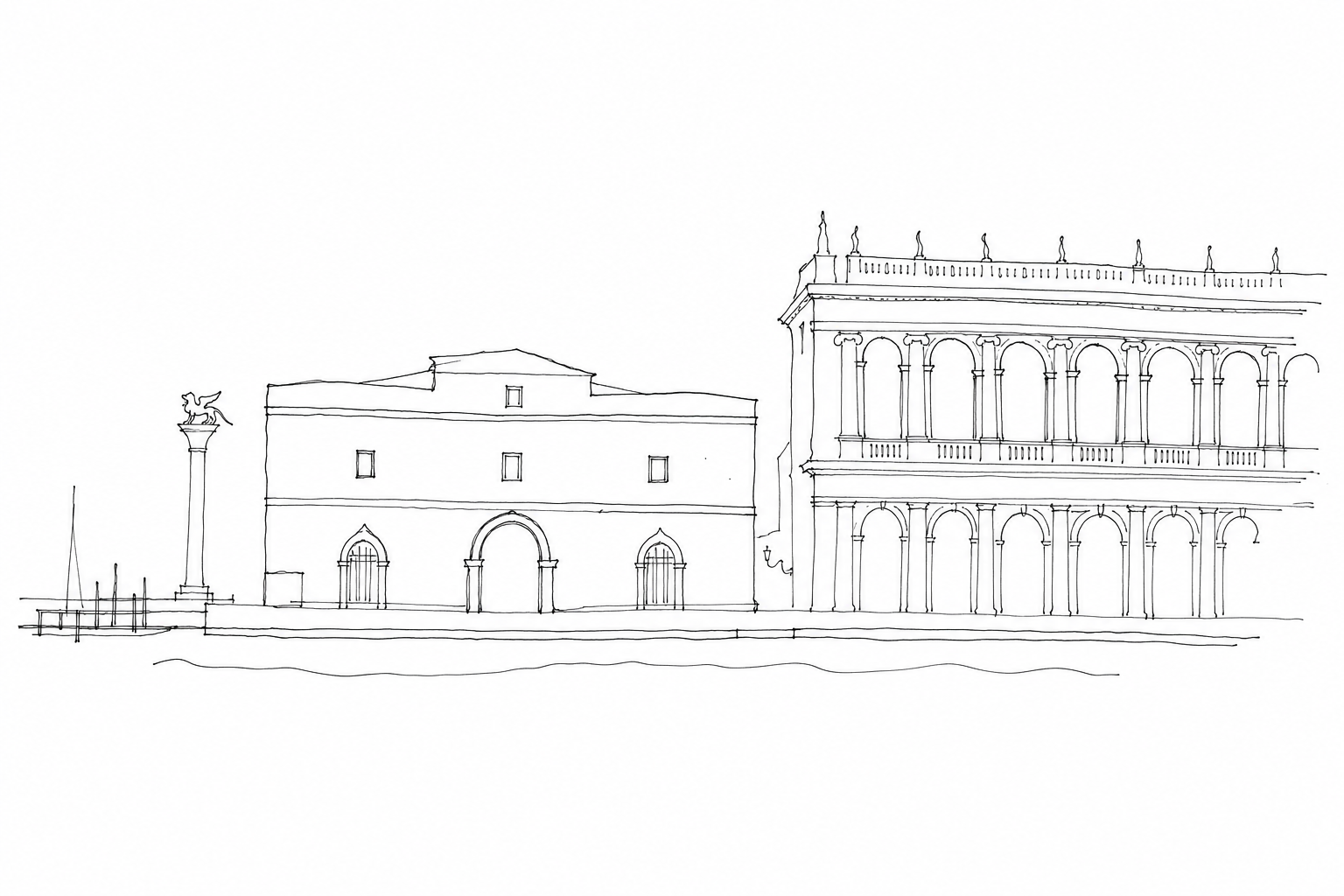

Beside the Marciana Library, overlooking the Molo, the Venice Mint seems almost to hold back the sound of struck metal, scales, and checks. It was not just any building: here the Republic transformed gold and silver into coin, and coin into public trust. Its position, between the Doge’s Palace, the basin of San Marco, and maritime traffic, tells precisely how Venice understood power: visible, supervised, linked to commerce but also to the stability of institutions.
On the Molo, between power and money
The Venice Mint occupies a position that was never neutral: on the Molo of San Marco, beside the Marciana Library and facing the basin, at the point where the city showed visitors its authority. Here money was not a hidden matter, but a public function, supervised and made visible in the institutional heart of the Republic.
The proximity to the Doge’s Palace, the Piazzetta, and the landing places emphasized a precise message: coins, laws, maritime commerce, and political representation belonged to the same system. Gold, silver, and copper arrived through extensive mercantile networks; in the Mint they were checked, weighed, transformed into currency recognizable and guaranteed by the State.
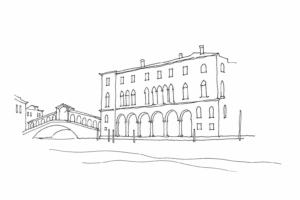
Beside the Library, temple of humanistic knowledge designed by Jacopo Sansovino, the coin factory completed an urban scene founded on culture, government, and trust. The solidity of the building spoke the same language as Venetian coinage: stability, measure, reputation.
Why Venice put its money here
The choice to concentrate coinage on the Molo responded to a logic of public control. Venetian money was not only a means of exchange: it was a promise by the State regarding the weight, the fineness of the metal, and the recognizability of the impressed mark. Keeping the Mint beside the places of government meant making this responsibility visible.
Into the building designed by Jacopo Sansovino in the sixteenth century entered gold, silver, and copper intended to be weighed, assayed, melted, and struck. The workshops required security, surveillance, and a construction resistant to fire; for this reason the building took on a compact, severe, almost military character, different from the ornamental lightness of the nearby Marciana Library.
Trust also passed through magistrates, controls, and procedures. Every ducat, zecchino, or minor coin had to correspond to standards recognized in Mediterranean markets. Placing monetary production in the political heart of San Marco declared that value depended not only on the metal, but on the public authority capable of guaranteeing it.
Stone, fire, and security: the architecture
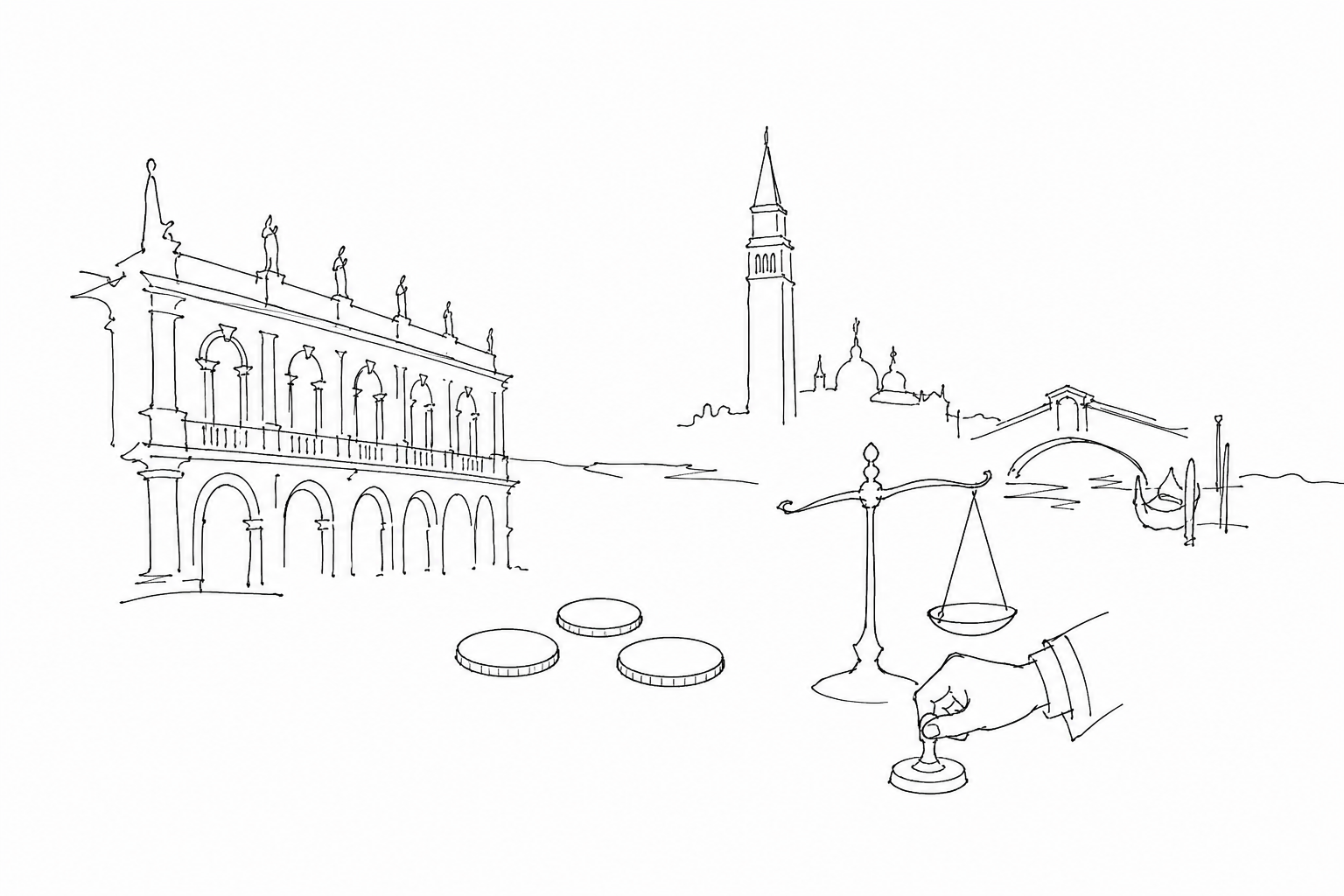
The building designed by Jacopo Sansovino from 1536 should not be read as a simple monumental backdrop. It was a productive and protected machine, designed to contain precious metals, furnaces, specialized personnel, and coining tools. For this reason its language appears more severe than the nearby Marcian humanistic architecture: robust rustication, Istrian stone, measured openings, and a compact rhythm communicate stability even before ornament.
Fire was the main risk. Melting required high temperatures, and a building full of timber would have been vulnerable. The response was an almost “mineral” construction: heavy masonry, vaults, stairs, and structures conceived to reduce exposure to fires. The internal distribution also responded to a logic of surveillance: controllable entrances, separable passages, rooms suitable for following the path of the metal, from verification to processing.
In this architecture, security becomes a public message. Venetian coinage was born in a place that showed, through its own building mass, discipline, control, and reliability.
How to look at it today, without haste
To read it in person, it is best to start from the Molo, with your back to the basin. The Mint appears as a severe block, lower and more compact than the elegant sequence of the Marciana Library: it does not seek lightness, but authority. The regular openings, the rustication, and the Istrian stone immediately communicate an idea of surveillance and measure.
From the Piazzetta, however, the comparison becomes more subtle. On one side one sees Sansovino’s learned language intended for knowledge and representation; on the other, the seat where gold and silver were transformed into ducats, grossi, and other issues guaranteed by the State. The proximity is not decorative: it connects culture, government, and economic trust.
Looking at it without haste, one can follow a simple line: the port brought wealth, the public palace controlled it, the monetary factory certified it. Thus the building is not only a Renaissance monument, but a visible piece of the Venetian system: commerce, law, the weight of metal, and political credibility concentrated in a few meters.
Looking at the Mint today means stopping on a side of Piazza San Marco often crossed in haste. Its severe façade, its proximity to the Marciana Library and the Doge’s Palace, and its direct relationship with the water and the ancient landing places help to read Venice beyond the monumental image. In a few meters culture, government, exchanges, and security come together: not as abstract ideas, but as stone, fire, metal, and daily work.
Related Posts
Sansovino’s Loggetta: the small precious building at the foot of the Campanile
History, architecture and sculptures of Sansovino’s Loggetta, at the foot of St. Mark’s Campanile.Palazzo dei Camerlenghi: money, public offices and economic power next to Rialto
History and interpretation of the Palazzo dei Camerlenghi, the financial seat of public Venice next to Rialto.
The Molo of San Marco: columns, departures and the maritime power of the Serenissima
History and interpretation of the Molo of San Marco: the columns, the Basin, State departures and the language of Venetian power.Questions Answered
Why was the Venice Mint located beside the Marciana Library?
To symbolize the link between culture, governance, and economic trust.How did the Republic ensure trust in Venetian coinage?
By public control, supervision, and state guarantees of metal quality.What architectural features protected the Mint?
Heavy masonry and fire-resistant design ensured security and stability.What role did the Mint play in Venice’s system of power?
It linked monetary production to political authority and commercial control.
St Mark’s seen through its details
Want to connect architecture, ceremony and power without stopping at the postcard view?
 Sansovino’s Loggetta: the small precious building at the foot of the CampanileHistory, architecture and sculptures of Sansovino’s Loggetta, at the foot of St. Mark’s Campanile.
 The Giants’ Staircase: where the doge became doge before the cityHistory, ritual and details of the Giants’ Staircase in the courtyard of the Doge’s Palace.
 The Marciana Library: books, painted ceilings and public knowledge next to San MarcoEditorial guide to the Marciana Library: history, rooms, books, paintings and public role in the heart of San Marco.
 The Golden Staircase of the Doge’s Palace: ascending toward power amid stucco and political controlThe Golden Staircase as a political threshold of the Doge’s Palace: architecture, stucco, access and messages of power in the Venice of...