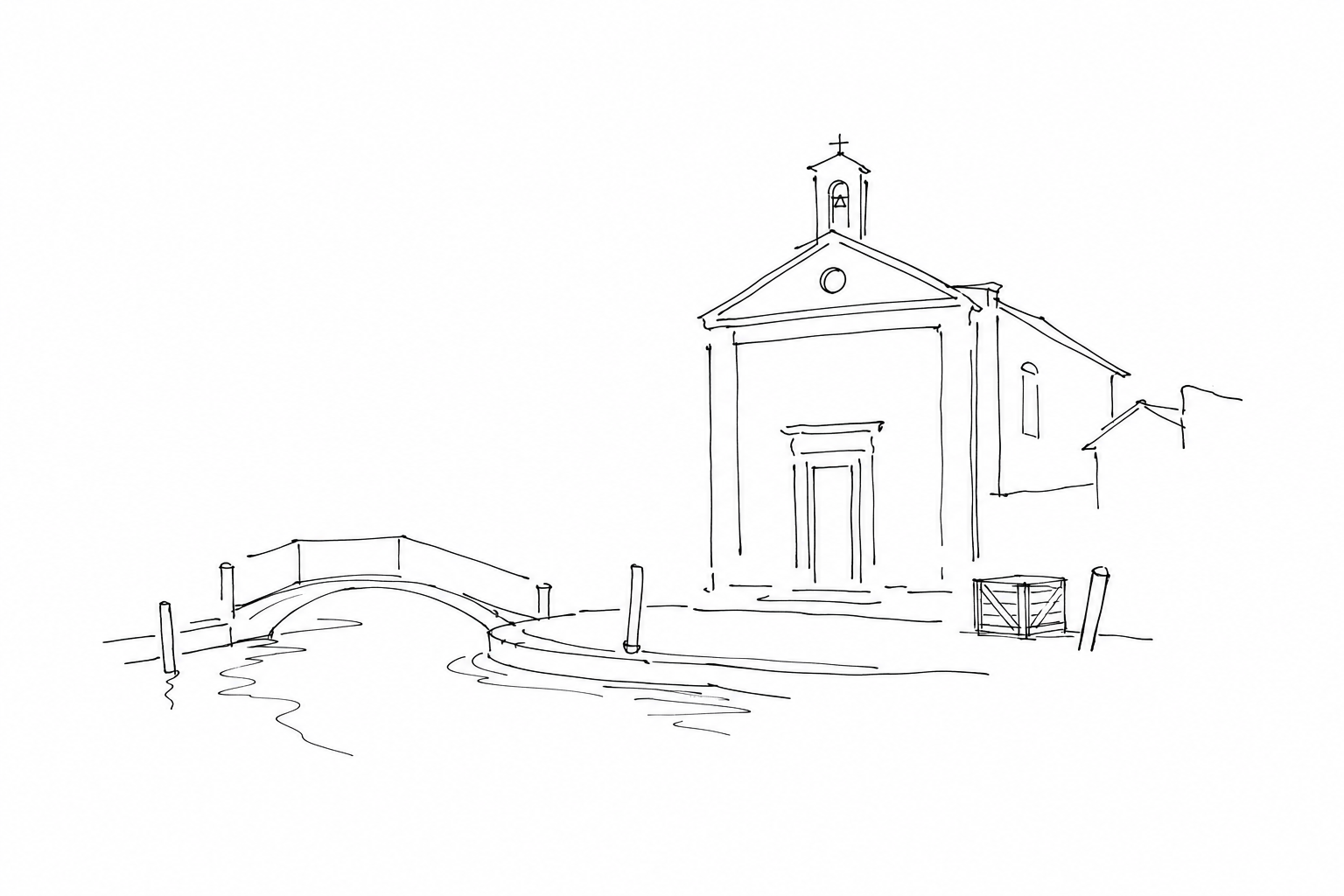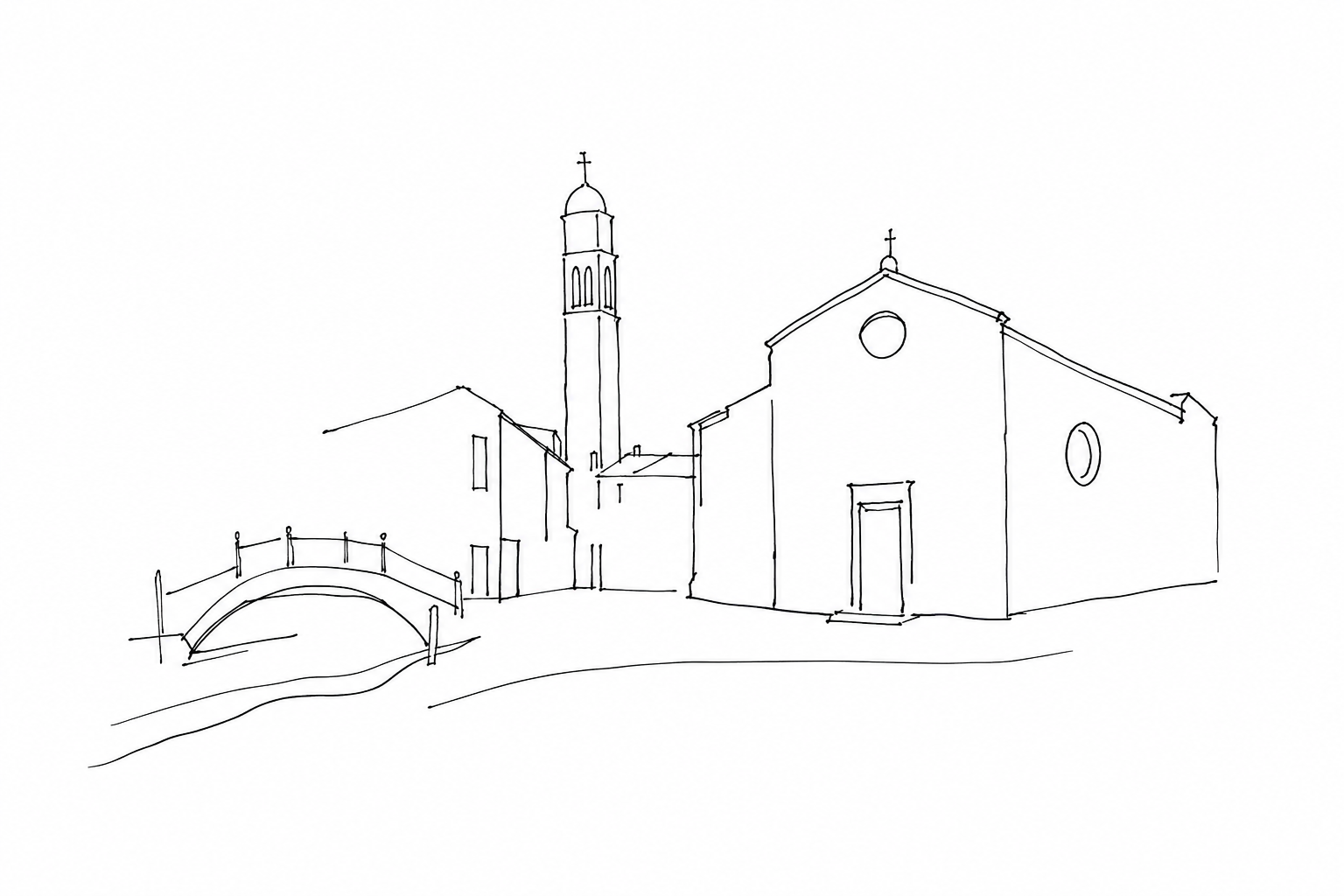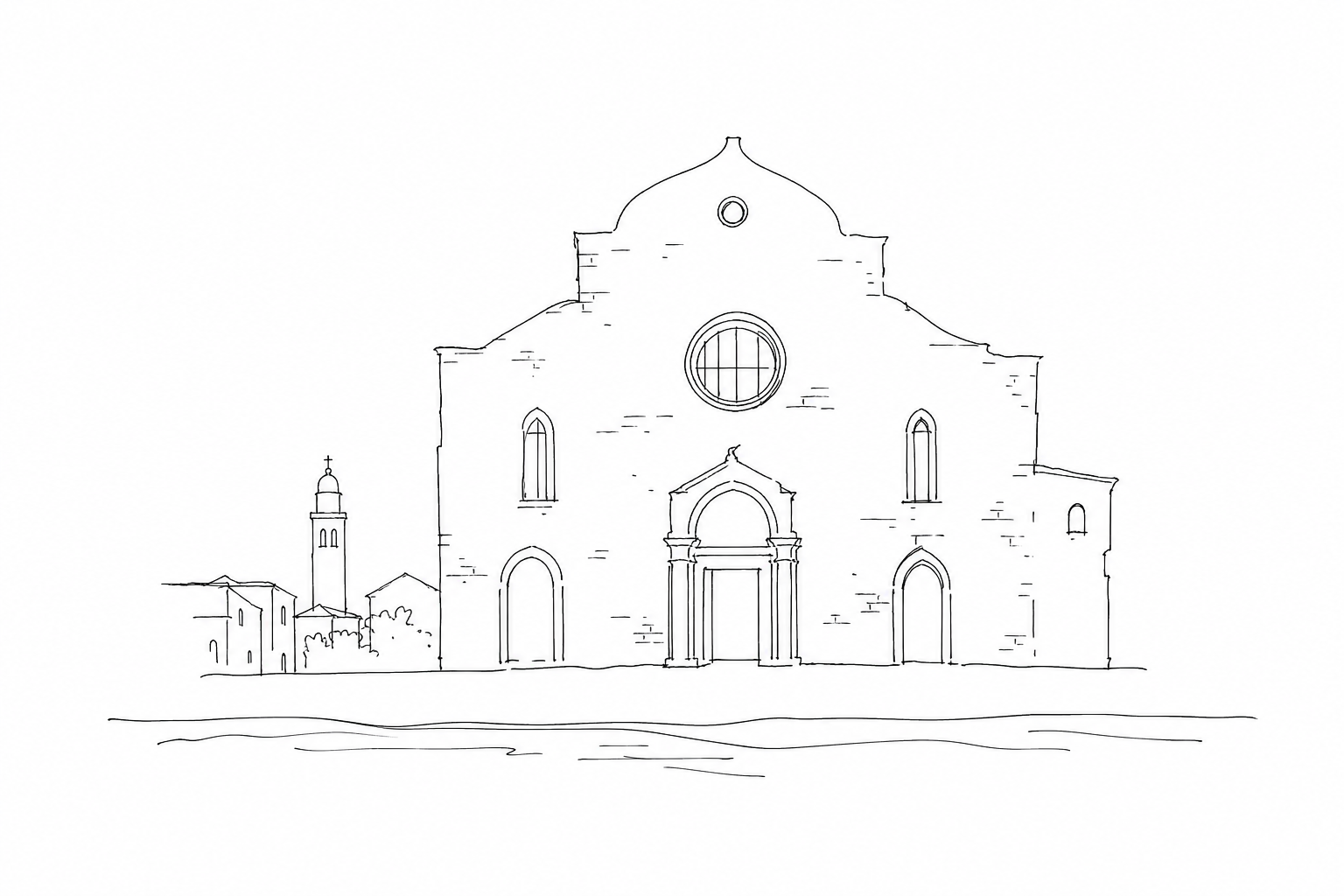

For those arriving in Venice by train, San Simeon Piccolo is often the first clear image beyond the exit of Santa Lucia: a compact façade, an unexpected green dome, the Grand Canal in between like a threshold. It is not among the most visited churches, yet it has a very precise urban role: it stands opposite the station like a backdrop, almost a silent greeting. Looking at it carefully means reading a fragment of eighteenth-century Venice, its relationship with Rome, with water and with the quick gaze of those who arrive.
The first view when leaving Santa Lucia
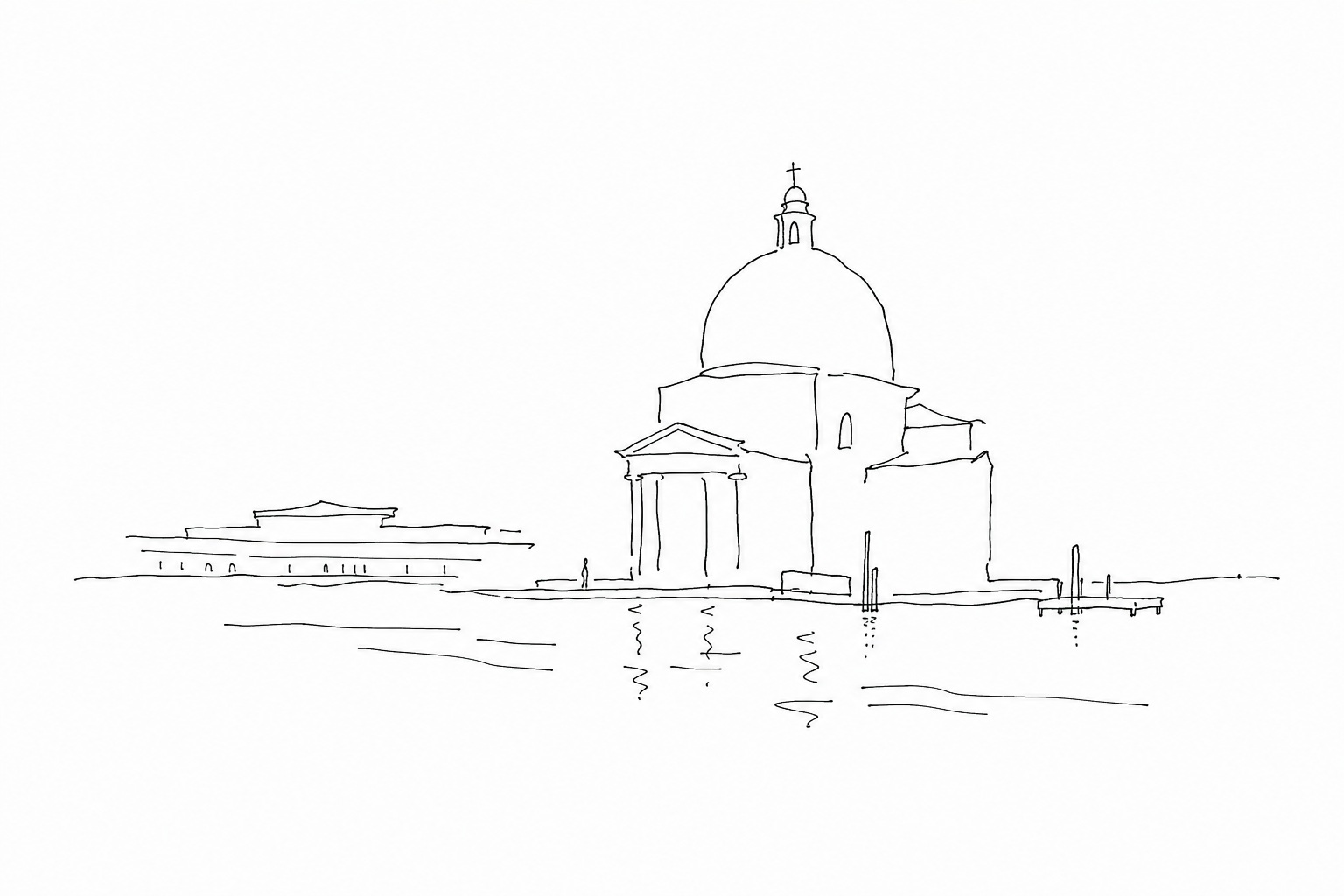
As soon as you leave Venezia Santa Lucia station, San Simeon Piccolo appears almost like a ceremonial threshold: it is not on the same side of the Grand Canal, but precisely this distance makes it more evident. The church presents itself in front, beyond the water, with the large dome covered in oxidized copper standing out among the lower façades of Santa Croce. The green of the dome, the pronaos with Corinthian columns and the staircase on the landing create an immediate image, readable even by those arriving for the first time.
Its role as a “welcome” is partly a modern effect: the building, designed by Giovanni Antonio Scalfarotto in the eighteenth century, long predates the railway layout. Yet its frontal position in relation to the station exit has transformed it into one of the city’s first monumental signs. San Simeon Piccolo dominates the arrival because it combines perspective, water and verticality: the Grand Canal acts as an open space, while the dome concentrates the gaze even before the route into Venice begins.
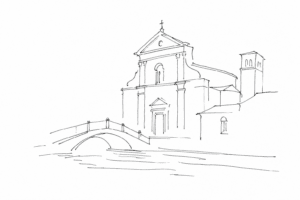
A neoclassical church in dialogue with Rome
Behind the immediate impact of the green dome there is a precise project: San Simeon Piccolo was rebuilt between 1718 and 1738 to a design by Giovanni Antonio Scalfarotto, at a time when Venice was looking with interest at the models of antiquity and the solemnity of Roman architecture.
The temple façade, with the pronaos and Corinthian columns, recalls the image of a classical building more than that of a traditional lagoon church. The most evident reference is the Pantheon: not a literal copy, but a dialogue made up of a central plan, compact volume and dominant dome. It is precisely this combination that makes the building so recognizable from the opposite side of the canal.
The green color of the dome derives from the oxidized metal covering, and helps distinguish the church in the urban profile. Beneath the dome, the drum and the lantern accentuate the verticality, while the cylindrical body maintains a severe, almost archaeological appearance.
For this reason San Simeon Piccolo seems to welcome those who arrive: it uses a monumental, Roman and measured language, but places it in a Venetian scene of water, reflections and landings.
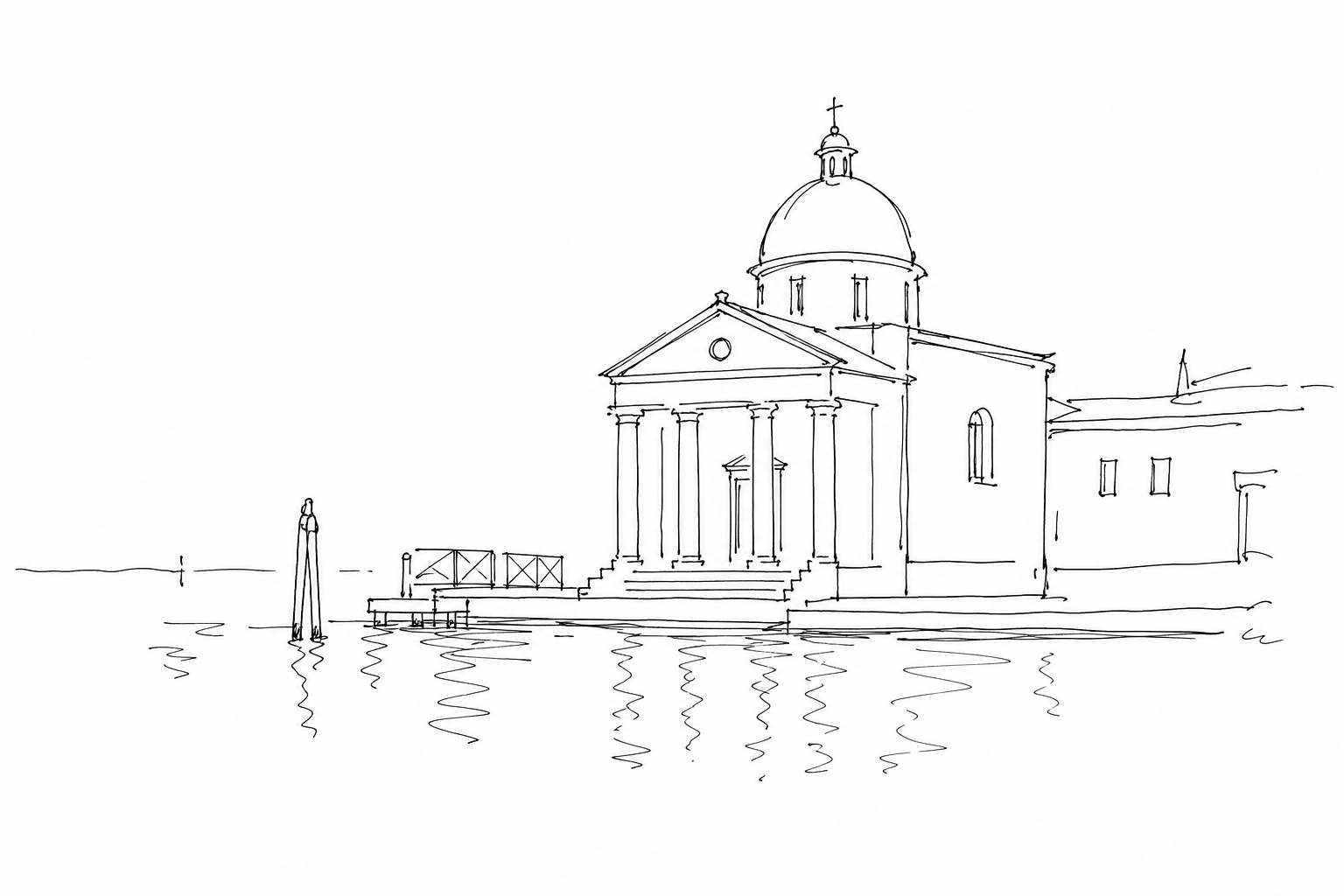
The best point from which to read San Simeon Piccolo is precisely that of those leaving the station: from there the front appears like a theatrical threshold. The pronaos, with freestanding Corinthian columns and a triangular pediment, recalls an ancient temple more than a traditional lagoon building. The staircase does not lead to a large square, but almost directly to the water: this makes the façade a frontal presence, designed to be seen across the Grand Canal.
The green dome, in reality a cap covered in oxidized copper, is not a simple crowning element. The high drum raises it above the portico and makes it recognizable even in the visual traffic of banks, jetties and palaces. Looking carefully, you notice the contrast between the curved volume and the rectilinear base: below, the classical order imposes measure; above, the rounded mass lightens the composition.
Even from outside you can understand why it seems to “welcome” those who arrive: it does not hide among the calli, but positions itself as an immediate backdrop, mirrored in the water and aligned with the traveler’s gaze.
To avoid reducing San Simeon Piccolo to a postcard, it is worth slowing down as soon as you leave the station and looking at it in three stages. First, remaining on the side of the bank, let the front enter the field of vision together with the Grand Canal: you immediately understand that the building is designed for those arriving from the water and from the mainland.
- Stop before crossing: from here the round mass above the pronaos appears more compact, almost like an urban signal.
- Move toward the Ponte degli Scalzi: halfway across the bridge the green dome is read better in profile, and the base seems to lift it above the traffic of the canal.
- Observe the proportions: columns, staircase and drum should not be seen separately; they work together to create the effect of welcome.
If you want to enter, always check the updated information on site: even from the outside, however, the architectural reading is already very rich.
San Simeon Piccolo deserves more than a distracted glance from the station square. Its strength lies precisely in its position: it does not dominate Venice, but introduces its way of building perspectives, expectations and surprises. Stopping for a few minutes in front of the dome, observing the façade and the reflection on the canal helps you understand that even the arrival can become part of the itinerary. Before chasing bridges and calli, this church invites you to slow down: Venice already begins there, in the dialogue between water, architecture and daily movement.
Related Posts
Santa Lucia Station: what to look at in the first ten minutes after getting off the train
A short and precise guide to what to look at as soon as you get off the train at Venice Santa Lucia, before entering the…San Giobbe in Cannaregio: the hidden Venetian Renaissance near the station
Guide to San Giobbe, a Renaissance church in Cannaregio just a short walk from Santa Lucia.
San Giorgio Maggiore: why crossing the basin changes your view of Venice
San Giorgio Maggiore seen from the basin: history, architecture and perspective to read Venice from another point.Questions Answered
What role does San Simeon Piccolo play for visitors arriving in Venice?
It acts as a welcoming visual threshold opposite the train station.Who designed San Simeon Piccolo and what architectural style does it represent?
Giovanni Antonio Scalfarotto designed it in a neoclassical style.What architectural elements make San Simeon Piccolo distinctive?
Its oxidized green dome, Corinthian columns, staircase, and Roman temple references.How can visitors best appreciate the church’s significance?
By observing it slowly from various viewpoints and recognizing its urban role.
Keep exploring Venetian art in context
Want to connect this story with works, churches and palaces that make more sense when read together?
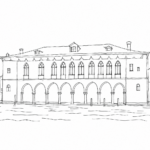 The Fontego dei Turchi: from home of Ottoman merchants to museum on the Grand CanalHistory, architecture and urban interpretation of the Fontego dei Turchi, from the Ottoman presence in Venice to the Museum of Natural History.
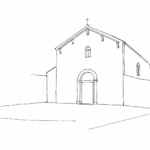 San Giacomo dall’Orio: beams, silence and ancient stone in the less obvious heart of Santa CroceA slow reading of San Giacomo dall’Orio: campo, wooden beams, ancient columns and urban quiet in Santa Croce.
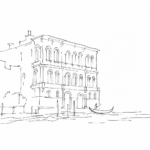 Ca’ Pesaro: why modern art in Venice lives in a palace on the Grand CanalWhy Venice’s Gallery of Modern Art is in a Baroque palace on the Grand Canal: the history, architecture, collections and urban meaning...
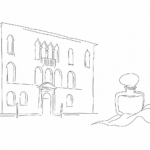 Palazzo Mocenigo: perfumes, textiles and noble life in the Venice of San StaeEditorial guide to Palazzo Mocenigo, among clothing, perfumes, noble rooms and the urban context of San Stae.