
A few steps from the busiest flows, San Giorgio dei Greci is recognizable even before entering: its leaning bell tower interrupts the regularity of the calli of Castello and invites you to look at Venice from another perspective. It is not only an architectural curiosity, but the visible sign of a community that for centuries had a decisive role in the mercantile city. Around the church, among Istrian stone, icons, courtyards and narrow passages, one can read a Venice made of foreign presences, exchanges, concessions and identities preserved with discretion.
Where it is and why it immediately strikes you
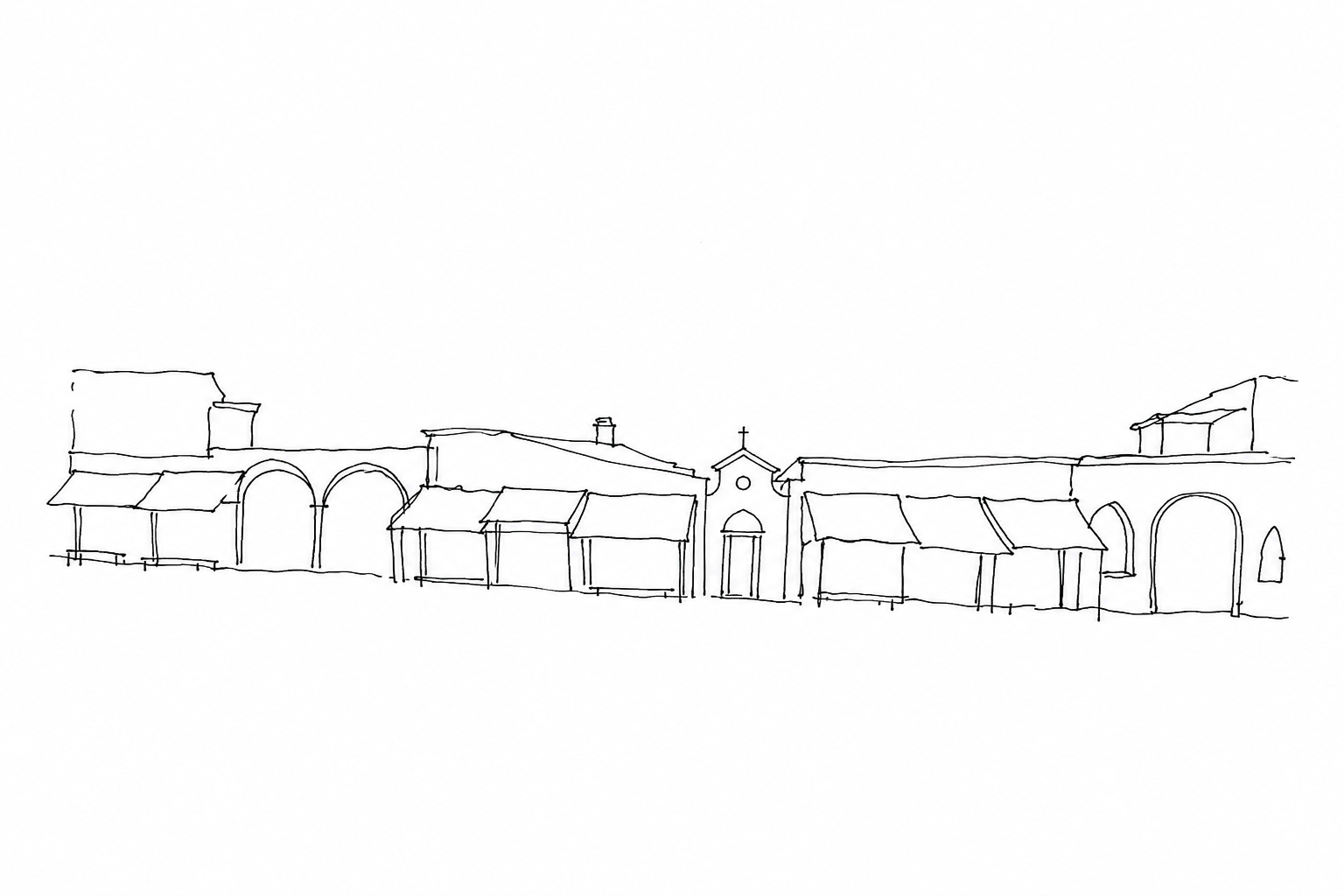
San Giorgio dei Greci is located in the sestiere of Castello, not far from Riva degli Schiavoni and from the route that connects the Marcian area to the Arsenale. The church stands in an area that, for centuries, was inhabited and frequented by merchants, sailors and families from the eastern Mediterranean: a perfect context for understanding why Venice was not only a lagoon city, but also a crossroads of foreign communities.
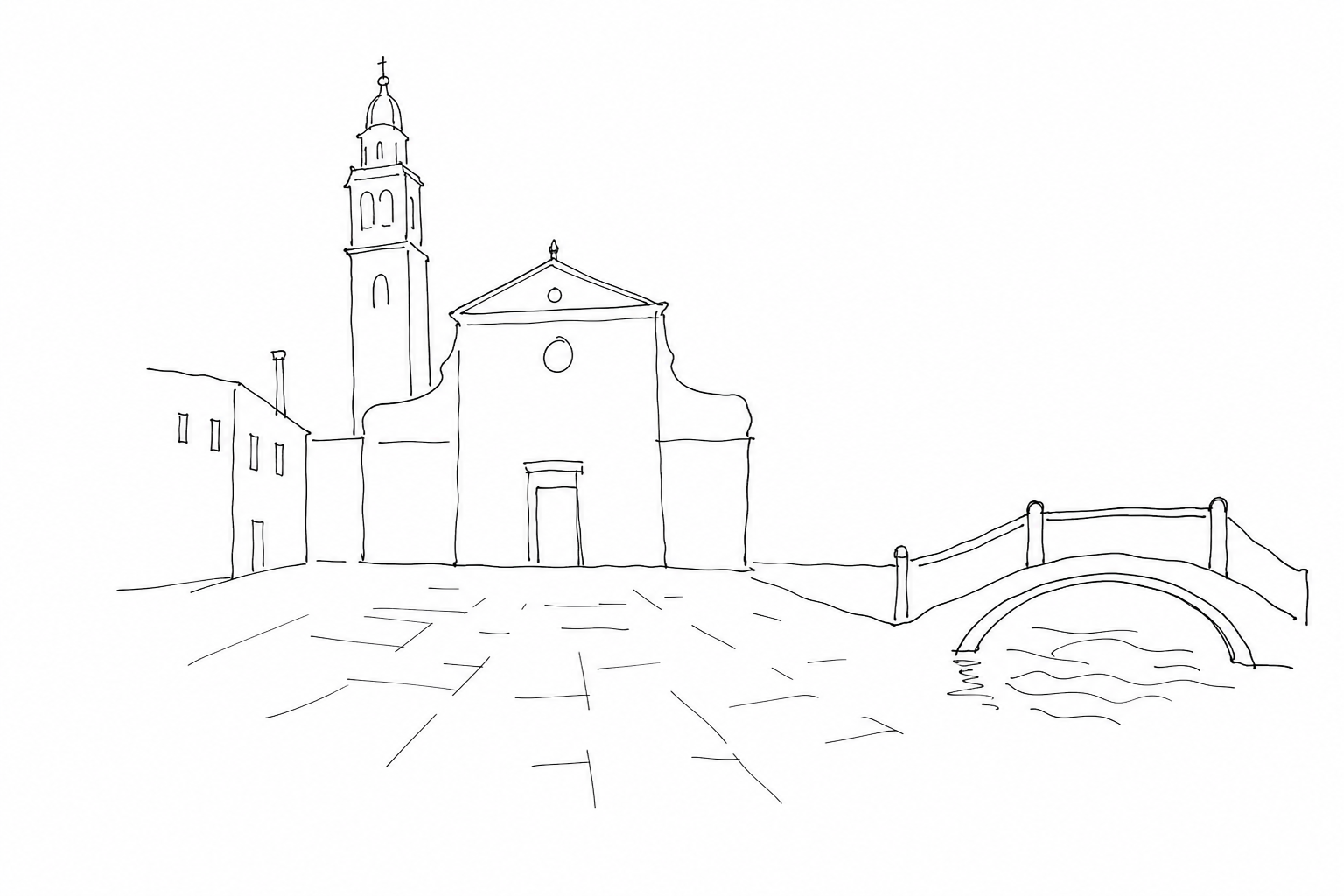
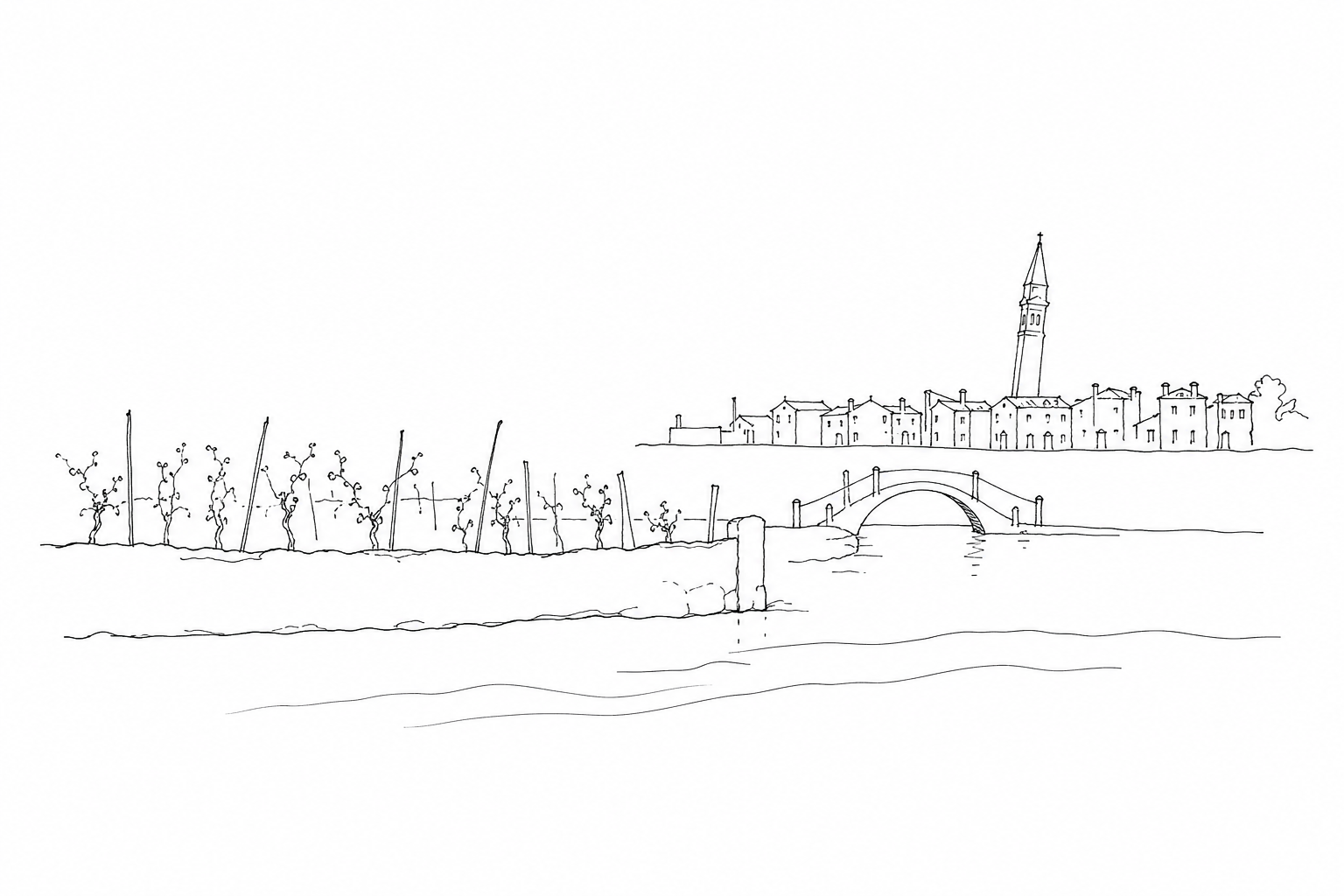
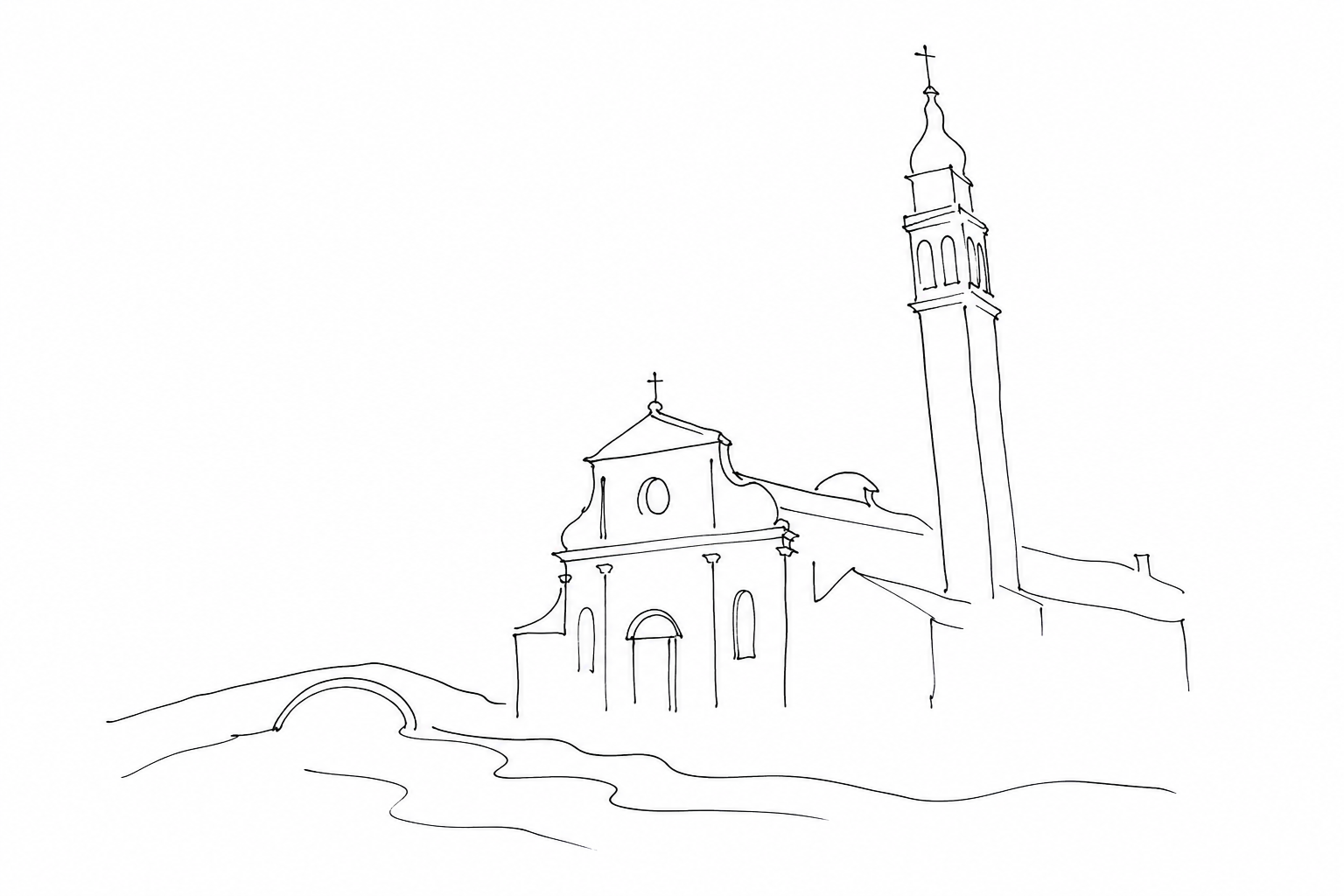
The element that immediately catches the eye is the leaning bell tower, visible above the dense fabric of calli and canals. Its tilt is not a scenic effect: it tells of the fragility of Venetian soil, built on foundations immersed in the lagoon, and makes the complex recognizable even before entering the church.
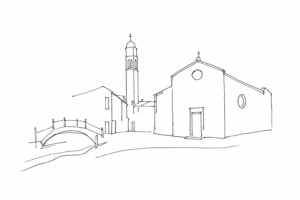
Next to the sacred building, the bell tower thus becomes an urban sign: it indicates the historic presence of the Greek Orthodox community and introduces a less monumental, but profoundly international, Venice.
The Greek community in mercantile Venice
The presence of San Giorgio dei Greci in the heart of Venice is explained by the role the city had for centuries as a commercial gateway to the eastern Mediterranean. Merchants, sailors, artisans, translators and men-at-arms from Crete, Corfu, Cyprus, the Peloponnese and other Greek-speaking lands frequented the lagoon long before the church was built. After the fall of Constantinople in 1453, this presence became even more visible: Venice welcomed exiles, families and intellectuals linked to the Byzantine world.
The community was not only numerous, but also economically and culturally important. The Greeks took part in maritime trade, served as stradioti in the Venetian army and contributed to the circulation of books, manuscripts and humanistic knowledge. For this reason, they long sought a place where they could celebrate according to the Orthodox rite, without having to give up their religious identity.
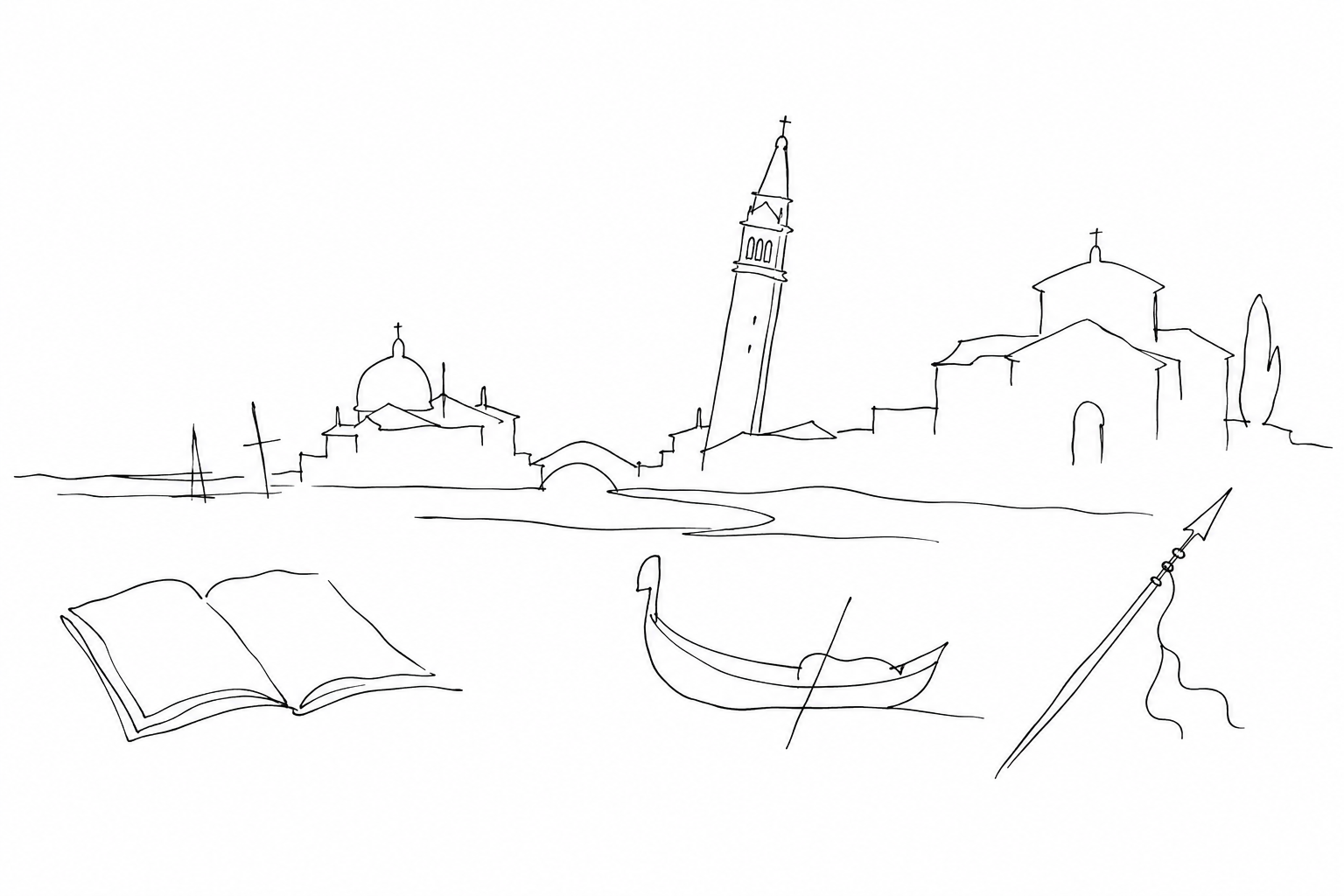
San Giorgio dei Greci therefore arose as the concrete expression of an organized minority: not an isolated building, but the spiritual center of a foreign nation recognized within the mercantile city. Its leaning bell tower, so surprising today, also signals this history of coexistence, negotiation and rootedness.
Church, leaning tower and details to observe
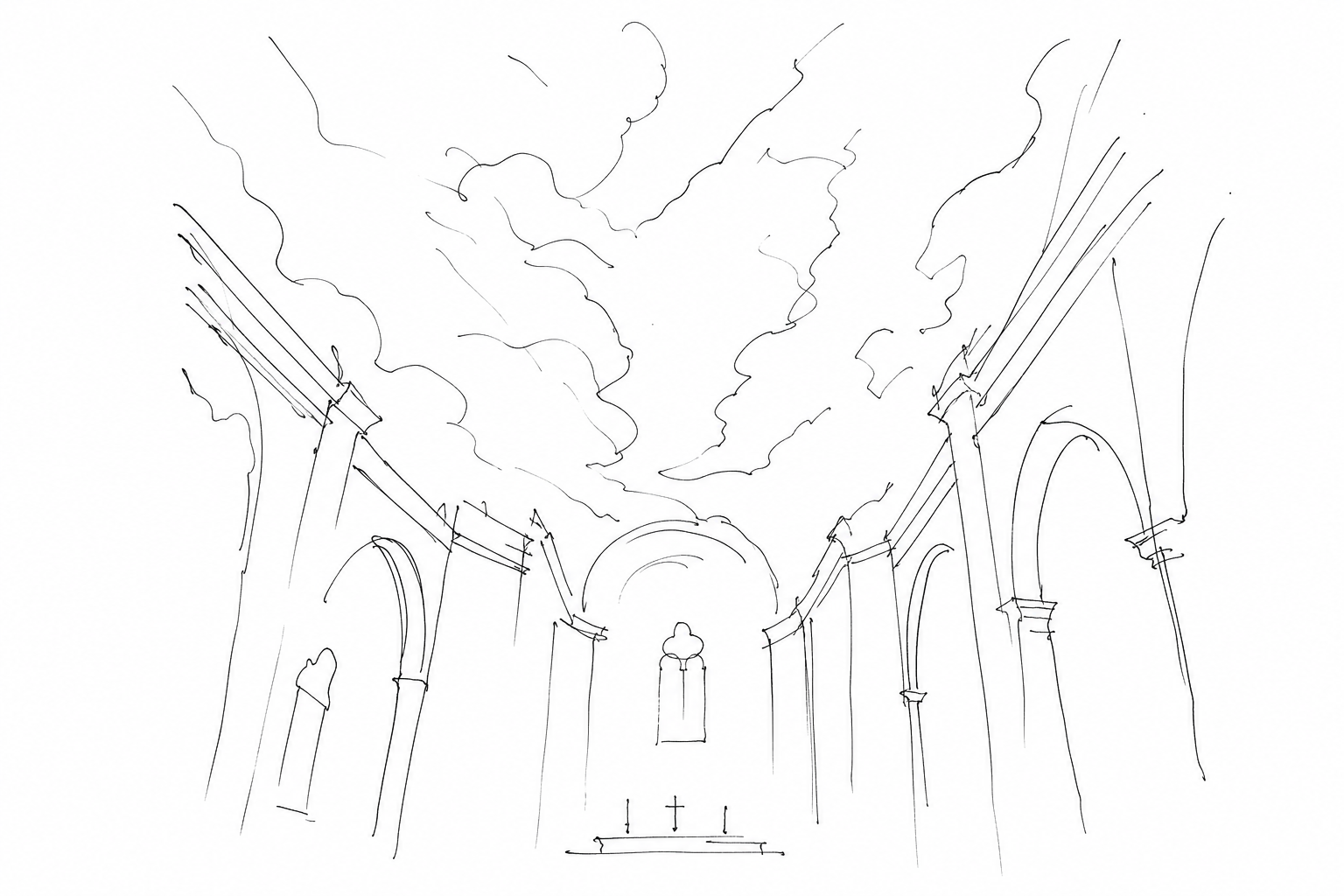
The sacred building of San Giorgio dei Greci appears discreet along the rio, but reveals a very precise composition: a sober Renaissance façade, an Istrian stone portal, a single nave and a layout designed for the Orthodox rite. The most evident difference, compared with many Latin parishes, is the iconostasis: the wall of icons that symbolically separates the space of the faithful from the sanctuary. Here painting is not simple decoration, but part of the liturgy.
The tower, built at the end of the sixteenth century, is the most recognizable sign of the complex. Its tilt did not originate as a scenic effect: it depends on the delicate balance of the lagoon terrain and the settling of the foundations, a frequent problem in the tallest Venetian buildings. This very inclination makes visible, in an almost physical way, the effort of building in a city on water.
- To note outside: the relationship between the vertical mass of the tower and the minute fabric of the calli.
- Inside: icons, gilding and liturgical furnishings refer to the Byzantine and post-Byzantine tradition.
- In the complex: Venetian architecture and Eastern rite coexist without cancelling each other out.
How to read it during a walk in Castello
To understand it while walking, it is best to arrive from the rio and not immediately seek a grand scenic effect. The key point is the urban sequence: water, narrow fondamenta, bridge, composed façade and off-axis tower. Here the Hellenic presence does not appear as an isolated monument, but as a small recognizable quarter, born near the mercantile routes and the houses of those who worked among the port, workshops and diplomacy.
- Stop on the bridge of the same name: from here the inclination can be read better, because the comparison with the vertical lines of the houses makes the deviation evident.
- Look at the façade without haste: the Renaissance language speaks the lagoon architectural language, while the religious identity emerges above all in the interiors and in the nearby institutions.
- Broaden your gaze: the scuola, archives, icon museum and memory of the eastern diaspora help to understand why this place is a material trace of the foreign nations admitted, controlled and at the same time indispensable to the city.
For any internal visits or access to the museum spaces, always check the updated information before leaving.
Stopping in front of San Giorgio dei Greci means giving time to an urban detail that tells much more than its oblique form. The leaning bell tower, the church and the minute fabric of Castello show how Venice also grew thanks to communities that arrived from outside, capable of leaving deep traces without always occupying the scene. Including it in a slow walk makes it possible to grasp a less immediate city, where history, devotion and daily life coexist in a few meters, far from the most usual simplifications.
Related Posts
San Giobbe in Cannaregio: the hidden Venetian Renaissance near the station
Guide to San Giobbe, a Renaissance church in Cannaregio just a short walk from Santa Lucia.Santa Maria Formosa: one campo, two façades, and a Venice that changes sides with every step
A narrative guide to Santa Maria Formosa: the campo, the two façades, the bell tower, and the details that change the way you look.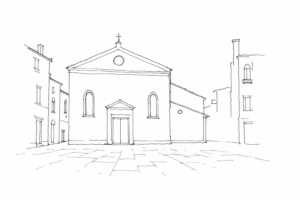
San Zulian: the small church near St. Mark’s where Sansovino left his mark
A brief guide to San Zulian, a church between St. Mark's and the Mercerie, with the facade linked to Sansovino and the physician Tommaso Rangone.Questions Answered
Where is San Giorgio dei Greci located and why is it significant?
It’s in Castello, a historic mercantile district with eastern Mediterranean ties.What does the leaning bell tower symbolize?
It reflects the fragility of Venetian soil and the Greek community’s presence.What role did the Greek community play in Venice?
They were crucial in trade, military, and cultural life.How does the church’s architecture reflect its religious identity?
It blends Venetian styles with Orthodox liturgical elements like the iconostasis.
Castello beyond the busiest routes
Which nearby stops tell the district through art, the sea and memory?
 Carpaccio in Venice: where to look for the city’s painted stories among saints, animals and everyday detailsA route through the Accademia, the Scuola degli Schiavoni and the Correr to read Carpaccio through saints, animals and everyday life.
 Palazzo Grimani: the Tribune where Venice dreamed of classical antiquityA journey through the Tribune of Palazzo Grimani, among collecting, architecture and ancient sculptures in the heart of Castello.
 San Francesco della Vigna: vineyards, proportions and silence at the far end of CastelloOutline on the history, vineyards, architecture and urban quiet of San Francesco della Vigna.
 The Scuola Dalmata degli Schiavoni: Carpaccio, dragons and saints in an almost domestic VeniceEditorial guide to the Scuola Dalmata degli Schiavoni, amid Carpaccio, Dalmatian saints and a Venice gathered in the sestiere of Castello.