
The Scuola Dalmata degli Schiavoni is one of those Venetian places where great painting does not ask for distance, but closeness. In the dense fabric of Castello, among inhabited calli and side passages away from the more predictable flows, the confraternity of the Schiavoni preserves a cycle by Vittore Carpaccio that seems designed to be read almost at a slow pace, painting after painting. Dragons, saints, animals, imagined architectures and everyday details coexist in an intimate hall, where religious history also becomes urban narrative, community memory and minute observation of the world.
A Dalmatian confraternity in the fabric of Castello
The Scuola Dalmata degli Schiavoni was born in the heart of Castello, not in the Venice of the grand façades on the Grand Canal, but in a district of narrow calli, shipyards, parishes and trade linked to the Arsenale. The name “Schiavoni” then indicated the communities coming from Dalmatia and the other Adriatic shore, territories deeply intertwined with the Serenissima through commerce, navigation and maritime defense.
Recognized in the fifteenth century as a national confraternity, the Scuola brought together sailors, merchants, artisans and Dalmatian families residing in or passing through Venice. It was not a school of instruction, but a devotional and charitable institution: it kept relics, organized religious practices, supported its confratelli and asserted a collective identity within the dominant city.
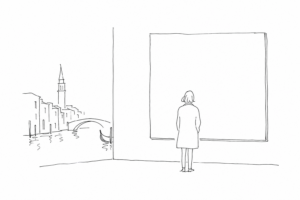
The choice of Castello is significant: close to the routes, to sea workers and to the Riva degli Schiavoni, this building makes great Adriatic history almost domestic. Even before Carpaccio, dragons and saints, here one enters a Venice of community, memory and belonging.
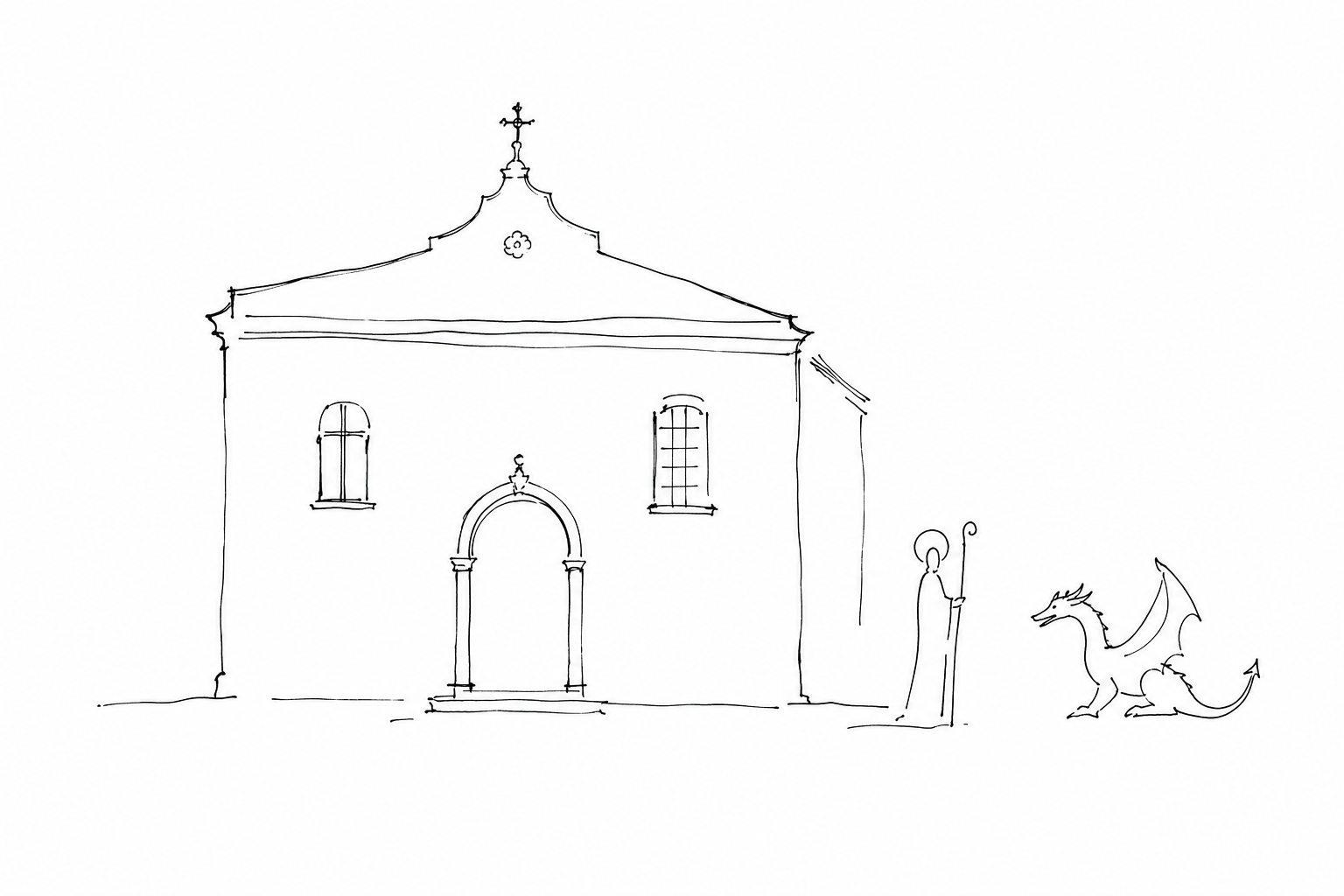
The most magnetic core of the seat is in the ground-floor hall, where Vittore Carpaccio painted, in the early years of the sixteenth century, a series of large canvases dedicated above all to Saint George, Saint Jerome and Saint Tryphon. The surprise lies not only in the subjects: it lies in the distance. The canvases are not seen from below upward, as in a monumental church, but almost at the same level as the visitor.
For this reason Saint George’s dragon, the princess, the eastern armed men, the books in Saint Jerome’s study and the famous little dog witnessing the vision seem to belong to an inhabited room. Carpaccio builds narrative scenes dense with details: carpets, architectures, animals, fabrics, instruments, small everyday gestures. Sacred legend becomes a close story, readable step by step.
In this intimate dimension, the painting speaks to the Dalmatian community without losing Adriatic breadth: the saints protect, the sea remains in the cultural background, and Venice appears not as a triumphant stage set, but as a familiar, ordered, almost domestic environment.
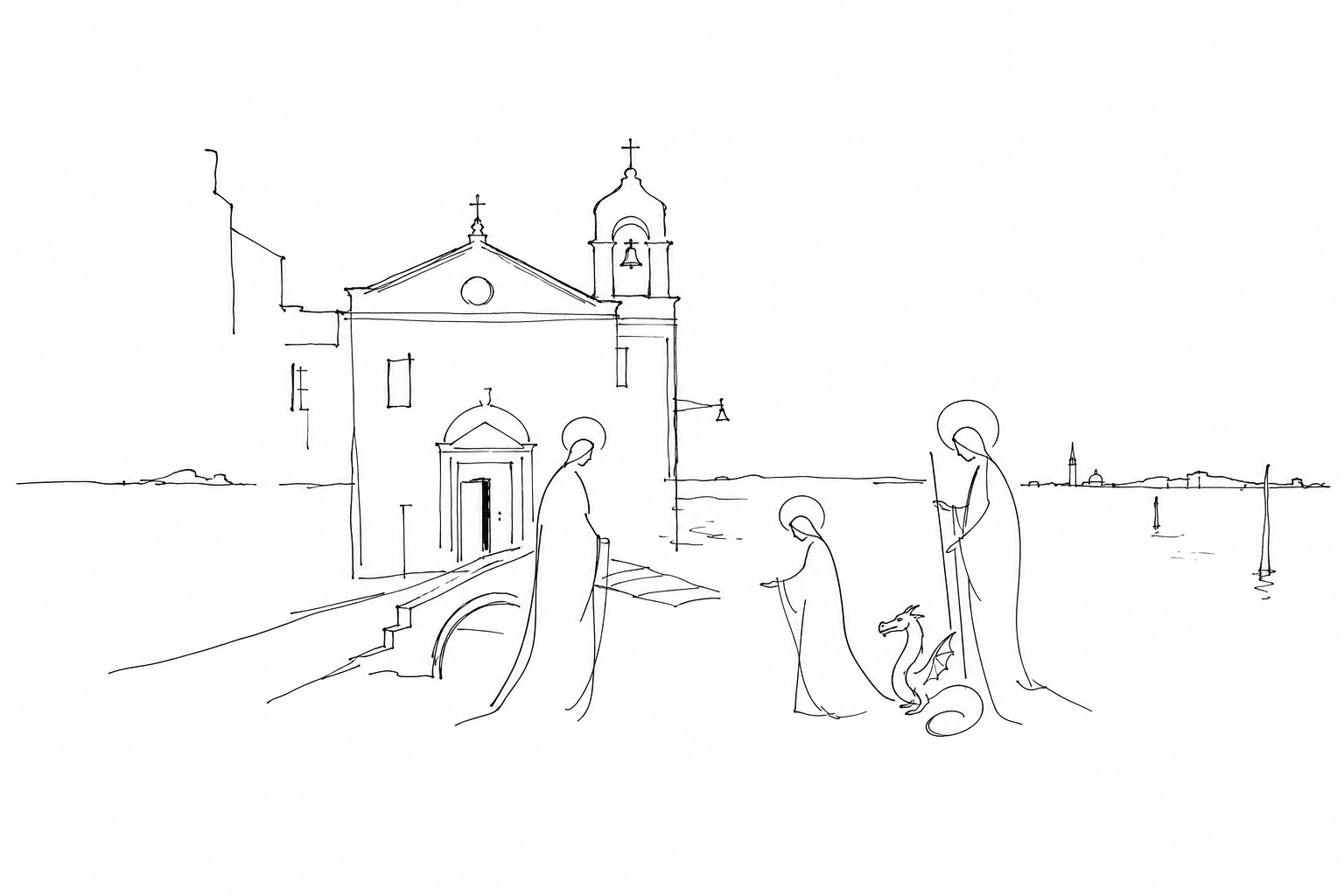
Dragons, saints and stories: George, Tryphon, Jerome
The cycle works as a narrative sequence, but it does not proceed with a uniform tone: it alternates battle, miracle, meditation and community life. Saint George is the most spectacular protagonist. In the combat against the dragon, the knight does not merely occupy the center of the action: he crosses a landscape strewn with remains, animals, macabre fragments, so that evil appears physical, almost tangible. In the subsequent triumph, violence gives way to public order; the eastern city observes, judges, converts.
Saint Tryphon instead introduces a different note, more closely linked to Adriatic memory. A young martyr venerated in Kotor, he appears in the episode of the exorcism of the daughter of Emperor Gordian. Here the prodigy does not have George’s military grandeur: it is a gesture of spiritual authority, concentrated in a ceremonial space, before figures who react with measured astonishment.
With Saint Jerome the register changes again. In the canvas of the lion in the convent, the saint tames the wounded animal while the friars flee in fear: a devotional scene, but also an ironic observation of human behavior. The funeral of Jerome and the vision of Saint Augustine then shift attention to death, to the fame of the learned man and to the miraculous communication between the saints.
- George: victory over evil and collective conversion.
- Tryphon: Dalmatian identity and the power of exorcism.
- Jerome: study, asceticism, monastic memory.
In order not to consume the place in a few minutes, it is best to look at it as a room inhabited by images, not as a neutral hall. Even before the individual episodes, scale matters: nearby canvases, low walls, gathered light, domestic details that bring the sacred into a seaside district.
A simple method is to proceed by levels. From afar one reads the narrative masses: the dragon, the procession, the monastery, the crowd. At mid-distance, gestures and glances emerge, often more decisive than the main action. Up close, Carpaccio reveals objects, animals, carpets, inscriptions and architectures that transform the story into everyday experience.
The most useful reading today is therefore slow: following the diagonals, noticing who witnesses the miracles, distinguishing eastern and Venetian spaces. In this way the cycle remains at once devotion, community memory and minute theater, without becoming a simple photograph to tick off.
Visiting the Scuola Dalmata degli Schiavoni means granting oneself time for a close encounter with Carpaccio and with a less monumental, but no less dense, Venice. Here painting is not only illustrious decoration: it is a visual archive of devotions, mercantile ties, foreign identities integrated into the city. Pausing over the details, the domestic scales, the animals, the gestures of the saints helps one to move beyond the logic of the quick stop. It is a small place, but capable of broadening one’s gaze on Castello, on the confraternities and on that everyday Venice that often remains just outside the frame.
Related Posts
Carpaccio in Venice: where to look for the city’s painted stories among saints, animals and everyday details
A route through the Accademia, the Scuola degli Schiavoni and the Correr to read Carpaccio through saints, animals and everyday life.Carpaccio’s Stories of Saint Ursula: a painted tale to follow like a Venetian novel
Narrative guide to Carpaccio’s Stories of Saint Ursula: origin, episodes, Venetian details and keys to interpretation at the Gallerie dell’Accademia.
The Scuola Grande di San Rocco: Tintoretto and the pictorial cycle that transforms a confraternity into sacred theater
History, rooms and reading of Tintoretto’s cycle at the Scuola Grande di San Rocco, between confraternity, architecture and sacred theater.Questions Answered
What is the Scuola Dalmata degli Schiavoni?
A Venetian confraternity for Dalmatian sailors and merchants.How does Carpaccio's painting cycle differ from typical monumental art?
Canvases are viewed at eye level, creating intimacy.Which saints are central to the painting cycle and what do they symbolize?
Saint George, Tryphon, and Jerome represent victory, identity, and study.How should visitors approach viewing the Carpaccio cycle?
With slow, layered observation focusing on narrative and details.
Another stretch of Castello
Want to follow the district from major monuments to its quieter waterfronts?
 Carpaccio in Venice: where to look for the city’s painted stories among saints, animals and everyday detailsA route through the Accademia, the Scuola degli Schiavoni and the Correr to read Carpaccio through saints, animals and everyday life.
 La Pietà and the Musician Girls: Vivaldi Seen from the Hospital Girls’ SideThe Venetian Pietà reinterpreted through the musician girls who played for the hospital and for Vivaldi.
 The Arsenale ropewalks: where the ropes that held Venetian naval power together were bornHistory, function, and interpretation of the Arsenale ropewalks, the long space where Venice produced the ropes for its fleet.
 Palazzo Grimani: the Tribune where Venice dreamed of classical antiquityA journey through the Tribune of Palazzo Grimani, among collecting, architecture and ancient sculptures in the heart of Castello.