
Palazzo Pisani Moretta is one of those Venetian fronts that do not merely decorate the Grand Canal: they make it vibrate. In its flowery Gothic, the loggias seem perforated rather than built, as if Istrian stone had been worked with the patience of embroidery. To look at it means reading architecture, family ambition, water light and urban life together: not a simple palace to photograph while passing by vaporetto, but a façade that tells how Venice transformed prestige into visual lightness.
Where it is and why it strikes immediately
Palazzo Pisani Moretta directly overlooks the Grand Canal, in the stretch between San Polo and San Tomà, where Venetian façades are not observed only from land: they are read from the water, like theatrical wings. Its position is decisive for understanding the effect of Venetian Gothic: Istrian stone, pale and resistant to salt air, stands out against the changing reflection of the canal and makes arches, small columns and tracery appear almost suspended.
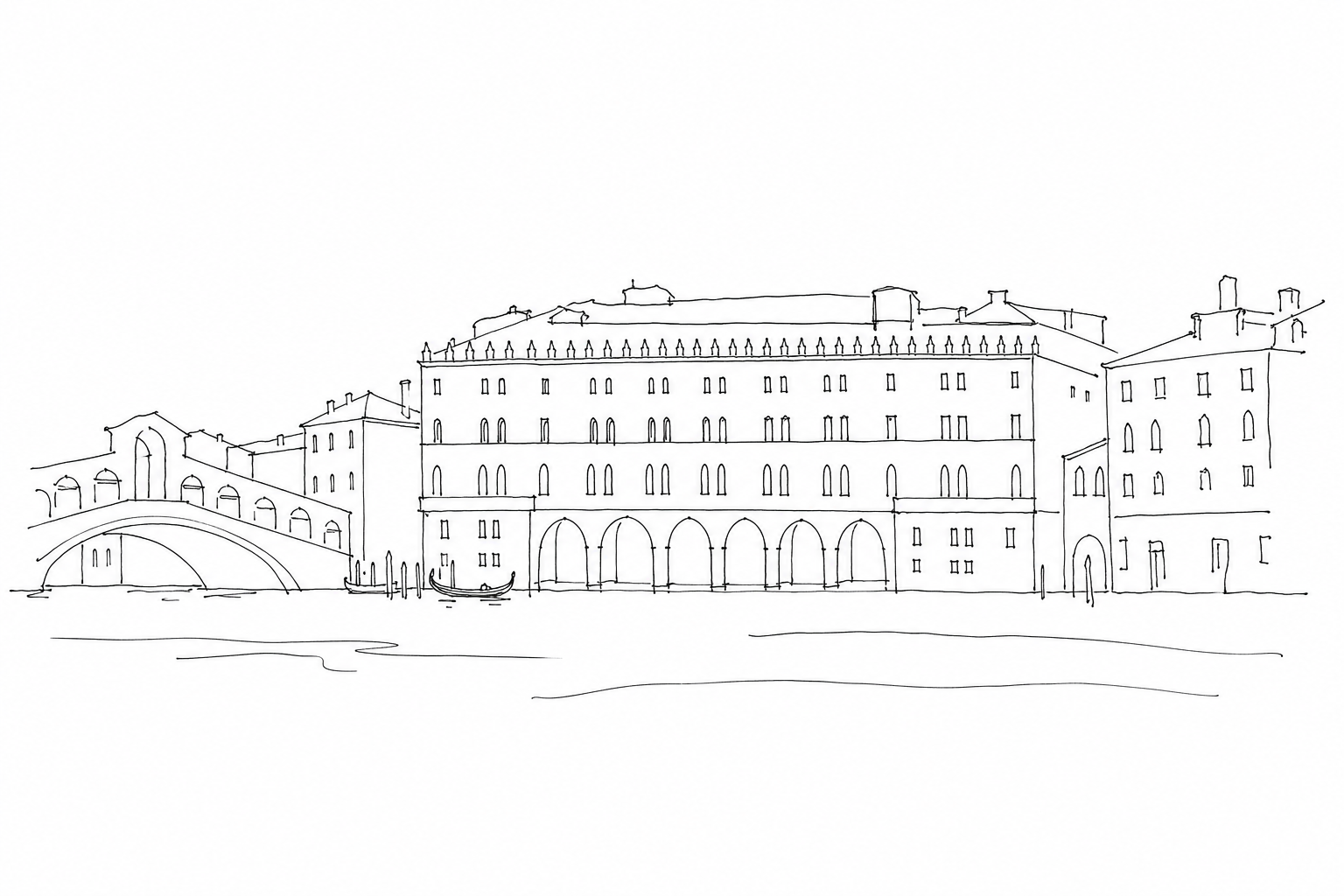
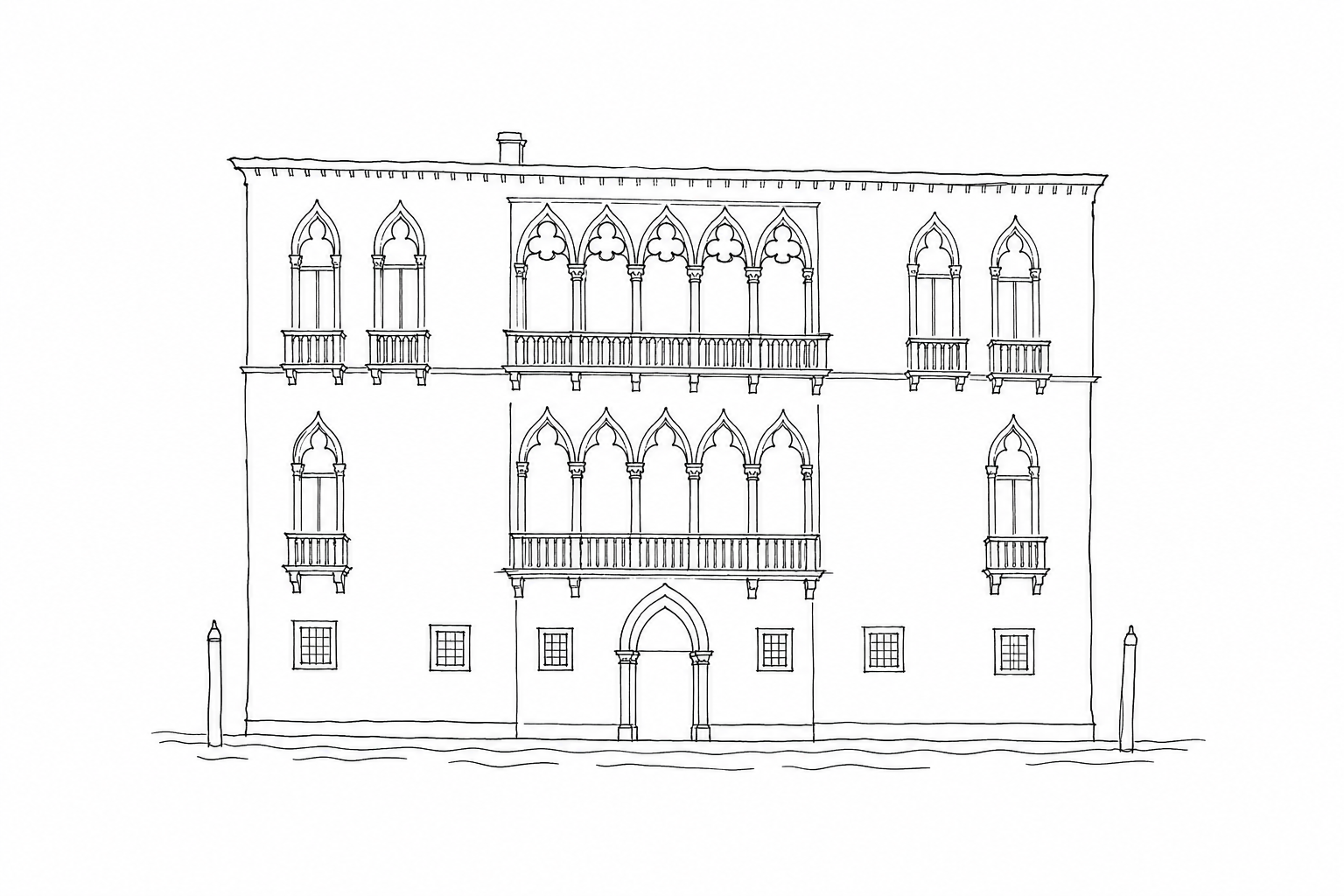
The overall impression comes above all from the large late-Gothic façade, organized in superimposed registers and lightened by central multi-light windows. The openings do not seem like simple windows, but carved lace: inflected arches, slender little pillars, quatrefoils and finely incised profiles transform the mass of the palace into a vibrating surface. It is here that the idea of “embroidery in stone” becomes concrete: not added decoration, but the very structure of the building, designed to filter light, water and family prestige into a single image.
The façade: two loggias like overlapping lace
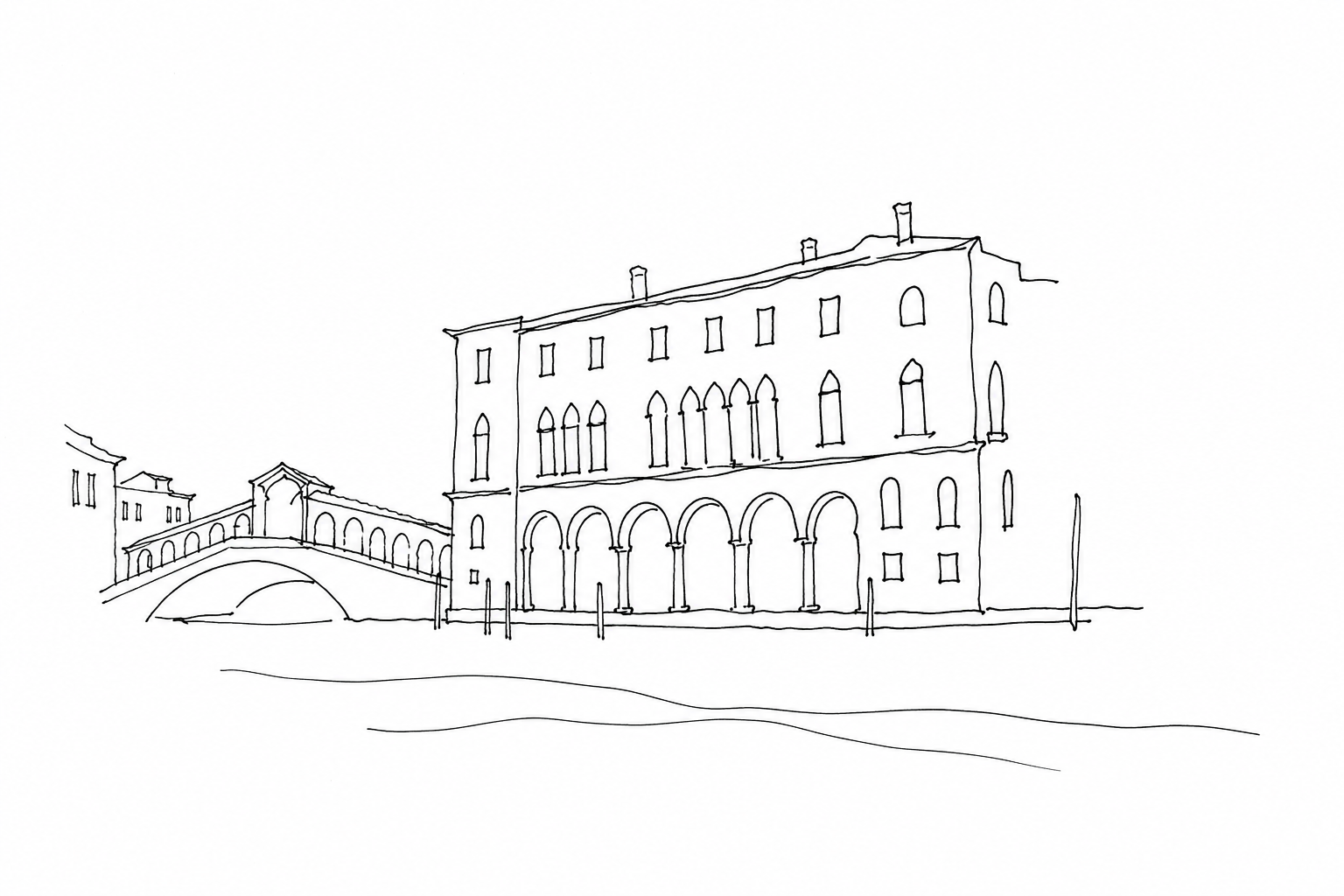
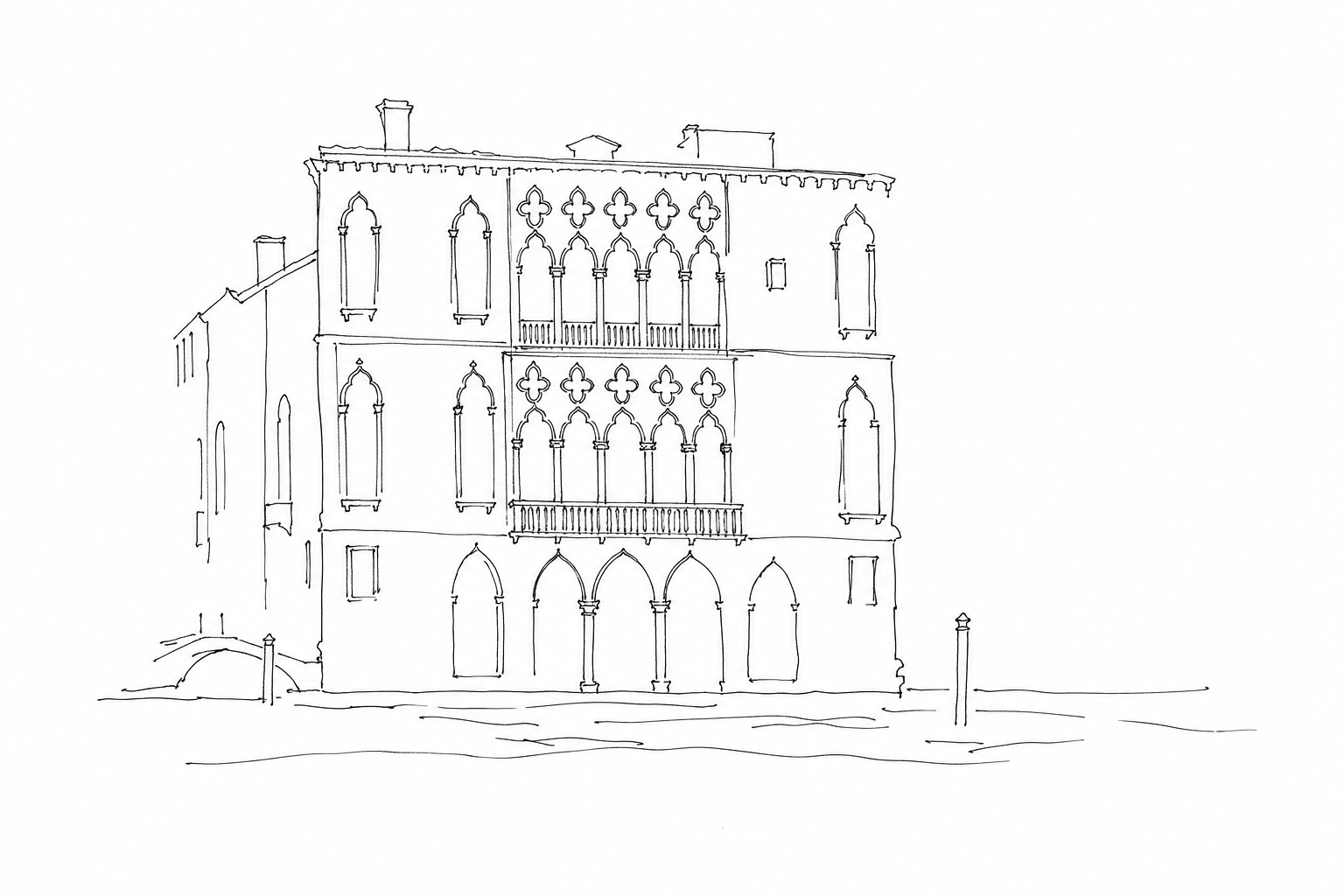
The effect of embroidered stone arises above all from the central part of the façade, where Palazzo Pisani Moretta concentrates its visual energy in two large superimposed multi-light windows. They are not simple windows: they are loggias open toward the Grand Canal, composed of a dense sequence of pointed arches, slender columns and tracery that lighten the wall until it seems almost suspended.
The Gothic choice can be read in the verticality of the arches, in the trefoil profiles and in the small quatrefoil motifs inserted above the openings. These elements function like stitches and knots in lace: repeated regularly, they create rhythm; carved in Istrian stone, they capture the light; reflected by the water, they multiply shadows and vibrations.
The two loggias, one above the other, give the façade a hierarchical but not heavy structure. The solid side sections frame the perforated center, while the smaller openings at the sides prevent the elevation from becoming a flat surface. The result is typically Venetian: the masonry does not impose itself as a compact mass, but as a filter. Palazzo Pisani Moretta thus appears closer to a worked fabric than to a building block, because Venetian Gothic transforms the representative function of the palace into a weave of light, voids and carved stone.
A Gothic born among water, light and prestige
To understand why Palazzo Pisani Moretta seems worked like lace, one must look at it from the Grand Canal, that is, from its true entrance street. In Venice, noble residences were not designed only to be inhabited: they had to make themselves recognizable from the water, before merchants, ambassadors and guests arriving by boat.
The construction, begun in the fifteenth century for the Bembo family and later passed to the Pisani in the seventeenth century, belongs to that lagoon Gothic that lightens the masonry instead of flaunting its weight. Perforated arches, vertical rhythm and pale surfaces engage with a city without broad land perspectives: here the light bounces off the canal, rises from below and breaks up the carved profiles.
The result is not gratuitous decoration. In such a dense urban context, wealth was expressed through refinement, measure and the ability to capture the gaze. The building transformed family prestige into a public image: not a closed fortress, but an elegant backdrop, fragile only in appearance, built to appear precious precisely when the water multiplies its shadows and reflections.
How to read it today without stopping at the photo
To observe it today, it is worth slowing the gaze and reading the front as a weave. First identify the two noble floors: the large superimposed multi-light windows are not simple windows, but the visual center of the building, the element that lightens the mass and transforms it into design. Then follow the pointed arches, the small lobes and the capitals: each element seems repeated with patience, like an embroidery stitch, but also serves to distribute light and shadow.
A good exercise is to compare solids and voids. The side masonry gives stability; the central tracery, instead, creates rhythm and transparency. Looking from the Grand Canal, also seek the imperfect symmetry produced by the reflections: the water doubles the openings and makes the stone less heavy. It is here that lagoon Gothic is best understood: not applied decoration, but architecture designed to shine before those who arrived from the water.
Understanding Palazzo Pisani Moretta means slowing the gaze: following the rhythm of the arcades, noticing the superimposition of the loggias, imagining the continuous relationship between interior halls and the Grand Canal. Its charm arises not only from Gothic elegance, but from the way that elegance dialogues with water, with light and with the city’s social representation. It is a less immediate and more precise Venice, one that reveals itself in the details and invites observation before taking a shot.
Related Posts
The façade of Ca’ d’Oro: how to recognize Venetian Gothic by looking at a palace on the Grand Canal
A visual guide to the façade of Ca’ d’Oro: arches, loggias, tracery and asymmetries that reveal Venetian Gothic on the Grand Canal.Palazzo Contarini Fasan: the so-called house of Desdemona and the fragile charm of Venetian Gothic
History, legend and Gothic details of Palazzo Contarini Fasan, a small façade on the Grand Canal linked to the myth of Desdemona.
Palazzo Grassi: the white face of the Grand Canal between Venetian nobility and contemporary exhibitions
History, façade and current exhibition role of Palazzo Grassi, the white palace on the Grand Canal.Questions Answered
What makes Palazzo Pisani Moretta’s Venetian Gothic façade unique?
Its lace-like, embroidered stone structure that filters light and water.Why is Istrian stone important in the palace’s design?
It resists salt air and reflects canal light, enhancing visual effect.How does the palace express family prestige?
Through refined, light, and perforated architecture visible from the water.Why is viewing the palace from the Grand Canal essential?
Because architecture is designed to be recognized and admired from the water.
Follow another thread of Venetian art
Which places help you see artists, architecture and history as parts of the same city?
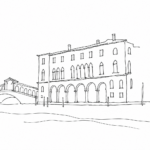 Palazzo dei Camerlenghi: money, public offices and economic power next to RialtoHistory and interpretation of the Palazzo dei Camerlenghi, the financial seat of public Venice next to Rialto.
 Marbled paper in Venice: colors on water and workshops that seem like alchemy laboratoriesA short journey through the history, technique and Venetian workshops of marbled paper, where pigments, water and slow gestures become objects of...
 San Giovanni Elemosinario: the almost invisible church hidden among the shops of RialtoA short guide to the church of San Giovanni Elemosinario, amid the Rialto market, Renaissance history, and works by Titian and Pordenone.
 San Cassiano: Tintoretto, market and silence a few minutes from the chaos of RialtoA short route between Rialto and San Cassiano: market, quiet calli, church and canvases by Tintoretto.