
Seen from the outside, the Bridge of Sighs is one of the most recognizable images of Venice. But its meaning changes when it is observed from the inside, along the passage that connected the Doge’s Palace to the New Prisons. It was not a panoramic point or a romantic place: it was a stone corridor, closed and functional, crossed by defendants and convicts at the most delicate moment of their judicial path. Understanding what could really be seen from those small openings means reading Venice from a less decorative and more concrete perspective, made of architecture, justice, control and fragments of light on the city.
From the Doge’s Palace to the New Prisons: the real route
The Bridge of Sighs was not a panoramic walkway, but a functional connection within the Venetian judicial machine. It connected the Doge’s Palace, where courtrooms and interrogation rooms were located, to the New Prisons, built between the end of the sixteenth century and the beginning of the seventeenth century beyond the Rio di Palazzo.
Those who crossed it therefore came from the institutional heart of the Republic and passed into a closed corridor, in Istrian stone, divided into two separate passages. This double route made it possible to manage different movements without crossings, maintaining control over detainees and officials.
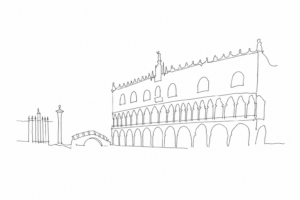
From the inside, Venice could not be seen freely. The small screened openings let a narrow view filter through: the canal below, a fragment of sky, the nearby façades and the movement of boats. More than one last great panorama, it was a compressed perception of the city: the physical passage from the power that judged to the place where punishment was held.
Inside the bridge: narrow corridors, stone and filtered light
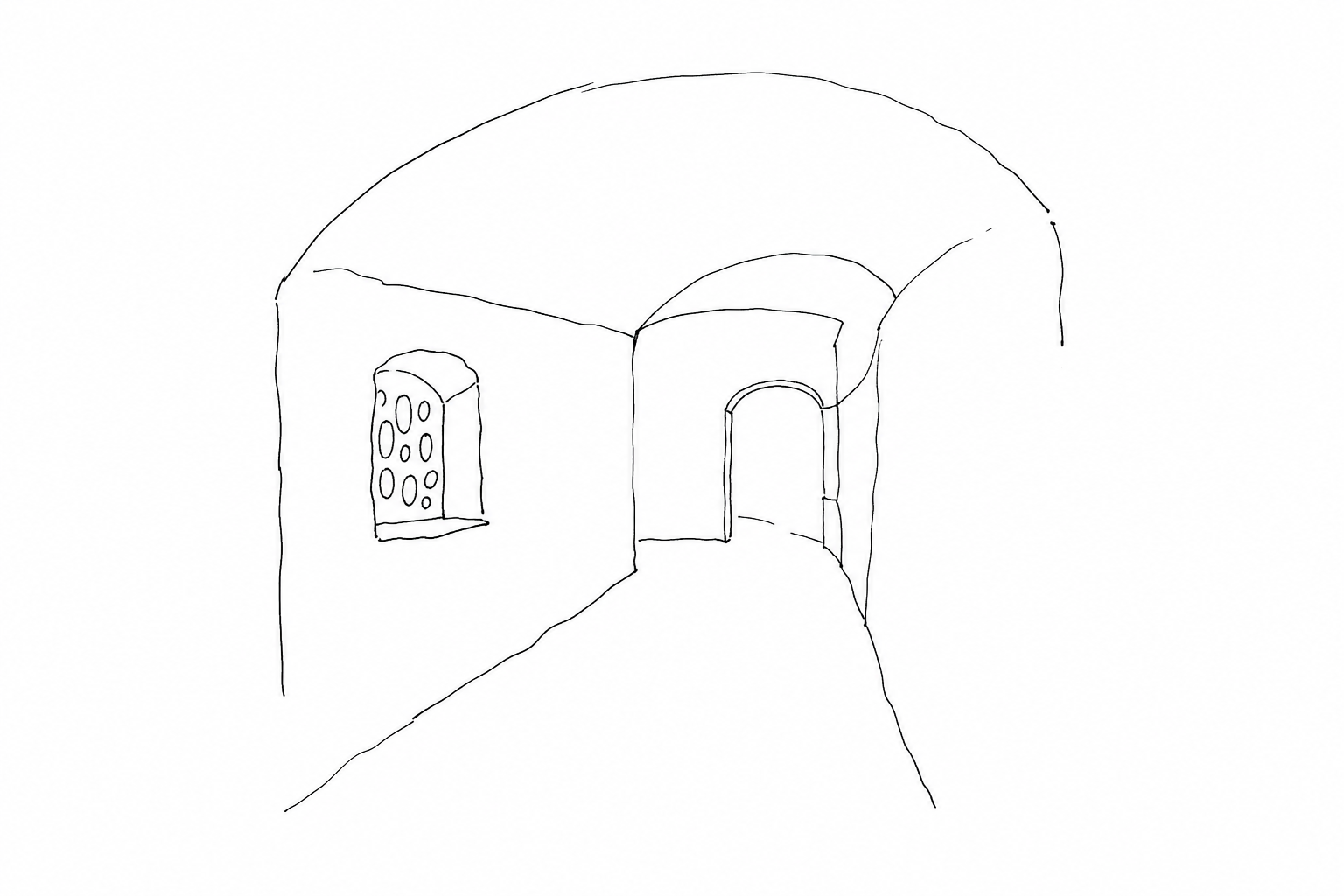
Seen from the inside, the Bridge of Sighs immediately loses the romantic image built from the outside. It is not a spacious or decorative environment: it is a closed service passage, designed to move supervised people without exposing them to the city. The structure contains separate, narrow and almost parallel corridors, divided by internal masonry; this arrangement made it possible to manage different movements between the halls of justice and the New Prisons.
The dominant material is light, compact stone, with surfaces that absorb sound and make the route more austere than theatrical. Light enters only through small openings screened by dense stone grilles: not a free window, but a filter. From there the gaze did not embrace Venice; it caught fragments of the canal, close-up façades, water below and some external movement cut by the pattern of the stone.
The sensation must have been that of a brief but controlled crossing: a few steps, little air, a broken view. The “sigh,” if there was one, belonged more to the constraint of the route than to a memorable panorama.
What those going to the cells really saw
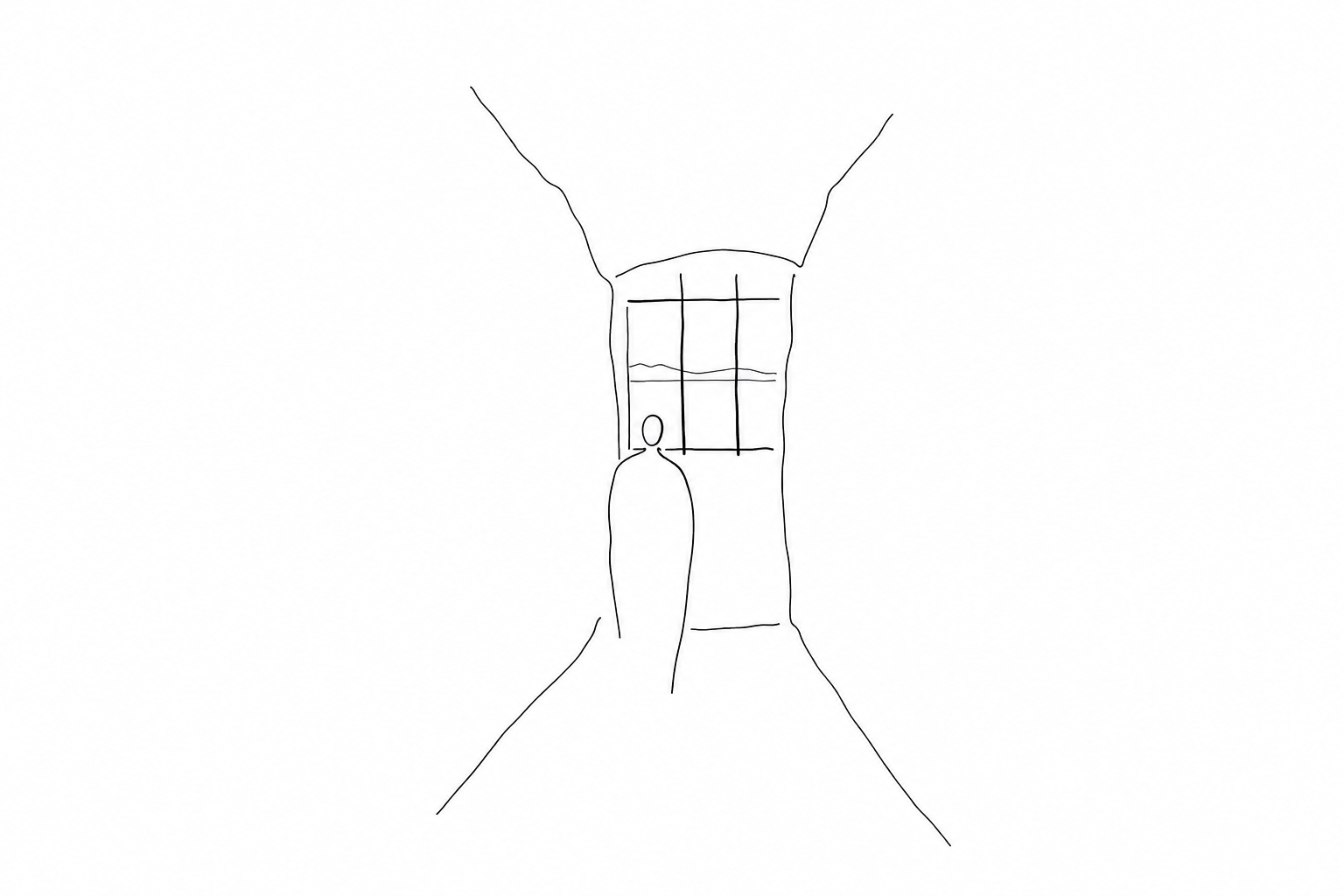
In the short route toward the prison area, the view did not open up as in a belvedere. Those who passed through there saw in fragments: first the nearby wall of the corridor, then a blade of light, finally the outside filtered by small screened openings. The small windows were not designed to offer a panorama, but to provide air and light without allowing easy contact with the city.
Through the grilles in Istrian marble, the gaze could catch isolated details: the water of the Rio di Palazzo beneath the passage, the movement of a gondola or a service boat, a portion of the opposite façade, the sky cut into narrow squares. Toward the basin of San Marco, an open space was sensed more than seen: glimmers on the water, stronger light, perhaps distant silhouettes beyond the mouth of the canal.
- Not a continuous view: the grille broke the image into small segments.
- Not a comfortable lookout: the passerby was in motion, supervised, inside a compulsory route.
- Not only darkness: Venetian light entered, but controlled, reduced, almost geometric.
For this reason the true visual memory must have been made of contrasts: closed interior, nearby water, unreachable city just a few meters away.
The sigh between romantic legend and Venetian reality
The most famous name risks misleading. The image of the condemned person casting one last poignant glance over Venice belongs above all to Romantic sensibility, fueled in the nineteenth century also by writers such as Byron. The concrete use of the passage was less theatrical: it connected the judicial and administrative halls of ducal power with the State prison, making the movement of detainees quick and supervised.
The “sigh,” therefore, should not be imagined as a pause before a panorama. The small perforated openings allowed light, water and urban silhouettes to be perceived, but they did not offer a wide or consoling scene. Moreover, not everyone who crossed it was destined for death: many were taken to their cell after interrogations, sentences or transfers.
The power of the place lies precisely in this gap: the legend speaks of emotion; the architecture tells of control, separation and the sudden loss of the city.
Ideally entering the Bridge of Sighs means shifting the gaze from legend to the materiality of the place: the Istrian stone, the narrow corridors, the screened windows, the short stretch of water of the Rio di Palazzo. The sigh belongs not so much to a romantic scene as to the sudden distance between the public life of the city and the isolation of the cells. Precisely for this reason the bridge remains so powerful: not only a photographed icon, but a real passage, built to separate worlds that are very close. Looking at it from this perspective helps to understand a less showy, but more precise and human Venice.
Related Posts
Ponte della Paglia: the spot from which everyone photographs the Sighs without wondering where they are
Where Ponte della Paglia really is, why the Bridge of Sighs can be seen from there and what this crowded spot in Venice tells.The Piombi and Pozzi: the prisons of the Doge’s Palace beyond the legend of Casanova
History, spaces and meaning of the prisons of the Doge’s Palace, from the Piombi to the Pozzi, beyond the myth of Casanova’s escape.
Ponte dell’Accademia: the wooden bridge from which Venice seems built to be looked at
History, form and views from the Ponte dell’Accademia, the wooden crossing over the Grand Canal between San Marco and Dorsoduro.Questions Answered
What was the actual purpose of the Bridge of Sighs?
It connected judicial halls to prisons with controlled detainee movements.What could prisoners see from inside the bridge?
Fragments of canal, sky, façades through small screened openings.How does the bridge’s interior differ from its romantic image?
It’s a narrow, austere corridor focused on control rather than views.What does the ‘sigh’ of the bridge truly represent?
The sudden separation from the city and loss of freedom, not a romantic view.
Keep exploring the Venice of St Mark’s
Which spaces help you read the square as a system of symbols, institutions and images?
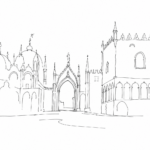 The Porta della Carta: entering the Doge’s Palace by reading stone, power and propagandaA close reading of the Porta della Carta: ceremonial threshold, Gothic sculpture and political manifesto between St. Mark's and the Doge's Palace.
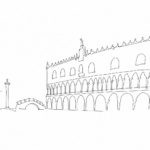 The Piombi and Pozzi: the prisons of the Doge’s Palace beyond the legend of CasanovaHistory, spaces and meaning of the prisons of the Doge’s Palace, from the Piombi to the Pozzi, beyond the myth of Casanova’s...
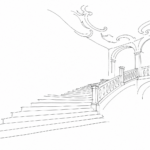 The Golden Staircase of the Doge’s Palace: ascending toward power amid stucco and political controlThe Golden Staircase as a political threshold of the Doge’s Palace: architecture, stucco, access and messages of power in the Venice of...
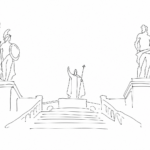 The Giants’ Staircase: where the doge became doge before the cityHistory, ritual and details of the Giants’ Staircase in the courtyard of the Doge’s Palace.