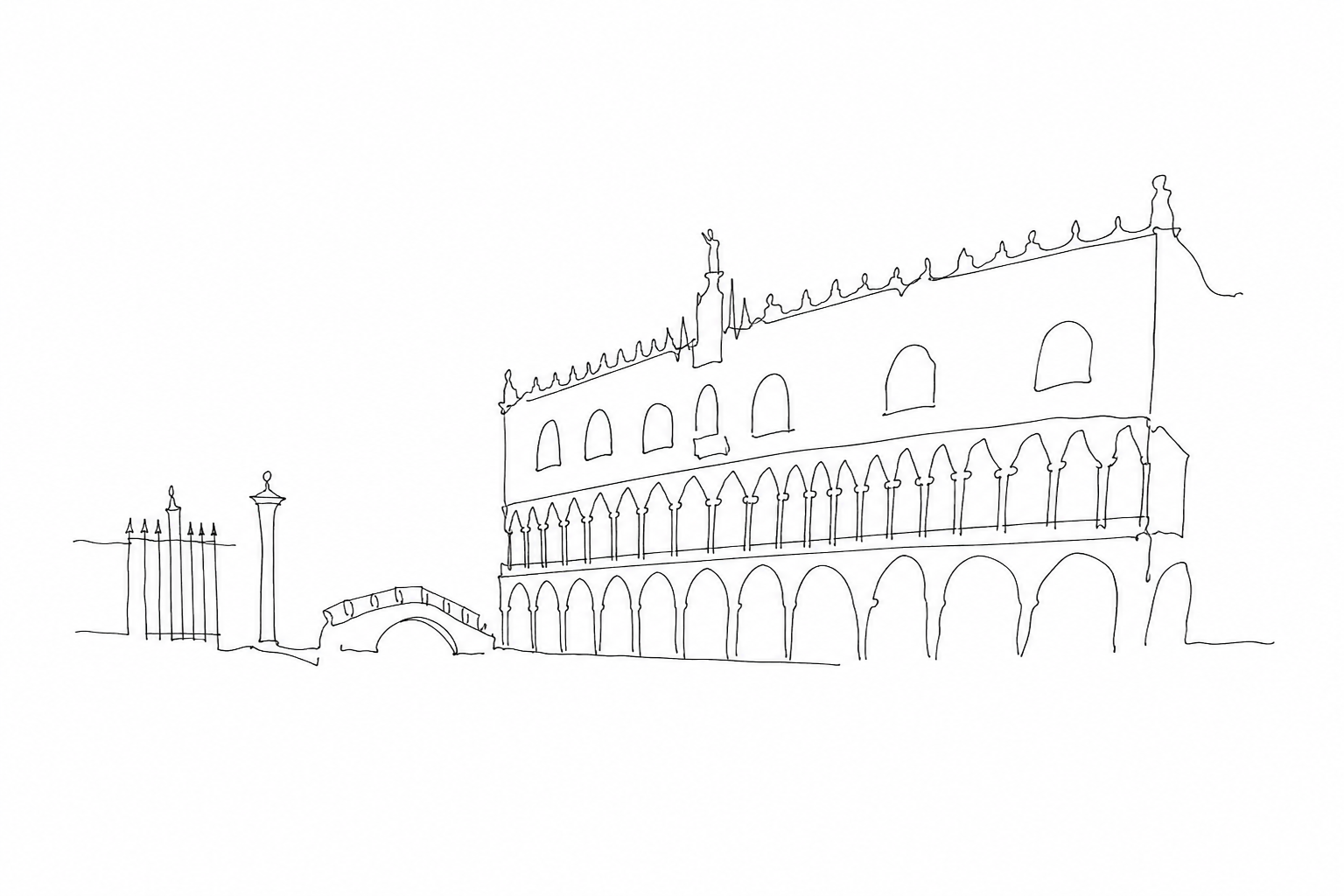

In the Doge’s Palace, Venetian justice was not a hidden appendage, but an integrated part of power. The Piombi and the Pozzi recount this proximity with an almost physical clarity: above and below the government halls, amid low ceilings, narrow corridors, Istrian stone, humidity and heat. Beyond Casanova’s famous escape, these prisons help us read the daily functioning of the Serenissima, the relationship between control, bureaucracy and punishment, and the way architecture transformed punishment into a concrete experience.
Why the prisons were inside the heart of power
In the Doge’s Palace the prisons were not a foreign body: they were part of the political machine of the Republic of Venice. The same building brought together the doge’s residence, the government halls, the administrative offices and the spaces of justice. Arrest, interrogation, judgment and custody could thus take place just a few steps from the places where magistracies such as the Council of Ten, responsible for State security, operated.
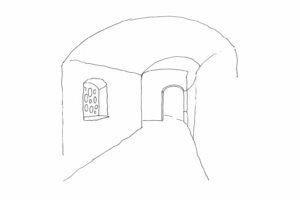
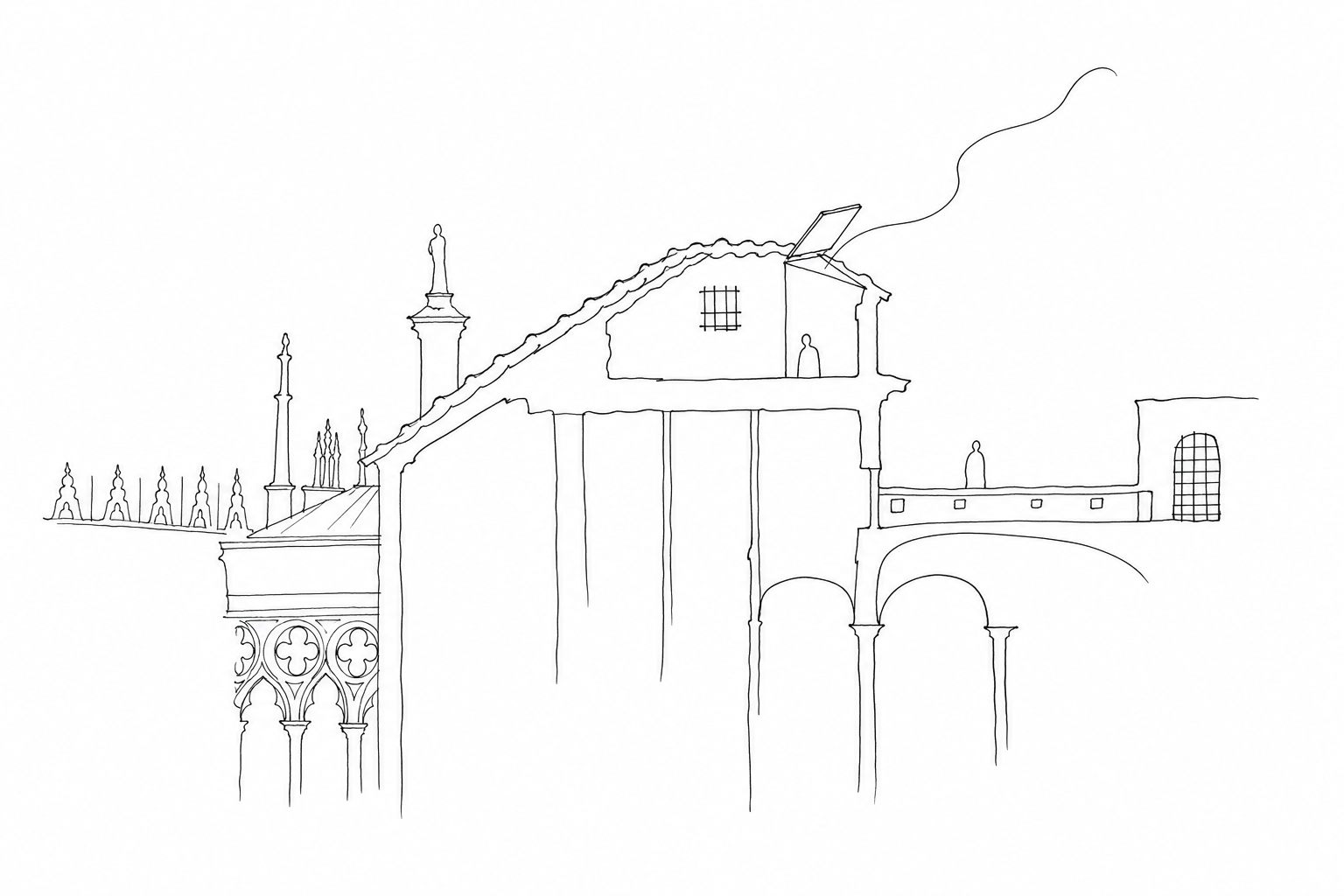
The Piombi, created in the attics under the lead sheets of the roof, housed prisoners often connected to delicate or politically significant proceedings. They were cells high up in the palace, exposed to summer heat and winter cold, but relatively close to the upper offices. The Pozzi, on the other hand, were located on the lower levels: damp, dark spaces, almost dug into the belly of the building, designed for harsher imprisonment.
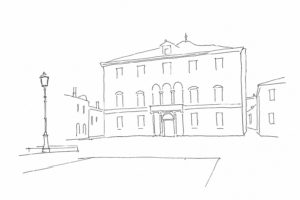
Even before Giacomo Casanova’s famous escape, these prisons told of a precise choice: Venetian power wanted to control justice from within its institutional center.
The Piombi: high cells, heat, control and the memory of Casanova
The name Piombi derives from the lead sheets that covered the roof above these spaces. The cells were located high up, in the attic of the Doge’s Palace, not in the underground levels: a position that immediately changes the usual image of the dark, damp prison. Here the main problem could become the opposite, namely the heat retained by the metal during the summer, together with scarce air, reduced spaces and continuous surveillance.
Compared with the Pozzi, the Piombi often housed prisoners considered less ordinary: people connected to political or religious trials, or to events considered delicate by the Venetian government. The high level did not mean freedom. Stairs, corridors, reinforced doors and passages close to the judicial offices made control immediate, almost administrative.
Giacomo Casanova turned these spaces into legend with the escape of 1756, carried out with the monk Marino Balbi. But his story must not obscure the architectural fact: the Piombi show a prison designed to isolate without distancing, suspended above the halls of power and beneath a scorching roof.
The Pozzi: the low prison, damp and almost without light
If the high prison struck one for heat and proximity to the offices, the Pozzi communicated the opposite: descent, cold, water. The name is not a casual metaphor. These spaces occupied low levels, close to the level of the courtyard and the lagoon level; for this reason humidity rose through the masonry, soaking floors and walls. The rooms, closed by heavy doors, received air and brightness only through minimal openings, often facing internal corridors rather than the outside.
The difference was not only climatic. Above, one still perceived the Venetian administrative machine; below, a sense of deprivation dominated: less light, less noise, less orientation. The prisoners locked up here lived a punishment made of immobility and darkness, worsened by narrow spaces and by the proximity to canals, foundations and cold stone.
On the surfaces of the Pozzi there are known incised marks, names, dates, religious figures or symbols left by prisoners. They are not decorations, but material traces of forced stays: they make visible an underground prison, very different from the literary memory linked to Casanova.
To interpret them without stopping at the most famous escape, it is useful to follow a vertical logic: above, the prison under the roof, close to chancelleries and magistracies; below, the damp confinement, almost removed from view. This arrangement tells of justice administered in the heart of Venetian power, not a place separated from the city.
During the route, observe above all three elements. First: the materials, from the wood of the roofs to the brickwork, which explain heat, cold and isolation better than any romanticized account. Second: the thresholds, that is, doors, narrow corridors and guarded passages, designed to control bodies and movements. Third: the traces incised by the prisoners, when visible, because they transform the wall into a document.
The Bridge of Sighs should be read within the same system: not as a simple sentimental icon, but as a functional connection between interrogation, sentence and punishment. Before visiting, only check which spaces are included in the available route.
Visiting the Piombi and the Pozzi means observing the Doge’s Palace from a less ceremonial and more unsettling perspective. The cells, the passages and the differences in light are not simple stage settings of the past, but clues to a political system capable of combining public splendor and capillary surveillance. Reading them carefully allows us to go beyond the anecdote of Casanova and to understand how Venice administered power even in its most closed, everyday and severe spaces.
Related Posts
The Bridge of Sighs from the inside: what those passing toward the New Prisons really saw
A precise look at the internal passage of the Bridge of Sighs: route, light, windows and the true view of detainees toward the New Prisons.Ateneo Veneto: the Scuola dei Picai and the harsher side of Campo San Fantin
History, architecture and memory of the Scuola dei Picai, today the Ateneo Veneto, in the campo next to La Fenice.
Ponte della Paglia: the spot from which everyone photographs the Sighs without wondering where they are
Where Ponte della Paglia really is, why the Bridge of Sighs can be seen from there and what this crowded spot in Venice tells.Questions Answered
Why were prisons located inside the Doge’s Palace?
To integrate justice within Venetian political power and maintain close control.What were the key differences between the Piombi and the Pozzi prisons?
Piombi were hot attic cells for political prisoners, Pozzi were cold, damp cells underground.How does the reality of the Piombi prisons contrast with the legend of Casanova’s escape?
Piombi were designed for close surveillance and isolation, beyond just the famous escape story.What significance do the prisoner marks in the Pozzi hold?
They serve as tangible evidence of forced confinement, not mere decoration.
Read St Mark’s beyond the square
Want to move from the famous monuments to details that explain power, art and public life?
 The Golden Staircase of the Doge’s Palace: ascending toward power amid stucco and political controlThe Golden Staircase as a political threshold of the Doge’s Palace: architecture, stucco, access and messages of power in the Venice of...
 The Porta della Carta: entering the Doge’s Palace by reading stone, power and propagandaA close reading of the Porta della Carta: ceremonial threshold, Gothic sculpture and political manifesto between St. Mark's and the Doge's Palace.
 The Giants’ Staircase: where the doge became doge before the cityHistory, ritual and details of the Giants’ Staircase in the courtyard of the Doge’s Palace.
 The Hall of the Great Council: when Venice painted itself as an immense republicHistory, political function and images of the Hall of the Great Council in the Doge’s Palace.