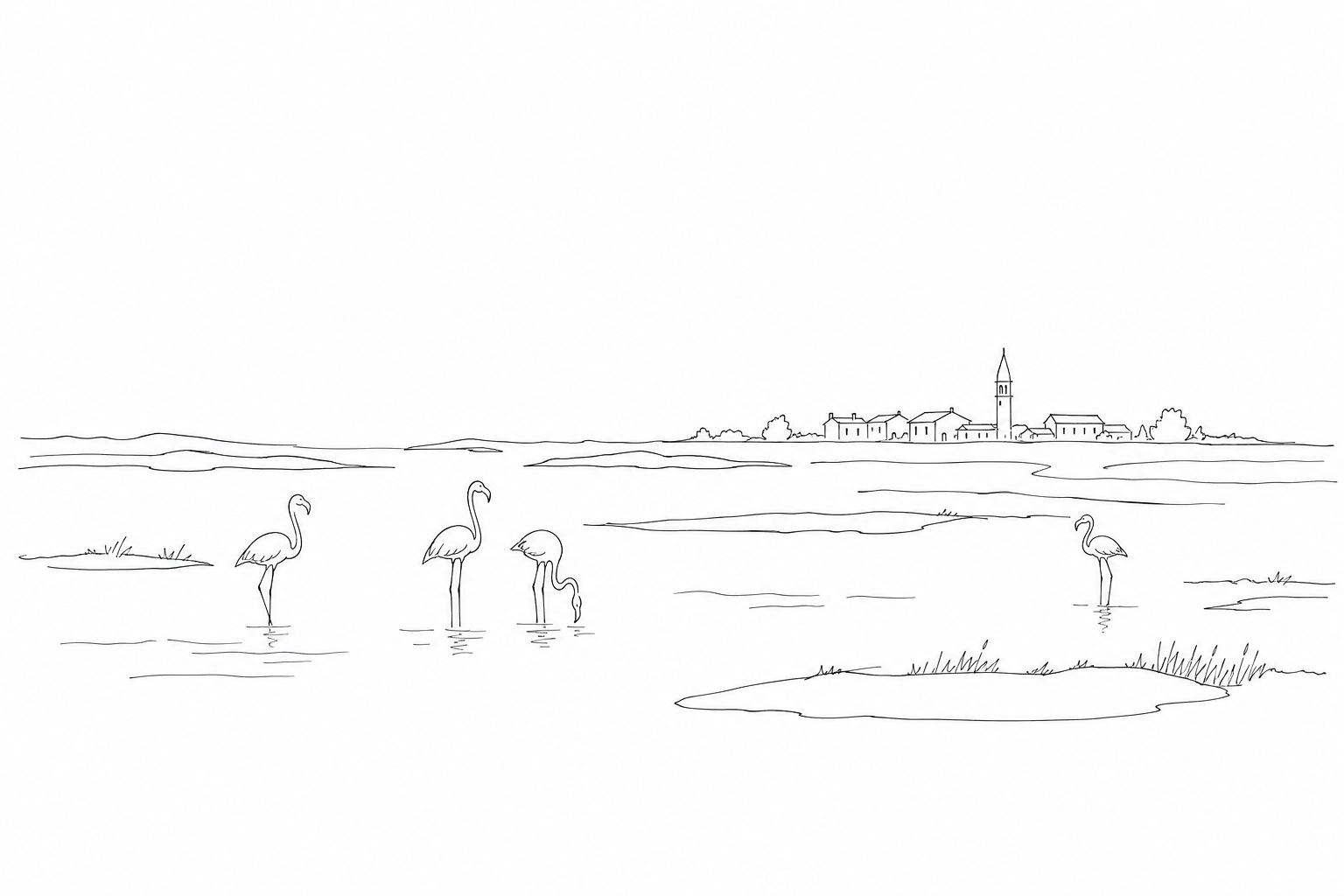
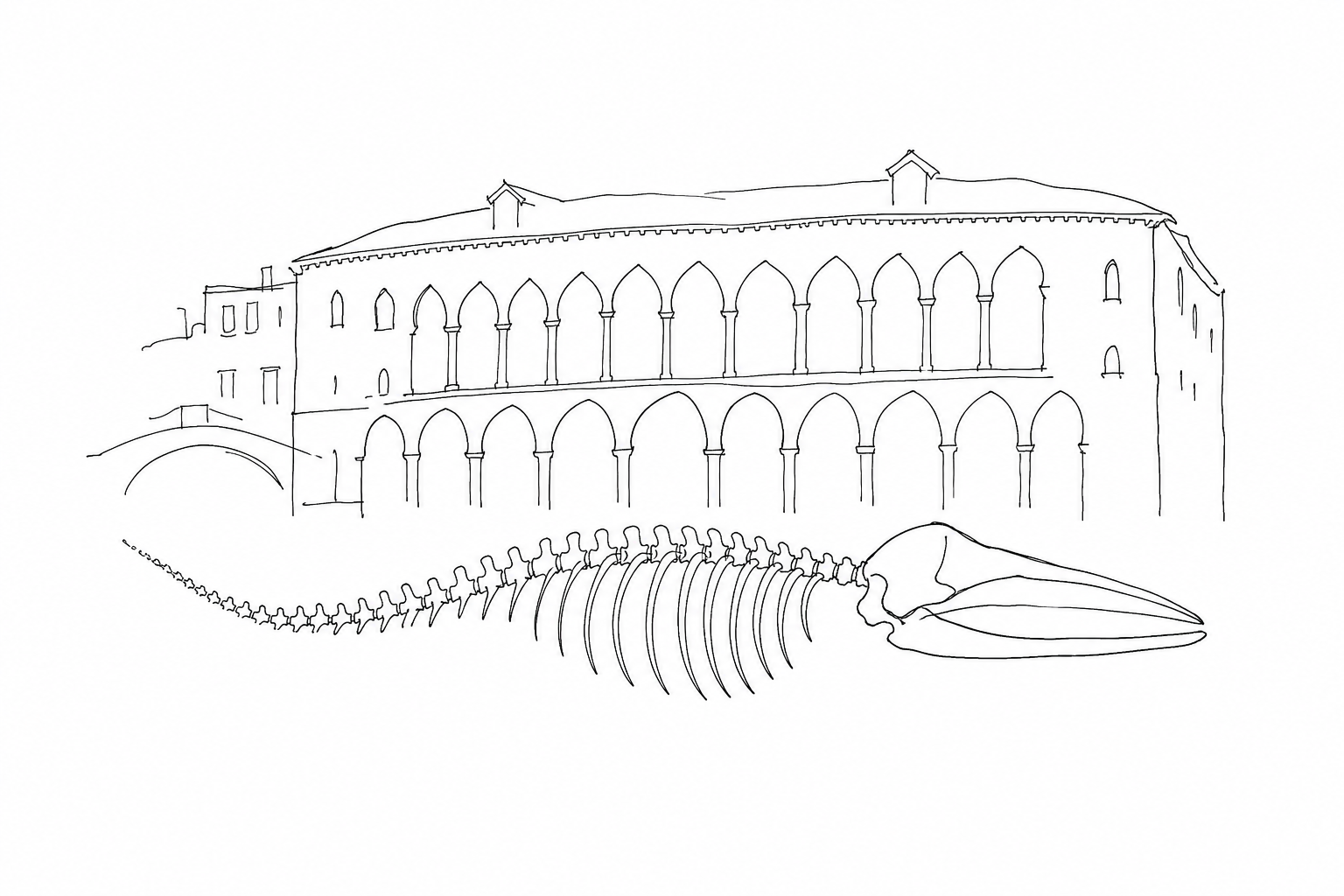

The Natural History Museum shows a less predictable Venice: not only painting, churches and palaces, but scientific collections, cetacean skeletons, fossils and finds that tell of the relationship between the city, the sea and deep time. Housed in the Fontego dei Turchi, overlooking the Grand Canal, the museum combines mercantile architecture and naturalistic knowledge, transforming a historic building into a route made of bones, stones, animals and questions. It is a stop suited to those who want to read Venice also through what it preserves, studies and classifies, far from the idea of a museum as a simple indoor break.
A scientific museum in the Fontego dei Turchi
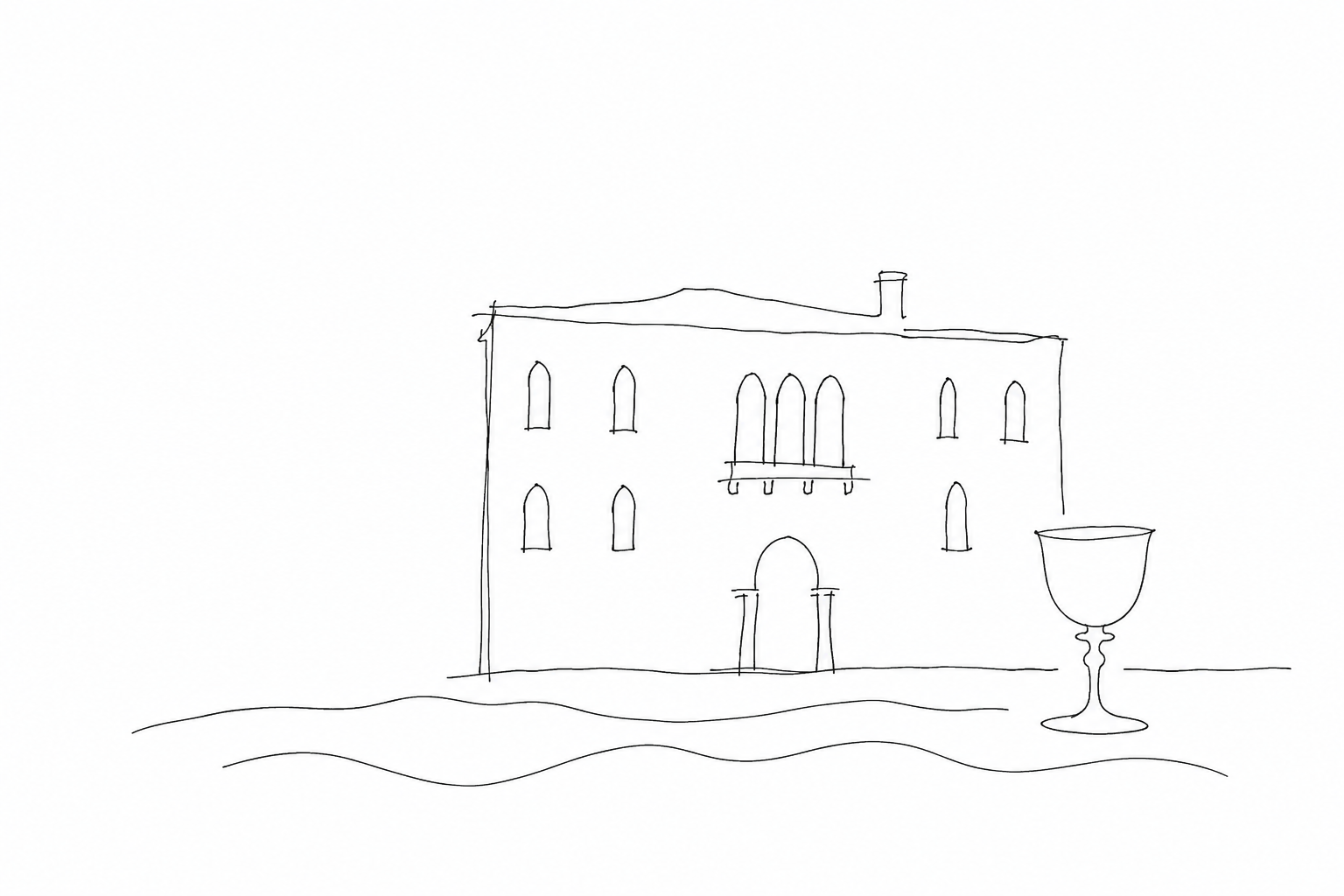
The Natural History Museum of Venice occupies one of the most recognizable buildings on the Grand Canal: the Fontego dei Turchi, in the Santa Croce sestiere. Before housing cetacean skeletons, fossils and zoological collections, this palace was part of the city’s commercial history. Its façade, with the long portico on the water and the sequence of arches, recalls the Veneto-Byzantine language that marked medieval Venice.
In the seventeenth century the building was assigned to Ottoman merchants, who had warehouses, lodgings and controlled spaces for trade here. The name “Fontego” preserves precisely this function: not a simple noble palace, but a place of goods, encounters and diplomatic surveillance.
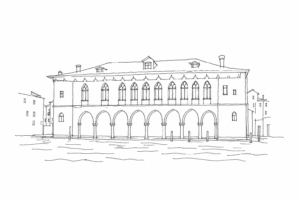
The transformation into a museum venue adds a further level to the urban reading. After nineteenth-century restorations and its use as the seat of the Museo Correr, the palace became home to the natural history collections in the twentieth century. Thus, inside a building born for international trade, Venice today tells of much older routes: those of evolution, prehistoric seas and animal life.
Whales and cetaceans: the sea enters the rooms
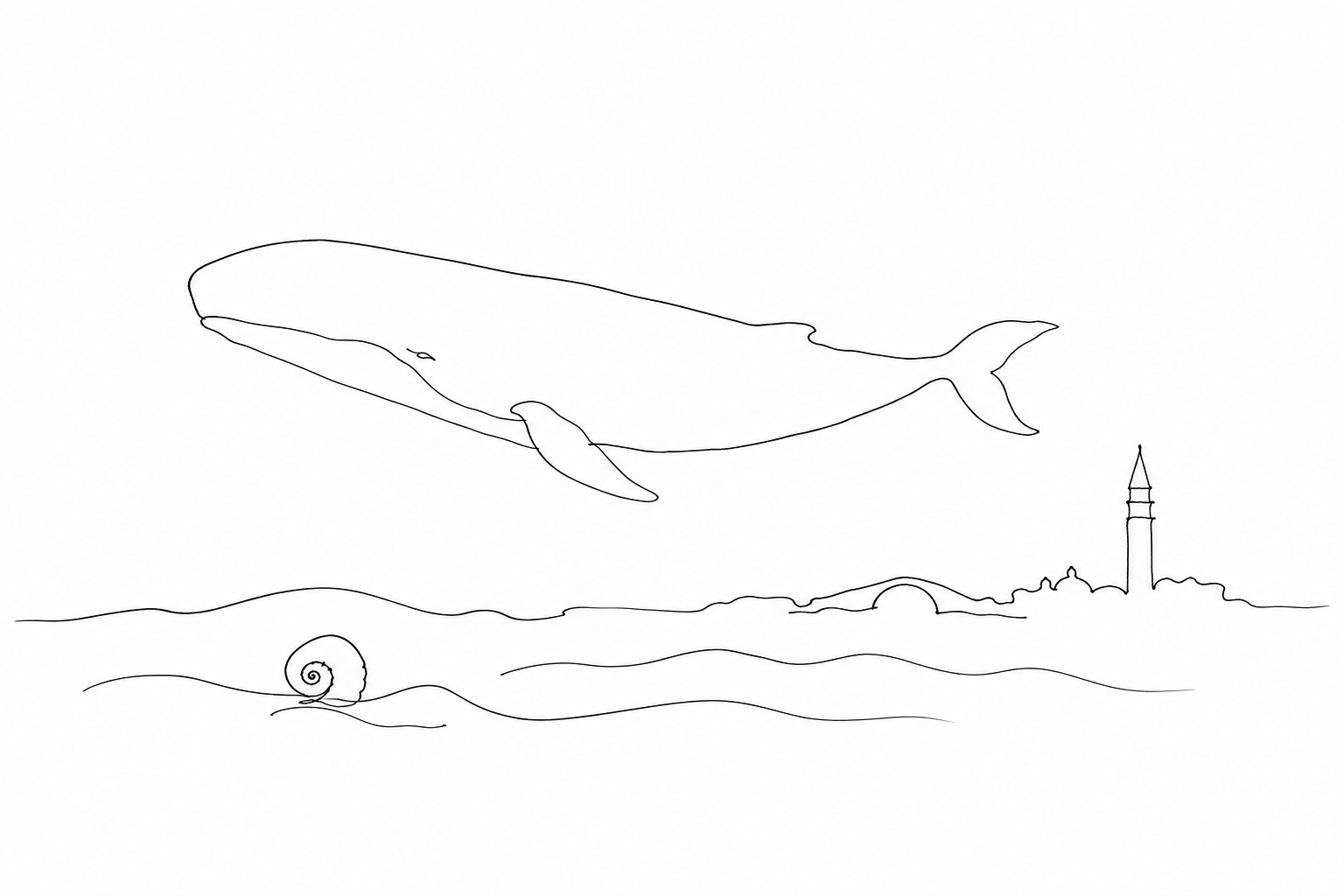
The emotional heart of the visit is often the cetacean section, because it brings into the rooms a scale that visitors almost never encounter up close. In front of the skeletons of whales and other marine mammals, the animal body becomes architecture: vertebrae like elements of a long nave, ribs that outline a volume, skull and jaws capable of making the power of swimming visible.
Here zoology is not just a list of species. The differences between baleen and teeth, between filter feeding and active hunting, help us read two opposite ways of inhabiting the sea. A whale shows how a giant can feed on tiny organisms; an odontocete, instead, tells of echolocation, depth and predation.
In a city built on water, this presence has a particular effect: it reminds us that the sea is not only landscape or trade route, but an ecosystem populated by complex forms of life. Cetaceans make the continuity between lagoon, Adriatic and oceans concrete, transforming wonder into knowledge.
Fossils, dinosaurs and deep time
After the impact of the large marine skeletons, the visit changes scale: from immense bodies we move to deep time, the kind measured in millions of years. The fossil collections serve precisely this purpose: they do not merely show “ancient finds,” but transform stones, footprints, bones and shells into a readable sequence of vanished environments.
Among the most recognizable nuclei are the materials linked to the paleontological expeditions promoted by Giancarlo Ligabue, in particular those in the Nigerien Sahara. Here the narrative becomes very concrete: herbivorous dinosaurs, large freshwater predatory reptiles, fragments of Cretaceous ecosystems that allow us to imagine rivers, plains and climates extremely distant from the current lagoon.
The value of the section lies not only in the rarity of the pieces, but in the way it forces us to read the city from another perspective. In a place often associated with painting, palaces and trade routes, fossils remind us that natural history precedes and surpasses human history. Each display case broadens the horizon: before the Serenissima, before the current Adriatic, there were moving continents, extinctions, adaptations and forms of life now lost.
A quick reading during a short stay
If time is short, it is best to enter with a clear hierarchy: first the fin whale room, because it immediately gives the physical measure of the relationship between lagoon, Adriatic and natural life; then the great paleontological finds, which shift the gaze to extremely distant eras; finally the zoological sections, to be read not as a simple catalogue of animals, but as an archive of environments, migrations and adaptations.
The value of the visit, in a short itinerary, lies in the contrast with palaces, churches and painting: here the city is not only an artistic setting, but an observation point on water, climate, living species and transformations of the territory. To orient yourself better, choose a few questions: what does the skeleton of a whale tell us? Which forms of life precede the current lagoon? In what way has collecting nature also meant studying the world?
Before going, always check updated information on opening hours, tickets and access.
Visiting the Natural History Museum during a short stay means introducing an intelligent variation into the Venetian rhythm. After calli, campi and façades on the water, the rooms of the Fontego dei Turchi open up a different perspective: the sea as a living environment, fossils as a measure of time, collections as traces of research and curiosity. It does not replace artistic Venice, but completes it, reminding us that the city is also observation, science, commerce, nature. For this reason it works well in a slow itinerary: it offers concrete content, a significant venue and a broader view of what Venice can tell.
Related Posts
The Fontego dei Turchi: from home of Ottoman merchants to museum on the Grand Canal
History, architecture and urban interpretation of the Fontego dei Turchi, from the Ottoman presence in Venice to the Museum of Natural History.Naval History Museum: gondolas, models and ships to understand Venice as a maritime city
A route through the Naval History Museum to interpret Venice through gondolas, ship models, the Arsenal and maritime culture.
Visiting Venice without entering any museum: a day made of details, campi and water
A slow itinerary in Venice without museums, among calli, campi, bridges, rii, fondamenta and stops to read the inhabited city.Questions Answered
What is the significance of the Fontego dei Turchi building?
It reflects Venice’s commercial past and now houses natural history collections.What can visitors learn from the cetacean exhibits?
They illustrate marine life and ecological connections between lagoon and ocean.How do fossils contribute to understanding Venice in the museum?
They reveal prehistoric environments and biological evolution predating human history.How should one prioritize exhibits in a short visit?
Start with the whale room, then fossils, and finish with zoological sections.
Follow another thread of Venetian art
Which places help you see artists, architecture and history as parts of the same city?
 The Fontego dei Turchi: from home of Ottoman merchants to museum on the Grand CanalHistory, architecture and urban interpretation of the Fontego dei Turchi, from the Ottoman presence in Venice to the Museum of Natural History.
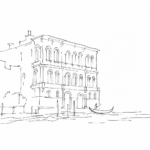 Ca’ Pesaro: why modern art in Venice lives in a palace on the Grand CanalWhy Venice’s Gallery of Modern Art is in a Baroque palace on the Grand Canal: the history, architecture, collections and urban meaning...
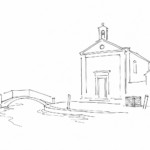 Santa Maria Mater Domini: a small church for understanding the mercantile Venice of Santa CroceA slow reading of Santa Maria Mater Domini, among campo, mercantile history, art and the urban fabric of Santa Croce.
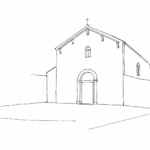 San Giacomo dall’Orio: beams, silence and ancient stone in the less obvious heart of Santa CroceA slow reading of San Giacomo dall’Orio: campo, wooden beams, ancient columns and urban quiet in Santa Croce.