
Casa Goldoni is not only a museum dedicated to an author: it is a way to enter Venetian theater starting from a palace in San Polo, with its stairways, courtyard, and traces of an urban life made up of families, trades, and passages. Here the biography of Carlo Goldoni meets the concrete Venice of the eighteenth century, the one observed in the squares, workshops, and everyday conversations. Visiting this house means reading theater even before the scripts: in the places, in the objects, in the domestic proportions, and in the memory of a district that remains central without becoming predictable.
A palace in San Polo before the museum
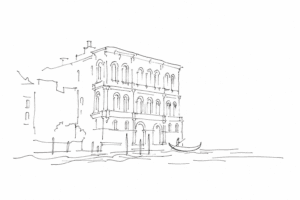
Before being identified with the memory of Carlo Goldoni, Casa Goldoni is first and foremost a Venetian building set within the dense fabric of San Polo. The palace, known as Ca’ Centani or Centanni, belongs to that residential Venice made up of small squares, canals, narrow passages, and façades that often reveal themselves only when arriving a few steps from the entrance.
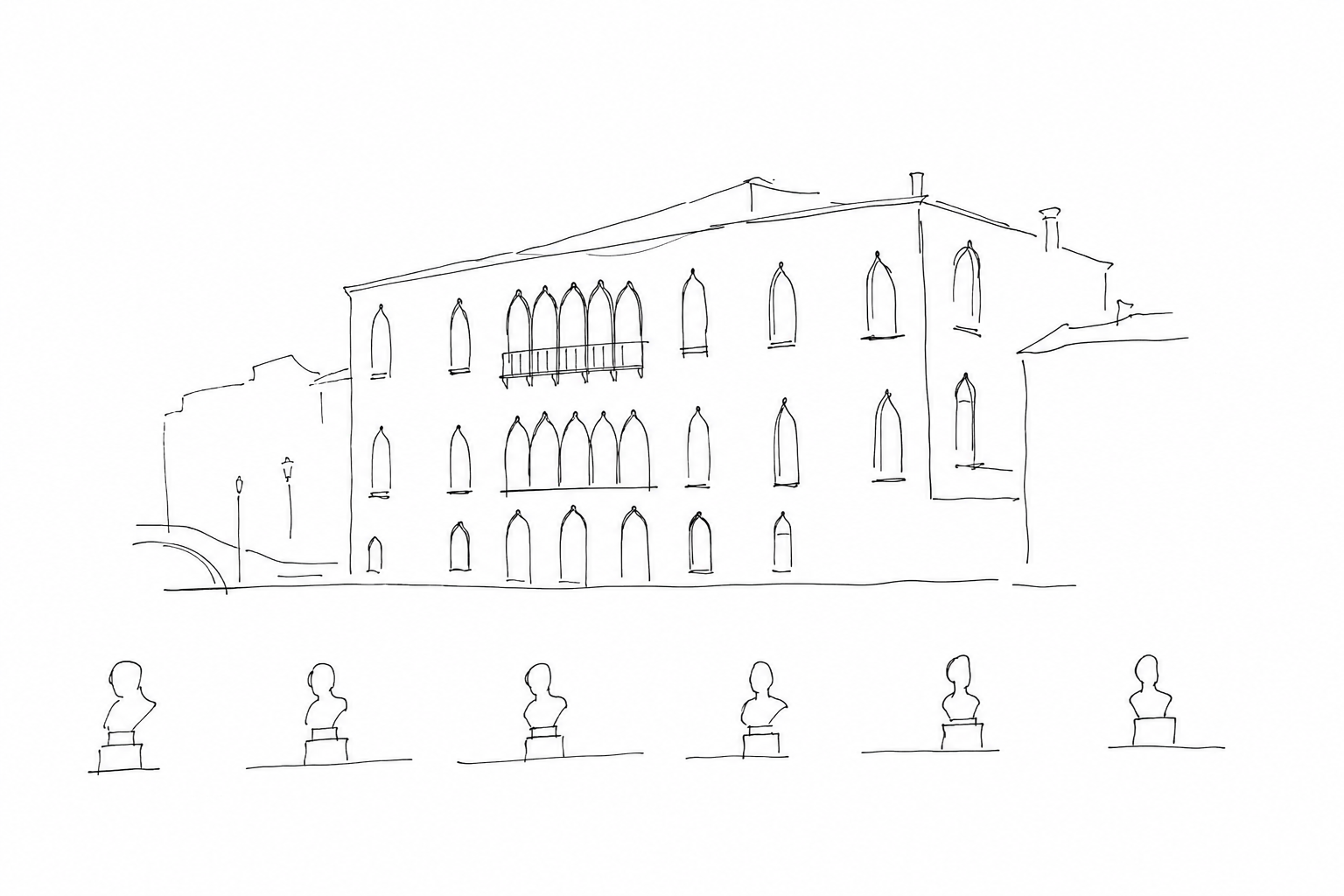
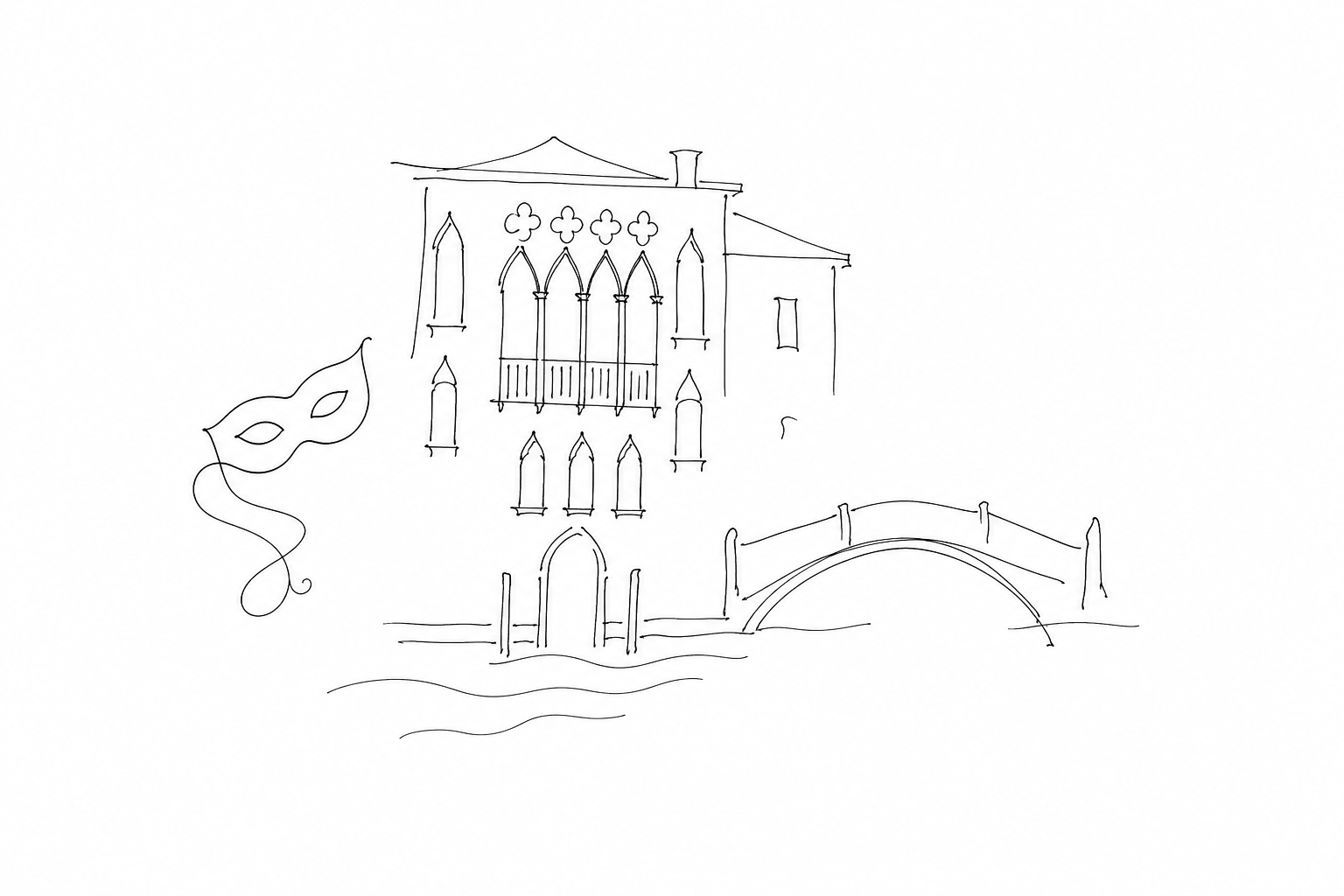
Its architecture preserves the character of a Venetian Gothic residence: vertical proportions, elegant openings, and a close relationship with the water and the minute circulation routes of the sestiere. It is not an isolated or monumental palace in the most theatrical sense of the Grand Canal, but a noble house rooted in a busy district, near San Tomà and not far from the mercantile routes of Rialto.
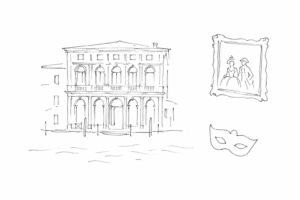
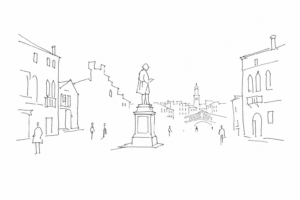
This location helps to read the museum: entering Casa Goldoni means passing from the urban everyday life of San Polo to the world of Venetian theater, understanding how Goldoni’s comedy was also born from the observation of courtyards, calli, workshops, and city conversations.
Carlo Goldoni was born in Venice on February 25, 1707, in a family environment that soon brought him into contact with mobility, professions, and urban relationships. His father Giulio, a doctor, and his mother Margherita Salvioni belonged to an educated bourgeoisie, different from the aristocracy but close to its spaces: salons, theaters, conversations, journeys between cities of the Republic and northern Italy.
The residence today linked to his name helps to read this Venetian origin not as a simple biographical fact, but as a cultural premise. In the eighteenth century the city lived on spectacle: public theaters, companies, masks, impresarios, and an audience ready to recognize itself in everyday characters. Goldoni transformed that living material into theatrical reform, reducing the improvisation of the commedia dell’arte and giving more weight to texts, dialogues, and psychologies.
Entering the museum therefore means approaching the young author before fame: a Venetian who grew up observing the voices, trades, social contrasts, and gestures of the city that would become stage material.
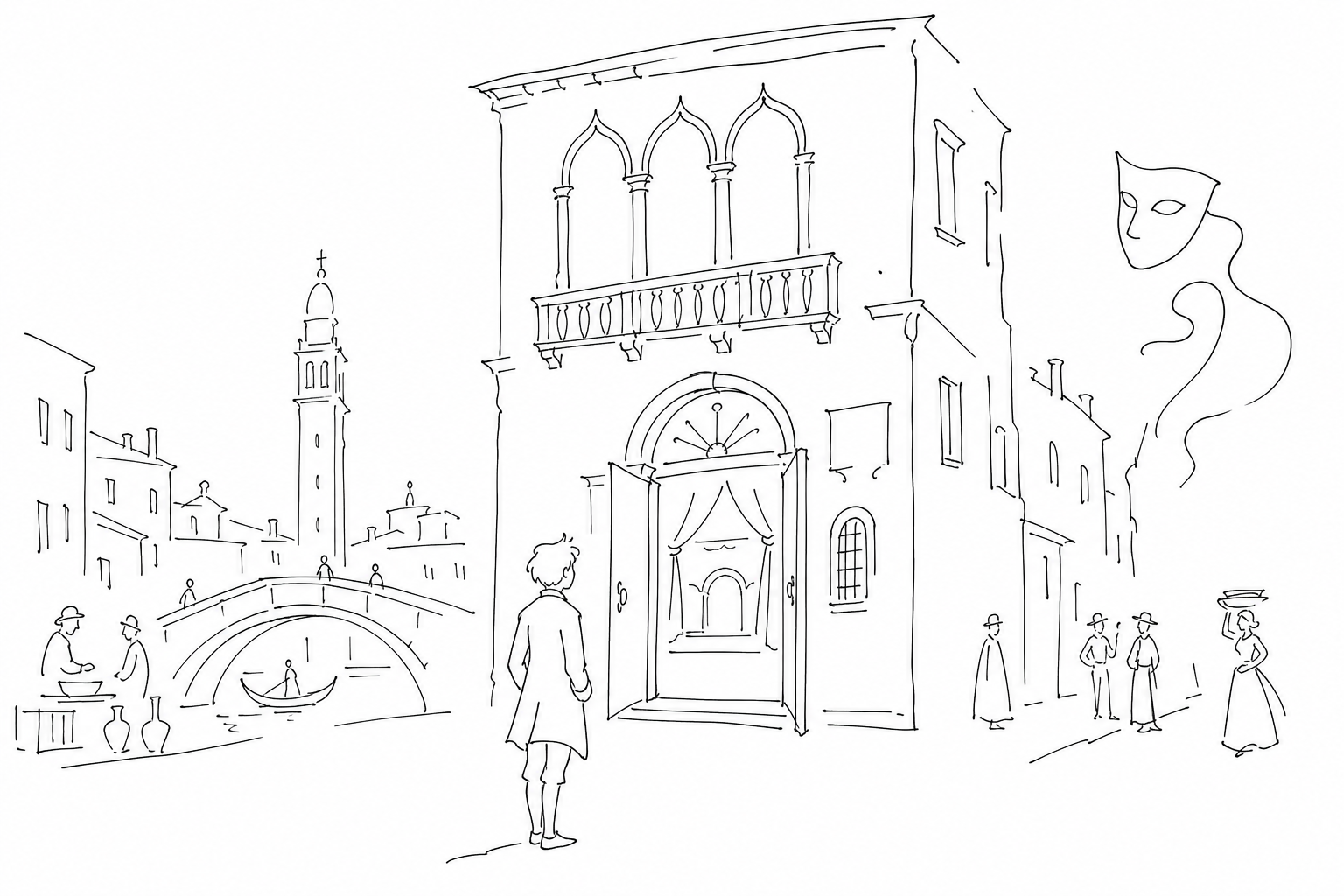
The visit should not be read as a simple sequence of commemorative rooms. The building in San Polo, identified with Palazzo Centani, already preserves in its layout a key to interpretation: courtyard, open staircase, portego, and view onto the water speak of an urban residence, crossed by people, goods, and voices. Even before the display cases, it is useful to observe how the spaces require movement through thresholds and passages, almost as if on a stage.
The display dedicated to Goldoni works through evocation rather than through full reconstruction. Portraits, editions, documents, costumes, and stage materials should not be sought as isolated relics, but as clues to a trade: writing for actors, companies, impresarios, and different audiences. The famous puppet theater, linked to eighteenth-century aristocratic taste, shows how theater was also object, mechanism, miniature, and social game.
In order not to trivialize the route, it is useful to distinguish three levels: the Gothic architecture of the residence, the biographical memory of the author, and the Venetian theatrical culture of the eighteenth century. It is from the intersection of these planes that the museum becomes readable.
Visiting Casa Goldoni in the rhythm of San Polo
To orient the visit, it is useful to think of this address not as an isolated stop, but as a graft within the sestiere. The entrance from Rio Terà dei Nomboli leads into an area of small passages: narrow calli, small bridges, internal courtyards, and sudden openings toward larger squares. It is the same urban fabric that helps explain why eighteenth-century theater was also born from everyday observation.
At the edge of the itinerary, the context offers clear coordinates: the Frari and San Rocco recall the artistic density of the area; San Tomà and the routes toward Rialto show a city made of traffic, workshops, encounters, and social masks. The birthplace of the playwright is located precisely in this fabric, more domestic than monumental.
For variable aspects such as opening hours, tickets, or any closures, it is always advisable to check updated information through the official channels.
Leaving Casa Goldoni means returning to San Polo with a more attentive gaze. The museum helps to understand how Goldoni’s theater was born from the observation of the real city: the characters, the voices, the habits, the social tensions that Venice transformed into stage. For this reason the visit works best if it does not remain isolated, but is linked to the rhythm of the district, to its squares, to the routes toward Rialto, and to the less hurried calli. In an apparently discreet palace, theatrical Venice stops being an image and becomes an urban experience.