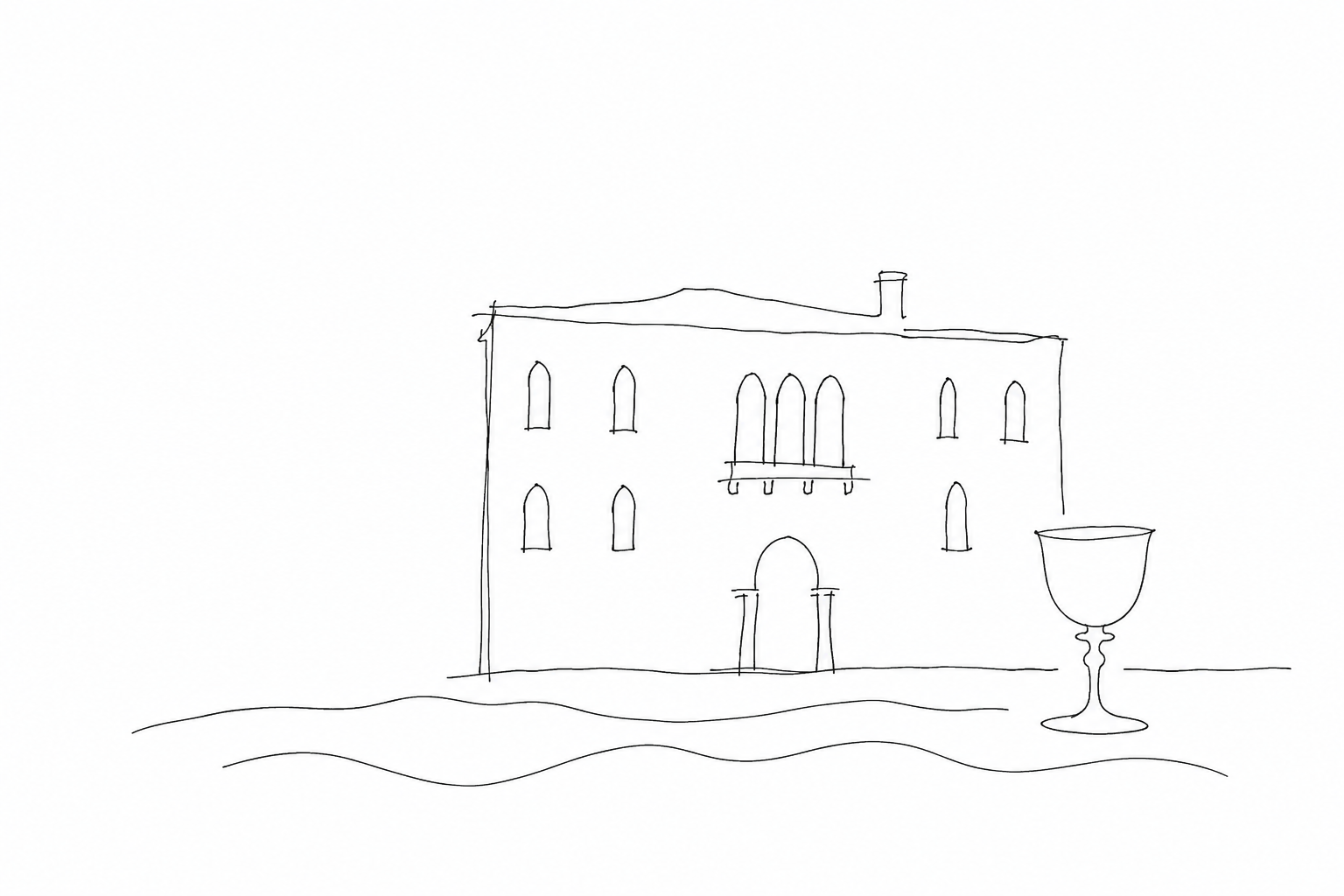

Murano cannot truly be understood by watching only a furnace demonstration. The Glass Museum, housed in Palazzo Giustinian, makes it possible to read the island through objects, techniques, trade and social transformations that have built its identity. The rooms do not only recount the skill of the master glassmakers, but also the relationship between Venice and its islands, between production and control, between aristocratic taste, technical research and daily life. Visiting the museum means slowing down and observing Murano with a less immediate, more precise gaze.
Why the museum changes the way you look at Murano
A furnace demonstration shows the gesture: the master who gathers the incandescent mass, blows, cuts, shapes. The Murano Glass Museum, instead, makes it possible to read what that gesture carries with it: centuries of techniques, migrations of knowledge, production rules and Venetian taste.
In the rooms of Palazzo Giustinian, an ancient seat linked to the bishops of Torcello, history is not reduced to the spectacle of the moment. Archaeological finds converse with Renaissance glass, filigree, lattimo, murrine and twentieth-century works, showing how Murano was a laboratory, an artistic industry and an archive of inventions.

The value of the museum lies precisely in this change of scale: from the souvenir to duration. A thin glass, an enamelled cup or a technical sample set explains better than many performances why the island is not only “where you see glass being blown,” but a place that has built identity through matter, fire and expertise.
Palazzo Giustinian: a history inside a building
The home of the Glass Museum is not a neutral container. Palazzo Giustinian overlooks Murano’s main canal, at a point that recalls how much the island was organised around water: transport of sand and raw materials, arrival of merchants, circulation of finished objects towards Venice and beyond.
The building, of Gothic origin and later adapted over the centuries, was linked to the presence of the bishops of Torcello; this layering helps one read Murano as an autonomous community, with its own religious, civic and production institutions, not as a simple scenic appendix of the lagoon.
The collection was born in the nineteenth century, in the climate of rediscovery of Venetian applied arts, thanks to the initiative of local figures such as Abbot Vincenzo Zanetti and Antonio Colleoni. It was not only a storehouse of ancient pieces: it served to document techniques, models and memories that were also useful to the island’s manufactories.
Entering Palazzo Giustinian, therefore, means reading architecture and industry together: rooms, views and routes relate the civic history of Murano to that of glass, even before observing a single cup or bead.
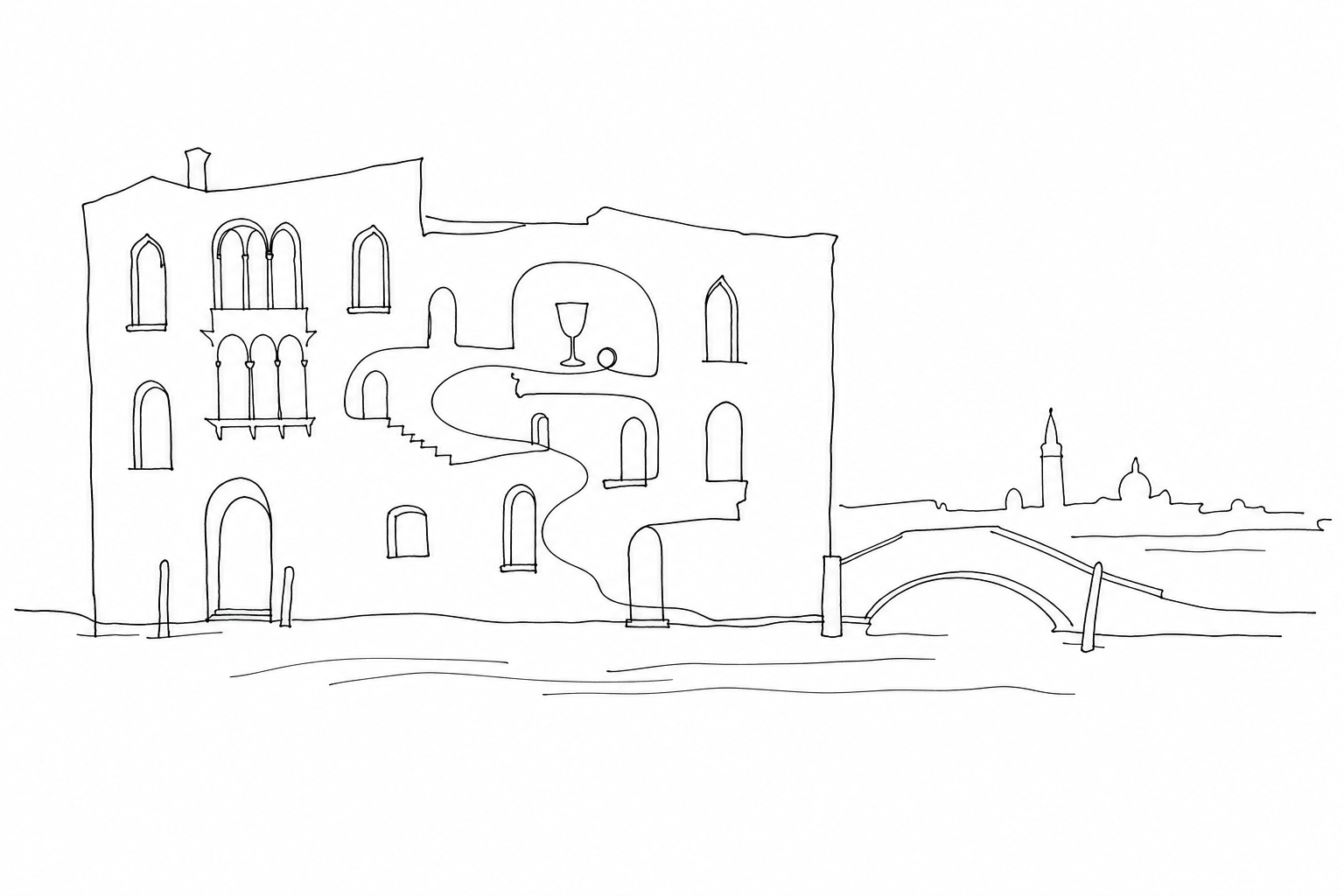
Rooms, techniques, centuries: a grammar of the furnace
The route works best if you do not immediately look for the “most beautiful” piece, but observe how the form, colour and use of the objects change. The oldest sections help to recognise a Mediterranean heritage preceding the Venetian period: balsamaria, cups and small containers show how blown glassworking was already a refined technology in the Roman age.
When Renaissance artefacts appear, the point is not only transparency. Venetian cristallo was born as a technical ambition: to obtain a clear, thin material, almost free of impurities. Alongside it, enamel and gold decoration reveals a courtly taste, made of coats of arms, small figures and surfaces to be viewed up close, not of quick demonstration effects.
In the following centuries it is worth following the solutions that artisans adopted to transform matter into design: filigree, with white or coloured threads incorporated into the wall; lattimo, opaque and white, often used to imitate porcelain; chalcedony, which seeks veining similar to hard stones; murrine, where the motif is born from the section of composite canes.
The eighteenth century introduces another key: European competition. Figures such as Giuseppe Briati and the success of Venetian chandeliers recount a production capable of responding to Bohemian crystal and the taste of the courts. The rooms thus become an atlas: not a sequence of isolated objects, but a chronology of problems solved in the furnace.
After the furnace: how to look more carefully
The live demonstration helps to understand gesture, heat and speed, but it risks reducing everything to virtuosity. Before or after the trial, it is worth entering the collection with three simple questions: who will use this object, what technical problem does it solve, what social taste does it represent?
- Look at controlled imperfections: bubbles, filaments, inclusions and thicknesses are not only decoration; they often reveal procedures, risks and workshop choices.
- Follow the forms of use: goblets, lamps, mirrors, conterie beads and pharmacy objects recount trade, domestic life and relationships with Venice.
- Connect rooms and territory: when leaving, observing calli, banks and ancient production areas helps to understand why fire, water and the control of spaces were decisive.
For an informed visit it is useful to check updated details on access and opening hours in advance, then devote time to the captions: there, wonder becomes context.
Leaving the Glass Museum means returning to the calli of Murano with different tools: a cup, a bead, a chandelier or an archaeological fragment are no longer simple decorative objects, but traces of centuries of work, invention and exchange. The visit does not replace the furnace, it completes it: it helps to distinguish the scene designed for the visitor from the broader history of the island. For those who want to go beyond the quick image of the souvenir, Palazzo Giustinian is an essential starting point.
Related Posts
Murano beyond the furnaces: the lighthouse, the fondamenta and the real life of the glass island
A portrait of Murano beyond glass: lighthouse, fondamenta, canals and daily life on the island.The Burano Lace Museum: the slow art that photographs of the colorful houses do not tell
An outline on the Burano Lace Museum, among history, gestures, rooms and mindful visiting.
Glass beads in Venice: a small global object born between Murano and city workshops
History, places and meanings of Venetian glass beads, between Murano furnaces, urban work and global routes.Questions Answered
What makes the Murano Glass Museum different from furnace demonstrations?
It reveals the historical, technical, and social context behind glassmaking, not just gestures.Why is Palazzo Giustinian important for Murano’s history?
It connects the island’s religious, civic and industrial past to its glass production.What are some key glassmaking techniques shown in the museum?
Techniques like cristallo, filigree, lattimo and murrine illustrate innovation over centuries.How should visitors look at glass objects in the museum?
By considering imperfections, use, and what social tastes they represent.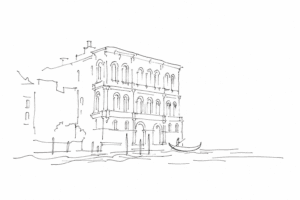
Keep exploring the lagoon islands
Want to connect this stop with islands where landscape, craft and history change completely?
 Glass beads in Venice: a small global object born between Murano and city workshopsHistory, places and meanings of Venetian glass beads, between Murano furnaces, urban work and global routes.
 Venetian impiraresse: the women who strung beads and kept an invisible trade aliveHistory and memory of the Venetian impiraresse, workers in the conterie trade who strung beads between home, calli and workshops.
 Murano, Burano or Torcello: Which Venice Island Should You Choose?At some point while planning a trip to Venice, the same question almost always appears: is it worth visiting the islands too?...
 The Burano Lace Museum: the slow art that photographs of the colorful houses do not tellAn outline on the Burano Lace Museum, among history, gestures, rooms and mindful visiting.