
Ca’ Pesaro is not just a museum of modern art overlooking the Grand Canal: it is one of the places where Venice shows how the past can become a space for the new. Inside a Baroque palace built for a powerful family, among marble, grand staircases and windows on the water, there are works that tell of the nineteenth and twentieth centuries, the Biennales, the civic collections and the city’s cultural choices. Visiting Ca’ Pesaro therefore means reading architecture, urban politics and artistic taste together, without separating the container from the content.
A Baroque palace for a changing city
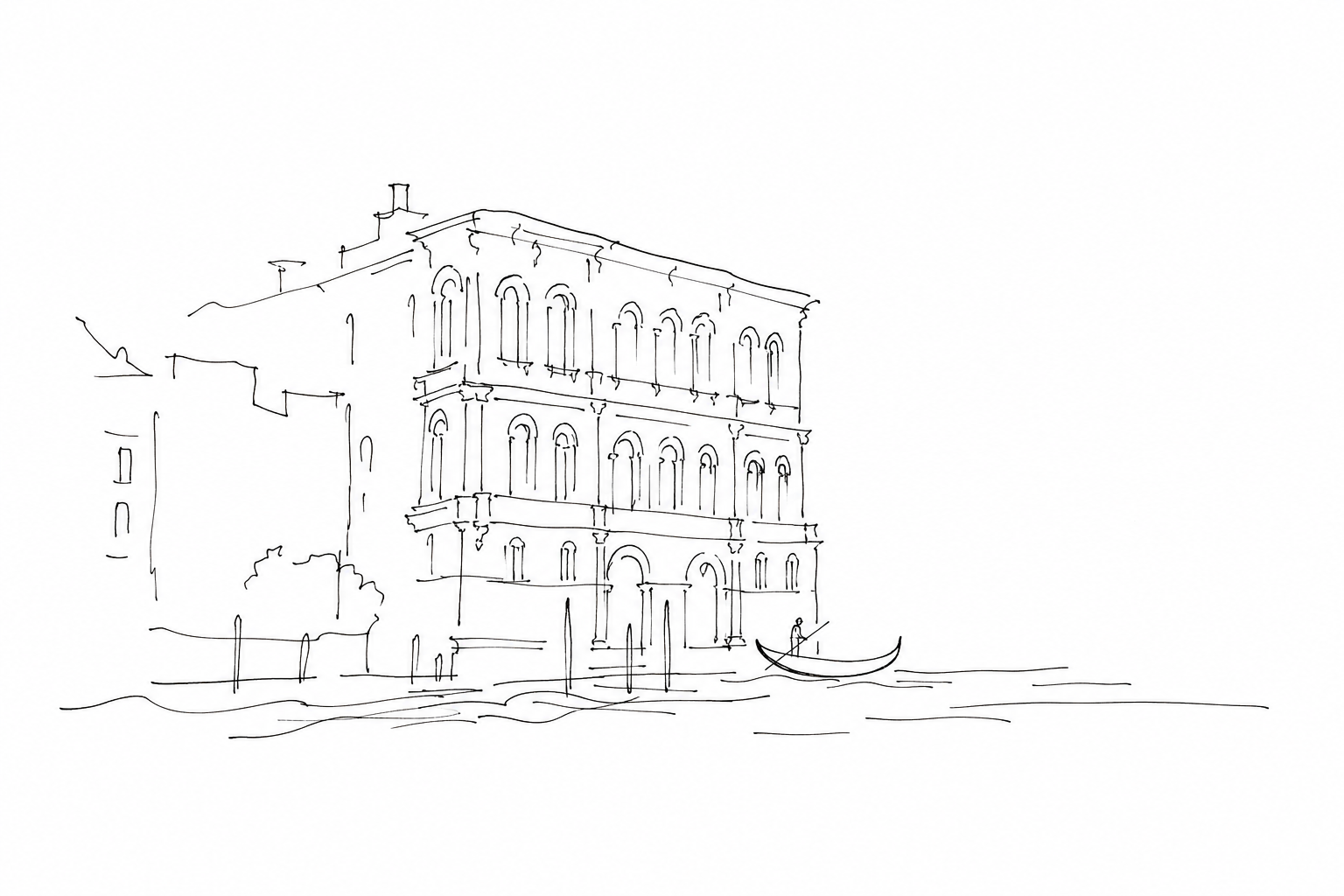
Ca’ Pesaro is striking precisely because it does not resemble the immediate idea of a museum of modern art. Its severe façade on the Grand Canal, designed by Baldassare Longhena for the Pesaro family and completed by Antonio Gaspari, speaks the language of Venetian Baroque: Istrian stone, monumental orders, deep windows, an almost theatrical presence on the water.
Inside, however, the city has placed a different narrative: that of the International Gallery of Modern Art, born from acquisitions, donations and the decisive link with the Venice Biennale. It is here that the palace ceases to be merely aristocratic memory and becomes a sign of transformation: Venice does not only preserve its past, but uses it as a frame for reading the twentieth century.
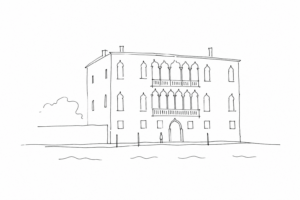
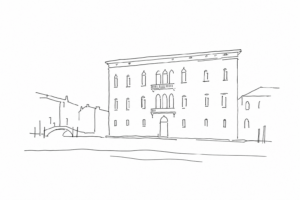
The contrast is not an accident, but the starting point. Modern works and historic rooms coexist because Ca’ Pesaro shows a distinctly Venetian continuity: the ability to absorb different eras without erasing what came before them.
From the Pesaro family to the civic museum
The transition from patrician residence to public museum explains why modern art found a place right here, on the Grand Canal. The palace was born as an assertion of family prestige: a monumental house, entrusted to Baldassare Longhena and then completed by Gian Antonio Gaspari at the beginning of the eighteenth century, designed to represent rank, wealth and dynastic continuity.
With the end of the Republic and the changing of social balances, many Venetian aristocratic residences lost their original function. This house too went through changes of ownership and new uses, until the decisive turning point linked to Felicita Bevilacqua La Masa. The duchess assigned the building to the city, with a precise intention: to transform a private legacy into a space useful to contemporary cultural life.
This is where the gallery’s civic vocation was born. Not a simple reuse of old rooms, but a conversion of meaning: what was a sign of noble power becomes a place of public access, preservation and engagement with the artistic present.
Biennale, purchases and collections: the decisive choice
The link between Ca’ Pesaro and the twentieth century stems from a very concrete decision: not to allow the works presented at the first Biennales to remain merely exhibition episodes. At the end of the nineteenth century, the Municipality began to purchase works seen in the international exhibitions, forming a stable civic core. In this way Venice placed alongside its own historical memory a collection capable of engaging with living, debated languages, often still controversial.
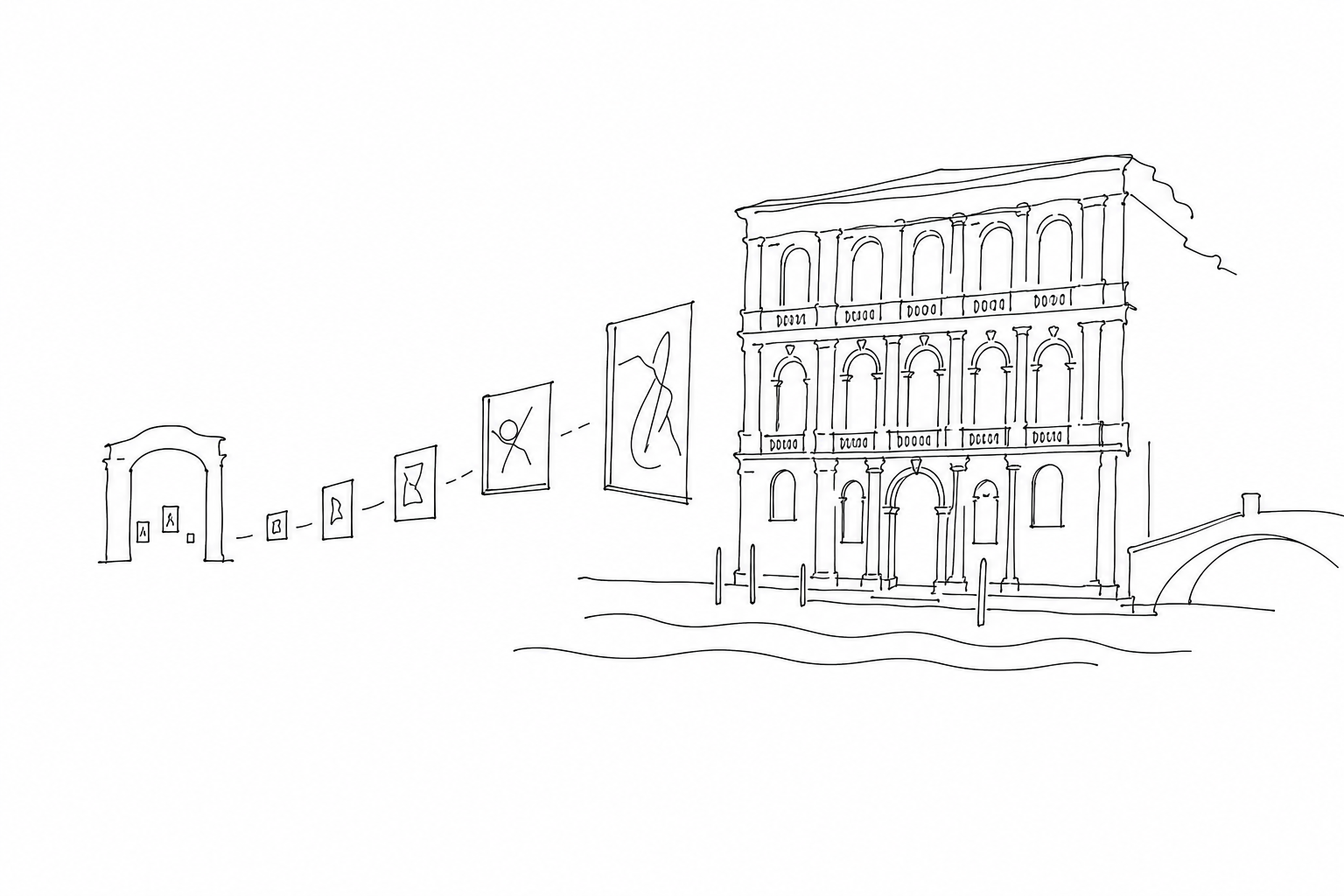
The donation of Felicita Bevilacqua La Masa gave that collection a coherent home. The rooms overlooking the Grand Canal were not conceived as a mere prestigious repository: they became the place where public purchases, bequests and later acquisitions could tell the relationship between the lagoon city and the international scene.
Here the route does not depend on a single local school. The presence of works linked to the Biennale, together with names such as Klimt, Rodin, Medardo Rosso, Boccioni and other leading figures between the nineteenth and twentieth centuries, explains the nature of the gallery: a collection born from exchange, not from isolation. The palace on the Grand Canal thus inhabits a double identity: Venetian memory and a critical laboratory of the historical contemporary.
How to read it during a visit
The visit works better if the building is considered as part of the route, not as a simple container. Before going up, observe from the Grand Canal the Baroque façade begun by Baldassare Longhena and completed by Gian Antonio Gaspari: columns, superimposed windows and monumental mass prepare an intentional contrast with the works exhibited inside.
In the rooms, it is useful to read the labels looking for three clues: provenance from the Biennale, public purchase, bequest or donation. This information explains why certain works are here and not elsewhere.
A second criterion is the dialogue of scale: the seventeenth-century decoration and high ceilings make the force of paintings such as Klimt’s Judith II or the material tension of the sculptures by Medardo Rosso and Arturo Martini more evident. Do not look for a neutral sequence: the meaning lies in the passage between patrician magnificence and twentieth-century experimentation.
For up-to-date data on open rooms, tickets and services, always check the official information before your visit.
Understanding why modern art in Venice lives in Ca’ Pesaro helps you look at the museum more carefully. Not as a simple collection of works, but as the result of family legacies, public acquisitions, dialogues with the Biennale and transformations of the city. During the visit it is worth alternating your gaze: from the canvases to the rooms, from decorative details to the openings onto the Grand Canal. It is precisely in this continuous passage between palace and collection that Ca’ Pesaro reveals its most interesting identity.
Related Posts
Peggy Guggenheim in Venice: an American collector inside a never-finished palazzo
The story of Peggy Guggenheim in Venice, between Palazzo Venier dei Leoni, the Grand Canal, twentieth-century art and daily life in Dorsoduro.Palazzo Grassi: the white face of the Grand Canal between Venetian nobility and contemporary exhibitions
History, façade and current exhibition role of Palazzo Grassi, the white palace on the Grand Canal.
Ca’ Rezzonico and Pietro Longhi: everyday Venice in the eighteenth century, between masks and salons
An itinerary at Ca’ Rezzonico to read Pietro Longhi and Venetian life in the eighteenth century through social rituals, masks, salons and everyday details.Questions Answered
Why is Ca’ Pesaro an unusual museum of modern art?
Because it combines a Baroque palace with modern art collections linked to the Venice Biennale.How did Ca’ Pesaro become a public museum?
Through the donation by Felicita Bevilacqua La Masa transforming it from a private residence.What role does the Venice Biennale play in Ca’ Pesaro’s collection?
The museum acquires works from the Biennale to form a permanent civic collection.How should visitors approach the museum experience at Ca’ Pesaro?
By appreciating both the Baroque architecture and the provenance of artworks.Keep exploring Venetian art in context
Want to connect this story with works, churches and palaces that make more sense when read together?
 Palazzo Mocenigo: perfumes, textiles and noble life in the Venice of San StaeEditorial guide to Palazzo Mocenigo, among clothing, perfumes, noble rooms and the urban context of San Stae.
 The Fontego dei Turchi: from home of Ottoman merchants to museum on the Grand CanalHistory, architecture and urban interpretation of the Fontego dei Turchi, from the Ottoman presence in Venice to the Museum of Natural History.
 San Simeon Piccolo: the green dome in front of the station that seems to welcome those who arriveWhy San Simeon Piccolo, with its green dome on the Grand Canal, is the first face of Venice for those arriving at...
 Santa Maria Mater Domini: a small church for understanding the mercantile Venice of Santa CroceA slow reading of Santa Maria Mater Domini, among campo, mercantile history, art and the urban fabric of Santa Croce.