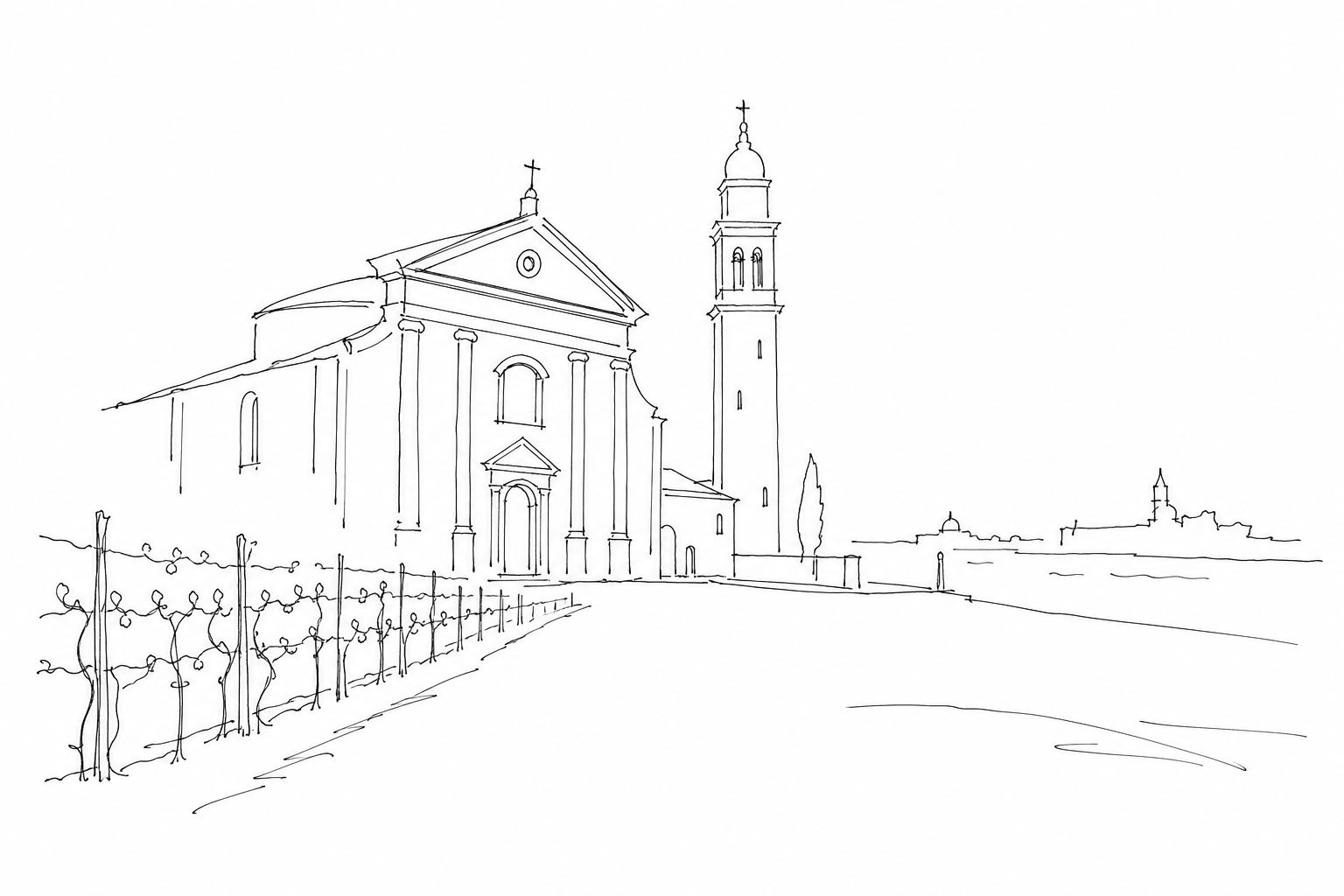

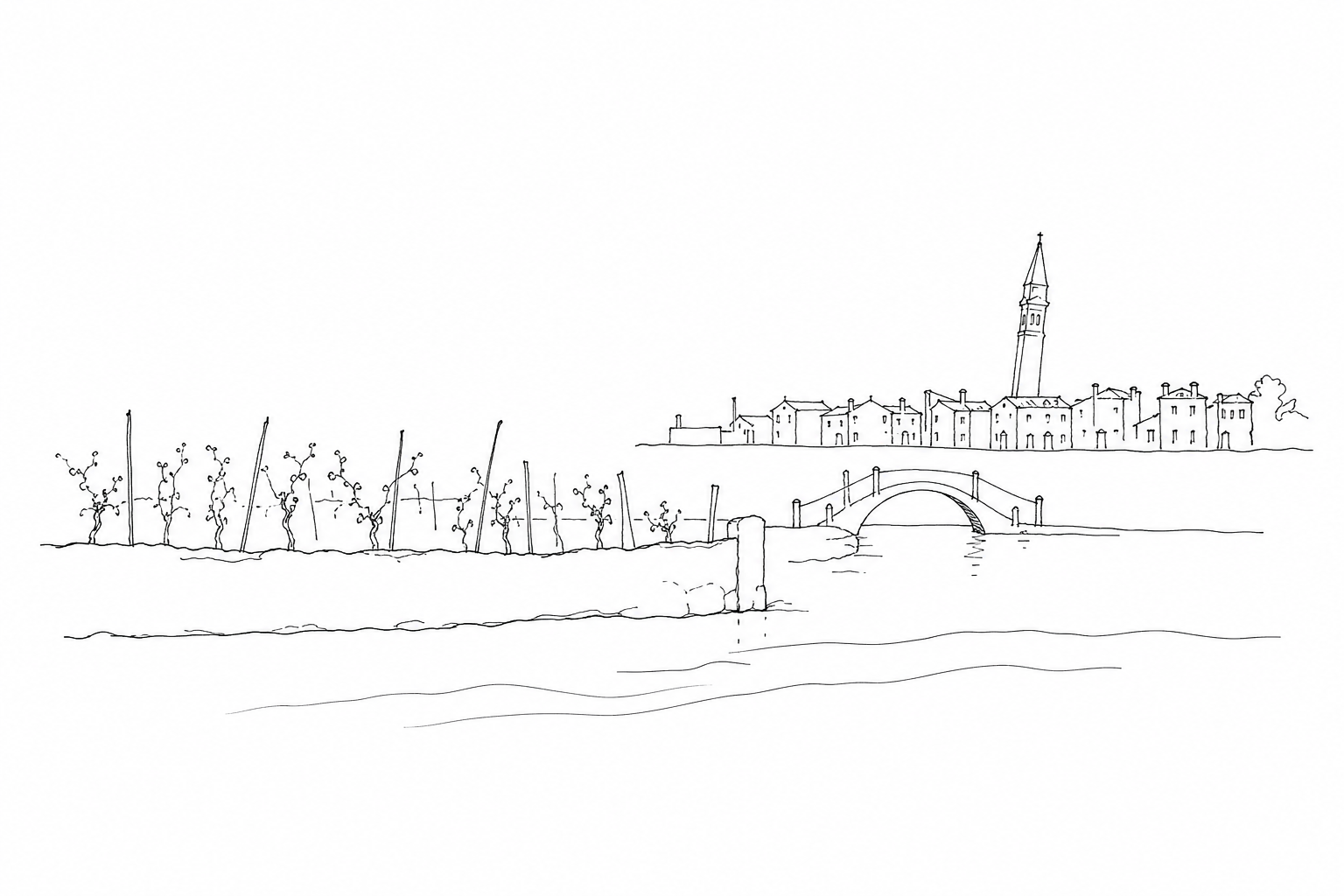
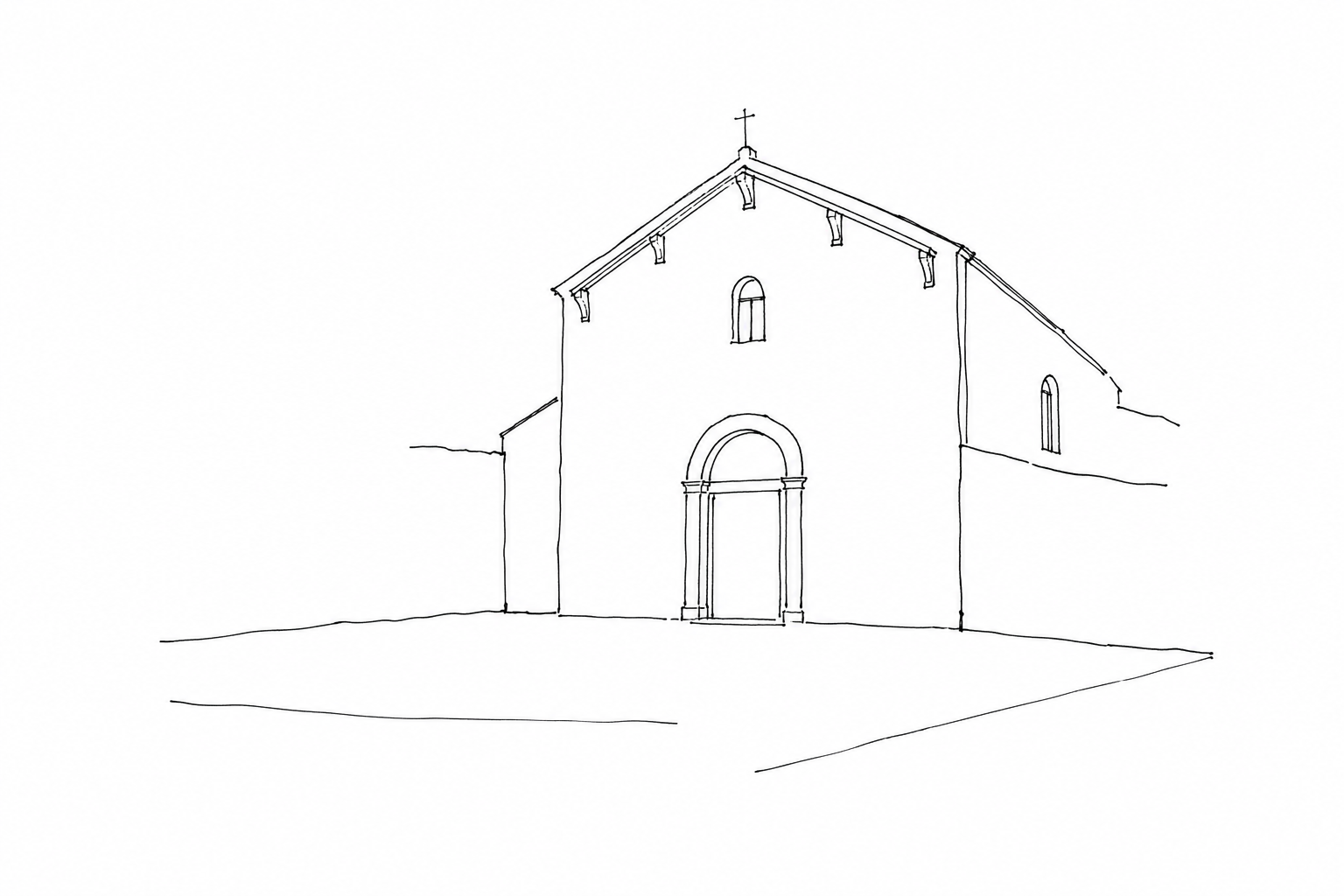

San Giacomo dall’Orio belongs to that Venice that does not impose itself immediately: a compact campo, a few water passages, lived-in houses and a church that seems to hold different centuries under the same roof. In the less obvious heart of Santa Croce, far from the more predictable routes, this place invites you to slow down and look carefully: the wooden beams, the ancient columns, the reused stones, the discreet light on the works. It is not a picturesque detour, but a small urban and historical node in which the city shows its everyday continuity.
A compact campo in the sestiere of Santa Croce
San Giacomo dall’Orio is encountered in the heart of Santa Croce, but not along the most predictable axis of Venetian passages. The campo in front of it seems to open up suddenly, after narrow calli and small turns, with a domestic scale that distinguishes it from the city’s great ceremonial spaces.
The church gives the place its name and determines its rhythm: it does not dominate with a monumental façade, but with an ancient, lateral presence, made of brick, worn stone and irregular proportions. Around it, the houses and courtyards maintain the impression of a secluded urban island, while remaining a short distance from very busy areas such as the Frari area, San Stae and the route toward Rialto.
This position explains part of its charm: San Giacomo dall’Orio does not ask for a spectacular detour, but for slower attention. Even before the internal beams and the works preserved inside, it is the campo that prepares the gaze for the silence of the church.
An ancient name and a layered history
San Giacomo dall’Orio belongs to that group of Venetian churches in which age is not read in a single date, but in a sum of reconstructions. Tradition places its origin in the Early Middle Ages, often recalling a very ancient foundation, perhaps between the 9th and 10th centuries; the forms visible today, however, mainly tell of Romanesque, Gothic and later transformations.
The structure preserves a composite character: spolia columns, different capitals, reworked masonry and the imposing internal wooden roof indicate a history built through adaptations, rather than through a single unified design. It is precisely this stratification that makes the church precious: it does not erase earlier periods, but lets them emerge.
The name also remains debated. “Dall’Orio” has been linked to various hypotheses: an ancient laurel, an area called “Luprio” or other linguistic distortions that developed in Venetian speech. The uncertainty does not impoverish the place; on the contrary, it makes it consistent with its identity, made of ancient stone, overlapping memories and traces not entirely resolved.
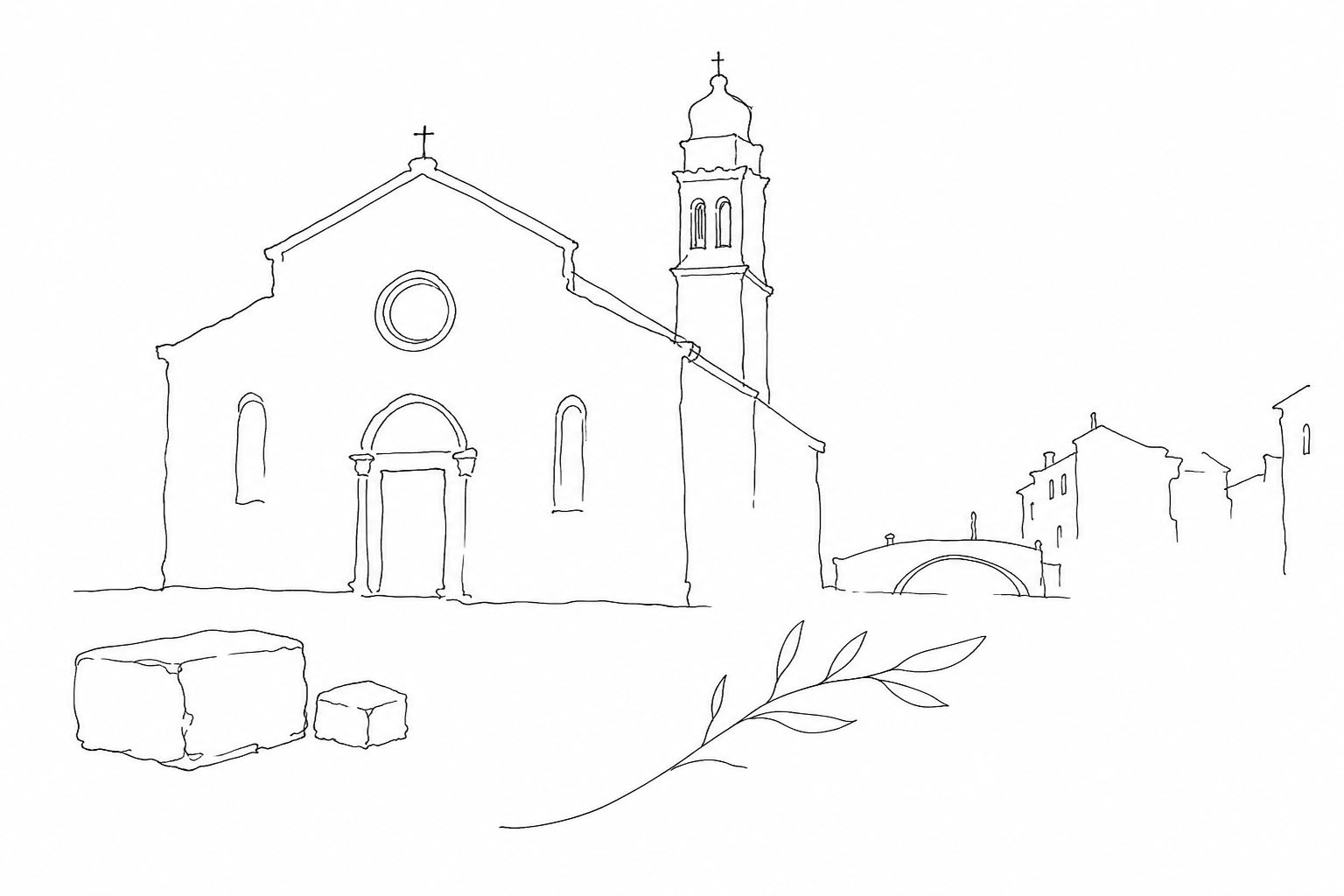
Beams, columns and stone: what to look at inside
Inside San Giacomo dall’Orio, the gaze should be raised before even looking for altars and canvases. The wooden ceiling, set like a great upturned hull, gives the nave a warm and almost nautical scale: it is not accessory decoration, but a structural presence that recalls how much Venice translated its relationship with wood, water and shipyards into architecture.
Immediately afterward it is worth observing the columns. They do not form a perfectly uniform sequence: marbles, shafts and capitals reveal different origins and periods, according to a Venetian practice of reuse that transformed older materials into new architectures. This variety does not disturb the whole; on the contrary, it makes the church’s stratification legible.
- The beams: they follow the rhythm of the nave and lower the tone of the light, creating a compact interior.
- The capitals: some show forms of Byzantine or medieval taste, to be read as relocated fragments.
- The stone: bases, floors and side passages preserve a worn material, more eloquent than a uniformly restored surface.
The atmosphere arises precisely from this balance: not immediate monumentality, but silence, shadow and sedimented material.
Works and rhythm of the visit: reading without haste
To avoid turning San Giacomo dall’Orio into a quick sum of altars, it is best to proceed in brief stops: first the nave, then the side chapels, finally the works preserved in the adjoining rooms when accessible. Among the references to look for are paintings linked to the great Venetian painting of the 16th and 17th centuries, with attributed or documented presences by Lorenzo Lotto, Paolo Veronese, Jacopo Palma il Giovane and Francesco Bassano: they should not be read as an isolated gallery, but as images created to accompany devotion, confraternities and local memory.
The best rhythm is to alternate distance and detail: look at the altar as a whole, then move closer to the faces, the hands, the fabrics, the painted light. On leaving, the small urban space around the church helps you understand the tone of the place: low houses, passages toward Rio Marin and a neighborhood life more restrained than along the major itineraries. Before the visit, it is prudent to check updated access to the sacristy, chapels or individual works.
Visiting San Giacomo dall’Orio means reading Venice in layers, without immediately seeking the most famous image. The campo, the church and the nearby calli compose a rare balance between neighborhood life, medieval memory and artistic details to observe calmly. It is a stop suited to those who want to understand Santa Croce beyond simply passing through, leaving space for silence, material and the city’s less displayed rhythms. From here, Venice appears more concrete: made of wood, stone, shadow, short passages and discoveries that remain.
Related Posts
Santa Maria Mater Domini: a small church for understanding the mercantile Venice of Santa Croce
A slow reading of Santa Maria Mater Domini, among campo, mercantile history, art and the urban fabric of Santa Croce.Campo San Giacomo dell’Orio in the evening: why some Venetian campi do not need monuments
An evening reading of Campo San Giacomo dell’Orio: space, history and everyday life in the Santa Croce sestiere.
San Polo: the church that gives the campo its name but often remains out of frame
The church of San Polo explained from the campo: position, history, details and works to observe more carefully.Questions Answered
Where is San Giacomo dall’Orio located in Venice?
In the less obvious heart of the Santa Croce sestiere.What makes the church’s architecture special?
Its composite character with reused columns and a wooden roof reflects layered history.What should visitors pay attention to inside the church?
Wooden beams, varied capitals, and worn stone surfaces.Which artists’ works are preserved in San Giacomo dall’Orio?
Paintings linked to Lotto, Veronese, Palma il Giovane, and Bassano.
More places for reading Venetian art
Would you like to continue through museums, churches and palaces without separating works from their neighbourhoods?
 Santa Maria Mater Domini: a small church for understanding the mercantile Venice of Santa CroceA slow reading of Santa Maria Mater Domini, among campo, mercantile history, art and the urban fabric of Santa Croce.
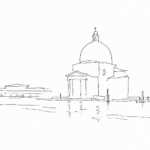 San Simeon Piccolo: the green dome in front of the station that seems to welcome those who arriveWhy San Simeon Piccolo, with its green dome on the Grand Canal, is the first face of Venice for those arriving at...
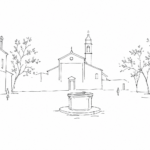 Campo San Giacomo dell’Orio in the evening: why some Venetian campi do not need monumentsAn evening reading of Campo San Giacomo dell’Orio: space, history and everyday life in the Santa Croce sestiere.
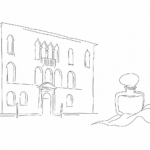 Palazzo Mocenigo: perfumes, textiles and noble life in the Venice of San StaeEditorial guide to Palazzo Mocenigo, among clothing, perfumes, noble rooms and the urban context of San Stae.