
M9 is one of the most interesting places for reading Mestre without considering it merely the antechamber of Venice. The museum recounts the Italian twentieth century through images, sounds, objects, data and immersive environments, but its value also lies in its location: in the heart of a city that grew with industry, migrations, consumption and daily mobility. Visiting M9 means entering a nearby history, made up of homes, work, school, television, bodies and urban landscapes. A museum that helps us understand not only a century, but also the complex relationship between the mainland and the lagoon.
Why M9 is in Mestre, not in Venice
Placing M9 in Mestre means reading the Venetian twentieth century from its mainland gateway, where the city changed scale, work and population. If historic Venice recounts centuries of maritime power, Mestre shows the century of factories, railways, internal migrations, neighborhoods that grew around Porto Marghera and connections with the lagoon.
The museum was created in Mestre’s urban center, not as a scenic alternative to Venice, but as a tool for understanding what often remains outside the postcard image: Italian modernization, consumption, school, the home, television, social conflicts, the transformations of the everyday landscape. The choice of place is therefore part of the content.
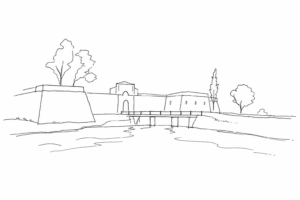
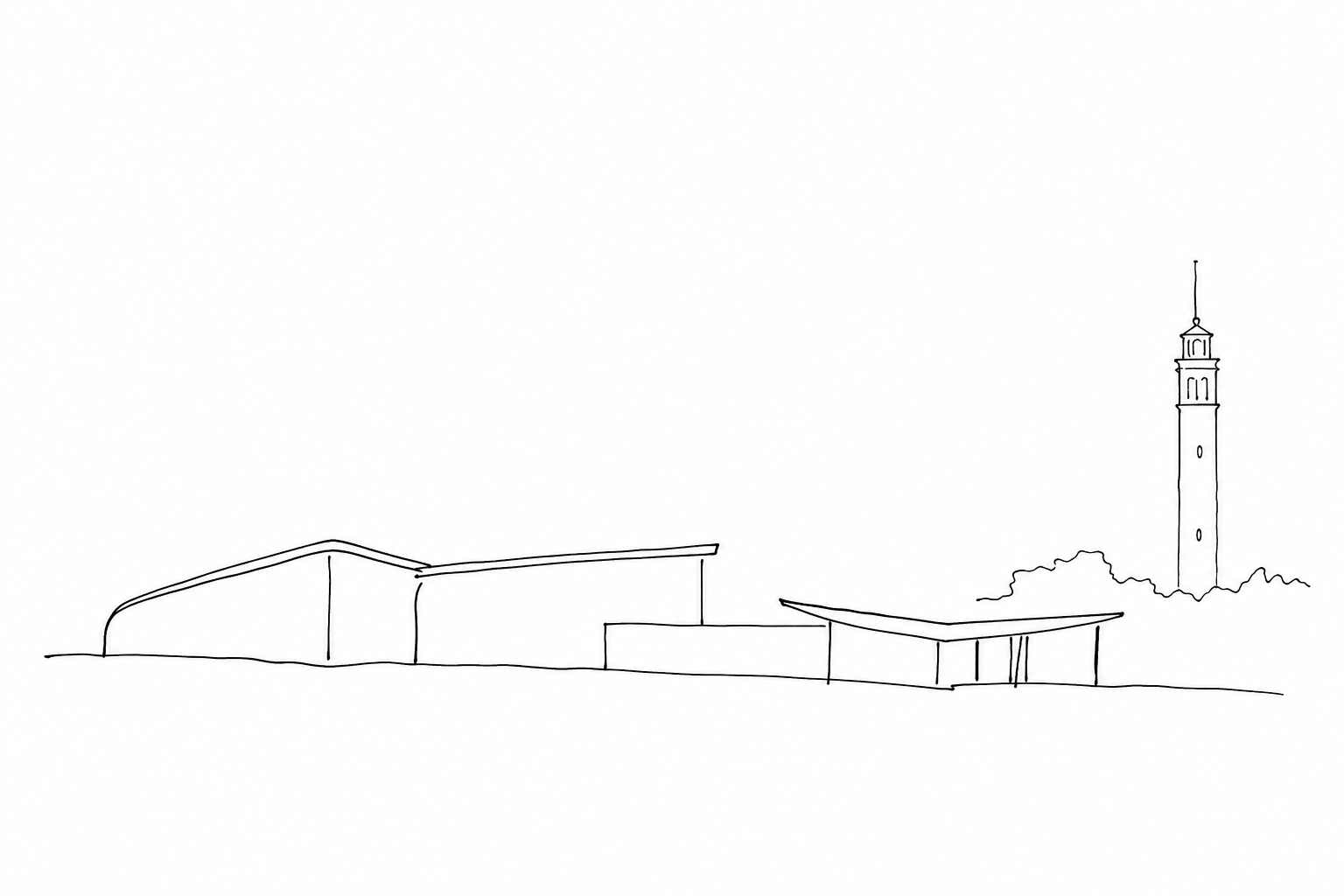
The contemporary architecture of the complex, designed by the Sauerbruch Hutton studio, also dialogues with this idea: fitting into an ordinary urban fabric and reactivating it. M9 asks us to look at Mestre not as a simple transit station toward Venice, but as a living archive of the century that changed both.
A museum about the century that transformed everyday life
M9’s permanent route does not recount the twentieth century through a sequence of display cases, but through digital environments, archive images, sounds, visualized statistics and testimonies. The effect is that of entering the century in which Italy moved from a predominantly agricultural country to an urban, industrial and then post-industrial society: a transition that on the lagoon mainland had visible consequences for factories, neighborhoods, mobility and families.
The rooms connect great history with ordinary gestures: living, going to school, working, taking care of oneself, consuming, staying informed. World wars, fascism, reconstruction, the economic boom, television, internal migrations, social movements and new forms of citizenship do not remain in the background; they become keys for understanding why the contemporary city is made up of public housing and warehouses, shopping centers and infrastructures, workers’ memories and new origins.
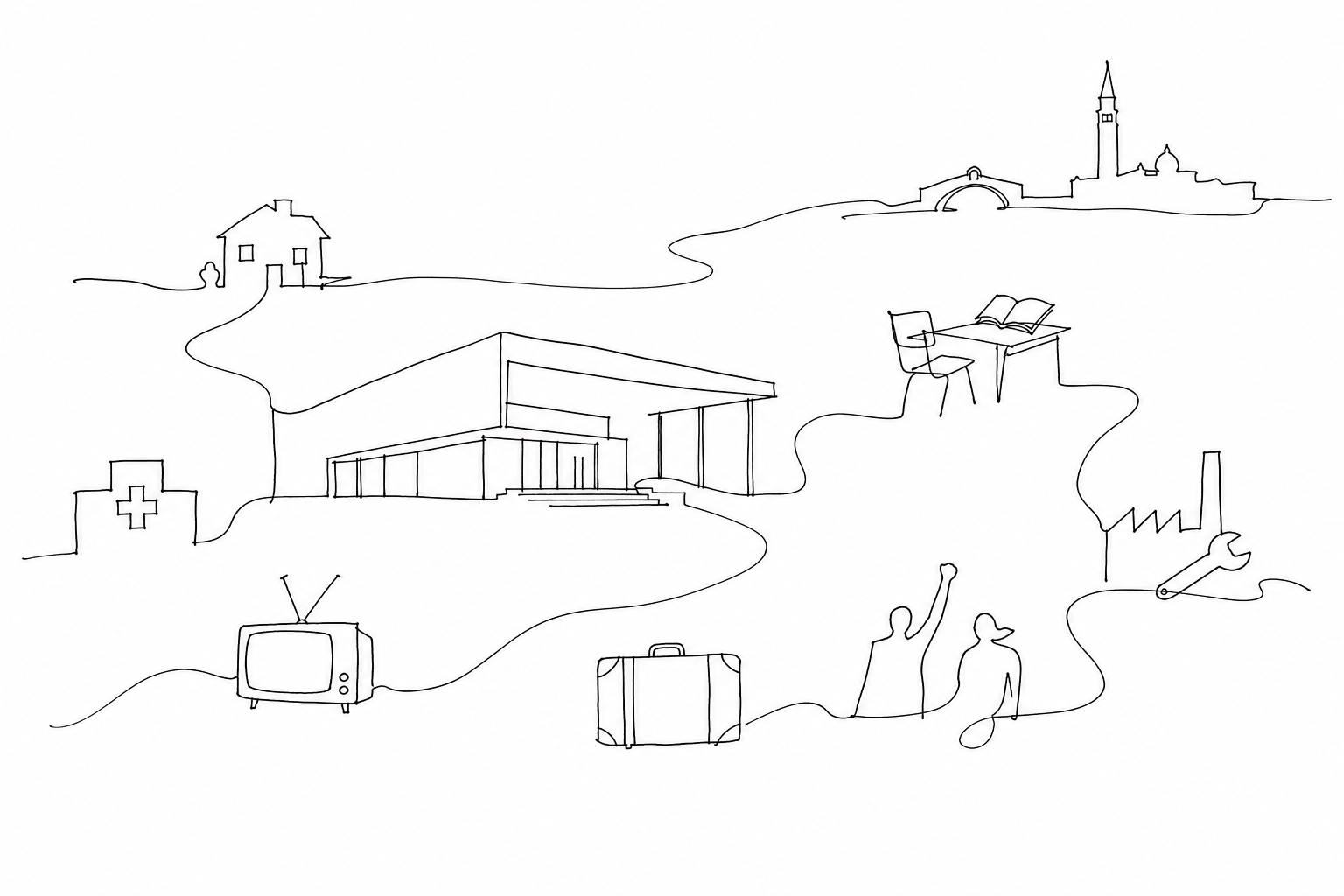
In this sense, M9 also helps us understand Venice: not from the monumental image, but from the system of relationships that in the twentieth century linked port, industry, services, commuting and tourism. The museum makes the twentieth century perceptible not as nostalgia, but as the everyday grammar of the present.
Architecture and regeneration: the M9 district
The M9 complex should be read even before entering the rooms: it is an urban intervention that stitches together a central block of the mainland, transforming spaces that had long been closed into pedestrian passages, courtyards and public fronts. The project by the Sauerbruch Hutton studio combines new architecture with the recovery of historic buildings, including the area of the former convent of Santa Maria delle Grazie, creating a small cultural district inserted into Mestre’s commercial and residential fabric.
The outer skin, composed of polychrome ceramics, is not merely decorative: it changes with the light and makes the volume recognizable without imitating its context. The compact forms, diagonal cuts and sloping roofs guide the eye toward passages and internal squares. In this sense, the building anticipates the museum’s narrative: it speaks of modernization, energy consumption, mobility, collective life and urban transformation. Visiting M9 therefore also means observing the before and after of the city, not only what is displayed on the screens.
M9 before or after the lagoon: a stop that changes the reading of the journey
On a short stay, M9 can be included without treating it as a simple filler between train and vaporetto. Its position on the mainland helps give order to what often remains in the background: commuting, residential building, consumption, school, industrial work and family transformations.
- Before Venice: the visit prepares the gaze. The rooms dedicated to Italian modernization make the contrast between the historic center and the inhabited areas outside the lagoon more legible, where services, homes, factories and daily mobility were concentrated.
- After Venice: M9 works as a reverse shot. After churches, palaces and calli, it brings the journey back to the twentieth century as lived: television, the automobile, the supermarket, internal migrations, new domestic habits.
- With little time: it is better to choose a thematic route, not try to absorb everything. Work, home and transport are the most useful threads for understanding the relationship between islands and mainland.
For opening hours, access and tickets, it is always best to check the updated information on the official channels.
Including M9 in a short Venetian stay does not mean taking time away from the historic city, but adding a level of interpretation. Mestre shows what often remains outside the classic image of Venice: the inhabited mainland, transformed and crossed every day. The museum and the district that surrounds it allow us to observe the twentieth century as a concrete experience, not as a simple chronology. Before or after Venice, M9 works as an intelligent pause: it shifts the gaze, connects architecture, memory and everyday life, and makes the territory being crossed clearer.
Related Posts
Mestre city center after Venice: Piazza Ferretto, porticoes and the return to the everyday city
A slow return from Venice to Mestre city center: Piazza Ferretto, porticoes, Civic Tower, M9 and everyday rhythm.Forte Marghera: the green threshold between Mestre, the lagoon and military memory
Editorial guide to Forte Marghera: history, green spaces, water and its role between central Mestre and the lagoon.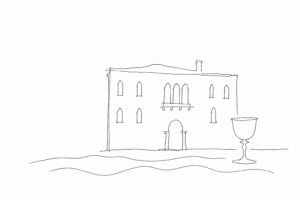
The Murano Glass Museum: reading the island’s history beyond demonstrations for tourists
An editorial guide to the Murano Glass Museum: rooms, techniques, objects and context for understanding the island beyond demonstration furnaces.Questions Answered
Why is M9 located in Mestre instead of Venice?
Because Mestre represents the Venetian mainland's industrial and urban transformation.How does M9 present the twentieth century?
Through immersive digital environments, sounds, images, and data rather than traditional displays.What role does the museum's architecture play?
Its architecture connects new and historic elements, fostering urban regeneration.How can visitors best experience M9 with limited time?
By choosing thematic routes focused on work, home, and transport to understand island-mainland relations.
Explore Venice from the mainland too
Want to add a few stops that reveal Mestre and its relationship with the lagoon?
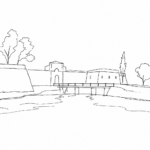 Forte Marghera: the green threshold between Mestre, the lagoon and military memoryEditorial guide to Forte Marghera: history, green spaces, water and its role between central Mestre and the lagoon.
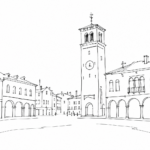 Mestre city center after Venice: Piazza Ferretto, porticoes and the return to the everyday cityA slow return from Venice to Mestre city center: Piazza Ferretto, porticoes, Civic Tower, M9 and everyday rhythm.
 Staying in Mestre to Visit Venice: When the Mainland Makes Your Trip EasierChoosing where to stay when visiting Venice is not a secondary decision. The lagoon city has an extremely strong character: beautiful, fragile,...Frequently asked questions about Mestre, Venice and your stayA practical FAQ for travellers considering staying in Mestre to visit Venice, planning a short stay and deciding whether an apartment in...