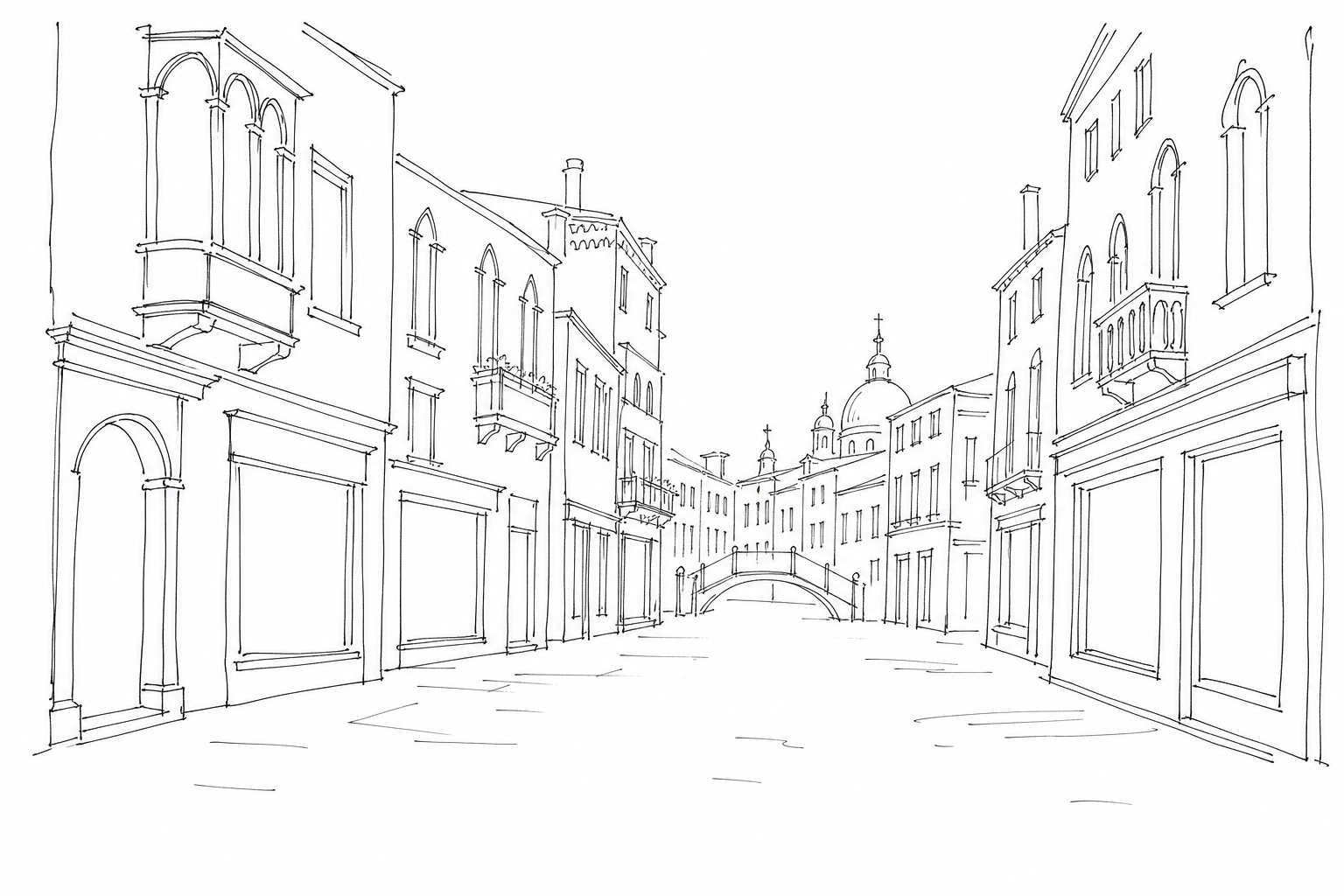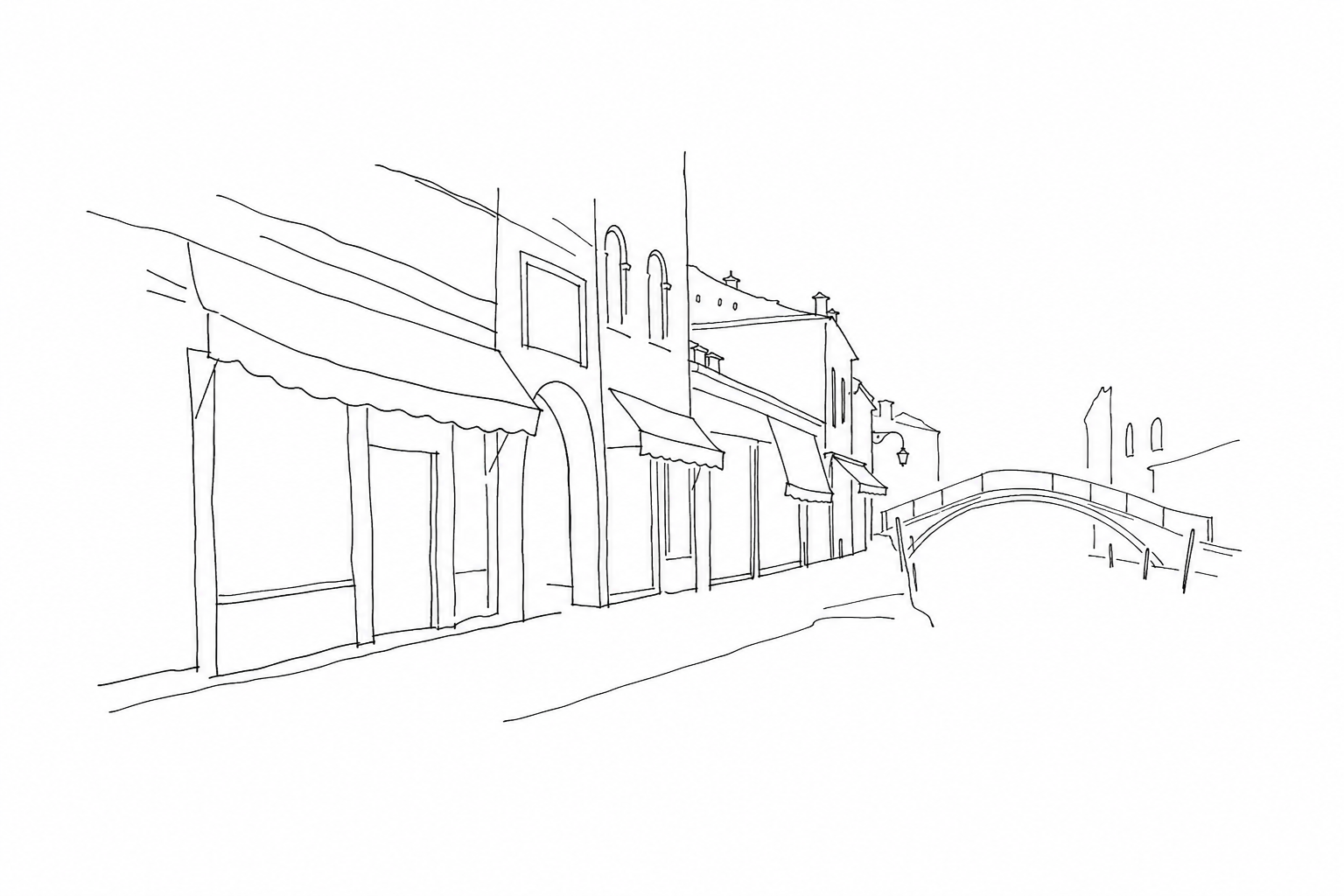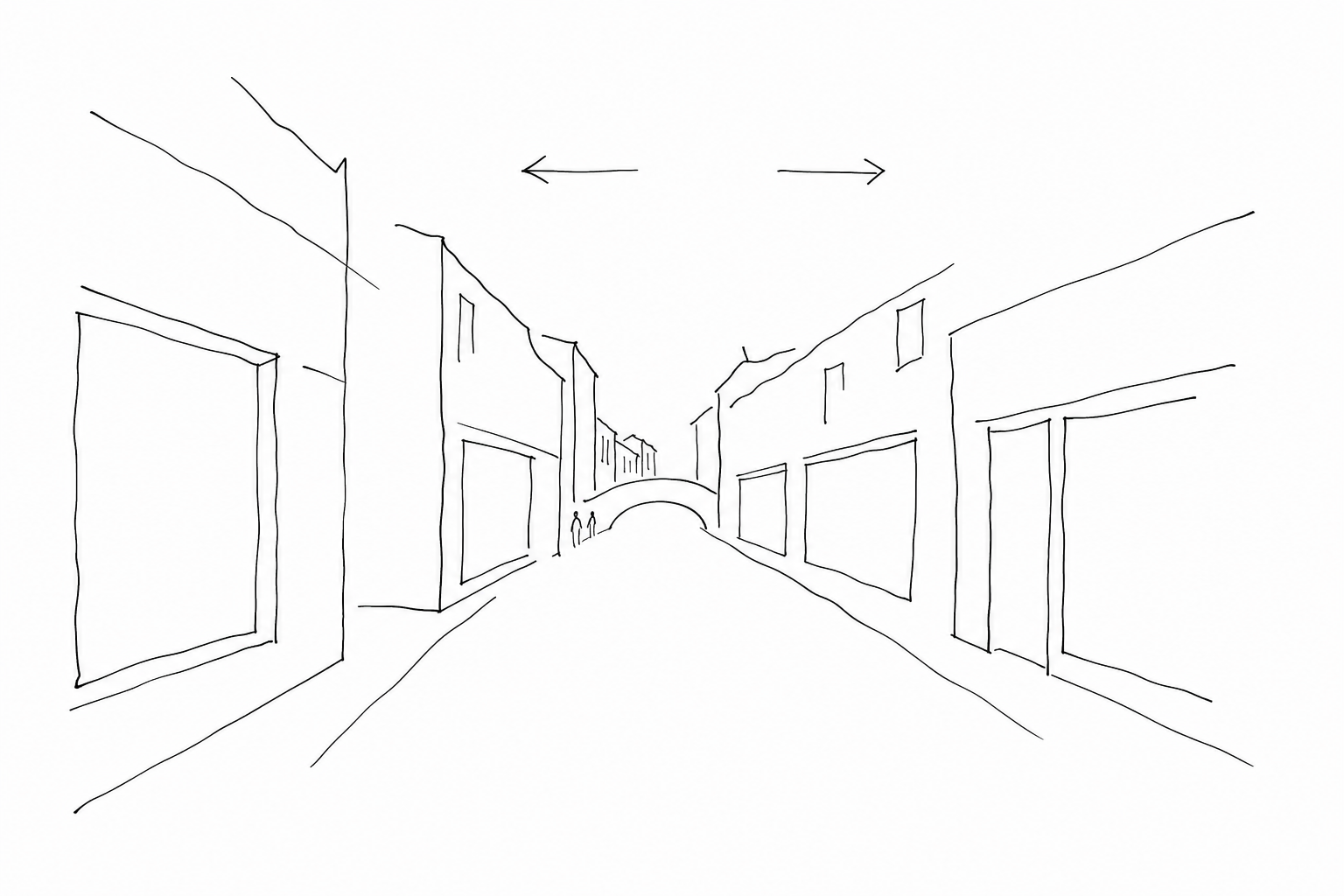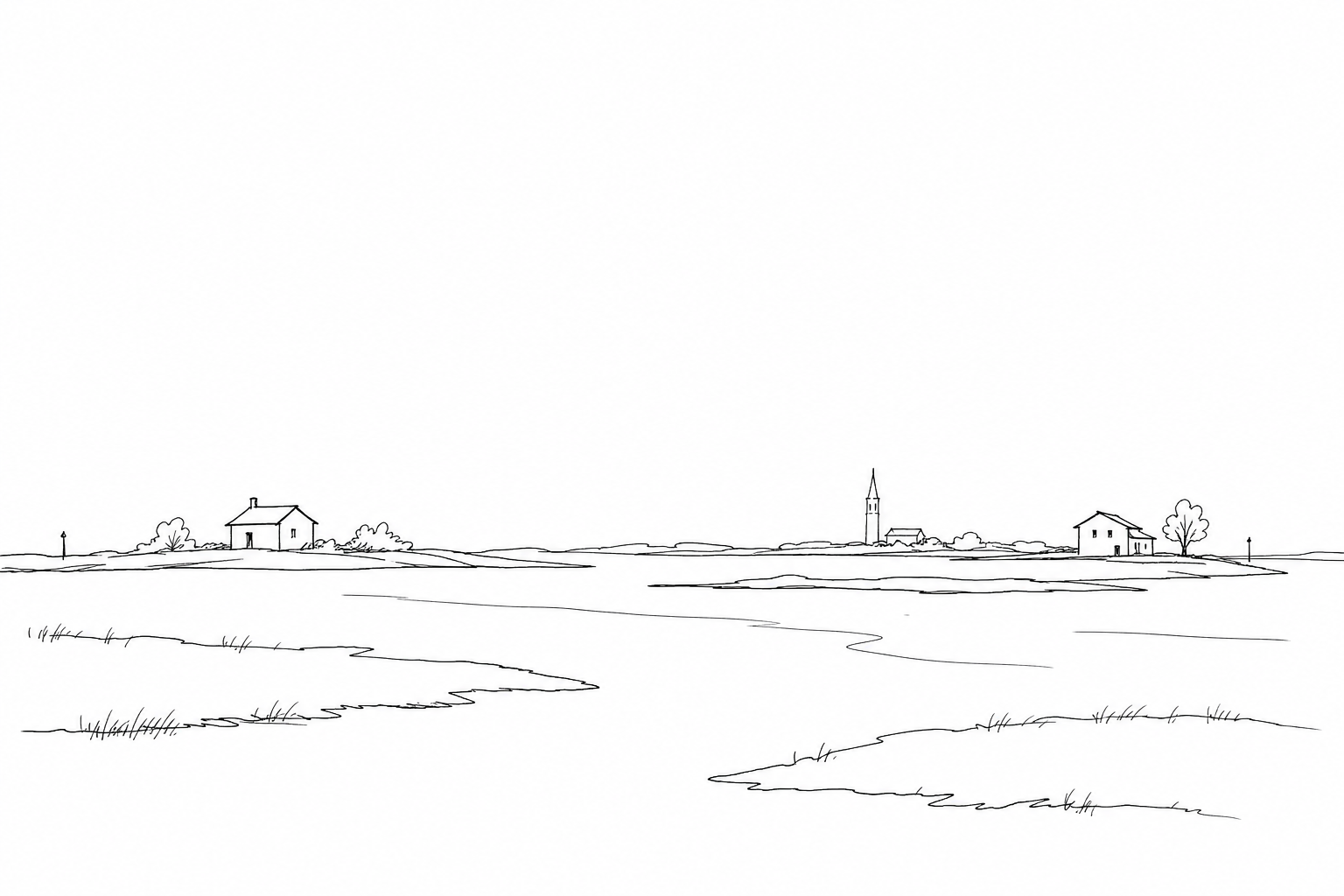
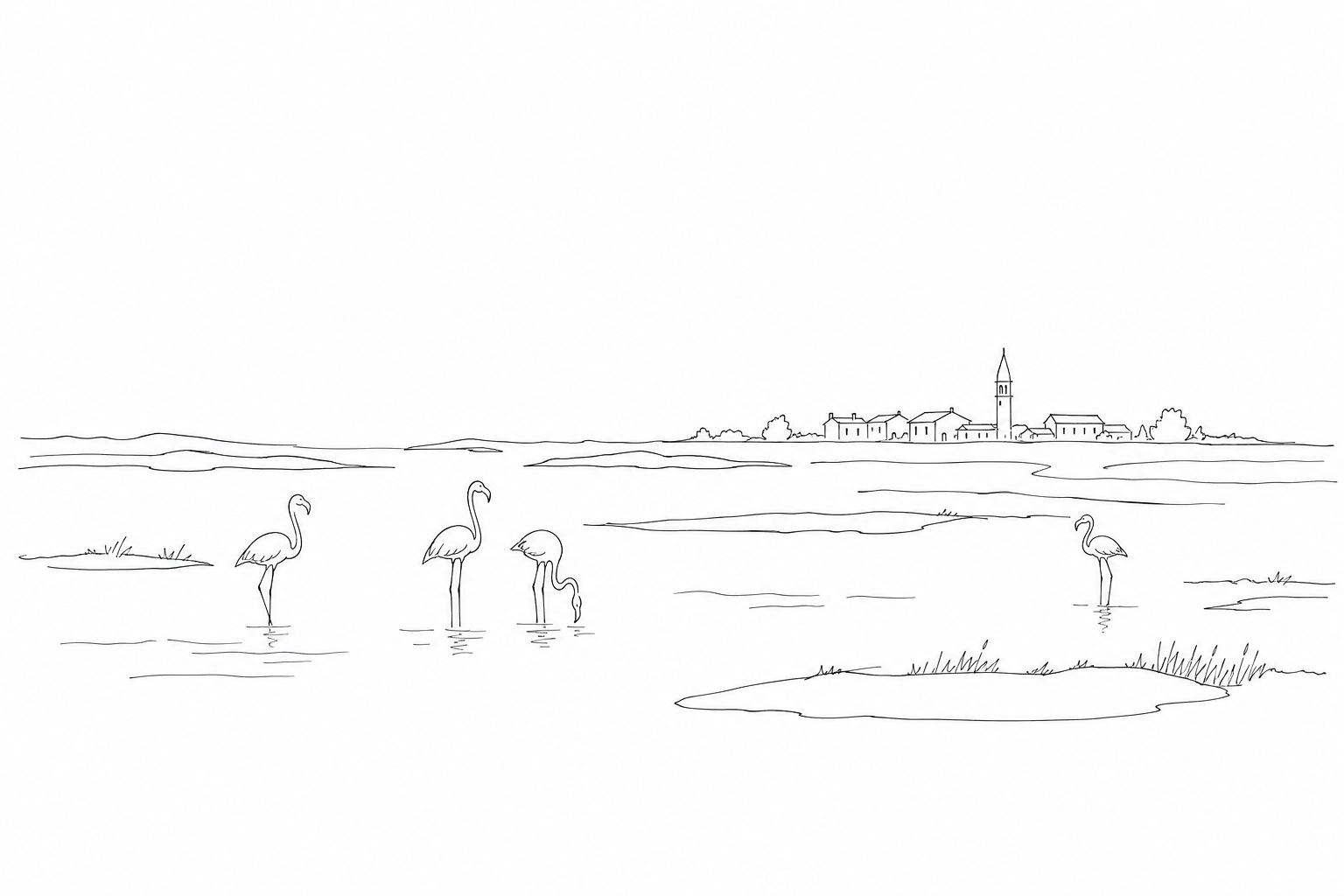
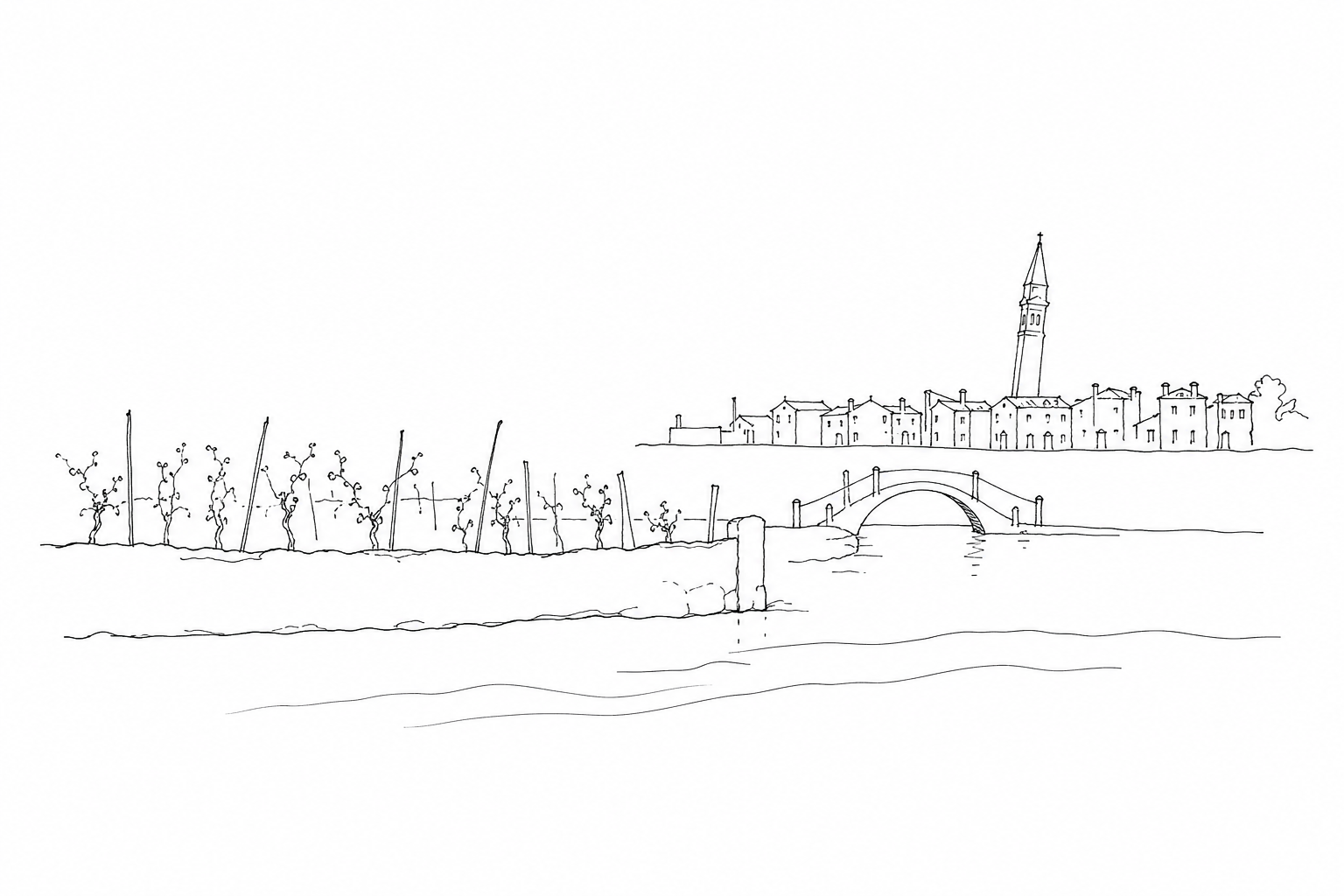
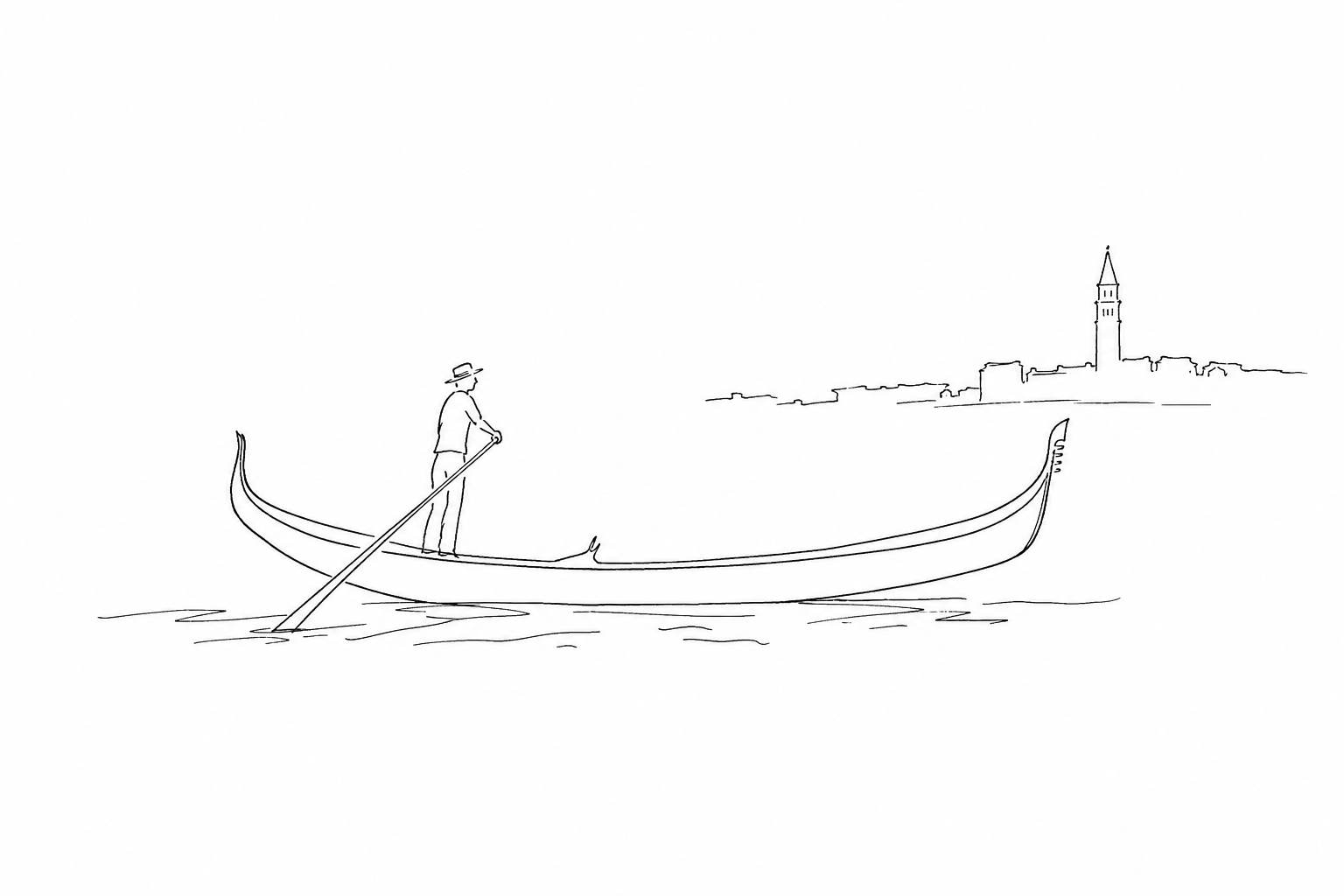

Before becoming a familiar image on regatta days, the mascareta was a boat for work, for passage, for everyday life. Small and light, suited to narrow rii and short distances, it tells of a less scenic and more concrete Venice: that of the sestieri, of small-scale transport, of rowing as a practical gesture even before it was a sport. Understanding what a mascareta really is means looking at the city from the water, but without the postcard: observing forms, uses, materials and habits that have given this boat a precise place in the Venetian urban landscape.
What a mascareta really is
The mascareta is a traditional Venetian rowing boat, light and easy to handle, designed to move through canals, rii and the shallow waters of the lagoon. Before becoming a recognizable presence in images of regattas, it was above all a boat for use: suited to short transport, small services, daily movements and small-scale fishing.
Its identity lies in its proportions: a slender hull, a bottom suited to lagoon navigation and compact dimensions compared with other Venetian boats. It is often handled alla veneta, that is, rowing standing up, with the oar resting on the forcola. This technique allows one to see ahead, steer precisely and quickly correct course in tight spaces.
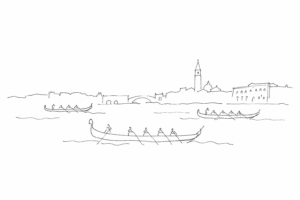
Defining it only as a “regatta boat” would therefore be reductive. Racing has made its elegance visible, but the mascareta was born from a practical necessity: to be small, agile, stable enough and perfectly Venetian in its relationship with the water.
A boat born from Venetian everyday life
The mascareta is not understood starting from the podium, but from the ordinary act of crossing a city made of water. In the centuries when rii, canals and salt marshes were routes of work before they were photographic settings, a boat was needed that could enter narrow passages, come alongside without bulk and move even where the seabed required caution.
Its compact dimensions respond precisely to this inhabited environment: a boat that was too large would have been inconvenient in the smaller rii; one that was too fragile would not have withstood continuous use. The mascareta offered a practical balance between lightness, control and stability, useful for small transport, family movements, errands, small-scale fishing and short routes in the lagoon.
Its construction also reflected local knowledge. In the Venetian squeri, the form did not arise from an abstract drawing, but from the experience of those who knew currents, banks, low landings and close maneuvers. This is why the mascareta appears so “Venetian”: not because of decoration, but because it translates the city’s everyday measure into wood.
Why it is agile: hull, oars and rowing
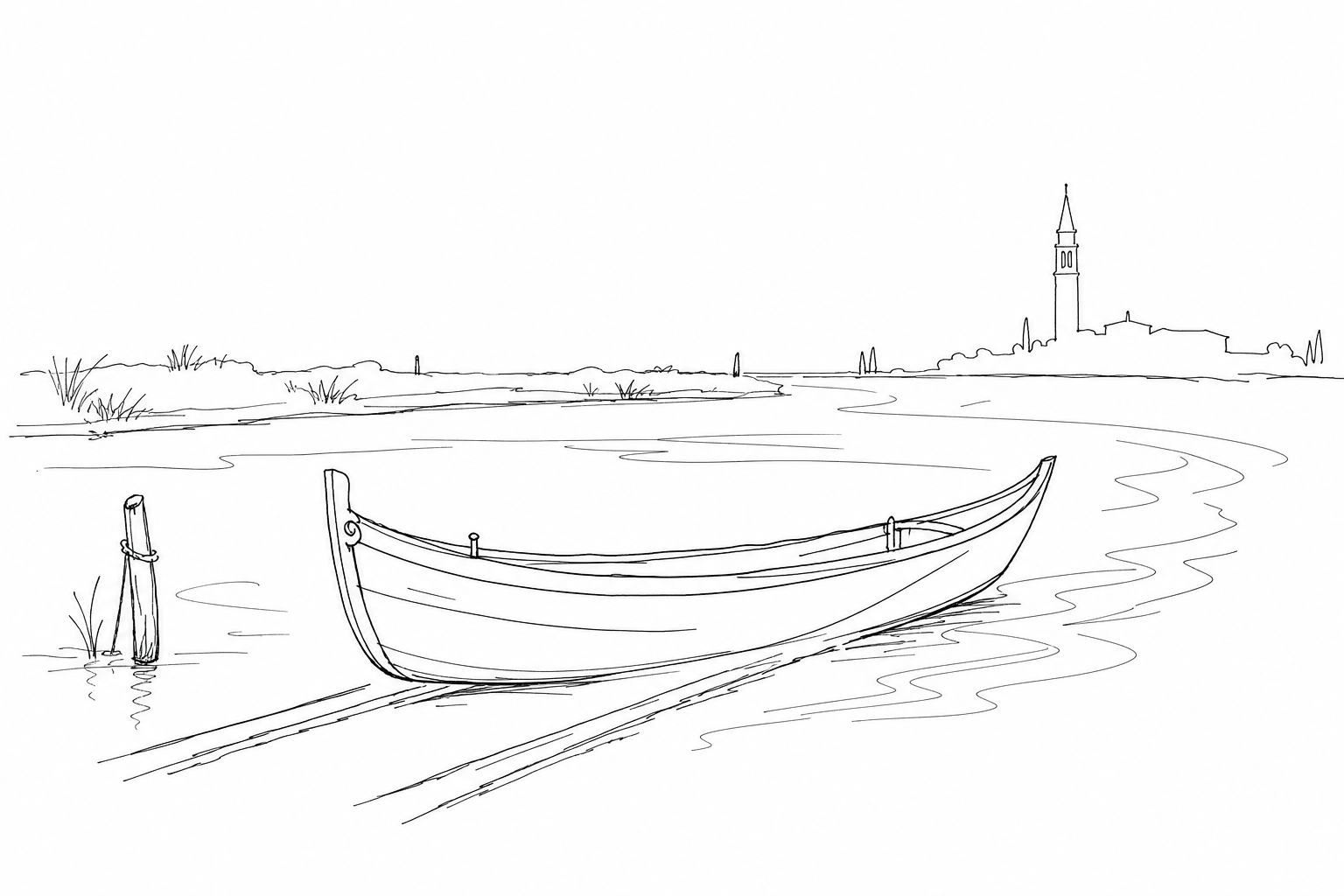
The agility of the mascareta comes from a precise balance: limited length, reduced weight and a bottom suited to gliding in shallow waters. The hull is narrow enough to pass through the smaller rii, but not so nervous as to become unstable when the rower stands up. The tapered ends help entry into the water and make the response quicker when changing direction.
The propulsion is that of voga alla veneta: one rows standing up, looking forward, with the oar resting on the forcola. This open oarlock is not a simple support: it allows different positions of the oar, useful for moving forward, braking, correcting course or turning in tight spaces. In a canal, where current, wind and traffic require quick decisions, such mobility matters more than pure speed.
Handling with one or two oars also changes the behavior of the craft. With a single rower, finesse is needed to compensate for the lateral thrust; in pairs, acceleration and control increase. Before the regatta images, here there is a technique born to maneuver close to banks, bridges and landings.
From the waters of the sestieri to regatta photos
Before becoming a recognizable silhouette in race images, the mascareta belonged to the small-scale traffic of the sestieri: short crossings, errands, lagoon fishing, movements between fondamenta and banks where a large craft would have been a hindrance. Its measure spoke the language of narrow rii, temporary landings, turns under low bridges.
The passage to a public image occurs when a practical use becomes an ordered spectacle: visible crews, distinct colors, a course watched by eyes from the banks. In regattas, what in daily life was discreet quickness becomes a legible gesture: rowing standing up, the rhythm of bodies, the trajectory on the Grand Canal or in the open lagoon.
This transformation does not erase its local origin. On the contrary, it makes it more evident: in photographs it remains a small boat, designed for nearby waters and exact maneuvers. The public celebration amplifies its form, but does not reinvent it; it brings to the foreground knowledge born in the ordinary routes of Venice.
The mascareta remains one of Venice’s most eloquent boats because it combines constructive simplicity, agility and everyday memory. In its lines there is not only the reference to regattas or to the most recognizable photographs, but a long familiarity with canals, banks, water courtyards and the city’s small movements. Looking at it carefully helps read Venice as a place built also through its smallest means: boats born to serve, cross, connect. And it is precisely in this discreet measure that the mascareta preserves its most Venetian identity.
Related Posts
The caorlina: the transport boat that became a protagonist of historic regattas
Origins, shape and role of the caorlina: from a working boat of the lagoon to a symbolic presence in Venetian regattas.Regata Storica: how to watch it while understanding boats, colors and hierarchies on the water
A guide to reading the Regata Storica: procession, boats, colors, flags and racing logic on the Grand Canal.
How a gondola is made: ferro, asymmetry and details that are not decoration
Bow ferro, hull asymmetry, forcola and finishes: the gondola read as a precise machine, not as Venetian ornament.Questions Answered
What is a mascareta?
A traditional lightweight Venetian rowing boat for canals and lagoons.How was the mascareta originally used?
For small-scale transport, daily errands, and fishing in Venice.What makes the mascareta agile?
Its hull shape, light weight and standing rowing technique.How did the mascareta become a symbol in regattas?
It evolved from practical use to a public spectacle in rowing races.
Venice seen from the water
Would you like to connect this story with the vessels and trades that shaped the lagoon landscape?
 The caorlina: the transport boat that became a protagonist of historic regattasOrigins, shape and role of the caorlina: from a working boat of the lagoon to a symbolic presence in Venetian regattas.
 Regata Storica: how to watch it while understanding boats, colors and hierarchies on the waterA guide to reading the Regata Storica: procession, boats, colors, flags and racing logic on the Grand Canal.
 The bragozzo: sail, fishing and the Adriatic in the colorful boat of lagoon traditionHistory, forms and colors of the bragozzo, a fishing boat linked to Chioggia, the lagoon and the Adriatic.
 Traghetto da parada: crossing the Grand Canal like Venetians doWhat the traghetto da parada is, how to use it, and why it tells of the everyday relationship between Venice, water, and...